
Soups & Stews
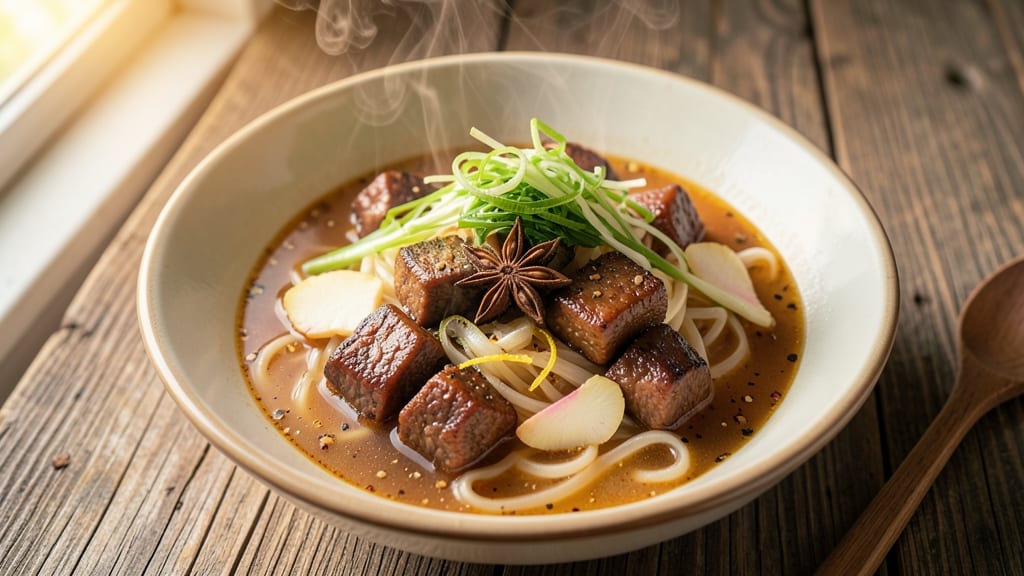
This beef kway teow soup recipe delivers restaurant-quality wok-seared noodles swimming in aromatic, savory broth—exactly how it should be. The secret lies in layering flavors through star anise infusion, tender slow-cooked beef, and that signature high-heat stir-fry finish that creates wok hei (breath of the wok).
I've perfected this version over years of testing, balancing traditional techniques with home-cook practicality for a soup that's both authentic and approachable.
The broth starts with star anise and spices simmered until deeply fragrant, forming the flavor base before adding beef and vegetables. Thin rice noodles get their signature texture from a quick sear in the wok after cooking—this creates those crispy edges while keeping the centers tender.
What makes this recipe special is how it transforms simple ingredients into a harmonious bowl where each component plays its part: the beef stays juicy yet firm, the noodles achieve perfect texture, and the broth carries all the aromatic complexity.
By the time you're ready to serve, you'll have a steaming bowl of beef kway teow where every spoonful delivers rich beef flavor, fragrant broth, and that satisfying contrast of crispy noodle edges against silky centers.
The soup's depth comes from slow-cooked beef that absorbs the spiced broth, while fresh herbs and lime add brightness at the end. This is comfort food at its finest—warm, satisfying, and packed with authentic flavor without requiring specialized equipment.
Serve immediately with chili oil drizzled on top and fresh cilantro for garnish. For extra depth, prepare the beef and broth a day ahead—it develops even more flavor when left to marinate in its own juices.
The noodles should be stir-fried just before serving to maintain that perfect texture. Let's make this soup that brings the essence of Singaporean street food to your kitchen.
Ingredients for beef kway teow soup
Pantry staples meet Asian market finds for this aromatic beef noodle masterpiece.
| Ingredient | Amount | Notes |
|---|---|---|
| Beef Chuck Roast 🥩 | 1 ½ lb | Cut into 1-inch cubes |
| Flat Rice Noodles 🍜 | 12 oz | Kway teow or vermicelli |
| Star Anise 🌟 | 2 whole | For aromatic infusion |
| Fresh Ginger 🧅 | 1 inch | Sliced thinly, peeled |
| Garlic Cloves 🧄 | 4 cloves | Minced, aromatic base |
| Green Onions 🧅 | 4 whole | White and green parts separated |
| Fresh Cilantro 🌿 | ¼ cup | Chopped, for garnish |
| Fresh Ginger 🧅 | 2 tbsp | Grated, aromatic depth |
| Soy Sauce 🥄 | ½ cup | Light or dark variety |
| Oyster Sauce 🍶 | 2 tbsp | For umami richness |
| Sesame Oil 🫒 | 1 tbsp | Toasted, for aroma |
| Chili Oil 🌶️ | 2 tbsp | For serving, optional |
| Lime 🍋 | 1 whole | Juiced, for brightness |
| Water 💧 | 8 cups | For broth base |
| Salt 🧂 | 1 ½ tsp | Adjust to taste |
The beef is everything—chuck roast gives you that melt-in-your-mouth texture, but sirloin works in a pinch. Cut it into uniform cubes so they cook evenly. For the star anise, Asian grocery stores usually have it in bulk bins, but regular supermarkets stock it too—just don't burn it. Ginger's a game-changer here: freshly grated adds depth, while pre-grated loses its punch. I always grab extra ginger because it's used twice—once for the broth, once for the stir-fry finish. The rice noodles? Kway teow is ideal, but vermicelli or even udon will work if that's what you've got.
No star anise? 1 cinnamon stick + 1 bay leaf gets you close. Soy sauce shortages? Coconut aminos work, though the flavor won't be identical. The oyster sauce is non-negotiable for that umami kick—vegetarian oyster sauce works if you need it. Sesame oil gets added at the very end for aroma, so don't skimp. The chili oil is optional but 100% worth it—drizzle it on top right before serving. For the noodles, soak them in hot water for 5-7 minutes until pliable but still firm. Over-soaking makes them mushy, and nobody wants that.
This soup tastes even better the next day—make extra broth and store it separately. The beef stays tender for 3 days in the fridge, while the noodles are best made fresh when serving. For a shortcut, pre-cook the beef and broth a day ahead—it develops deeper flavor. Store noodles in a damp paper towel in the fridge for up to 2 days. Freeze broth in ice cube trays for quick future batches. The lime should be juiced fresh—bottled juice lacks brightness. Garnish with cilantro and extra chili oil right before serving.
Why You'll Love This Recipe
- One-Pot Magic: I swear by this recipe—just toss everything into one pot, and the star anise and ginger work their alchemy while you chop garlic. No fancy techniques, no extra dishes. My lazy Sundays just got a whole lot easier.
- Deep Umami Bomb: That beef chuck roast? Slow-simmered until it’s fall-apart tender, then slurped up with rice noodles—it’s like a hug in a bowl. The star anise and garlic cloves layer in warmth that lingers, making every spoonful ridiculously satisfying.
- Leftover Goldmine: Between us, this soup only gets better the next day. The noodles soften just right, the broth deepens, and I’ve reheated it three times without a single complaint. Perfect for meal prep or when you’re too tired to cook.
- Budget-Friendly Feast: A big cut of beef chuck stretches across multiple servings, and rice noodles cost pennies. Honestly, it’s the kind of recipe that makes me feel like I’m feeding a crowd without breaking the bank—especially when I double the batch.
Step-by-step instructions for beef kway teow soup
Here's how to make this rich, aromatic soup with perfectly seared beef and fragrant star anise broth.
Prepare the Beef and Aromatics
Cut the 1.5 lb beef chuck roast into 1-inch cubes and pat them dry with paper towels. This helps create a better sear later. In a small bowl, combine the 2 whole star anise, 1 inch sliced fresh ginger, 4 minced garlic cloves, and 1.5 tsp salt. Set aside for now - these will infuse the broth with deep flavor.
Separate the 4 whole green onions, cutting them into white parts and green parts (you'll use both). Also, finely chop the 0.25 cup fresh cilantro and set aside for garnish. Grate the 2 tbsp fresh ginger separately - this will add a bright, zesty kick to the soup.
Sear the Beef for Maximum Flavor
Heat a large wok or deep skillet over high heat until it's smoking hot. Add the beef cubes in a single layer, being careful not to overcrowd. Let them sear undisturbed for 2-3 minutes until they develop a deep golden-brown crust. This step is crucial for building rich, meaty flavor in the broth.
Once browned on one side, flip the beef and repeat on the other side. Transfer the seared beef to a plate and set aside. You'll notice the beef releases some juices and fond (browned bits) in the pan - don't wipe them out. These will form the flavor base for your soup.
Build the Star Anise Infused Broth
In the same wok, add 1 tbsp sesame oil and swirl to coat the pan. Add the star anise, sliced ginger, and garlic mixture you prepared earlier. Stir-fry for 30 seconds until fragrant - you should smell that warm, spicy aroma of star anise.
Pour in the 8 cups water and bring to a rolling boil. Add the seared beef back to the wok, then reduce heat to medium-low. Let it simmer gently for 45-60 minutes, partially covered. This long simmering time allows the beef to become tender and the star anise to infuse its distinctive flavor into the broth.
Finish the Soup with Noodles and Sauces
While the beef simmers, prepare the 12 oz flat rice noodles by soaking them in hot water for 5-8 minutes until pliable but still slightly firm. Drain and set aside. When the beef is tender (it should easily pull apart with a fork), remove the star anise pieces from the broth.
Add the 0.5 cup soy sauce and 2 tbsp oyster sauce to the wok, stirring to combine. Toss in the drained noodles and the white parts of the green onions. Stir gently to coat everything in the flavorful broth. Let it cook for another 2-3 minutes until the noodles are heated through and slightly softened.
Serve with Fresh Garnishes
Ladle the hot soup into bowls. Drizzle each serving with 2 tbsp chili oil and a squeeze of juice from the whole lime. Garnish with the green parts of the green onions and the chopped 0.25 cup fresh cilantro. The contrast of fresh herbs and bright lime juice against the rich, savory broth makes this dish truly special.
Serve immediately while hot, with extra chili oil on the side if desired. Each bowl should be packed with tender beef, chewy noodles, and a deeply aromatic broth that's perfectly balanced between savory, spicy, and umami flavors.
Pro Tips For Making Beef Kway Teow Soup
- Sear the Beef First: I learned this the hard way—skipping the sear means flavorless beef. After browning the chuck roast in small batches (don’t crowd the pan!), you’ll get caramelized crusts that dissolve into the broth later, giving depth the store-bought bouillon can’t match. Use a heavy pot and medium-high heat—this isn’t the time to rush.
- Slice Ginger Thinly: Sounds simple, but I used to hack off thick chunks and wonder why the soup tasted one-dimensional. For kway teow, shave ginger into paper-thin strips (about 1mm thick) so it infuses without turning the broth bitter. Pro move: Toss the slices into the broth early—let them simmer alongside the star anise, then fish them out before serving.
- Don’t Overcook the Noodles: Flat rice noodles turn to mush if you stare at them too long. Once they’re tender (about 2-3 minutes in hot broth), drain them immediately and rinse under cold water to stop cooking. Toss them back in just before serving—this keeps them al dente and prevents a gluey mess. (Yes, even if you’re impatient like me.)
- Use a Pressure Cooker for Beef: I was skeptical until I tried it—beef chuck roast in a pressure cooker becomes fork-tender in 45 minutes (versus hours on the stove). After browning, add the beef with garlic, ginger, and star anise, then pressure cook with enough water to cover. The result? Rich, melt-in-your-mouth beef that shreds easily, and a broth packed with flavor without skimping on time.
Perfect pairings for this recipe
Broth Enhancers
Elevate your star anise broth by adding a splash of 1 tbsp Shaoxing wine when you first bring the water to a boil—it deepens the umami complexity. For a smoky twist, include ½ tsp five-spice powder with the star anise while simmering.
I also love adding 2 slices of fresh lemongrass (bruised) to the broth for a citrusy aroma that pairs beautifully with the beef. 🌿
Noodle Variations
Swap the flat rice noodles for thin egg noodles if you can't find kway teow—they hold up well to the stir-fry finish. For gluten-free, use rice stick noodles> (soak them 10 minutes longer).
I once made this with udon noodles for a heartier version, but they need slightly less cooking time to avoid mushiness.
Protein Swaps
For a seafood twist, replace the beef with 1 lb shrimp (peeled and deveined) or 12 oz firm tofu> (pressed and cubed). If using shrimp, add them only in the last 5 minutes of simmering to prevent overcooking.
For vegetarians, shiitake mushrooms> (sliced) make a great meaty substitute—they absorb the broth beautifully.
Herb Garnishes
Beyond cilantro, try Thai basil> for a sweet, anise-like finish or mint leaves> for a refreshing contrast. I often add a sprinkle of toasted sesame seeds> (½ tsp) for extra crunch. For heat lovers, mix ½ tsp chili flakes> into the chili oil before drizzling.
Side Pairings
Serve with steamed jasmine rice> to soak up the rich broth. For a complete meal, add quick-pickled cucumbers> (slice cucumbers, toss with rice vinegar, sugar, and salt) for a tangy crunch.
I also love pairing this soup with spring rolls> or fried wantan> for a full Singaporean street-food experience. 🍜
Beverage Pairings
A cold Singapore Sling> (gin-based cocktail) cuts through the soup's richness perfectly. For non-alcoholic options, try jasmine green tea> or lychee juice>—both complement the star anise notes. I also enjoy a coconut water> on the side to balance the meal's savory depth.
Nutrition facts
Frequently asked questions
Can I substitute beef chuck with another cut?
Yes! Sirloin or flank steak work well for a leaner option, while brisket adds extra richness. Cut all into 1-inch cubes for even cooking. Avoid fatty cuts like ribeye—they can make the broth greasy. If using sirloin, marinate it for 30 minutes in soy sauce and cornstarch before searing for better texture.
What if I can't find star anise?
Use 1 cinnamon stick + 1 bay leaf as a substitute—they'll give a warm, spiced depth. For a more authentic aroma, try ½ tsp ground star anise (if available). Avoid cinnamon alone—it lacks the complex licorice-like notes star anise provides. The broth will still taste great, just slightly different.
How do I fix mushy noodles?
Mushy noodles happen when over-soaked or overcooked. For next time, soak flat rice noodles in hot water for only 5-7 minutes—they should be pliable but still firm. If it's too late, drain and pat them dry, then toss with 1 tsp cornstarch to crisp them up during the final stir-fry. The high heat will revive their texture.
Can I make this soup ahead of time?
Yes! Prepare the beef and broth up to 2 days ahead—it tastes even better after flavors meld. Store separately in the fridge. Reheat gently on the stove, then add fresh noodles and stir-fry just before serving. The noodles should always be cooked fresh to maintain their signature texture. Keep chili oil and lime juice separate until serving.
Why does my broth taste bland?
Bland broth often means insufficient searing or simmering. Always sear the beef until deeply browned to build flavor. For depth, add 1 tbsp soy sauce and ½ tsp five-spice powder to the broth while simmering. If it's still weak, reduce the broth by half (simmer uncovered) to concentrate the flavors. A splash of Shaoxing wine or extra star anise can also help.