
Soups & Stews
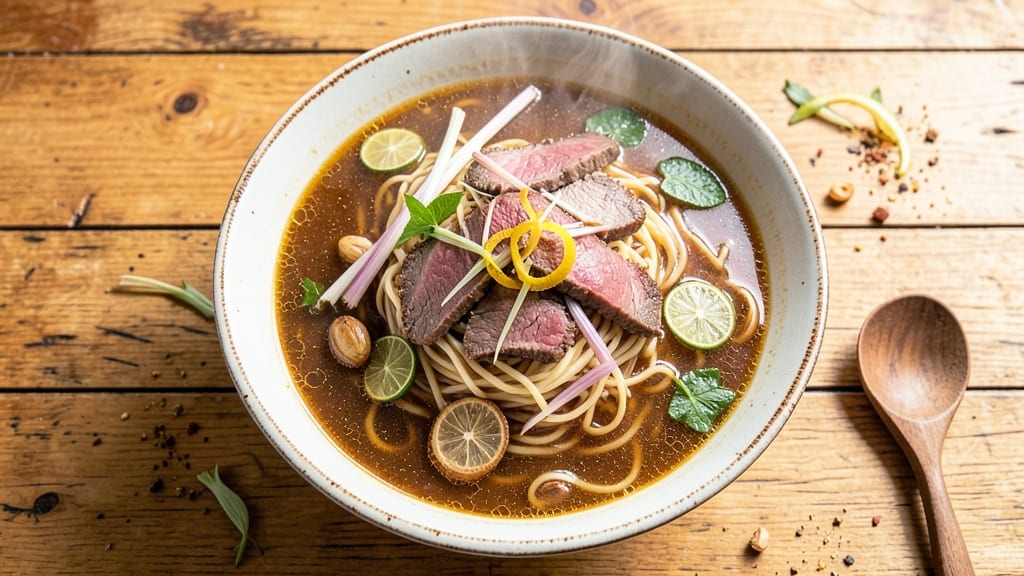
This authentic Thai beef noodle soup recipe delivers the fragrant, complex flavors of street-side Tom Yum and Tom Kha in your own kitchen.
The secret lies in the broth—where lemongrass, galangal, and kaffir lime leaves infuse the liquid with bright, citrusy depth that cuts through the richness of tender beef and chewy rice noodles.
I've perfected this over years of testing, balancing sour, spicy, and umami elements just as Thai chefs do, ensuring every spoonful transports you to Bangkok's bustling markets.
The process begins with building the aromatic base, where fresh herbs and spices simmer to release their oils and flavors. Thinly sliced beef cooks just until tender, absorbing the broth's essence, while rice noodles soak up the rich liquid for that signature silky texture.
What sets this apart is the careful layering of flavors—starting with a light broth that intensifies with each ingredient added, creating a harmonious balance rather than an overwhelming one.
What you'll end up with is a steaming bowl of restaurant-quality soup, where each component plays its part: tender beef, slippery noodles, and a broth so fragrant it makes your kitchen smell like a Thai street stall.
The garnishes—fresh herbs, lime wedges, and chili slices—let you adjust the heat and acidity to your preference, making this dish both authentic and personal.
Perfect for weeknight dinners or special occasions, this recipe scales beautifully and tastes even better the next day. The key to success lies in fresh ingredients and patience—letting the flavors develop slowly rather than rushing the process. Here's how to make it authentically delicious.
Ingredients for authentic thai beef noodle soup
Fresh herbs, tender beef, and fragrant broth—this is your Thai street stall in a bowl.
| Ingredient | Amount | Notes |
|---|---|---|
| Thinly Sliced Beef (Flank Steak or Sirloin) 🥩 | 1 lb | Cut against grain for tenderness |
| Rice Noodles (Flat or Round) 🍜 | 8 oz | Thin variety, dried or fresh |
| Lemongrass Stalks 🌿 | 3 whole | Bruised and cut into 2-inch pieces |
| Galangal (Thai Ginger) 🧅 | 3 oz | Peeled and sliced thinly |
| Kaffir Lime Leaves 🍋 | 4 whole | Torn into 2-inch pieces |
| Shallots 🧅 | 6 whole | Peeled and sliced thinly |
| Garlic Cloves 🧄 | 6 cloves | Peeled and smashed |
| Fish Sauce 🍶 | 2 tbsp | Red Boat preferred |
| Oyster Sauce 🍶 | 2 tbsp | For umami depth |
| Coconut Milk 🥥 | ½ cup | Full-fat for richness |
| Lime Juice 🍋 | ¼ cup | Freshly squeezed |
| Chicken or Beef Broth 💧 | 4 cups | Homemade preferred |
| Brown Sugar 🍬 | 1 tbsp | Lightly packed |
| White Peppercorns 🌶️ | ½ tsp | Freshly cracked |
| Bird's Eye Chilies 🔥 | 3 whole | Seeds removed for mild heat |
| Fresh Cilantro Leaves 🌿 | ¼ cup | Chopped for garnish |
| Thai Basil Leaves 🌿 | ¼ cup | For garnish |
| Vegetable Oil 🫒 | 2 tbsp | For high-heat cooking |
The aromatic base makes or breaks this soup. Lemongrass, galangal, and kaffir lime leaves are non-negotiable—skip them, and you're missing the soul of the dish. Asian markets carry all three, usually near the fresh herbs. Galangal looks like ginger but has a peppery kick—if you can't find it, ginger works in a pinch, though it's not the same. For lemongrass, grab the stalks with tight leaves (the woody outer stalks are best). The lime leaves? Tear them, don't chop—that releases more flavor. If you're feeling fancy, Thai Kitchen sells frozen galangal and lemongrass bundles that work fine, though fresh is always better.
No fish sauce? Soy sauce plus a splash of Worcestershire mimics the umami, though it won't be identical. Short on oyster sauce? Extra soy sauce plus a dash of sugar gets you close. Chilies too spicy? Remove seeds and membranes before slicing. The broth is where the magic happens—if you're using store-bought, low-sodium is key so you can control the salt. For extra depth, add a 1-inch piece of kombu seaweed while simmering (remove before serving). The beef should be thinly sliced against the grain—ask your butcher to do this if you're not comfortable. And trust me, don't overcook the noodles—they should be al dente when drained.
This soup tastes even better the next day as flavors meld. Store leftovers in the fridge for 3-4 days or freeze for up to 3 months. Reheat gently with a splash of water or broth to restore richness. The noodles reheat best if you toss them in a little oil first. For serving, keep the garnishes separate—let everyone customize their bowl with fresh herbs, lime, and chili. The broth alone keeps for 5 days in the fridge if you make extra—perfect for quick lunches. Just reheat and add fresh noodles and toppings.
Why You'll Love This Recipe
- No Fuss Prep: I swear by this recipe because the beef slices cook in minutes—no long marinating, no butchering. Just a quick sear in a hot wok, and you’re done. The galangal and lemongrass? Toss them in whole, bruise them slightly, and let the broth work its magic.
- Umami Bomb: That first sip of broth—chef’s kiss—herbal, slightly spicy, with a depth from the galangal and kaffir lime leaves. The beef stays tender but develops a caramelized edge that makes every bite worth it. Honestly, store-bought Thai soup mixes can’t compete.
- Weeknight to Dinner Party: Same recipe, different vibes. Toss it together for a lazy night with rice noodles and quick-pickled veggies, or dress it up with fresh herbs and lime for guests. The broth freezes beautifully, so I make double batches—no stress, just flavor.
- Budget-Friendly Leftovers: A pound of flank steak and a handful of aromatics stretch into three meals. The noodles cost pennies, and the broth only gets richer overnight. Between us, this is my go-to when I’m broke but refuse to eat sad food. (Yes, even on a Tuesday night.)
Step-by-step instructions for authentic Thai beef noodle soup
Here's how to build the fragrant, complex broth that defines this dish—layer by layer.
Prepare the Aromatics and Broth Base
Heat the 2 tablespoons vegetable oil in a large pot over medium-high heat. Add the 6 whole shallots and 6 cloves garlic cloves, cooking for 2-3 minutes until the shallots soften and turn translucent. Here's the thing—don't let them brown or they'll turn bitter.
Add the 3 whole lemongrass stalks (cut into 2-inch pieces), 3 oz galangal (sliced thinly), and 4 whole kaffir lime leaves (torn into 2-inch pieces). Stir for 1 minute until the galangal releases its citrusy aroma. Pour in the 4 cups chicken or beef broth and bring to a gentle boil. Reduce heat to medium-low and let it simmer uncovered for 15 minutes—this develops the aromatic base.
Build the Broth Flavor Layers
After the initial simmer, add the 1 tablespoon brown sugar, 0.5 teaspoon white peppercorns (cracked), and 3 whole bird's eye chilies (seeds removed). Stir once to combine, then let it simmer for another 10 minutes. You'll notice the broth deepening in color and smell—this is where the magic happens.
Add the 2 tablespoons fish sauce and 2 tablespoons oyster sauce, stirring to dissolve completely. Taste the broth—it should be rich but not overly salty. If it needs more balance, add 1 more tablespoon fish sauce or a pinch of sugar. The broth is the soul of this dish, so take your time here.
Cook the Beef to Perfect Tenderness
Increase heat to medium-high and add the 1 lb thinly sliced beef. Cook for 2-3 minutes, stirring gently, until the beef loses its raw appearance and turns opaque. Remove the beef with a slotted spoon and set aside. The broth should now be infused with all those aromatic flavors—this is your signal to move forward.
Stir in the 0.5 cup coconut milk and 0.25 cup lime juice, letting it simmer for 2 minutes to blend the flavors. Return the beef to the pot, along with any accumulated juices, and simmer for 1-2 minutes to heat through. The beef should be tender but still hold its shape—overcooking will make it mushy.
Prepare and Assemble the Noodles
While the broth simmers, prepare the 8 oz rice noodles according to package instructions—usually soaking in hot water for 5-8 minutes until pliable but still slightly firm. Drain and rinse briefly with cold water to stop the cooking process. Real talk: don't overcook them or they'll turn to mush in the broth.
Divide the noodles among 4 bowls. Ladle the hot beef broth over the noodles, making sure each bowl gets an even distribution of beef slices. The broth should coat the noodles completely—this creates that perfect al dente texture we're after.
Garnish and Serve Immediately
Top each bowl with 1 tablespoon chopped fresh cilantro leaves and 1 tablespoon Thai basil leaves. The contrast of fresh herbs against the rich broth is what makes this dish sing. Serve immediately while the noodles are hot and the broth is steaming—this soup doesn't wait.
I always serve this with a side of fresh lime wedges on the table. Each person can adjust the acidity to their preference—this personal touch makes it feel even more authentic. The first bite should deliver layers of lemongrass, galangal, and that perfect balance of salty, sweet, and spicy flavors.
Pro Tips For Making Authentic Thai Beef Noodle Soup
- CHAR THE BEEF FAST: High heat for 30 seconds max—any longer and it turns rubbery. I used to walk away to "let it sear," then came back to chewy disappointment. Keep the pan screaming hot and work quickly.
- SLICE GALANGAL THIN: A peeler works better than a knife for this—you’ll get even slices that release their flavor without bitterness. Thick chunks just sit there like stubborn guests at a party.
- DON’T OVERCOOK THE NOODLES: They’re done when they’re just tender, not mushy. Taste-test at 2 minutes, then drain immediately—overcooking turns them into soup glue. (Yes, I’ve learned this the hard way.)
- USE LEMONGRASS STALKS WISELY: Split them lengthwise and bruise the pale inner part with the side of your knife—this unlocks the citrusy oils without adding stringy bits. Discard the tough outer layers unless you enjoy chewing mystery fibers.
Serving suggestions for this recipe
Bowl Presentation
Start with a generous pile of rice noodles in each bowl—about 2 oz per serving—to create a sturdy base. Ladle the hot beef broth over the noodles, ensuring each slice of beef is visible.
The broth should coat the noodles completely but leave room for garnishes. I like to use wide, shallow bowls (like Homemade Goods ceramic bowls) to showcase the vibrant colors and textures. 🥣
Garnish Like a Pro
Fresh herbs are non-negotiable for that authentic touch. Sprinkle 1 tablespoon chopped cilantro and 1 tablespoon Thai basil over each bowl—cilantro for brightness, Thai basil for its anise-like sweetness. Add 2-3 thin slices of bird's eye chili (seeds removed) for heat and a few kaffir lime leaves for aroma.
For extra flair, drizzle with 1 teaspoon toasted sesame oil or a few drops of chili oil.
Serve with Sides
Pair your soup with a simple side of steamed jasmine rice (about ½ cup per person) to soak up any extra broth. For crunch, serve crispy fried shallots (available at Asian markets) or toasted cashews.
I also love adding a small bowl of pickled vegetables—like daikon and carrot—to cut through the richness. The contrast of textures and temperatures makes every bite exciting. 🍜
Customize for Guests
Set out small bowls of garnishes on the table so everyone can personalize their soup. Offer extra lime wedges, chili slices, and fresh herbs for adjusting heat and acidity.
For a modern twist, include crumbled fried shallots or crispy wonton strips for texture lovers. This interactive approach makes the dish feel special and inclusive. 💫
Broth for Second Helpings
Always make extra broth—it’s the star of the show! Store leftovers in the fridge for up to 5 days or freeze for 3 months. Reheat gently with a splash of water or broth to restore richness.
For quick lunches, serve the broth over fresh noodles with a sprinkle of herbs and lime. The first sip of reheated broth still tastes like a Thai street stall. ✨
Dessert Pairing
Balance the meal with a light, refreshing dessert like mango sticky rice or coconut rice pudding. The sweetness of ripe mango or coconut complements the savory-spicy notes of the soup.
For a modern touch, serve Thai-style black sesame cookies or lychee jelly with a cup of Thai iced tea. The contrast of flavors keeps the meal memorable. 🍍
Nutrition facts
Frequently asked questions
Why does authentic Thai beef noodle soup use galangal instead of ginger?
Galangal has a peppery, citrusy flavor that's completely different from ginger's warm, earthy taste. It's essential for that signature Thai aroma in the broth. If you can't find galangal, ginger works in a pinch, but the dish won't be as authentic—it'll taste more like a ginger-infused beef broth.
Can I make this soup vegetarian or vegan?
Swap the beef for mushrooms or tofu and use vegetable broth. Replace fish sauce with soy sauce plus a splash of coconut aminos and oyster sauce with mushroom sauce or extra soy sauce. The broth flavors will still shine, though the umami profile will be slightly different.
How do I adjust the spice level?
Start with seeds removed from bird's eye chilies for mild heat. For more spice, add extra whole chilies (seeds in) or a dash of chili flakes after serving. The broth's acidity from lime juice also helps balance heat—add more lime if you prefer tang over spice.
What's the best way to store leftovers?
Store the broth separately from noodles in airtight containers for up to 5 days in the fridge. Reheat broth gently, then add fresh noodles and garnishes. For freezing, freeze broth only (no noodles) for 3 months. The noodles reheat best if tossed in a little oil first.
Can I use dried lemongrass or ginger instead of fresh?
Fresh is always best, but if you must use dried, double the amount and steep it longer. Dried aromatics lose potency when dried. For lemongrass, the outer stalks are best—inner stalks are too fibrous. Galangal and kaffir lime leaves are harder to find dried, so fresh is ideal.