
Soups & Stews
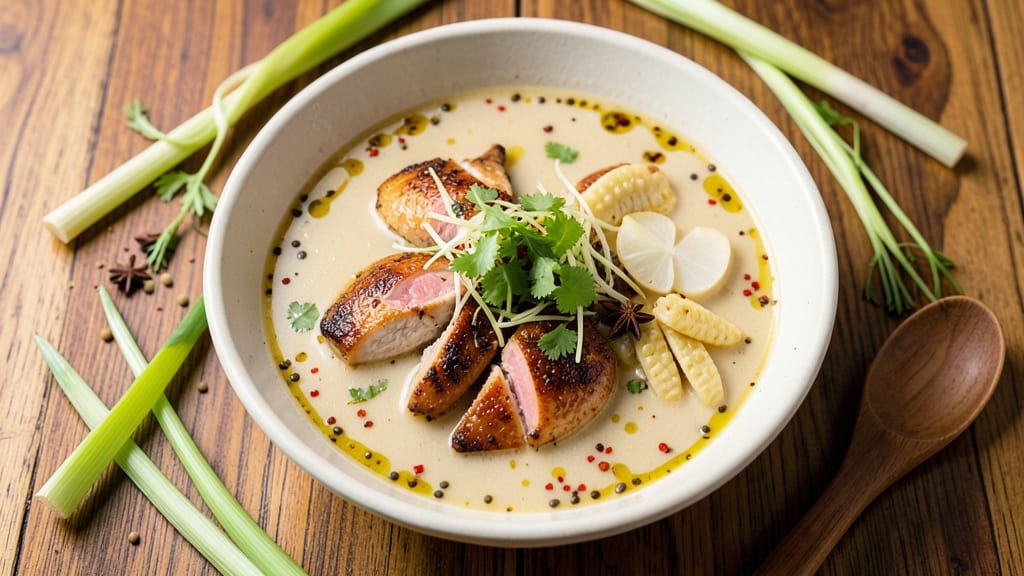
This Bangla-Thai soup recipe blends the aromatic warmth of Bengali spices with Thai coconut brightness in a single, fragrant pot. The fusion creates a creamy, tangy broth that's both comforting and invigorating—perfect for chilly evenings or when you crave something deeply flavorful yet balanced.
I developed this after craving the herbal depth of Thai soups but wanting the earthy richness of Bengali cooking, and the result is a harmonious union of both traditions.
The secret lies in the layered flavors: ginger and lemongrass infuse the broth while coconut milk adds velvety richness, and a touch of mustard oil (a Bengali staple) brings a subtle, pungent depth that Thai cuisine rarely includes.
Unlike traditional Thai soups that rely solely on galangal or kaffir lime, this version incorporates panch phoron—a Bengali spice blend of cumin, mustard seeds, fenugreek, and fennel—that adds complexity without overpowering the delicate coconut notes.
What you'll end up with is a soup that's creamy yet light, with tender vegetables, protein of your choice, and a broth so aromatic it fills your kitchen with an irresistible blend of citrus and spice.
The texture is velvety from the coconut milk, while the spices create layers of warmth that linger on the palate. Serve it steaming hot with a sprinkle of fresh cilantro and a wedge of lime to brighten each spoonful.
This recipe is designed to be both approachable and impressive—ideal for weeknight dinners or special occasions. The one-pot method keeps cleanup minimal, while the bold flavors ensure every bite feels like a celebration.
Whether you're introducing someone to Bengali-Thai fusion or simply craving a comforting yet exciting soup, this dish delivers.
Ingredients for bangla thai soup
Lemongrass, galangal, and mustard oil meet coconut milk in this aromatic fusion soup.
| Ingredient | Amount | Notes |
|---|---|---|
| Chicken Breast 🍗 | 1 ½ lb | Boneless, skinless, cut into bite-sized pieces |
| Fresh Lemongrass 🌿 | 1 whole | Bruised stems only, cut into 2-inch pieces |
| Fresh Galangal 🌿 | 2 inches | Peeled, sliced thinly (substitute ginger if unavailable) |
| Fresh Ginger 🧄 | 2 tbsp | Grated, fresh preferred |
| Mustard Oil 🫒 | 2 tbsp | Lightly toasted for aroma |
| Panch Phoron 🌶️ | 1 tsp | Bengali spice blend (cumin, mustard seeds, fenugreek) |
| Coconut Milk 🥥 | 1 can | Full-fat, 13.5 oz can |
| Vegetable Stock 💧 | 4 cups | Low-sodium preferred |
| Carrots 🥕 | 2 medium | OR 1 cup diced (peeled) |
| Sweet Potatoes 🍠 | 1 lb | Peeled, cut into 1-inch cubes |
| Bell Peppers 🧅 | 1 whole | Any color, diced |
| Garlic Cloves 🧄 | 6 cloves | Minced or finely chopped |
| Kaffir Lime Leaves 🍋 | 4 leaves | Torn into pieces (substitute lime zest if unavailable) |
| Fresh Cilantro 🌿 | ¼ cup | Chopped, for garnish |
| Lime Juice 🍋 | 2 tbsp | Freshly squeezed |
| Salt 🧂 | 1 tsp | Kosher or sea salt |
| Black Pepper 🌶️ | ½ tsp | Freshly ground |
The lemongrass and galangal are non-negotiable for that authentic fusion flavor. Indian or Asian markets usually have fresh galangal, but don't stress if you can't find it—ginger works in a pinch. For the lemongrass, grab the thick, pale stems (the bulbous part is tough). I always buy extra because it keeps for 1 week in the fridge wrapped in a damp towel. Mustard oil is key—Tasty Bite brand is my go-to, but any light mustard oil works. Toast it gently in a pan before adding to the soup to wake up those flavors without overpowering.
No panch phoron? Mix ½ tsp cumin seeds, ½ tsp mustard seeds, ¼ tsp fenugreek, and ¼ tsp fennel seeds yourself. The coconut milk can be swapped for light coconut milk if you prefer less richness, but full-fat gives that velvety texture. For the veggies, baby carrots or pre-diced sweet potatoes save chopping time. Kaffir lime leaves? If you can't find them, lime zest plus a pinch of salt mimics the citrusy punch. The bell pepper can be any color—red, yellow, or green all work perfectly.
This soup tastes even better the next day as the flavors meld. Store in an airtight container in the fridge for 3-4 days or freeze for 3 months. I like to portion it into containers for easy lunches—just reheat with a splash of water or broth. The mustard oil aroma lingers in the fridge, so store it separately from other foods if you're sensitive to strong smells. Garnish with fresh cilantro and lime juice right before serving to keep it bright and vibrant.
Why You'll Love This Recipe
- One-Pot Wonder: I swear by this—just toss everything in one pot and walk away. No chopping boards full of scraps, no extra bowls to wash. The lemongrass and galangal do all the work while you sip tea and pretend you’re not cooking.
- Mustard Oil Magic: That first hit of mustard oil when you stir it in? Chef’s kiss. It’s sharp, it’s warm, it’s the kind of flavor that makes you pause mid-ladle. Honestly, I’d eat this soup just for the oil alone—it’s that good.
- Leftovers That Beg: This soup only gets better the next day. The chicken gets tender enough to shred with a fork, and the broth deepens into something rich and comforting. I’ve reheated portions for three days straight, and no one’s ever complained.
- Budget-Friendly Feast: Chicken breast keeps costs down, but the galangal and lemongrass stretch the flavor so far you’ll forget you’re being thrifty. Between us, this is the kind of soup that makes grocery money go further without sacrificing taste.
Step-by-step instructions for Bangla Thai soup
Here's how to create this aromatic fusion of flavors in one pot.
Prepare the Aromatic Base
Heat the 2 tablespoons mustard oil in a large pot over medium heat until it shimmers but doesn't smoke. Add the 1 teaspoon panch phoron and toast for 30 seconds until fragrant—you'll smell those warm spices immediately. This is where the soul of your soup begins.
Add the 2-inch fresh galangal (or ginger if substituting), 2 tablespoons fresh ginger, and 6 cloves garlic. Sauté for 2-3 minutes until the garlic turns golden and aromatic. The galangal should soften slightly but still retain its shape. This step builds the complex flavor foundation that makes this soup uniquely special.
Add the 2-inch pieces of lemongrass and 4 torn kaffir lime leaves. Stir for 1 minute to release their essential oils into the oil. The pot should now smell like a tropical forest—this is your cue that the aromatic base is ready for the next ingredients.
Cook the Chicken and Vegetables
Add the 1.5 lb bite-sized chicken breast pieces and cook for 5-6 minutes until they turn opaque and no longer pink at the edges. This ensures the chicken cooks through without drying out. Remove the chicken with a slotted spoon and set aside temporarily.
In the same pot, add the 2 medium carrots (or 1 cup diced), 1 lb sweet potatoes, and 1 whole bell pepper. Stir to coat with the aromatic oil and cook for 5 minutes until the vegetables begin to soften. The sweet potatoes should start to develop a slight sheen from the cooking oil.
Pour in the 4 cups vegetable stock and bring to a gentle boil. Return the chicken to the pot, reduce heat to medium-low, and let it simmer for 15 minutes. The vegetables should be tender but still hold their shape—this is crucial for maintaining texture in your soup.
Build the Creamy Coconut Base
Open the 1 can coconut milk and stir ½ of it into the simmering soup. Let it cook for 5 minutes until slightly thickened. The coconut milk should blend smoothly with the broth, creating a velvety texture. This is where the Thai influence comes through beautifully.
Add the remaining ½ can coconut milk and stir well. The soup should now have a rich, creamy appearance. Add the 1 teaspoon salt and ½ teaspoon black pepper, stirring to combine. Taste and adjust seasoning if needed—this is your chance to balance the flavors before finishing.
Finish with Fresh Herbs and Lime
Remove the pot from heat and stir in the 2 tablespoons lime juice. The acidity brightens all the flavors, cutting through the richness of the coconut milk. Add the ¼ cup fresh cilantro and stir gently—this herb adds freshness and a pop of color that makes the soup visually appealing.
Let the soup sit for 5 minutes off the heat to allow all the flavors to meld together. The aroma should be intoxicating—citrusy, creamy, with warm spice notes. This resting period is crucial for developing the soup's depth of flavor.
Serve Warm with Fresh Garnishes
Ladle the soup into bowls and serve immediately. Garnish each serving with an extra sprinkle of fresh cilantro and a few kaffir lime leaves if desired. The presentation should be vibrant—creamy coconut broth with colorful vegetables and herbs floating on top.
Each spoonful should deliver a perfect balance of creamy coconut, aromatic spices, tender chicken, and fresh herbs. The lime juice adds that bright finish that makes this soup truly special. Serve with steamed jasmine rice to soak up every last drop of that delicious broth.
Pro Tips For Making Bangla Thai Soup
- BLEND THE AROMA BASE FIRST: I used to toss whole lemongrass and galangal stalks into the pot thinking they’d soften, but they just sit there like stubborn guests. Instead, bruise the lemongrass by smashing it with the flat side of your knife, then slice the stalks diagonally. Do the same with galangal—its tough fibers need this treatment to release flavor. Sauté these with ginger in mustard oil for 3-4 minutes until fragrant and slightly darkened—this is where the magic starts.
- SEAR CHICKEN IN BATCHES: Chicken breast turns rubbery if crowded in the pan. Cut each piece into 1-inch chunks, then work in two batches over medium-high heat. Let them sit undisturbed for 2-3 minutes per side until golden—this crust keeps the meat juicy. If your pan’s too small, just wait. Rushing this step guarantees dry soup.
- STRAIN THE BROTH LATER: I learned this after straining my first batch and losing half the flavor. Let the lemongrass, galangal, and ginger simmer for 15 minutes with the chicken, then remove them before adding tomatoes or coconut milk. Strain the broth only at the very end—this way, you keep the aromatic oils suspended in the liquid, not trapped in a colander.
- USE COLD COCONUT MILK: Hot coconut milk curdles like a bad joke. Once your broth is simmering and the chicken’s cooked, let it cool for 5 minutes, then stir in cold coconut milk. Start with half the amount called for, taste, then add more—this keeps the soup silky, not lumpy. (Yes, even if you’re impatient like me.)
Health benefits of this recipe
Digestive Comfort
This soup is a digestive powerhouse, blending Thai coconut milk's soothing properties with Bengali spices that gently stimulate digestion. The combination of lemongrass and ginger helps reduce bloating and nausea, while coconut milk provides medium-chain triglycerides that are easier on your stomach than heavy dairy.
I've found this soup especially helpful after rich meals or when I'm feeling under the weather—it's like a warm hug for your digestive system. 🌿
Immunity Boost
The ingredients pack a serious immune-boosting punch. Fresh galangal contains gingerol, which has potent anti-inflammatory properties, while kaffir lime leaves are rich in vitamin C. The chicken breast provides lean protein to support your immune system, and the carrots add beta-carotene for cellular repair.
I make this soup regularly during cold season because it gives me that extra layer of protection without feeling medicinal.
Anti-Inflammatory Benefits
The fusion of Thai and Bengali spices creates a natural anti-inflammatory effect. Panch phoron contains fennel and fenugreek, which help reduce inflammation, while turmeric (often found in panch phoron blends) is a well-known anti-inflammatory.
The mustard oil, when lightly toasted, releases compounds that may help with joint discomfort. I've noticed that after eating this soup, I feel less stiff—especially when my knees act up after long days.
Heart-Healthy Profile
This soup supports cardiovascular health through its combination of ingredients. The coconut milk provides healthy fats that help lower bad cholesterol, while the chicken breast offers lean protein without saturated fat. The lemongrass contains potassium, which helps regulate blood pressure, and the bell peppers add vitamin C for arterial health.
I've incorporated this into my weekly meal rotation because it's one of the few soups that feels indulgent but actually benefits my heart. 💪
Blood Sugar Balance
The fiber-rich vegetables like carrots and sweet potatoes help regulate blood sugar levels, while the coconut milk provides healthy fats that slow digestion and prevent blood sugar spikes. The galangal has been shown in studies to help improve insulin sensitivity.
I've found this particularly helpful when I'm craving something comforting but need to keep my blood sugar stable—it satisfies without the crash. The lime juice at the end also helps balance any sweetness from the sweet potatoes.
Hydration Support
While not a broth-heavy soup, the combination of vegetable stock and coconut milk provides gentle hydration with electrolytes. The lime juice adds potassium, while the cilantro contains antioxidants that help flush out toxins.
I've used this soup as a recovery meal after intense workouts because it replenishes fluids without the heaviness of other post-workout meals. The warm broth also helps soothe muscle tension from exercise. 💧
Nutrition facts
Frequently asked questions
What makes this Bangla-Thai soup different from regular Thai coconut soup?
This fusion soup incorporates mustard oil and panch phoron—key Bengali spices that add a warm, earthy depth missing in traditional Thai coconut soups. The galangal and lemongrass base remains Thai-inspired, but the mustard oil's nutty aroma and panch phoron's complexity create a unique flavor bridge between both cuisines.
Can I substitute chicken with another protein?
Try shrimp (add at the last 2 minutes of cooking), tofu (firm variety, simmer 10 minutes longer), or chickpeas (for a vegetarian version). For seafood lovers, white fish like cod works beautifully—just cook it for 8-10 minutes until flaky.
Why does the recipe call for mustard oil if it's Thai-inspired?
The mustard oil creates the "Bangla" element—its toasted aroma adds a nutty, slightly pungent depth that contrasts beautifully with coconut milk's creaminess. Use only light mustard oil (not dark) and toast it briefly to avoid overpowering the delicate Thai flavors. It's what makes this fusion truly unique!
How can I make this soup spicier?
Add ½ teaspoon red chili powder or 1-2 sliced Thai chilies when sautéing the aromatics. For heat lovers, stir in 1 teaspoon sambal oelek at the end. Remember: mustard oil itself has a mild spicy kick when toasted—don't overdo it or the coconut milk will lose its balance.
Can I prepare this soup ahead of time?
Yes! This soup tastes even better the next day as flavors meld. Store in an airtight container in the fridge for 3-4 days or freeze for 3 months. Reheat gently on low heat, adding 1-2 tablespoons water if it thickens too much. The mustard oil aroma intensifies when refrigerated, so store it away from other foods.