
Soups & Stews
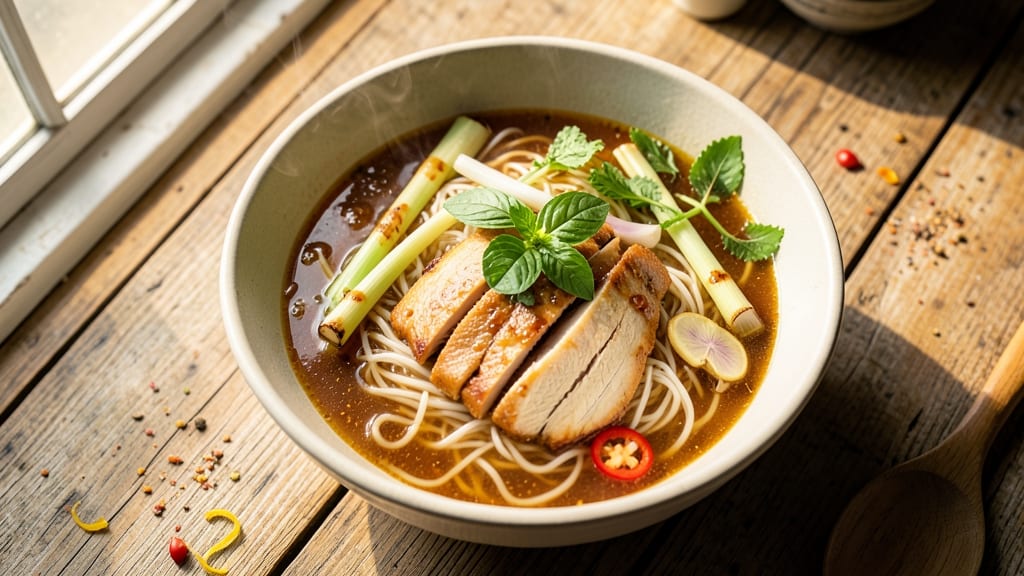
This authentic Thai chicken noodle soup recipe transports you straight to Bangkok with every fragrant, spice-balanced spoonful. The secret lies in the aromatic broth—lemongrass, galangal, and kaffir lime leaves create that signature Thai depth, while a perfect balance of heat, sourness, and umami transforms simple ingredients into something extraordinary.
I’ve perfected this recipe over years of testing, ensuring the broth stays rich without being heavy, and the noodles achieve that signature chewy texture.
The foundation of an authentic Thai noodle soup is patience—simmering the broth low and slow extracts maximum flavor from the herbs and spices. We’ll start with charring lemongrass and galangal for a smoky base, then build layers of complexity with fish sauce, lime juice, and a touch of palm sugar.
The chicken, poached in the broth, stays tender while absorbing those vibrant flavors, while rice noodles cook just right to hold up to the rich soup without turning mushy.
What makes this recipe truly special is the harmony of flavors: the bright citrus of kaffir lime, the earthy warmth of galangal, the savory umami from shrimp paste, and the subtle sweetness of palm sugar.
Each component plays its part—crisp Thai basil at the end adds freshness, while chili flakes let you adjust the heat to your preference. The result is a bowl that’s comforting yet invigorating, perfect for chilly evenings or whenever you crave a taste of Thailand.
This soup is more than a meal; it’s an experience. The aroma alone will have everyone gathering around the table, and the first sip delivers that perfect balance of warmth and brightness.
Whether you’re serving it to guests or treating yourself, the key is letting the flavors develop fully—no shortcuts here. Let’s get cooking, and prepare to be transported to the streets of Bangkok with every spoonful.
Ingredients for authentic thai chicken noodle soup
These aromatic ingredients transform simple pantry staples into Bangkok's most fragrant soup experience.
| Ingredient | Amount | Notes |
|---|---|---|
| Chicken Breast 🍗 | 1 ½ lb | Boneless, skinless, cut into bite-sized pieces |
| Lemongrass Stalks 🌿 | 3 whole | Fresh, tough outer leaves removed |
| Galangal Root 🍃 | 2 pieces | Fresh, peeled, cut into 1-inch chunks |
| Kaffir Lime Leaves 🍋 | 4 whole | Fresh, stems removed |
| Thai Fish Sauce 🐟 | ¼ cup | Red Boat brand preferred |
| Palm Sugar 🍯 | 2 tbsp | Or light brown sugar in a pinch |
| Shrimp Paste 🦐 | 1 tbsp | Kapi brand, strong aroma |
| Lime Juice 🍋 | ¼ cup | Freshly squeezed |
| Rice Noodles 🍜 | 8 oz | Flat or round, medium width |
| Thai Chili Flakes 🌶️ | 1 tsp | Adjust to taste |
| Thai Basil Leaves 🌿 | ¼ cup | Fresh, stems removed |
| Garlic Cloves 🧄 | 4 cloves | Fresh, minced |
| Shallots 🧅 | 3 whole | Peeled, sliced |
| Vegetable Oil 🫒 | 2 tbsp | For charring aromatics |
| Salt 🧂 | 1 tsp | Kosher or sea salt |
Lemongrass and galangal are the soul of this soup—fresh is non-negotiable. Hit up an Asian market for the best quality, or check the produce section of Whole Foods or H-Mart for stalks with vibrant green leaves. Galangal should smell citrusy and earthy; if it's musty, skip it. Kaffir lime leaves? Thai or Vietnamese markets usually have them in the freezer section, but if you can't find them, doubled lime zest works in a pinch. The shrimp paste is where that signature umami comes from—Kapi brand is the gold standard, but any good-quality paste will do. For the lemongrass, bruise the stalks gently before cutting to release more flavor.
No fish sauce? Soy sauce with a splash of Worcestershire mimics the umami, though it won't be identical. Running short on palm sugar? Light brown sugar or coconut sugar both work, but palm sugar's molasses notes are what you're really chasing. Fresh Thai basil is a game-changer—if you can't find it, Italian basil with a pinch of anise gets you close. The rice noodles should be labeled 'sen lek' or 'sen yai' for that perfect chewy texture; Thai Kitchen brand is widely available. For the aromatics, charring them in oil unlocks deeper flavors—don't skip this step, even if it means dirtying an extra pan.
This soup tastes even better the next day as flavors meld. Store leftovers in airtight containers for up to 3 days in the fridge, or freeze for 3 months. The broth reduces as it cools, so add a splash of water or chicken stock when reheating. For serving, keep the Thai basil and chili flakes separate so everyone can adjust to taste. The noodles reheat beautifully—just cover them with hot broth and let them soak for 5 minutes. Make a double batch; it disappears fast when the aroma hits the house.
Why You'll Love This Recipe
- One-Pot Magic: I swear by this recipe because it’s actually one-pot—no chopping boards full of mess. Toss the chicken, lemongrass, and galangal into the pot, let it simmer, then add the noodles at the end. The broth builds flavor while you prep the rest, and cleanup? Just a quick rinse.
- Umami Bomb: That first sip of broth—chef’s kiss. The galangal and kaffir lime leaves give it a bright, citrusy depth, while the Thai fish sauce ties everything together with this unmistakable savory punch. Honestly, it’s the kind of flavor that makes you pause mid-slurp to appreciate it.
- Budget-Friendly Powerhouse: A whole chicken breast and a handful of aromatic veggies stretch into four hearty servings—no wasted ingredients here. The galangal and lime leaves might seem fancy, but they’re cheap staples once you stock them, and the fish sauce? A little goes a long way. My wallet and my freezer thank me.
Step-by-step instructions for authentic Thai chicken noodle soup
Here's how to build this fragrant, balanced soup that captures Thailand's soul in every spoonful.
Build the Aromatic Base
Heat the 2 tablespoons vegetable oil in a large pot over medium-high heat until shimmering. Add the 3 sliced shallots and cook for 2 minutes until they begin to soften and develop color. This is where the magic starts—don't rush this step.
Add the 4 minced garlic cloves and 2 pieces galangal root (cut into 1-inch chunks), stirring constantly for 30 seconds until fragrant. The galangal will release its peppery aroma—this is your signal to add the 3 whole lemongrass stalks (tough outer leaves removed) and 4 whole kaffir lime leaves. Let everything sizzle together for 1 minute until you smell that complex citrus-herb bouquet.
Char and Infuse the Shrimp Paste
Push the aromatics to one side of the pot and add the 1 tablespoon shrimp paste to the empty space. Let it char for 30 seconds until it develops a deep, nutty aroma—this is essential for authentic flavor. Stir everything together for 1 minute to distribute the shrimp paste evenly.
Here's where it gets intense: add the 1.5 lb chicken breast (cut into bite-sized pieces) and cook for 3-4 minutes until the chicken develops a light golden crust. You're not fully cooking the chicken yet—just creating texture. Remove the chicken with a slotted spoon and set aside temporarily.
Balance the Broth
Return the pot to medium heat and add 4 cups water. Stir in the 2 tablespoons palm sugar and 1 teaspoon salt, letting the sugar dissolve completely. The broth should taste subtly sweet and properly seasoned at this stage—this is your baseline before adding the more complex flavors.
Bring to a gentle simmer, then add the reserved chicken back to the pot. Let it cook for 10-12 minutes until the chicken is fully cooked through and the broth has absorbed all the aromatic flavors. You'll notice the lemongrass and kaffir lime leaves infusing the liquid with their signature citrusy notes.
Finish with Tangy Heat
Strain the broth through a fine-mesh sieve into a clean pot, pressing gently on the solids to extract maximum flavor. Discard the lemongrass and kaffir lime leaves—you've already extracted their essence. Return the broth to medium heat and add the 0.25 cup Thai fish sauce and 1 teaspoon Thai chili flakes, stirring constantly.
Taste and adjust the balance—you want a harmonious blend of salty, sweet, sour, and spicy. The fish sauce should enhance the umami, while the chili adds just enough heat. For the final touch, stir in the 0.25 cup lime juice—this brightens the entire soup and cuts through the richness.
Assemble and Serve
Bring the broth back to a gentle simmer, then add the 8 oz rice noodles and cook for 3-4 minutes until they're tender but still have a slight bite. The noodles should absorb the broth beautifully, creating that signature silky texture.
Divide the noodles among bowls and ladle the hot broth over the top. Garnish each serving with 0.25 cup Thai basil leaves and serve immediately. The basil should be added fresh at the table—its aroma will make the soup sing even more when it's still warm. Each spoonful should deliver that perfect balance of aromatic broth, tender chicken, and chewy noodles.
Pro Tips For Making Authentic Thai Chicken Noodle Soup
- CHARGE THE BROTH FIRST: Skip the chicken until the aromatics are screaming. Slice galangal and lemongrass into thick coins, then pound them lightly with a mortar or knife—this releases oils faster. Simmer these in water with a pinch of salt for 10 minutes before adding chicken, or your broth will taste like it’s missing its soul. (Yes, even if you’re impatient like me.)
- SALT THE WATER LIKE IT’S THE SOUP: Thai soups need bold flavor from the start—don’t wait until the end. Salt your broth water aggressively (about 1.5 tsp per liter) before adding chicken, then adjust later. Unsalted broth? Add 2 tsp salt per liter upfront. I learned this the hard way when my first batch tasted bland no matter how much fish sauce I dumped in later.
- DON’T BOIL THE CHICKEN: Poaching chicken in rolling boil turns it rubbery. Once your broth hits a gentle simmer (tiny bubbles, not a frenzy), add chicken and keep the heat at the lowest setting that maintains movement. A thermometer helps—aim for 165°F (74°C) internal temp. I used to rush this, and the chicken would fall apart when shredded. Patience here makes all the difference.
- USE FISH SAUCE LAST: Fish sauce is the flavor bomb, but add it in two stages: half when the broth is nearly done, the rest right before serving. This prevents overpowering the broth’s delicate balance of galangal and lime. I was skeptical until I tried it—now I can’t imagine doing it any other way. Taste as you go; you can always add more, but you can’t take it out.
Regional styles of authentic thai chicken noodle soup
Bangkok Street Style
This is the version you’ll find at Bangkok’s famous street stalls like Jay Fai—bold, aromatic, and packed with layers. The key difference is the shrimp paste is toasted until it’s almost blackened, creating a smoky depth that’s essential.
I like to add 1 extra tablespoon of shrimp paste here and let it char for 45 seconds instead of 30.
Serve it with extra lime wedges on the side so everyone can squeeze fresh juice into their bowls—this is what makes it taste like you’re standing on a Bangkok street at midnight. 🌶️
Northern Thai Style
Up in Chiang Mai, they take their noodle soups seriously—this version swaps rice noodles for wide rice stick noodles (like sen yai) and adds fermented soybean paste for extra umami.
I use 1 tablespoon of taokwa (tofu skin) along with the shrimp paste, and replace the fish sauce with 1 tablespoon of soy sauce. The broth gets a touch of dried chili flakes (soak them in warm water first) instead of fresh chili flakes for a deeper, earthier heat.
Garnish with cilantro instead of Thai basil for a fresher finish. ✨
Southern Thai Fusion
In the south, they love their soups with a sweet-spicy kick, so this version incorporates red curry paste into the broth. Add 1 tablespoon of red curry paste (like Maesri) when you char the shrimp paste, and stir in 1 extra tablespoon of palm sugar at the end.
The noodles here are egg noodles instead of rice noodles, and the soup is topped with crushed peanuts and Thai chili jam for a sweet-spicy contrast. This is the version you’d find in Phuket or Krabi—rich, complex, and deeply satisfying. 🌟
Central Thai Home Version
This is the homestyle version you’d find in a Bangkok family kitchen—simpler but no less flavorful.
The broth uses less fish sauce (just 2 tablespoons instead of ¼ cup) and skips the shrimp paste, relying instead on extra garlic (add 2 extra cloves) and 1 teaspoon of soy sauce for umami.
The noodles are thin rice noodles, and the soup is finished with a splash of coconut milk (just 2 tablespoons) for a creamier texture. It’s lighter but still packed with the same aromatic depth—perfect for a cozy night in. 💛
Isaan-Inspired Spicy Kick
Isaan, Thailand’s northeastern region, is famous for its fiery, herb-forward cuisine. For this version, add 1 tablespoon of Isaan-style chili powder (like Nam Prik Pao) when you char the shrimp paste, and stir in 1 extra tablespoon of lime juice at the end.
The noodles here are wide rice noodles, and the soup is topped with fresh bird’s eye chilies and extra Thai basil. For a true Isaan touch, add 1 tablespoon of fermented soybean paste (like tauco) to the broth for a funky, savory depth.
This is the version that’ll make your eyes water—but in the best way. 🔥
Nutrition facts
Frequently asked questions
Can I substitute galangal if I can't find it?
Yes! Galangal is the heart of the flavor, but you can substitute 2 tablespoons of fresh ginger plus 1 tablespoon of lime zest for a similar peppery, citrusy kick. For a closer match, try 1 small piece of ginger and 1 teaspoon of ground coriander. The aroma won't be identical, but it'll still deliver that essential earthy depth.
How do I make this soup less spicy?
Adjust the heat by reducing the Thai chili flakes to ½ teaspoon or omitting them entirely. For extra mildness, add 1 extra tablespoon of palm sugar—it balances the heat naturally. If you prefer a touch of spice but want control, serve the chili flakes on the side so everyone can add their own.
Can I prepare this soup ahead of time?
The broth tastes even better the next day as flavors meld. Store it in airtight containers for up to 3 days in the fridge. Reheat gently, adding a splash of water or chicken stock if the broth has reduced too much. For the noodles, cook them fresh when serving—just add them to hot broth for 3-4 minutes before eating.
What's the best way to store leftover noodles?
Rinse cooked noodles under cold water to stop cooking, then drain well. Store them in airtight containers with a paper towel pressed between layers to absorb moisture. They'll keep for 2 days in the fridge. To reheat, soak in hot broth for 5 minutes—they'll soften without turning mushy.
Why does my broth taste weak or bland?
Most likely, the aromatics didn't infuse long enough. Simmer the broth uncovered for an extra 10-15 minutes to concentrate flavors. Also check your fish sauce—use Red Boat brand for authentic umami. If the broth tastes flat, add 1 extra tablespoon of shrimp paste (toasted) or ½ teaspoon of MSG for depth.