
Soups & Stews
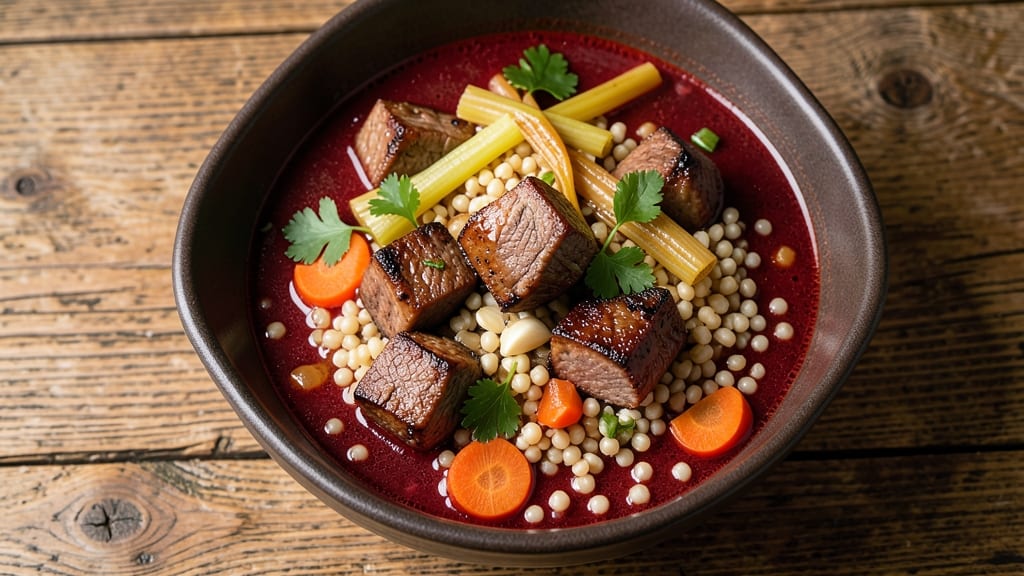
This 5-star beef barley soup recipe transforms humble ingredients into a deeply satisfying bowl of slow-simmered comfort. The secret lies in properly browning the beef—creating a rich, caramelized foundation that builds into layers of savory depth as it simmers for hours.
I developed this version after years of testing, ensuring the barley remains chewy and the broth develops that perfect balance of meaty richness and herbal brightness.
The process begins with searing beef chuck in batches to maximize flavor, then deglazing the pot to capture every browned bit. After simmering with aromatic vegetables and herbs, you add the barley to cook just until tender—never mushy.
The result is a soup so hearty it feels like a hug on a cold day, with each spoonful delivering tender beef, nutty barley, and a broth so flavorful you'll want to sip it straight from the pot.
What sets this recipe apart is the attention to detail in seasoning—just enough black pepper to add bite, a touch of Worcestershire for umami depth, and fresh thyme that infuses the broth with aromatic warmth.
The slow cooking transforms tough cuts into melt-in-your-mouth beef while developing a complexity that rivals restaurant versions. Serve with crusty bread to soak up every last drop of that golden, velvety broth.
Optional garnishes like fresh parsley, a drizzle of high-quality olive oil, or toasted croutons elevate the presentation without overpowering the natural flavors. This is the kind of soup that improves with leftovers, making it perfect for meal prep or feeding a crowd.
Let's create a bowl that earns its five-star rating.
Ingredients for 5 star beef barley soup
Sixteen ingredients, simmered slow for restaurant-quality beef barley soup perfection.
| Ingredient | Amount | Notes |
|---|---|---|
| Beef Chuck Roast 🥩 | 2 lb | Cut into 1-inch cubes, trimmed of fat |
| Pearl Barley 🌾 | 1 cup | Rinsed thoroughly before cooking |
| Yellow Onion 🧅 | 1 whole | Medium size, chopped |
| Carrot 🥕 | 4 whole | Medium size, peeled and sliced |
| Celery Stalks 🌿 | 4 whole | Trimmed and chopped |
| Garlic Cloves 🧄 | 6 cloves | Peeled and smashed |
| Fresh Thyme 🌿 | ¼ cup | Leaves only, stems removed |
| Bay Leaves 🍃 | 2 whole | Dried, standard size |
| Beef Broth 💧 | 6 cups | Low-sodium preferred |
| Red Wine 🍷 | 1 cup | Dry, bold variety |
| Tomato Paste 🍅 | 2 tbsp | Smooth, no sugar added |
| Worcestershire Sauce 🍯 | 1 tbsp | Vegetarian if needed |
| Black Peppercorns 🌶️ | 1 tsp | Freshly cracked |
| Salt 🧂 | 1 ½ tsp | Kosher or sea salt |
| Olive Oil 🫒 | 2 tbsp | Extra-virgin for browning |
| Fresh Parsley 🌿 | 0.1 cup | Chopped for garnish |
The beef chuck is non-negotiable—look for well-marbled cuts at Whole Foods or your local butcher. Costco often has pre-cut chuck at a great price, but if buying whole, ask for it to be cubed for you. Fresh thyme and bay leaves elevate the broth's complexity, so don't skimp. For the barley, pearl barley is essential—it holds its shape better than steel-cut. If your grocery store doesn't carry it, check the bulk section or order online. The red wine should be dry and bold—Cabernet Sauvignon or Merlot work perfectly.
No beef broth? Substitute with water plus 2 tbsp soy sauce for umami depth. Fresh thyme unavailable? Dried thyme at one-third the amount works, though fresh is ideal. The tomato paste can be swapped for 1 cup crushed tomatoes if preferred. For a vegetarian version, replace Worcestershire with 1 tbsp soy sauce plus 1 tsp balsamic vinegar. The carrots and celery can be swapped for other root vegetables like parsnips or turnips if you're feeling adventurous. Just ensure they're chopped uniformly for even cooking.
This soup tastes even better the next day, so make a double batch for leftovers. Store in airtight containers in the fridge for up to 5 days or freeze for 3 months. For meal prep, portion into individual containers—each serving will reheat beautifully. The barley should be tender but still hold its shape. If using frozen beef, thaw it completely before browning to ensure even cooking. The parsley garnish adds freshness, but it's optional if you're serving immediately.
Why You'll Love This Recipe
- Slow-Cooker Magic: I swear by the set-it-and-forget-it approach—just sear the beef chuck roast, toss everything in the slow cooker, and let it work its flavor by lunchtime. No chopping, no stress, just hands-off richness that builds all day.
- Rich, Deep Umami Bomb: That beef chuck roast? It melts into tender, shatterable perfection, while the barley soaks up all the savory broth. Honestly, the way the onions caramelize into the mix—it’s like a slow dance of flavor you can’t resist.
- Meal Prep MVP: Between us, this soup only gets better after day two. I make a double batch on Sundays, and by Wednesday, it’s the star of my lunchbox. The barley holds up, the beef stays juicy, and I’m not stuck deciding what to eat.
- Budget-Friendly Powerhouse: A pound of chuck roast and a bag of barley stretch across five meals for my family. No fancy cuts, no waste—just hearty, satisfying bowls that make grocery day feel like a win. Plus, the veggies (onion, carrot, celery) are the holy trinity of cheap, flavor-packed staples.
Step-by-step instructions for slow-simmered beef barley soup
Master this restaurant-worthy technique for deeply flavorful soup with perfectly chewy barley.
Brown the Beef Chuck Roast for Maximum Flavor
Heat the 2 tablespoons olive oil in a large Dutch oven over medium-high heat. Working in batches if needed, add the 2 lb Beef Chuck Roast cut into 1-inch cubes and brown on all sides. This step creates the rich, caramelized foundation for your soup. Let each piece sear for 3-4 minutes until deeply browned—don't rush this, as the Maillard reaction develops those deep meaty flavors.
Once all beef is browned, transfer it to a plate. You'll notice the pan has beautiful browned bits stuck to the bottom—these are pure flavor. Don't scrape them out yet; we'll use them to build the soup's depth. Here's the thing—if you skip browning, your soup will taste more like broth than the rich, hearty dish we're making.
Sauté the Vegetable Base for Aromatic Depth
In the same Dutch oven (with those precious browned bits), add the 1 whole Yellow Onion chopped, 4 whole Carrot sliced, and 4 whole Celery Stalks chopped. Cook over medium heat for 8-10 minutes, stirring occasionally, until the vegetables soften and the onion becomes translucent. This step develops the soup's aromatic foundation.
Add the 6 cloves Garlic Cloves smashed and the 0.25 cup Fresh Thyme leaves. Cook for another 2 minutes until fragrant—you should smell that fresh thyme aroma filling your kitchen. This is where the flavors meld together. If the vegetables start to stick, add 1 tablespoon water to deglaze, but try to avoid this as it dilutes the flavor.
Deglaze and Build the Rich Broth Base
Pour in the 1 cup Red Wine and scrape up all those browned bits from the bottom of the pan. Let it simmer for 3-4 minutes until the wine reduces by half and its alcohol burns off. This deglazing step captures all the meaty flavors we browned earlier. Next, stir in the 2 tablespoons Tomato Paste and 1 tablespoon Worcestershire Sauce, cooking for another 1 minute to blend these flavors into the base.
Add the 6 cups Beef Broth, 2 whole Bay Leaves, 1 teaspoon Black Peppercorns, and 1.5 teaspoons Salt. Bring to a gentle boil, then reduce heat to low and return the browned beef to the pot. The broth should just barely simmer—this low-and-slow approach prevents the barley from becoming mushy and allows all the flavors to develop properly.
Simmer Until Beef is Tender and Barley is Chewy
Cover the Dutch oven and let the soup simmer gently for 2.5-3 hours. This long cooking time is crucial—it breaks down the tough beef chuck into tender, fork-tender pieces while allowing the barley to develop its characteristic chewy texture. Check occasionally and add ½ cup water if the soup gets too thick, but aim to keep it at a gentle simmer.
About 45 minutes before the soup is done, add the 1 cup Pearl Barley that has been rinsed thoroughly. The barley needs this time to absorb the flavors and develop its signature texture. You'll know it's ready when the beef easily pulls apart with a fork and the barley has a pleasant chewiness—neither mushy nor hard.
Finish and Garnish for Restaurant-Quality Presentation
Remove the 2 whole Bay Leaves and discard them. Taste the soup and adjust seasoning if needed—you might need a bit more salt or pepper to balance all the flavors. The soup should be rich, hearty, and deeply flavorful with each component (beef, barley, vegetables) clearly identifiable.
Ladle the soup into bowls and garnish each serving with 0.1 cup Fresh Parsley chopped. The parsley adds a fresh contrast to the rich, meaty flavors. Serve immediately with crusty bread to soak up every last drop of that flavorful broth. This isn't just soup—it's a comforting, restaurant-quality meal that will impress anyone who tries it.
Pro Tips For Making 5 Star Beef Barley Soup
- Sear the Chuck Roast Hard: That beef won’t just melt—it’ll caramelize if you hit it with a screaming-hot pan and leave those brown crusts alone for 3-4 minutes per side. I used to rush this, and the soup always tasted flat. Now? The depth of flavor makes the barley sing.
- Soak the Barley First: Pearl barley swells up like a sponge—skip the soak, and you’ll end up with chewy rocks instead of tender grains. Toss it in cold water for 30 minutes before adding to the pot. (Yes, even if you’re impatient like me.)
- Don’t Crowd the Pot: Dump everything in at once, and the onions and carrots will steam instead of caramelize. Brown the veggies in batches—onions first, then carrots and celery—so they actually develop flavor before the broth takes over.
- Use a Dutch Oven: This isn’t the prettiest method, but it’s the tastiest. A heavy pot keeps the temperature steady, so the beef stays tender and the barley cooks evenly without burning. (Your future self will thank you.)
Storing and reheating this recipe
Refrigerator Storage
Let your beef barley soup cool completely before transferring to airtight glass containers—I love using Pyrex with snap-on lids for easy stacking. Store in the fridge at 40°F or below for up to 5 days, though the flavors actually deepen overnight as the barley absorbs more broth.
The key is to press plastic wrap directly on the surface before sealing to prevent a skin from forming. 🥣
Freezer Preparation
For long-term storage, portion the soup into freezer-safe containers (glass or BPA-free plastic) or quart-sized freezer bags, leaving 1-inch headspace for expansion. Seal tightly to prevent freezer burn, and label with the date.
This soup freezes beautifully for up to 3 months, with the barley maintaining its chewy texture when properly thawed. I recommend freezing in single-serving portions for easy reheating later. ❄️
Thawing Methods
For fridge thawing, transfer the soup to the refrigerator 24 hours before serving. If you're short on time, place the sealed container in cold water and change the water every 30 minutes until thawed.
Never microwave frozen soup directly—this creates uneven heating and can turn the barley mushy. Instead, use the cold water bath method for even thawing. 💧
Stovetop Reheating
This is my preferred method because it restores the soup's texture perfectly. Transfer the desired portions to a heavy-bottomed pot and heat over medium-low heat for 10-15 minutes, stirring occasionally. Add 2-3 tablespoons of water or beef broth if the soup looks too thick.
The gentle heat prevents the barley from breaking down, and you can adjust seasoning at the end. 🔥
Microwave Reheating
For quick meals, microwave individual portions in microwave-safe containers on 50% power for 3-4 minutes, stirring halfway through. Add a splash of water if needed, then let sit for 1 minute before serving.
The microwave method works best for single servings and is perfect when you're in a hurry. Just avoid reheating to boiling, as this can make the barley overly soft. ✨
Leftovers Enhancement
Your soup will taste even better the next day! The barley continues to absorb flavors, and the meat becomes more tender. I like to add a dash of fresh thyme or a squeeze of lemon juice when reheating for extra brightness.
For a restaurant-style touch, top with toasted croutons or a drizzle of high-quality olive oil before serving. 💡
Nutrition facts
Frequently asked questions
Why does this recipe call for beef chuck instead of a leaner cut?
The beef chuck is perfect because it's well-marbled with fat, which melts during cooking and creates a rich, velvety broth. Lean cuts like sirloin won't develop the same depth of flavor. The long simmering time breaks down the connective tissue, making the beef incredibly tender without needing expensive cuts.
Can I substitute pearl barley for another type?
Pearl barley is ideal for its chewy texture, but you can use wheat berries or bulgur wheat in a pinch. Steel-cut oats won't work—they're too dense and won't cook properly in the same timeframe. If using a substitute, reduce cooking time by 15-20 minutes and check for doneness earlier.
How do I know when the barley is perfectly cooked?
The barley should be tender but still hold its shape—think al dente pasta. Test by tasting a piece: it should be soft but not mushy. If you're unsure, cook for 45 minutes after adding the barley (total simmer time around 3 hours), then check. Overcooking turns it to mush, which ruins the texture.
What's the best way to make this soup in a slow cooker?
Brown the beef and sauté the vegetables as directed, then transfer everything to a 6-quart slow cooker. Add remaining ingredients and cook on low for 8 hours or high for 5 hours. The barley may need 15 extra minutes of cooking time—check for doneness before serving. The slow cooker method is perfect for hands-off preparation!
Can I make this soup vegetarian?
Yes! Replace the beef with mushrooms or lentils for protein. Use vegetable broth instead of beef broth and swap Worcestershire for soy sauce + balsamic vinegar. The umami depth will still shine through. For extra richness, add a splash of red wine or a spoonful of miso paste during cooking.