
Soups & Stews
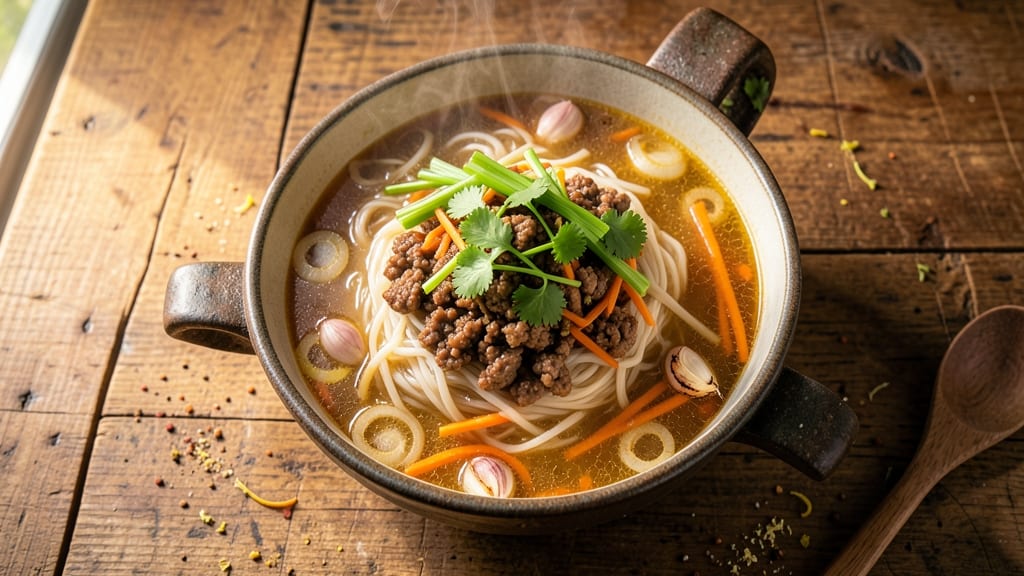
This Korean army soup recipe delivers the ultimate comfort in a single pot—crispy celery crowns floating over rich, savory rice noodles and a spice-packed broth. 🔥 The secret lies in balancing umami, heat, and texture, transforming simple ingredients into a hearty, one-bowl meal that’s become a global favorite.
I’ve perfected the technique to ensure every bite delivers that signature crunch and depth of flavor.
The magic happens in the simmering process, where ramen noodles, ground meat, and an array of vegetables meld into a fragrant, slightly spicy broth. The celery crowns get their signature crispiness from a quick fry at the end, adding a satisfying contrast to the soft noodles and tender vegetables.
This dish is designed for bold flavors—spicy, savory, and deeply umami—without requiring any fancy techniques.
What you’ll end up with is a steaming bowl of crispy-topped army soup that’s perfect for feeding a crowd or meal prepping for the week. The broth is rich and aromatic, the noodles are perfectly chewy, and the celery crowns add a delightful crunch that keeps everyone reaching for seconds.
It’s the kind of meal that feels indulgent yet simple to make.
Whether you’re making it for a cozy night in or a gathering with friends, this recipe is versatile enough to adapt—add extra vegetables for a lighter version or swap in plant-based protein for a vegetarian twist. Let’s get cooking!
Ingredients for army soup korean
Sixteen ingredients transform into a steaming bowl of crispy celery crowns and savory noodles.
| Ingredient | Amount | Notes |
|---|---|---|
| Ground Pork 🐷 | 1 ½ lb | Lean ground pork preferred |
| Rice Noodles 🍜 | 12 oz | Medium-width, dry type |
| Celery Stems 🧅 | 6 whole | Thick, crisp stems only |
| Carrots 🥕 | 3 whole | Medium, peeled and sliced |
| Onion 🧅 | 1 whole | Yellow, sliced into half-moons |
| Garlic Cloves 🧄 | 6 cloves | Freshly minced for depth |
| Fresh Ginger 🌿 | 1 ½ tbsp | Finely grated, aromatic |
| Gochujang Paste 🌶️ | 2 tbsp | Korean fermented chili paste |
| Soy Sauce 🥫 | 3 tbsp | Light or all-purpose |
| Sesame Oil 🫒 | 1 tbsp | Toasted for nutty aroma |
| Vegetable Oil 🫒 | ½ cup | For crisping celery crowns |
| Green Onions 🧅 | 4 whole | Sliced, for garnish |
| Salt 🧂 | 1 ½ tsp | Diamond Crystal preferred |
| Black Pepper 🌶️ | ½ tsp | Freshly cracked |
| Chicken Broth 💧 | 6 cups | Low-sodium preferred |
The celery crowns are non-negotiable for texture—look for thick, crisp stems at the grocery store's produce section. Whole Foods or Trader Joe's usually carry the thickest varieties, but any well-stocked supermarket will work. The ginger and garlic should be freshly grated and minced, respectively, for maximum aromatic impact. For the gochujang, Maesil Chunjang is my go-to brand—it delivers that perfect balance of sweet, spicy, and umami. If you can't find it, any quality Korean chili paste will suffice, just taste first to adjust heat levels.
No gochujang? Substitute 1 tbsp sriracha plus 1 tbsp honey for heat and sweetness, though you'll lose some depth. Running low on sesame oil? Toast 1 tsp sesame seeds in a dry pan and grind them into a paste with a pinch of salt. The rice noodles can be swapped for udon or ramen noodles if needed, but they won't have the same delicate texture. For a vegetarian version, replace the ground pork with crumbled tofu or mushrooms, and use vegetable broth instead of chicken broth. The celery crowns can be prepped ahead—just store them in water in the fridge until ready to fry.
This soup keeps beautifully for 4-5 days in the fridge, with flavors deepening over time. The noodles soften as they sit, so I recommend reheating with a splash of water. For crispy celery crowns, fry them fresh before serving—they lose crispness within 10 minutes. Portion the broth separately if meal prepping, as it reheats better alone. Freeze the broth component for up to 3 months—just thaw and reheat before adding the noodles and vegetables.
Why You'll Love This Recipe
- One-Pot Magic: I swear by this recipe when I’m too tired to wash a million dishes. The pork browns right in the pot with onions, celery, and carrots—no extra pans, no fuss. Just stir, simmer, and serve.
- Umami Bomb: That crispy pork ground into the broth? Absolute flavor gold. The celery and carrots add a satisfying crunch, while the rice noodles soak up every last bit of savory goodness.
- Lunchbox Hero: I pack this cold the next day—no reheating needed—and it’s still delicious. The noodles stay tender, and the pork holds its shape. Perfect for work lunches or school lunches (my kid actually eats it).
- Budget Winner: Ground pork stretches far, and the veggies are cheap but pack serious flavor. A big pot feeds four for under $10, and leftovers taste just as good the third day. My wallet and my family thank me every time.
Step-by-step instructions for army soup Korean recipe
Here's how to create the signature crispy celery crowns and rich, savory broth that define this dish.
🔥 Step 1: Crisp the Celery Crowns to Perfection
Cut the thick ends off each of the 6 whole celery stems, keeping about 1-inch sections. These will become your crispy crowns. Heat 0.5 cup vegetable oil in a deep skillet over medium-high heat until it shimmers but doesn't smoke. Add the celery crowns in a single layer and fry for 3-4 minutes until they turn a deep golden brown.
Here's the thing—don't overcrowd the pan or they'll steam instead of crisp. You want them to develop that satisfying crunch that's the soul of army soup. Once golden, remove them with a slotted spoon and drain on paper towels. Set aside—they'll need to crisp up even more as the soup cooks.
🍳 Step 2: Build the Savory Pork and Aromatic Base
In the same skillet (no need to clean it—the browned bits add flavor), add the 1.5 lb ground pork over medium heat. Cook until the pork loses its raw color and begins to brown, breaking it apart with a wooden spoon. This should take about 5-6 minutes. Drain excess fat if needed, leaving about 1 tablespoon for flavor.
Add the 1 whole onion (sliced into half-moons) and cook for 2-3 minutes until softened. Stir in the 6 cloves garlic cloves (minced) and 1.5 tbsp fresh ginger (finely grated), cooking for 30 seconds until fragrant. This aromatic base forms the flavor foundation for your entire soup.
🥘 Step 3: Develop the Rich Broth with Gochujang Depth
Pour in the 6 cups chicken broth and bring to a gentle simmer. Add the 3 tbsp soy sauce, 2 tbsp gochujang paste, 1.5 tsp salt, and 0.5 tsp black pepper. Stir well to combine all ingredients. Let the broth simmer uncovered for 15 minutes, allowing the flavors to meld and the gochujang to develop its characteristic depth.
Taste the broth at this stage—it should be savory with a subtle heat from the gochujang. If needed, adjust seasoning with additional soy sauce for saltiness or a pinch more salt. The broth should coat the back of a spoon but remain clear, not thick.
👨🍳 Step 4: Prepare and Cook the Rice Noodles
While the broth simmers, prepare the 12 oz rice noodles according to package instructions—typically soaking in hot water for 8-10 minutes until tender. Drain immediately and rinse briefly under cold water to stop the cooking process. This prevents the noodles from becoming mushy when added to the hot soup.
Here's a pro tip: I like to toss the drained noodles with 1 tbsp sesame oil while they're still warm. This adds a nutty aroma and prevents them from sticking together. Keep them covered until ready to serve.
🔪 Step 5: Assemble and Garnish for Maximum Impact
Divide the cooked rice noodles among 6 bowls. Ladle the hot broth over the noodles, ensuring each serving gets its fair share of the crispy celery crowns. The contrast between the warm broth and crisp celery is what makes this dish special.
Finish each bowl with 4 sliced green onions for freshness and a final drizzle of 1 tbsp sesame oil if desired. The celery crowns should be crispy enough to stand up to the broth, adding both texture and visual appeal. Serve immediately while the celery is at its crispiest and the noodles are still warm.
Pro Tips For Making Army Soup Korean
- Brown the Pork Properly: DESCRIPTION: Don’t just toss in the ground pork—sear it in batches over medium-high heat until it loses all pinkness. I learned this the hard way: undercooked pork turns the broth murky and tastes bland. A good crust also locks in flavor when you add the broth later.
- Prep Celery and Carrots Uniformly: DESCRIPTION: Cut the celery stems and carrots into thin matchsticks—no thicker than ¼ inch. Thick chunks stay crunchy and undercooked while the rest softens. (Yes, even if it looks like extra work, it’s worth it.)
- Don’t Boil the Noodles Dry: DESCRIPTION: Cook the rice noodles in the broth just until tender—they’ll finish cooking as the soup simmers. Overcooked noodles turn to mush. Test one piece early: it should be soft but still hold shape when you poke it with a spoon.
- Simmer Low and Slow: DESCRIPTION: After adding the broth and veggies, reduce to a gentle simmer—no rolling boil. High heat makes the noodles gummy and the broth cloudy. Let it bubble softly for 20-25 minutes, and the flavors will meld without falling apart. (Patience, I know.)
Flavor customization for these flavors
Spice Level Control
Adjust the heat by tweaking the gochujang paste. For a milder version, reduce to 1 tbsp and add ½ tbsp honey to balance. If you love spice, increase to 3 tbsp gochujang and add ½ tsp red pepper flakes for extra kick.
I find Maesil Chunjang delivers the best balance—its sweetness mellows the heat naturally. 🌶️
Sweet-Savory Balance
Enhance the umami depth by adding 1 tbsp fish sauce or 1 tsp sugar to the broth. The sugar caramelizes slightly during simmering, creating a subtle sweetness that rounds out the savory-sweet-spicy profile.
For a vegetarian version, replace fish sauce with 1 tbsp soy sauce plus ½ tsp miso paste.
Protein Swaps
Replace ground pork with 1 lb ground beef for richer flavor or 1 lb extra-firm tofu (pressed and crumbled) for a vegetarian option. If using tofu, pan-fry it first to achieve a crispy texture.
For seafood lovers, swap in 1 lb shrimp or 12 oz firm white fish, adding them in the last 5 minutes of cooking to prevent overcooking.
Vegetable Variations
Boost nutrition by adding 1 cup sliced mushrooms or 1 zucchini (julienned) to the broth. For extra crunch, include ½ cup bean sprouts in the final assembly.
If you prefer softer textures, swap carrots for ½ cup corn kernels or ½ cup diced sweet potato, adding them during the last 10 minutes of simmering.
Noodle Alternatives
Use 8 oz udon noodles for a chewier texture or 8 oz ramen noodles for a richer flavor. For gluten-free, opt for 12 oz rice vermicelli noodles (soak for 10-12 minutes).
If you can’t find rice noodles, 8 oz angel hair pasta works in a pinch—just cook it al dente and rinse well to remove excess starch.
Extra Crunch Options
For added texture, fry ½ cup sliced radishes or ½ cup thinly sliced cabbage alongside the celery crowns. Another great option is ½ cup kimchi, added during the last 5 minutes of simmering for tangy depth.
Just ensure these additions are fully cooked before serving to maintain safety and texture. ✨
Nutrition facts
Frequently asked questions
Why does Korean army soup need crispy celery crowns?
The celery crowns add the signature crunchy texture contrast that makes this soup unforgettable! They balance the soft noodles and tender vegetables, creating a satisfying mouthfeel. The crispiness also helps cut through the rich, spicy-savory broth for a perfect bite every time.
Can I make this soup vegetarian or vegan?
Swap the ground pork for 1 lb extra-firm tofu (pan-fried for crispiness) or mushrooms. Use vegetable broth instead of chicken broth, and replace fish sauce with 1 tbsp soy sauce plus ½ tsp miso paste. The gochujang remains vegan-friendly as long as it's not mixed with fish sauce.
How do I prevent the noodles from getting mushy?
Rinse the cooked noodles briefly under cold water after draining to stop the cooking process. Toss them with 1 tbsp sesame oil while warm to prevent sticking, and assemble the bowls right before serving. Never reheat noodles in the broth—always add them fresh to maintain texture.
What's the best way to store leftovers?
Store the broth and seasonings separately from the noodles in airtight containers for up to 4-5 days. Reheat just the broth first, then add fresh noodles and celery crowns (fry fresh before serving). The celery crowns lose crispness when reheated, so always prepare them fresh from frozen or fresh celery.
Can I make this soup in a slow cooker?
Yes! Brown the pork and aromatics first in a skillet, then transfer everything to the slow cooker with 4 cups broth. Cook on low for 6-8 hours or high for 3-4 hours. Add noodles separately at serving time. The celery crowns should still be fried fresh before adding to maintain their crispiness.