
Soups & Stews
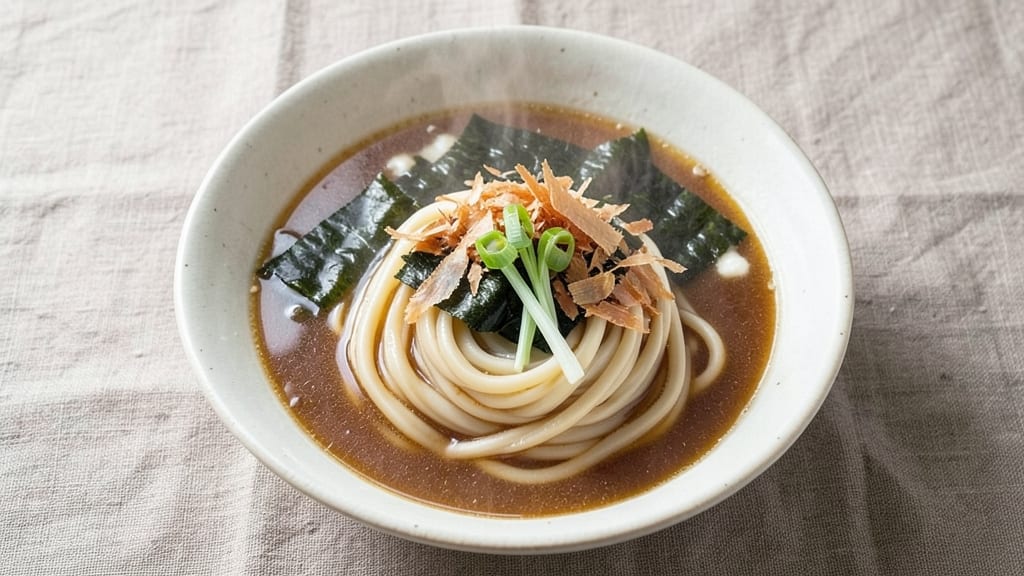
This authentic udon noodle soup recipe delivers the comforting, umami-packed experience that defines Japanese comfort food. The secret lies in a carefully balanced broth—dashi, soy sauce, and mirin work together to create depth that’s impossible to replicate with shortcuts.
I’ve perfected this method over years of testing, ensuring every sip delivers that signature silky texture and rich flavor profile.
What sets this recipe apart is the attention to traditional techniques: simmering kombu and bonito flakes for dashi, toasting sesame seeds for nutty aroma, and cooking udon just until it’s tender but still holds its shape. The result is a bowl that’s both restaurant-quality and deeply satisfying at home.
The broth should be clear yet deeply flavorful, with just a hint of sweetness from mirin balancing the savory notes. Toppings like tempura flakes, green onions, and nori add texture and visual appeal, while soft-boiled eggs or mushrooms can be customized to your preference.
This is the kind of dish that warms you from the inside out—perfect for chilly evenings or when you crave something hearty yet refined. Let’s make it step by step.
Ingredients for authentic udon noodle soup
Authentic udon noodle soup starts with these 15 essential ingredients for rich, comforting flavor.
| Ingredient | Amount | Notes |
|---|---|---|
| Dried Udon Noodles 🍜 | 8 oz | Thick wheat noodles, uncooked |
| Dried Kombu 🍃 | 1 sheet | For dashi base, rinsed |
| Bonito Flakes 🐟 | ¼ cup | High-quality, unsalted |
| Soy Sauce 🥫 | ½ cup | Japanese-style, low-sodium |
| Mirin 🍶 | ¼ cup | Sweet rice wine, not imitation |
| White Miso Paste 🧈 | 1 tbsp | For umami depth, smooth |
| Sesame Seeds 🌰 | 1 tbsp | Toasted for nutty aroma |
| Green Onions 🧅 | 4 whole | Thinly sliced, white and green parts |
| Nori Sheets 🍣 | 4 sheets | Dried seaweed, cut into strips |
| Tempura Flakes 🍤 | ¼ cup | For garnish, optional |
| Soft-Boiled Eggs 🥚 | 2 whole | 6-minute eggs, peeled |
| Shiitake Mushrooms 🍄 | 4 whole | Fresh, stems removed |
| Neutral Oil 🫒 | 1 tbsp | For egg cooking, like vegetable oil |
| Salt 🧂 | 1 tsp | Kosher or sea salt |
| Water 💧 | 8 cups | Filtered for best flavor |
The kombu and bonito flakes are non-negotiable for that signature umami depth. Look for kombu sheets from specialty stores like Mitsuwa or Japanese markets—the thicker and darker, the better. Bonito flakes should be light in color and free of fishy odor. If you're using dried shiitake mushrooms, soak them for 20 minutes before adding to the broth. For the udon noodles, Maruchan or Nissin brands are reliable, but check the packaging for '100% wheat' to avoid additives. Toasting the sesame seeds in a dry pan for 2 minutes enhances their nutty flavor—don't skip this step!
No mirin? Substitute 1 tbsp honey plus 1 tbsp water, but you'll lose some of that delicate sweetness. Running out of bonito flakes? Dried shiitake mushrooms work in a pinch, but reduce the amount to 2 tbsp. For a vegetarian option, skip the bonito and use kombu alone with an extra 1 tsp of soy sauce. The nori sheets can be replaced with seaweed snacks crushed into flakes if you prefer. If you can't find thick udon noodles, substitute ramen noodles but reduce cooking time by half. The white miso paste is key—don't use red miso, which is saltier and more intense.
Store the kombu and bonito flakes in an airtight container in a cool, dark place for up to 6 months. The udon noodles keep for 3 months in a sealed container, but they're best used within 2 weeks. Once cooked, the broth can be refrigerated for 4 days or frozen for 3 months. I like to make extra broth and freeze it in ice cube trays—perfect for quick meals later. The soft-boiled eggs should be made fresh, but you can prep the rest of the toppings ahead and store them separately in the fridge for up to 3 days
Why You'll Love This Recipe
- Five-Ingredient Magic: I swear by this combo—just kombu, bonito, soy, mirin, and water. That’s it. The dried kombu infuses the broth with umami depth while you’re making coffee, and the bonito flakes add a smoky aroma that fills the whole kitchen. Honestly? It’s the closest I get to a warm hug in a bowl.
- Umami Bomb: Between us, the broth alone is worth the hype. The kombu soaks up water and releases this oceanic richness, then the bonito flakes hit with a salty, toasty punch that makes you forget about takeout. I’ll be real: I’ve burned toast just to eat it straight from the pot.
- Lunchbox Hero: This soup is my secret weapon for meal prep—pack it cold or reheat it, and it’s still perfect. The udon holds up better than you’d think, and the broth stays flavorful even after a day. My college kid texts me every time I send a thermos; they call it "the only thing that doesn’t taste like ramen."
- Budget Warmth: A single packet of kombu and bonito flakes stretches to six bowls, and I’m not exaggerating. Soy sauce and mirin are pantry staples, so this is basically free therapy for those nights when you’re broke but still need comfort. Plus, leftovers taste better the next day—weird, but true.
Step-by-step instructions for authentic udon noodle soup
Here's how to craft a bowl of traditional udon with velvety noodles and layers of umami.
Prepare the Dashi Base
Rinse the 1 sheet dried kombu under cold water and pat dry with paper towels. Place it in a clean pot with the 8 cups water and bring to a gentle simmer over medium-low heat. You'll see small bubbles form at the edges—this is perfect. Once simmering, reduce heat to maintain just a few bubbles breaking the surface.
Simmer for 10 minutes, then carefully remove the kombu using tongs and discard it. The broth should smell like clean ocean air with a hint of seaweed. This is your aromatic foundation—don't rush this step. The kombu infuses the water with essential minerals and subtle sweetness that forms the soul of authentic udon broth.
Build the Umami Broth
Return the broth to a rolling simmer and add the 0.25 cup bonito flakes. Watch closely as they begin to float—this should take about 30 seconds before they start to dissolve. Remove from heat immediately after they've fully dispersed (about 1 minute total). Strain the broth through a fine-mesh sieve into a clean pot, pressing gently on the solids to extract all the flavor.
To this strained broth, add the 0.5 cup soy sauce, 0.25 cup mirin, 1 tbsp white miso paste, and 1 tsp salt. Stir gently to dissolve the miso completely. Taste and adjust seasoning—you want a balance of salty, sweet, and umami that sings. The broth should coat your spoon with a glossy sheen, indicating proper concentration. Keep warm over very low heat while you prepare the remaining components.
Cook the Udon Noodles
Bring a separate pot of 8 cups fresh water to a rolling boil. Add the 8 oz dried udon noodles and cook according to package instructions (typically 4-5 minutes). The noodles are done when they float to the surface and have a slight bounce when pressed between your fingers.
Drain immediately but reserve 1 cup of the starchy pasta water. This golden liquid is liquid gold—it helps create that signature slippery texture. Transfer the cooked noodles to a large serving bowl or individual bowls. Here's the thing about udon: they continue cooking slightly in the hot broth, so don't overcook them or they'll turn mushy.
Prepare the Toppings
While the noodles cook, prepare your toppings. Thinly slice the 4 whole green onions into 1-inch pieces, separating the white and green parts. Cut the 4 sheets nori into 1-inch strips. Toast the 1 tbsp sesame seeds in a dry skillet over medium heat for 1 minute until fragrant, then set aside. Slice the 4 whole shiitake mushrooms into thin strips.
For the soft-boiled eggs, heat 1 tbsp neutral oil in a small saucepan over medium heat. Gently lower in the 2 whole eggs and cook for exactly 6 minutes from when the water begins to simmer. Immediately transfer to an ice bath for 2 minutes, then peel under running water. The yolks should be perfectly set while the whites remain tender.
Assemble the Perfect Bowl
Ladle the hot broth over the cooked udon noodles, filling each bowl about ¾ full. The noodles will expand slightly as they absorb the broth—this is normal. Add the sliced mushrooms and green onions, then place one soft-boiled egg on top of each serving. Sprinkle with the toasted sesame seeds and 0.25 cup tempura flakes for that signature crunch.
Serve immediately with chopsticks and a spoon. The first bite should deliver that perfect harmony: slippery noodles gliding through rich, umami-packed broth, punctuated by the crunch of tempura flakes and the creamy resistance of the soft-boiled egg. This is where all the authentic flavors come together—don't wait to eat it! The magic fades fast once the broth cools.
Pro Tips For Making Authentic Udon Noodle Soup
- SOAK KOMBU FIRST: Tear the kombu into 1-inch strips and soak them in cold water for 10 minutes before boiling—this softens the seaweed and prevents it from turning bitter or crumbling into dust. I used to skip this, and the broth always tasted harsh until I realized the kombu needed a head start.
- BOIL BONITO FLAKES LAST: Add bonito flakes just as the broth nears simmering, not before—this keeps them crisp and aromatic instead of dissolving into nothing. I learned this the hard way after making broth that tasted like fish paste instead of delicate umami.
- USE MIRIN SPARINGLY: Start with 1 tablespoon of mirin and taste the broth before adding more—it’s sweeter than you think, and too much will make the dish cloying. My first batch was sickeningly sweet because I followed a recipe that called for 3 tablespoons without context.
- DON’T OVERCOOK THE NOODLES: Udon is done in 2-3 minutes after boiling—check the package, but don’t trust it blindly. Overcooked noodles turn mushy and ruin the texture, and I’ve had to start over more times than I’d like to admit.
Common mistakes when making your authentic udon noodle soup
Overcooking Noodles
Udon noodles cook fast—about 4-5 minutes—and they keep cooking in the hot broth. I’ve ruined countless bowls by leaving them in too long, turning them mushy. Test for doneness by pressing a noodle between your fingers: it should have a slight bounce.
Drain immediately and reserve the starchy water—this golden liquid is essential for that signature slippery texture. 🍜
Skipping Kombu Soak
Never skip rinsing the kombu sheet before simmering! The dried seaweed can be dusty, and any debris will cloud your broth. Pat it dry with paper towels to remove excess moisture, which prevents the water from boiling over.
A clean kombu sheet ensures a crystal-clear broth with maximum umami. Trust me, the difference is noticeable. 🍃
Boiling Bonito Too Long
Bonito flakes dissolve quickly—usually within 1 minute of simmering. If you leave them in too long, they’ll turn bitter and overpower the broth. Remove them immediately after they float and dissolve completely.
Strain the broth thoroughly to avoid any gritty texture. This small step makes a huge difference in flavor clarity. 🐟
Ignoring Starchy Water
Reserving 1 cup of starchy pasta water is non-negotiable for authentic udon texture. This golden liquid binds the broth to the noodles, creating that signature slippery feel.
If you skip it, your noodles will clump together and lack that restaurant-quality mouthfeel. Pour it into the broth just before serving to maximize its effect. 💛
Overcrowding the Pot
When cooking udon, don’t overcrowd the pot—use at least 8 cups of water for 8 oz of noodles. Overcrowding causes uneven cooking and a gummy texture. Stir gently once or twice during cooking to prevent sticking. The noodles should float freely when done, with room to move around. 🌊
Rushing the Broth
Patience is key with udon broth. Simmering kombu for 10 minutes and bonito for just 1 minute ensures maximum flavor extraction. Rushing this step results in a flat, one-dimensional broth. Let the ingredients work their magic—your taste buds will thank you. ✨
Nutrition facts
Frequently asked questions
Can I make udon noodle soup vegetarian?
Yes! Skip the bonito flakes and use 2 tbsp dried shiitake mushrooms instead for umami depth. Boost the soy sauce to 0.6 cup and add 1 tsp sugar to balance flavors. For extra richness, stir in 1 tbsp vegetarian dashi powder (available at Asian markets). The texture will be just as satisfying—just slightly different in profile.
How do I adjust the spice level?
Traditional udon is mild, but you can add heat by sprinkling ½ tsp chili oil or ¼ tsp red pepper flakes directly into each bowl before serving. For a smoky kick, toast ½ tsp sesame seeds with ¼ tsp smoked paprika together. Always add spices after the broth is ladled to preserve their potency.
Can I use instant udon noodles?
Not for authentic texture! Instant noodles contain additives that prevent the signature slippery quality. Instead, use fresh or dried udon noodles (like Maruchan or Nissin thick wheat). If you must use instant, cook them for half the package time and add ½ cup reserved starchy water to mimic the texture. The flavor won't be identical, but it's a decent shortcut.
What's the best way to reheat leftovers?
Reheat only the broth separately (strain it back through a sieve) to 165°F in a pot. Add the cold noodles to the hot broth and let them soak for 2 minutes—this restores their texture. Never microwave the whole bowl, or the noodles will turn rubbery. For toppings, warm tempura flakes in a dry pan for 30 seconds and toast sesame seeds fresh.
Why is my broth cloudy?
Cloudiness usually means either unrinsed kombu (debris) or overcooked bonito (bitter compounds). Always rinse kombu and strain broth through a fine-mesh sieve. For extra clarity, chill the broth overnight—the fat will solidify on top, making it easy to skim off. If the issue persists, reduce simmering time for bonito to 30 seconds.