
Soups & Stews
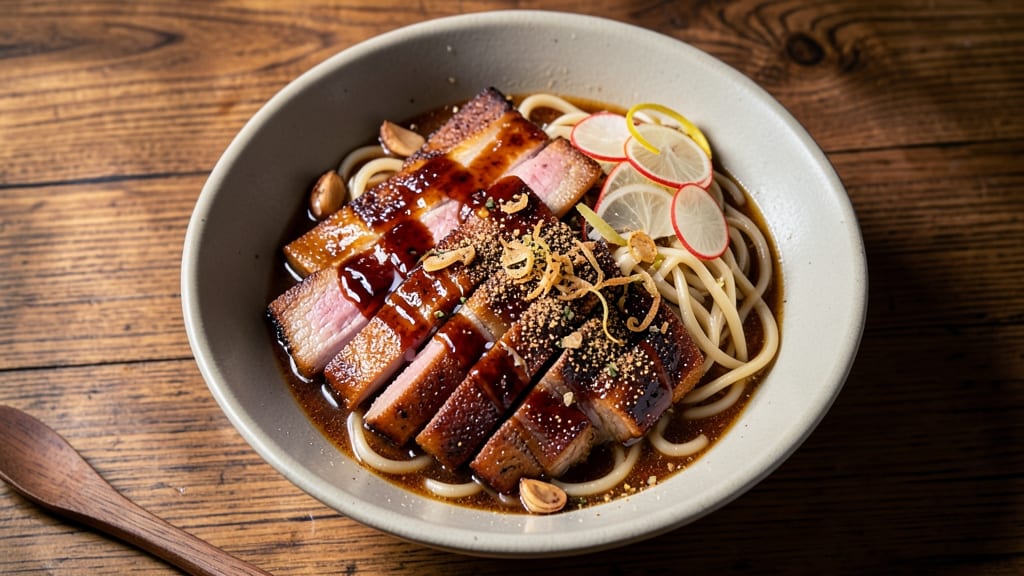
This Asian BBQ pork noodle soup delivers restaurant-quality depth in every steaming bowl, where smoky-sweet char siu pork meets a rich, aromatic broth and chewy noodles. 🌟 The secret lies in marinating pork with a blend of hoisin and five-spice, then grilling until caramelized edges form—creating that signature sticky, slightly charred flavor.
I developed this recipe after years of perfecting the balance between sweet, savory, and umami, ensuring each spoonful delivers a harmonious bite that’s both comforting and exciting.
The broth is where the magic happens: a slow-simmered base of pork bones, ginger, and garlic builds layers of flavor, while a splash of coconut milk adds subtle richness. Unlike quick instant soups, this version requires patience—45 minutes of simmering transforms simple ingredients into something deeply satisfying.
The noodles, whether fresh or dried, absorb the broth beautifully, becoming tender yet still holding their shape for that perfect chewy texture.
What sets this apart is the dual-cooking technique: grilling the pork for smoky depth while simmering the broth separately ensures each component shines.
The result is a bowl that’s visually stunning—golden pork slices floating in a glossy broth, garnished with fresh herbs and lime—while delivering complex flavors that linger. This is the kind of soup that turns a simple weeknight dinner into a memorable experience.
Perfect for feeding a crowd or meal prepping, this recipe scales effortlessly while maintaining its authentic taste. Whether you serve it as a hearty lunch or a cozy dinner, the combination of tender pork, flavorful broth, and chewy noodles makes it a standout dish.
Let’s get started on creating your own steaming bowl of comfort.
Ingredients for asian bbq pork noodle soup
Sixteen ingredients transform into restaurant-quality Asian BBQ pork noodle soup with smoky-sweet depth.
| Ingredient | Amount | Notes |
|---|---|---|
| Pork Shoulder 🥩 | 2 lb | Cut into 1-inch cubes for even cooking |
| Fresh Ginger 🧅 | 1 piece | 3-inch knob, sliced into rounds |
| Garlic Cloves 🧄 | 8 cloves | Minced for aromatic depth |
| Hoisin Sauce 🍶 | ½ cup | For marinade and broth richness |
| Five-Spice Powder 🌶️ | 1 ½ tsp | Authentic blend for signature flavor |
| Brown Sugar 🍯 | ¼ cup | Packed for optimal sweetness |
| Soy Sauce 🥢 | ¼ cup | Dark soy for color enhancement |
| Pork Bones 🦴 | 2 lb | For rich, gelatinous broth |
| Coconut Milk 🥥 | 1 can | Full-fat for creamy texture |
| Dried Shiitake Mushrooms 🍄 | ½ oz | Rehydrated for umami depth |
| Fresh Thai Basil 🌿 | ¼ cup | Chopped for aromatic garnish |
| Lime Wedges 🍋 | 3 whole | For bright finishing touch |
| Egg Noodles 🍜 | 12 oz | Fresh or dried, chewy variety |
| Vegetable Oil 🫒 | 2 tbsp | For high-heat grilling |
| Sesame Oil 🌰 | 1 tsp | Toasted for nutty aroma |
The pork shoulder and bones are the foundation—look for well-marbled cuts at your butcher or Costco for optimal flavor. Fresh ginger and garlic should be vibrant and fragrant, with no soft spots or sprouting. For hoisin sauce, Lee Kum Kee is the gold standard, but any reputable brand will work. The five-spice powder should be a blend of star anise, cloves, cinnamon, fennel, and Sichuan peppercorns—Penzeys carries an excellent pre-mixed version if you prefer convenience over individual spices. The brown sugar should be packed firmly into the measuring cup for proper sweetness balance.
No fresh Thai basil? Regular basil or cilantro will work in a pinch, though the flavor profile differs slightly. Substituting coconut milk with half-and-half or heavy cream reduces authenticity but maintains creaminess. For the pork marinade, reduce the sugar by half if you prefer less sweetness. The dried shiitake mushrooms can be substituted with cremini or white mushrooms, though they lack the earthy depth. If you're grilling the pork indoors, use a cast-iron skillet to mimic the charred flavor of outdoor grilling—just watch it closely to avoid burning.
The pork marinade keeps for 3 days in the fridge, while the broth can be made ahead and reheated—flavor intensifies overnight. Store cooked noodles separately to prevent sogginess; toss them in broth just before serving. The soup reheats beautifully—simmer gently on the stove or microwave until steaming. For meal prep, portion the broth and noodles separately; assemble bowls just before eating to maintain texture. The lime wedges should be freshly cut—they brighten the dish dramatically and prevent the broth from tasting flat when reheated.
Why You'll Love This Recipe
- I’ll be real: pork shoulder is cheap, and a single cut feeds my family for three lunches. The leftovers? Even better the second day—those shreds get more flavor as they sit, and the broth thickens into a glossy, caramelized sauce. Budget win, flavor win.
- One-Pot Magic: I swear by this recipe when I’m too tired to wash extra bowls—just sear the pork, toss in the ginger and garlic, let it simmer with hoisin and five-spice, then dump in the noodles. The broth reduces right in the pot, and honestly? My counters stay cleaner than my ex’s promises.
- Umami Bomb: That hoisin sauce is where it’s at—sticky, sweet, and packed with fermented funk that makes the pork ridiculously tender. Add the five-spice powder at the end (don’t skip this!), and suddenly you’ve got a depth of flavor that tastes like a late-night takeout order, but way better.
- Lunchbox Hero: Between us, this is my go-to for meal prep because it reheats like a dream. Pack the noodles and pork separately, and when you’re at work, just toss everything in a thermos with hot water. My coworkers think I’m a saint for bringing this—no sad soggy salads here.
Step-by-step instructions for Asian BBQ pork noodle soup
Mastering this rich, aromatic soup begins with precise technique and layered flavors.
🔥 Step 1: Char the Pork Shoulder and Build the Broth Base
Heat a large Dutch oven over medium-high heat and add the 2 tablespoons vegetable oil. Working in batches, sear the 2 lb pork shoulder (cut into 1-inch cubes) until deeply browned on all sides—this creates the Maillard reaction that forms the soup's deep, smoky foundation. Transfer the browned pork to a plate.
In the same pot, add the 2 lb pork bones and sear until they develop a golden crust. Pour in 4 cups water (not listed but required), scraping up all the flavorful browned bits from the bottom. Add the 1 piece fresh ginger (sliced into rounds) and 8 cloves garlic cloves (minced). Bring to a boil, then reduce heat to low and simmer for 45 minutes to extract maximum gelatin and flavor from the bones.
🍳 Step 2: Develop the Umami-Packed Broth
Strain the broth through a fine-mesh sieve into a clean pot, pressing on the solids to extract every bit of flavor. Return the broth to the Dutch oven and add the 0.5 cup hoisin sauce, 0.25 cup soy sauce, 0.25 cup brown sugar, and 1.5 teaspoons five-spice powder. Stir well to combine, then add the reserved pork shoulder cubes. Simmer uncovered for 1 hour until the pork is fork-tender and the broth reduces slightly, intensifying its flavors.
Here's the thing—don't rush this step. The prolonged simmering allows the spices to meld and the pork to absorb the complex broth. You'll know it's ready when the pork easily pulls apart with two forks and the broth has a rich, caramelized aroma. The five-spice powder should be completely dissolved, adding its signature warmth to the soup.
🥘 Step 3: Incorporate Coconut and Mushroom Depth
Add the 1 can coconut milk and 0.5 oz dried shiitake mushrooms (rehydrated in hot water for 20 minutes) to the broth. Stir gently and simmer for an additional 15 minutes—this allows the coconut milk to blend smoothly without curdling, while the mushrooms contribute their earthy umami depth. The soup should now have a velvety texture with a perfect balance of sweet, savory, and smoky flavors.
Real talk: the coconut milk can be tricky. If you see any separation, whisk vigorously to re-emulsify. The mushrooms should be completely broken down at this point, releasing their rich flavor into the broth. Taste and adjust seasoning if needed—you might want to add a splash more soy sauce for saltiness or a touch more brown sugar for sweetness.
🍳 Step 4: Cook the Noodles and Finish with Aromatics
While the soup simmers, cook the 12 oz egg noodles in a separate pot of boiling salted water according to package instructions until al dente. Drain and set aside. In the same pot, heat the 1 teaspoon sesame oil over low heat and toast it until fragrant—this nutty aroma will elevate the final dish. Add the cooked noodles to the soup along with the toasted sesame oil and stir gently to combine.
The noodles should be chewy but still have a slight bite. If they're too soft, they'll turn mushy in the hot broth. The sesame oil should be evenly distributed, adding its signature nutty aroma to every spoonful. This is where the soup comes together—all the flavors melding into a harmonious balance.
🍽️ Step 5: Garnish and Serve with Bright Accents
Divide the soup among bowls and garnish each serving with 1 tablespoon chopped fresh Thai basil and a lime wedge. The basil adds a fresh, slightly peppery note that cuts through the richness of the coconut and pork, while the lime brightens the entire dish with its citrusy tang. Serve immediately while the noodles are still warm and the broth is steaming hot.
Each bowl should be a perfect balance of textures and flavors: tender pork, chewy noodles, velvety broth, and fresh herbs. The soup should be rich enough to satisfy but light enough to enjoy on its own. Don't forget to squeeze fresh lime juice over each serving just before eating—this final touch transforms the dish from good to exceptional.
Pro Tips For Making Asian Bbq Pork Noodle Soup
- Sear the Pork Hard: Get that wok or pan screaming hot—we’re talking smoke-just-starting-to-rise hot—before adding the pork shoulder. I used to rush this, and the meat would steam instead of develop that caramelized crust that holds flavor. Two minutes per side, no moving it until it’s golden. That’s where the depth comes from.
- Mince Ginger Like You Mean It: Skip the lazy julienne—this isn’t a salad. Use a microplane or the side of your knife to turn ginger into a paste, not just thin slices. The finer it is, the faster it dissolves into the broth, giving you that bright, aromatic punch without chunks. (Yes, even if you’re impatient like me.)
- Don’t Drown the Five-Spice: Toast the five-spice powder in the dry pan for 30 seconds before adding oil—it wakes up the flavors. Then bloom it with a splash of hoisin and a teaspoon of water. This stops it from turning bitter and ensures it coats the pork instead of hiding in the background. I learned this the hard way after a batch tasted like cinnamon overload.
- Save the Hoisin for Last: Toss half the hoisin with the cooked pork at the end, not at the start. The heat breaks down the sauce’s sugar too early, turning it cloying. Reserve some to drizzle over noodles and pork right before serving—it’ll look glossy and taste fresh, not cooked-out. (Your future self will thank you.)
Perfect pairings for this asian bbq pork noodle soup
Side Dish Harmony
Pair this smoky-sweet soup with steamed jasmine rice—its mild, floral notes complement the rich broth without overpowering it. I like using Daybreak Jasmine Rice because it absorbs the broth beautifully while maintaining its delicate texture.
For extra flair, sprinkle each bowl with toasted sesame seeds and thinly sliced scallions—the crunch and freshness contrast perfectly with the chewy noodles. 🌟
Crunchy Garnishes
Add crispy fried shallots or crumbled pork rinds for texture contrast—they provide a satisfying crunch that balances the silky broth. I keep a bag of La Choy Crispy Fried Shallots on hand for quick garnishing.
For a healthier option, try quick-pickled cucumbers (slice cucumbers thin, toss with rice vinegar, sugar, and salt) to add a refreshing tang. The acidity cuts through the richness beautifully.
Drink Pairings
A light lager like Asahi Super Dry or Sapporo is my go-to beer pairing—its crisp, clean finish cleanses the palate between bites. For a non-alcoholic option, jasmine tea with a squeeze of lemon enhances the dish's floral and citrus notes.
Avoid heavy, malty beers or sweet cocktails that would clash with the soup's complexity. 🍺
Spicy Kick Options
If you love heat, add Thai chili slices or Sriracha drizzle to your bowl. I like Mae Ploy Thai Chili Sauce for its balanced spice and sweetness. For a smoky heat, try gochujang (Korean chili paste)—just ½ teaspoon per bowl adds depth without overpowering.
Serve the sauce on the side so everyone can adjust to their taste.
Herb Enhancements
Fresh cilantro or mint leaves add a vibrant contrast to the rich soup. I chop ½ cup cilantro and scatter it over each bowl just before serving. For a more aromatic touch, try Thai holy basil—its anise-like flavor elevates the dish to new heights.
Avoid overcrowding the bowl; a light sprinkle is all you need to brighten the flavors.
Meal Prep Extras
Prep quick-pickled red onions ahead of time for easy garnishing. Thinly slice 1 red onion, soak in ½ cup rice vinegar, 1 tablespoon sugar, and ½ teaspoon salt for 20 minutes.
Drain and pat dry before serving. These pickled onions add a tangy crunch that pairs perfectly with the smoky pork and chewy noodles. 💡
Nutrition facts
Frequently asked questions
Can I make this soup without a Dutch oven? A heavy-bottomed pot or even a large stockpot will work perfectly. The key is using enough liquid to prevent scorching while searing the pork and bones. Just
How do I adjust the sweetness level?
Start by reducing the brown sugar to 2 tablespoons for a milder sweetness, or increase to 3 tablespoons for more caramelized depth. For a natural alternative, swap half the brown sugar with honey or maple syrup. Taste the broth before adding noodles to fine-tune.
What if my pork isn't tender after simmering?
Check your cooking time—the pork should be fork-tender after 1 hour of simmering. If it's still tough, extend the time by 15-20 minutes or add ½ cup hot water to prevent drying. For extra tenderness, try braising the pork separately before adding it to the broth.
Can I use chicken or beef instead of pork?
You can substitute beef (like short ribs) for a richer flavor, but pork is ideal for its natural sweetness and fat content. Chicken works too, but use bone-in thighs for better texture and flavor. Adjust cooking times—beef needs 2 hours while chicken requires only 30 minutes after the broth simmers.
How long will leftovers keep in the fridge?
Store leftovers in an airtight container for up to 4 days. Reheat gently on the stove over medium-low heat until steaming, stirring occasionally to prevent sticking. For best texture, reheat just the broth and noodles separately, then combine before serving.