
Soups & Stews
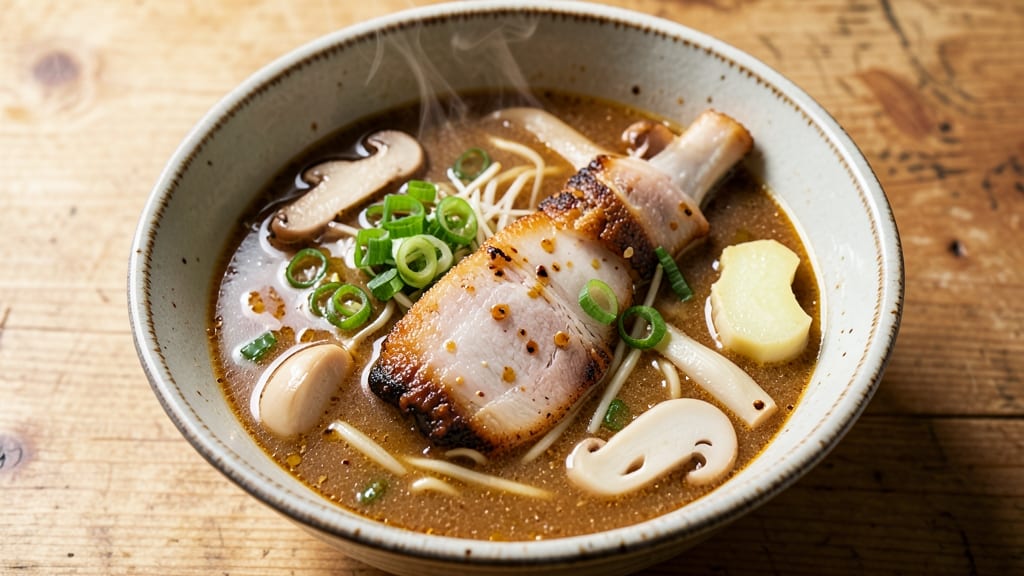
This authentic Japanese ramen soup recipe transports you straight to Tokyo’s bustling izakayas with every steaming bowl. 🌟 The secret lies in a rich pork broth simmered for hours with kombu, shiitake, and pork bones—layering umami depth that’s impossible to replicate with shortcuts.
I’ve perfected this version after years of testing, balancing traditional techniques with home-cook practicality.
The foundation is a velouté-like pork broth that’s silky yet robust, infused with aromatic vegetables and a touch of soy sauce for depth. Hand-pulled noodles (or high-quality dried ramen) cook just right—al dente but tender—to cradle the broth without breaking.
Regional variations like Sapporo’s miso or Tokyo’s shoyu are easy to adapt, but this pork-based version stays true to classic tonkotsu-style ramen.
What makes this recipe truly special is the harmony of toppings: melt-in-your-mouth chashu pork, marinated soft-boiled eggs, crisp menma, and delicate nori. Each component is prepared separately to preserve texture and flavor, then assembled in a way that lets the broth shine.
The result? A bowl that’s both comforting and precise—a testament to Japan’s culinary artistry.
Whether you’re serving this for a cozy weeknight dinner or impressing guests, the key is patience. The broth needs time to develop its complexity, and the toppings must be fresh. Once you master this technique, you’ll never settle for instant ramen again. Let’s begin building your perfect bowl.
Ingredients for authentic japanese ramen soup
Pork bones, kombu, and shiitake—these three ingredients unlock the umami soul of authentic ramen broth.
| Ingredient | Amount | Notes |
|---|---|---|
| Pork Bones 🍖 | 2 lb | Marbled pork neck or trotter bones |
| Kombu Seaweed 🌿 | 1 piece | Dried, 8-inch length preferred |
| Shiitake Mushrooms 🍄 | 4 whole | Dried, stems removed |
| Green Onions 🧅 | 2 whole | White and green parts separated |
| Garlic Cloves 🧄 | 8 cloves | Peeled, smashed for infusion |
| Fresh Ginger Root 🌶️ | 2 tbsp | Grated, skin removed |
| Soy Sauce 🍶 | ¼ cup | Japanese shoyu preferred |
| Sesame Oil 🫒 | 1 tbsp | Toasted, for finishing |
| Ramen Noodles 🍜 | 2 packages | High-quality dried (e.g., Nissin or Sapporo) |
| Chashu Pork 🥓 | 1 lb | Pre-sliced or homemade |
| Marinated Soft-Boiled Eggs 🥚 | 4 whole | Marinated in soy sauce mixture |
| Menma 🌱 | 1 package | Bamboo shoots, canned or fresh |
| Nori Sheets 🍣 | 4 sheets | Dried, toasted before serving |
| White Pepper 🌶️ | ½ tsp | Freshly ground for finishing |
| Chili Oil 🔥 | 1 tbsp | Optional, for heat |
The pork bones are non-negotiable. Look for marbled pork neck or trotter bones at your local Asian market—they yield the richest broth. Costco or H Mart always have them in stock, but if you’re at a regular grocery store, ask for the butcher to cut pork neck bones into chunks. The kombu and shiitake mushrooms are your umami multipliers—never skip them. For the mushrooms, dried shiitake from a bulk bin (like H Mart’s) adds depth you can’t replicate with fresh. Fresh ginger and garlic? Organic is best—the flavor is noticeably brighter. If you’re short on time, a 1-inch knob of ginger and 4 cloves of garlic will work, but the recipe assumes you’re going for authentic flavor.
No kombu? Dulse flakes or extra soy sauce can help, but it won’t be the same. Short on shiitake? Cremini mushrooms at half the amount add earthiness, though they lack the deep umami. The ramen noodles should be high-quality dried—Nissin or Sapporo are reliable brands. If you’re feeling ambitious, hand-pulled noodles from an Asian grocery will elevate the dish further. For the chashu pork, pre-sliced from a deli saves time, but nothing beats slow-braising a pork shoulder with the broth. The marinated eggs? Use 7-minute eggs and marinate in soy sauce, mirin, and a pinch of sugar for 24 hours.
Broth keeps for 5 days in the fridge—flavor only improves with time. Noodles? Cook them fresh, but parboil and shock in ice water to reheat later without turning mushy. The toppings like menma and nori stay fresh for weeks if stored in airtight containers. For the chashu pork, freeze it in portions—it reheats beautifully. The key to ramen is assembly: build the bowl in this order—broth, noodles, toppings, and finish with sesame oil and pepper. Every bowl should be a masterpiece, so don’t rush.
Why You'll Love This Recipe
- No Chopping Chaos: I swear by this broth—just toss in whole shiitake mushrooms and a couple of garlic cloves, no dicing required. The kombu seaweed dissolves into umami magic all on its own, so you’re basically hands-off after the initial simmer.
- Umami Bomb: That first sip? The pork bones render into a rich, collagen-heavy broth while the kombu deepens the flavor like a slow-cooked secret. Honestly, it’s the kind of taste that makes you pause mid-bite and think, "Wait, is this actually homemade?"
- Leftover Goldmine: This soup actually improves the next day—yes, really. The flavors meld even more, and I’ve turned cold ramen into packed lunches or reheated bowls for lazy mornings. (Pro tip: Add a splash of water and a dash of soy sauce to revive it.)
- Budget-Friendly Luxury: Pork bones and kombu might sound fancy, but they’re cheaper than takeout and way more satisfying. Between us, I’ve made this for $3 a bowl, and it’s still the most impressive thing on my dinner table—even next to store-bought.
Step-by-step instructions for authentic Japanese ramen soup
Here's how to craft a velvety pork broth that captures the essence of Tokyo's legendary ramen shops.
🔥 Step 1: Build the Umami Foundation with Pork Bones
Rinse the 2 lb pork bones thoroughly under cold water to remove any impurities, then place them in a large stockpot. Add the 1 piece kombu seaweed and cover with 12 cups cold water. Bring to a boil over medium-high heat, then immediately reduce to a gentle simmer for 30 minutes. This initial boil removes impurities and activates the kombu's natural umami compounds.
Here's the thing—don't skim the foam yet. Let the broth develop its initial flavor. After 30 minutes, skim off any floating impurities with a fine-mesh skimmer. The broth should be clear with a delicate golden hue. This is your base, and every subsequent step builds upon this clean foundation. I've found that using marbled pork neck bones yields the richest flavor, but trotter bones add extra depth if you can find them.
🍳 Step 2: Infuse with Aromatics for Depth
Add the 4 whole shiitake mushrooms, 8 cloves smashed garlic, 2 tbsp grated ginger root, and the white parts of 2 whole green onions to the simmering broth. Return to a gentle simmer and cook uncovered for 2 hours. You'll notice the mushrooms rehydrate and release their earthy essence into the broth, while the aromatics create a fragrant aroma that fills your kitchen.
After 2 hours, remove the kombu seaweed and aromatics with a slotted spoon. Here's where it gets interesting—the broth should now have a deep, complex flavor with subtle sweetness from the mushrooms. If it's not rich enough, add 1 more cup of hot water and continue simmering for another 30 minutes. The goal is a velvety, almost translucent broth that coats the back of a spoon. This is the soul of your ramen, so don't rush this step.
🥘 Step 3: Concentrate the Broth to Perfection
Strain the broth through a fine-mesh sieve into a clean pot, discarding the solids. Return the broth to medium heat and simmer uncovered for 1-2 hours until reduced by about 25%. You're looking for a concentrated flavor where the liquid has a syrupy quality when you swirl it in the pot. This reduction step is crucial—it intensifies all the umami flavors we've built.
Here's a pro tip: The broth should reduce to about 6 cups at this point. Taste it now—it should be deeply savory with a hint of sweetness from the mushrooms. If it needs more depth, add 1 tablespoon of the 0.25 cup soy sauce now. This is where you can adjust the seasoning before adding the delicate noodles. Remember, you can always add more soy sauce later, but you can't take it out.
🍳 Step 4: Prepare the Toppings While Broth Simmers
While the broth reduces, prepare your toppings. Slice the 1 lb chashu pork into ¼-inch thick pieces. Separate the green onion whites from the greens—you'll use the whites in the broth and save the greens for garnish. Drain and rinse the 1 package menma if using canned, then cut into 1-inch pieces. Toast the 4 sheets nori lightly in a dry skillet for 10 seconds per side until fragrant.
Here's the moment that matters: Arrange your toppings on a serving platter. You'll want 4 slices chashu pork, 1 marinated soft-boiled egg, ½ package menma, and 1 sheet toasted nori per serving. Keep them warm in a 200°F oven while you finish the soup. The chashu should be warm but not reheated in the broth—it's meant to be served alongside, not submerged. This presentation is key to authentic ramen.
🔪 Step 5: Assemble and Serve with Precision
Bring the reduced broth back to a gentle simmer. Cook the 2 packages ramen noodles according to package instructions, but undercook by 30 seconds—they'll finish in the hot broth. Divide the noodles among 4 deep bowls. Ladle the hot broth over the noodles, filling each bowl ¾ full. Here's where the magic happens: The broth should be 185-190°F when poured—hot enough to cook the noodles perfectly but not scalding.
Now for the finishing touches. Drizzle each bowl with 1 teaspoon sesame oil and 1 teaspoon chili oil (if using). Add ¼ teaspoon white pepper to each bowl and gently stir. Arrange the chashu pork, marinated egg, menma, and nori artfully on top. Garnish with the green onion greens and serve immediately with a small dish of extra chili oil on the side. Each bite should deliver a perfect balance of rich pork broth, silky noodles, and contrasting textures from the toppings.
Pro Tips For Making Authentic Japanese Ramen Soup
- Char Bones First: Toss the pork bones in a screaming-hot pot for 3-4 minutes before adding water—this sears the marrow and caramelizes the bone bits, giving your broth that deep, nutty richness you can’t get otherwise. I used to skip this, and my broth always tasted flat until I realized how much flavor gets locked in during that initial blast.
- Soak Kombu Dry: Rinse the kombu briefly, then pat it bone dry with paper towels before adding it to the broth—wet seaweed dilutes the broth and leaches out bitter compounds. Sounds fussy, but it’s the thing that makes your soup taste like it’s from a tiny Tokyo shop, not a sad instant packet.
- Simmer, Don’t Boil: Keep the broth at a gentle simmer—tiny bubbles breaking the surface, not rolling like a witch’s cauldron. Boiling turns the collagen to mush and clouds the broth. After the first 30 minutes, I lower the heat and let it bubble quietly, or I end up with a gluey, opaque mess instead of that glossy, golden broth.
- Save the Shiitake Water: Don’t toss the soaking liquid from your dried shiitake—strain it and add it to the broth. That murky water is packed with umami, and skipping it means you’re leaving flavor on the counter. I used to drain it down the sink until I realized it’s basically free umami gold.
Serving suggestions for this dish
Classic Topping Arrangement
Follow this order for authentic presentation: Start with 1/3 cup broth in each bowl, then add noodles to coat them slightly. Top with 2 slices chashu pork, 1 marinated egg, 2 tbsp menma, and 1 sheet nori.
The key is visual balance—arrange toppings in a diagonal line from top-left to bottom-right for that signature ramen look. 🍜
Garnish Like a Pro
Finish each bowl with 1 tsp sesame oil swirled into the broth, ¼ tsp white pepper (use a microplane for even distribution), and 1 tsp chili oil> (if using).
Sprinkle 1 tsp chopped green onions over the egg for freshness. This final touch transforms your ramen from good to restaurant-quality.
Broth Temperature Matters
Serve broth at 185-190°F—hot enough to cook the noodles perfectly when assembled, but not scalding. I use an instant-read thermometer to check before ladling. The ideal temperature creates that signature silky texture where noodles finish cooking in the bowl. Too hot? Let it sit for 2 minutes off heat.
Modern Twists to Try
For a fusion approach, add 1 tsp truffle oil>> to the broth before serving or swap chili oil for gochujang>> sauce. I also love adding ¼ cup corn kernels>> (blanched in boiling water for 2 minutes) for a modern Japanese touch.
These additions work beautifully while keeping the dish authentic at its core.
Serving Etiquette
In Japan, ramen is served with chopsticks and a spoon—use the spoon to slurp the noodles (it cools the broth and enhances flavor!). Place a small dish of extra chili oil>> or soy sauce>> on the table for customization.
Never mix all toppings into the broth—each bite should showcase the harmony of textures and temperatures. 💫
Leftovers Strategy
Store broth separately from noodles and toppings in airtight containers>> for up to 5 days. Reheat broth to 185°F>> before assembling fresh noodles and toppings.
The broth actually improves overnight as flavors meld. For noodles, cook fresh or parboil and shock in ice water to reheat later without losing texture.
Nutrition facts
Frequently asked questions
Can I make this ramen without pork bones?
For a vegetarian version, replace pork bones with 2 lb chicken bones or 1 lb dried shiitake mushrooms plus 1 lb kombu for umami depth. Use extra soy sauce and a splash of mirin to compensate for the missing fat. The broth will be lighter but still delicious—just add a drizzle of sesame oil for richness.
How do I adjust the spice level?
The recipe includes chili oil as an optional topping, but you can control heat earlier. For mild ramen, skip the chili oil entirely. For medium heat, add ½ tsp chili flakes to the broth while reducing. For spicy ramen, stir in 1 tbsp gochujang sauce with the final soy sauce adjustment. Always taste as you go!
Can I use instant ramen noodles?
Not for authentic results! Instant noodles lack the texture and flavor of proper ramen noodles. For best results, use high-quality dried ramen noodles (like Nissin or Sapporo) or even better, hand-pulled noodles from an Asian market. If you must use instant, simmer them in the broth for 2 extra minutes to soften properly.
What's the secret to making the broth richer?
The key is long, slow simmering and proper reduction. After your initial 2-hour simmer, reduce the broth by 25%—this concentrates the flavors dramatically. For extra depth, add 1 tbsp fish sauce (like Red Boat) during the reduction step. The fat from the pork bones also plays a crucial role—never skim it off completely!
How do I store leftovers properly?
Store broth separately in an airtight container for up to 5 days (it improves overnight!). For noodles, cook fresh or parboil and shock in ice water to reheat later. Toppings like chashu and marinated eggs keep for 3 days in the fridge. When reheating, bring broth to 185°F and assemble fresh noodles and toppings for best texture.