
Soups & Stews
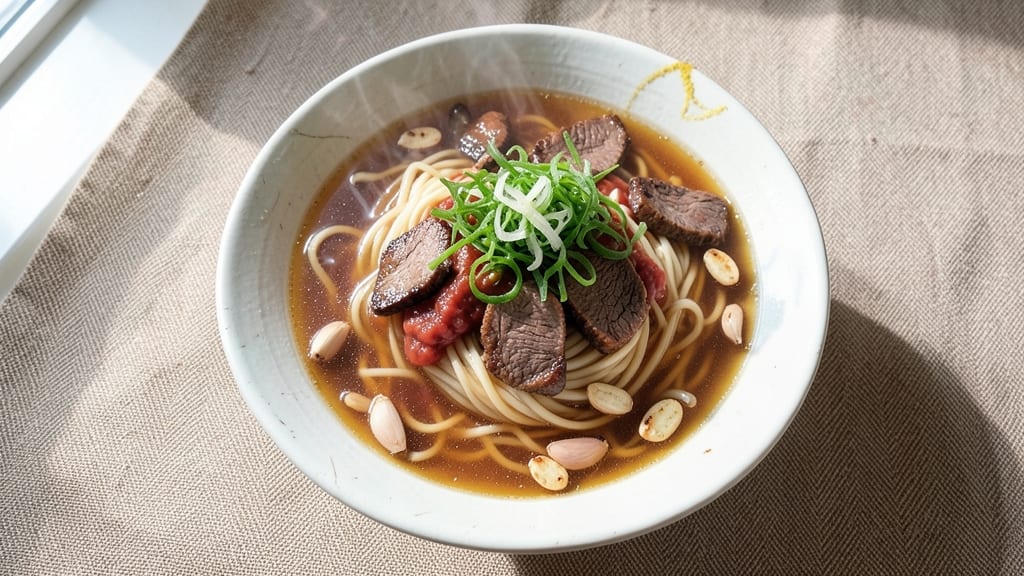
This beef soba noodle soup recipe delivers the perfect balance of rich umami broth, tender beef, and chewy soba noodles—every spoonful is a harmony of Japanese comfort food.
The secret lies in building a deeply flavorful broth using dashi and miso, then layering it with thinly sliced beef that melts into tender perfection. I developed this version after years of refining traditional techniques, ensuring the broth stays vibrant while the noodles maintain their signature bite.
The foundation of this recipe is a foolproof broth that starts with dashi stock, simmered with miso paste and aromatic vegetables for a slow infusion of umami.
Thinly sliced beef (like itame or fukujinzuke-style jerky) adds protein without overpowering the delicate flavors, while soba noodles—cooked just until al dente—soak up the broth beautifully. The result is a bowl that’s both comforting and restaurant-quality, with each component playing its part.
What makes this recipe stand out is its versatility—adjust the spice level with chili oil or keep it classic with a sprinkle of sesame seeds. The broth remains rich yet light, thanks to careful simmering, while the beef dissolves into the soup, creating an irresistible depth.
Whether you’re serving it as a light lunch or a hearty dinner, this soup delivers satisfaction in every bite.
Ready in under 45 minutes, this recipe is perfect for weeknights or special occasions. The key is patience—letting the broth develop its complex flavors while keeping the noodles chewy.
Garnish with green onions or a drizzle of sesame oil for freshness, and you’ll have a bowl that feels like a warm hug in soup form. Let’s get started!
Ingredients for beef soba noodle soup
Rich umami broth meets chewy soba noodles and tender beef—here’s what you’ll need for a restaurant-quality bowl.
| Ingredient | Amount | Notes |
|---|---|---|
| Dashi Stock 🍜 | 4 cups | Homemade or quality store-bought |
| Red Miso Paste 🧈 | 2 tbsp | Aged for deep umami flavor |
| Soba Noodles 🍜 | 8 oz | 100% buckwheat, uncooked |
| Thinly Sliced Beef 🥩 | 8 oz | Itame-style or pre-sliced for soup |
| Green Onions 🧅 | 4 whole | Thinly sliced for garnish |
| Garlic Cloves 🧄 | 3 cloves | Minced for aromatic base |
| Ginger 🌿 | 1 tbsp | Freshly grated, peeled |
| Sesame Oil 🫒 | 1 tbsp | Toasted for finishing |
| Dried Shiitake Mushrooms 🍄 | 2 whole | Rehydrated in hot water |
| Low-Sodium Soy Sauce 🥄 | 1 tbsp | For balanced seasoning |
| Water 💧 | 4 cups | For broth dilution |
| Chili Oil 🌶️ | 1 tsp | Optional for spice |
| Sesame Seeds 🌰 | 1 tsp | Toasted for garnish |
| Salt 🧂 | ½ tsp | Adjust to taste |
The dashi stock is the soul of this soup—homemade with kombu and bonito flakes delivers the deepest flavor, but Hondashi brand from Asian markets works in a pinch. For the miso, red miso (like Miso Master) adds richness without overpowering. Thinly sliced beef is key—pre-sliced itame-style from Japanese grocery stores saves time, but any lean cut sliced paper-thin works. The shiitake mushrooms? Dried is best—rehydrate them in hot water for 20 minutes before adding to the broth. Look for them in the dried goods section of Asian markets or the international aisle at Whole Foods.
No dashi stock? Vegetable broth with a splash of soy sauce gets you close, though it’ll lack that signature umami depth. Substituting beef? Thinly sliced mushrooms or tofu work beautifully—just marinate them in soy sauce first. Fresh ginger is ideal, but dried ginger at half the amount works if you’re in a hurry. The soba noodles must be 100% buckwheat for that authentic chew—King Soba or Nisshin brands are my go-tos, but any buckwheat noodle will do. For extra richness, stir in a spoonful of sesame paste at the end, though it’s not traditional.
Broth keeps for 3 days in the fridge—reheat gently and add fresh noodles and beef when serving. For longer storage, freeze the broth in ice cube trays and thaw as needed. Soba noodles cook in 2-3 minutes—don’t overdo it, or they’ll turn mushy. Garnish with green onions and sesame seeds right before serving, as they lose freshness when added earlier. This soup tastes even better the next day once the flavors meld.
Why You'll Love This Recipe
- Foolproof Simplicity: I swear by this—just slice the beef thin, simmer it in dashi for 5 minutes, and stir in that rich miso paste. No chopping mountains of veggies, no balancing complex sauces. The noodles cook in the same pot, and boom: dinner’s ready.
- Umami Bomb: That red miso paste? It’s the secret weapon here. One spoonful turns the broth from good to I’ll-have-two-bowls in seconds. The beef stays tender but develops this perfect edge, and the dashi adds that deep, savory backbone—like a cozy hug in a bowl.
- Weeknight Wonder: Between us, this is my go-to when I’m too tired to plan. Packs the fridge for lunch the next day, reheats beautifully, and even impresses guests when I serve it in those pretty ceramic bowls. (Yes, even on a Tuesday night.)
- Budget-Friendly Powerhouse: Soba noodles are cheap, thin beef stretches further than you’d think, and a little miso goes a long way. I make this for four people for under $10, and somehow it always feels like a fancy meal. Leftovers? Even better cold the next morning.
Step-by-step instructions for beef soba noodle soup
This method delivers a rich, umami-packed broth with perfectly chewy noodles every time.
👨🍳 Step 1: Prepare the Miso-Garlic Base
In a medium saucepan, combine the 4 cups dashi stock and 4 cups water over medium heat. While waiting for the mixture to warm, create the aromatic base by mincing the 3 cloves garlic and grating the 1 tbsp ginger. Add these to the simmering broth along with the 2 tbsp red miso paste and 1 tbsp low-sodium soy sauce. Stir constantly for 3-4 minutes until the miso fully dissolves and the mixture becomes smooth and fragrant.
The miso needs to integrate completely—you'll notice the broth develop a deeper, earthier aroma. If you see any undissolved clumps, strain the mixture through a fine-mesh sieve to ensure a silky texture. Keep the heat at a gentle simmer (medium-low) to prevent the miso from cooking out its complex flavors.
🍳 Step 2: Rehydrate and Add Shiitake Mushrooms
While the broth simmers, prepare the 2 whole dried shiitake mushrooms by soaking them in 1 cup hot water for 15-20 minutes until pliable. Drain, reserving the soaking liquid, then slice the mushrooms into thin strips. Add the mushrooms and their reserved soaking liquid to the simmering broth. Let everything cook together for 8-10 minutes to allow the mushrooms to soften and infuse their umami depth into the broth.
This step is where the soup starts building its layered complexity. The mushrooms should become tender enough to eat but still hold their shape slightly. If the broth reduces too quickly, add ½ cup water to maintain the proper consistency for the noodles we'll add later.
🍳 Step 3: Cook the Beef and Season
Add the 8 oz thinly sliced beef to the simmering broth. Cook for 4-5 minutes until the beef is just cooked through but still retains its delicate texture. Season with the 0.5 tsp salt and adjust to taste—this is your opportunity to balance the flavors before adding the noodles. The beef should float just below the surface, indicating it's ready.
Here's where precision matters: the beef should be cooked but not tough. If you see the slices starting to curl or shrink, they're overcooking. Remove the pan from heat briefly if needed, then return to a gentle simmer. This is also the perfect time to taste and adjust seasoning—add a touch more soy sauce if needed for depth.
🥘 Step 4: Cook the Soba Noodles
Bring a separate pot of salted water to a rolling boil. Add the 8 oz soba noodles and cook according to package instructions, typically 4-5 minutes for al dente texture. Drain immediately and rinse briefly under cold water to stop the cooking process and remove excess starch. This prevents the noodles from becoming mushy when added to the hot broth.
Soba noodles have a delicate texture that's easily ruined by overcooking. You want them chewy but not rubbery—when cooked perfectly, they should hold their shape but still be tender. The rinse is crucial: it removes surface starch that would otherwise make the broth cloudy and the noodles slimy.
🥘 Step 5: Assemble and Finish
Add the cooked soba noodles to the beef broth and gently stir to combine. Return to low heat just long enough to warm through (2-3 minutes). Remove from heat and stir in the 1 tbsp toasted sesame oil, 1 tsp chili oil (if using), and 1 tsp toasted sesame seeds. Divide among bowls and garnish with thinly sliced 4 whole green onions. Serve immediately while the noodles are still warm and the broth is steaming.
This final assembly step is where all the flavors come together. The sesame oil adds nutty richness, the chili oil brings subtle heat, and the sesame seeds contribute texture. The green onions provide a fresh contrast to the deep umami broth. Each bowl should have perfectly balanced flavors—rich from the miso, savory from the beef, and chewy from the noodles.
Pro Tips For Making Beef Soba Noodle Soup
- Simmer Beef Briefly: Thinly sliced beef cooks fast—drop it in just before serving and pull it out when it’s barely warmed through. Overcooking turns it mushy, and you want that tender, almost translucent texture. I used to let it sit in the broth too long, and it’d turn to rubber.
- Toast Miso First: Heat the red miso paste in a dry pan for 30 seconds until it smells nutty and fragrant. This deepens the umami without making the soup taste bitter. I learned this the hard way—raw miso just dissolves into a bland paste.
- Reserve Broth Early: Strain the dashi stock before adding miso, then set aside 1 cup of the clear broth. Stir the miso into the remaining broth, then thin it with the reserved liquid when serving. This keeps the soup rich but not gluey, and you can adjust thickness on the fly.
- Cook Noodles Separately: Boil soba noodles until they’re just tender, then drain and rinse briefly under cold water. Toss them with a splash of broth and green onions right before serving—this stops them from turning limp in the hot soup. I used to add them raw, and they’d either stay rock-hard or turn to mush.
Pro cooking tips for this recipe
Miso Integration Secrets
Miso paste is the flavor bomb of this soup, but it’s easy to overcook and turn bitter. Always dissolve it into a small amount of hot broth first, then stir into the main pot to prevent clumping.
I like to whisk 2 tbsp red miso with ¼ cup warm broth until completely smooth before adding it to the pot. This ensures even distribution and prevents those unsightly lumps. 🧈
Beef Cooking Precision
Thinly sliced beef cooks in seconds—literally. Once the broth returns to a gentle simmer after adding the beef, it should take just 4-5 minutes to reach 145°F internal temperature. Overcooking turns it tough, so remove it from heat if it starts to curl at the edges.
For extra tenderness, I marinate the beef in 1 tbsp soy sauce and ½ tsp sugar for 15 minutes before cooking. This keeps the slices supple and flavorful.
Noodle Texture Control
Soba noodles are delicate—cook them 1 minute less than package instructions suggest, then rinse immediately in cold water. This stops the cooking process and removes excess starch that would make your broth cloudy.
For an extra-chewy texture, I like to blanch the noodles in boiling water for just 2 minutes, then shock them in ice water before adding to the soup. This preserves their signature bite.
Broth Clarity Trick
For a silky-smooth broth, strain it through a fine-mesh sieve after cooking the mushrooms but before adding the beef. This removes any sediment while keeping all the umami-rich liquid.
If you’re short on time, simmer the broth with a 1-inch piece of kombu (dried kelp) for 10 minutes—it naturally clarifies the broth as it infuses flavor. Just remove it before adding the miso.
Layered Flavor Boost
Build depth by adding ingredients in stages. Start with the shiitake mushrooms to develop their umami, then add the beef when it’s nearly done. Finish with the sesame oil and chili oil right before serving—this preserves their fresh, vibrant flavors.
For an extra layer, I sometimes stir in 1 tsp grated daikon radish at the end for a subtle sweetness that balances the richness. 🌶️
Equipment Shortcuts
No fine-mesh sieve? Use a clean kitchen towel or cheesecloth to strain the broth—just double it up for better filtration. For thinly sliced beef, ask your butcher to slice it against the grain for maximum tenderness.
If you can’t find dried shiitake mushrooms, cremini mushrooms work in a pinch—just slice them thinly and add them directly to the broth without soaking. These small swaps keep the recipe accessible without sacrificing flavor.
Nutrition facts
Frequently asked questions
Can I use regular wheat noodles instead of soba?
While you can substitute wheat noodles, you'll lose the authentic chewy texture and nutty flavor of 100% buckwheat soba. For a closer match, try udon noodles (thicker and softer) or rice noodles (lighter texture). If you must use wheat, cook them 1 minute less than package instructions and rinse thoroughly to prevent a gummy broth.
How do I make this soup spicier?
For heat lovers, add 1 tbsp gochujang (Korean chili paste) when dissolving the miso, or stir in 1-2 tsp chili crisp at the end. For a smoky kick, swap the chili oil for 1 tsp toasted chili flakes>. For balanced spice, I recommend ½ tsp chili oil + ½ tsp honey to temper the heat with sweetness. Adjust to taste—spices intensify as the soup cools!
Can I prepare the broth ahead of time?
The broth keeps for 3 days refrigerated> or 3 months frozen. For freezing, portion into ice cube trays—thaw overnight in the fridge before using. Just reheat gently (low heat) and add fresh noodles and beef when serving. Pro tip: Store the shiitake mushrooms separately and add them fresh when reheating for maximum flavor.
What's the best cut of beef for this recipe?
Look for lean, tender cuts that slice thinly—sirloin, flank steak, or ribeye work best. Ask your butcher for itame-style slices> (pre-cut for soups) or slice against the grain yourself. For extra tenderness, marinate in 1 tbsp soy sauce + ½ tsp sugar for 15 minutes> before cooking. Avoid fatty cuts like ribeye, as they can make the broth greasy.
Why did my miso clump in the broth?
Miso clumps when added directly to hot liquid. Always dissolve it first: whisk 2 tbsp miso> with ¼ cup warm broth> until smooth, then stir into the pot. For extra insurance, strain the broth through a fine-mesh sieve> after adding miso. If clumps appear, gently press them against the sieve with a spoon to release the paste. Never boil miso—it turns bitter!