
Soups & Stews
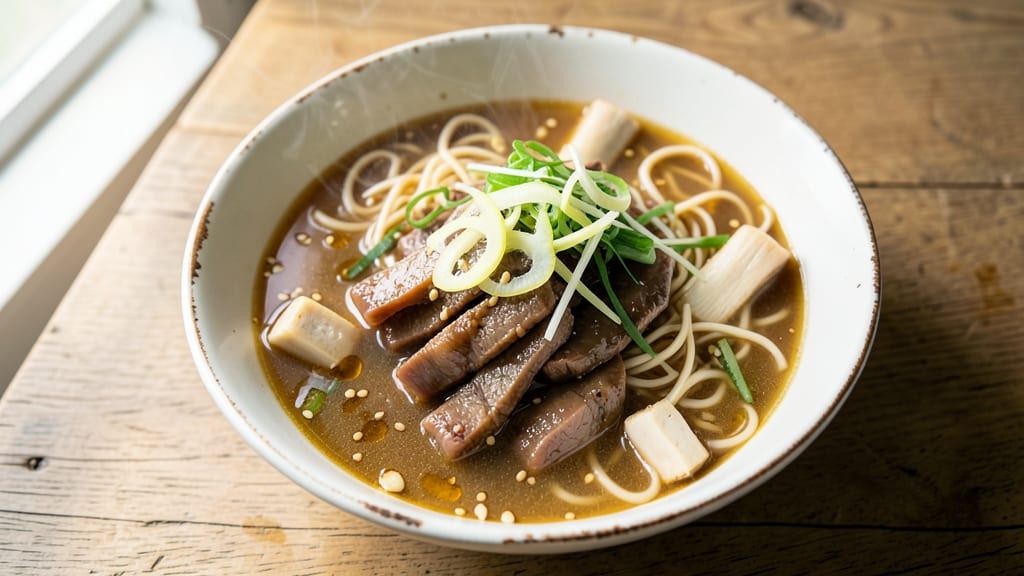
This beef tendon noodle soup recipe delivers restaurant-quality comfort in a single bowl—rich, collagen-packed broth infused with chewy tendon bites and delicate noodles. The secret lies in slow simmering, which transforms tough beef tendons into melt-in-your-mouth texture while extracting deep umami flavor from the bones and aromatics.
I’ve perfected this version to balance traditional methods with modern efficiency, whether you’re using a pressure cooker or a slow simmer on the stovetop.
The beauty of this dish is its dual texture contrast: tender, jelly-like tendon pieces that practically dissolve on your tongue alongside al dente wheat noodles. The broth develops layers of flavor from ginger, garlic, star anise, and soy sauce, creating a savory depth that’s both comforting and complex.
What makes it special is the collagen-rich broth, which not only tastes incredible but also supports joint health—a bonus you won’t find in instant noodle soups.
By the time you finish this recipe, you’ll have a steaming bowl of soup that’s warm, hearty, and deeply satisfying—perfect for chilly evenings or as a post-workout meal.
The aroma alone will fill your kitchen with an inviting warmth, while the first spoonful delivers that perfect harmony of textures and flavors. Whether you’re serving it to a family gathering or treating yourself after a long day, this soup is designed to impress without requiring advanced skills.
The best part? It’s versatile enough to adapt to your schedule. Use a pressure cooker for a quick 90-minute version or slow simmer for 4-5 hours to deepen the flavors even further.
Garnish with green onions, cilantro, or a drizzle of chili oil for extra brightness. Here’s how to make it—step by step—for a bowl of soup that tastes like home.
Ingredients for beef tendon noodle soup
Six ingredients transform tough beef tendons into melt-in-your-mouth bites—collagen-rich broth included.
| Ingredient | Amount | Notes |
|---|---|---|
| Beef Tendon 🥩 | 2 ½ lb | Cut into 1-inch cubes |
| Beef Bones 🦴 | 2 lb | Marrow bones preferred |
| Dried Wheat Noodles 🍜 | 1 lb | Ramen or udon style |
| Green Onions 🧅 | 1 whole | Sliced for garnish |
| Fresh Ginger 🌿 | ½ cup | Grated, peeled |
| Garlic Cloves 🧄 | 8 cloves | Smashed, not minced |
| Star Anise Pods 🌟 | 2 whole | Lightly crushed |
| Soy Sauce 🍶 | ½ cup | Dark soy preferred |
| Sesame Oil 🫒 | 1 tbsp | Toasted for aroma |
| Dried Shitake Mushrooms 🍄 | 4 whole | Rehydrated, sliced |
| Cilantro 🌿 | ¼ cup | Chopped for garnish |
| Salt 🧂 | 2 tsp | Adjust to taste |
| Black Peppercorns 🌶️ | 1 tsp | Crushed, not ground |
| Chili Oil 🔥 | 2 tbsp | For finishing |
The beef tendon is the star—look for well-marbled cuts at your local Asian market or butcher shop. Costco often carries pre-cut beef tendons in the frozen section, which saves time. If you're buying whole, ask for the tendon slices near the bone—they're packed with flavor. The bones? Marrow bones add richness, but any beef bones will work. Don't skimp on the ginger—fresh, organic ginger from the store's produce section has the best zing. If you can't find it, frozen works too—just grate it frozen for easier peeling.
No star anise? Cinnamon sticks or fennel seeds add warmth, though star anise gives that signature depth. Dark soy sauce unavailable? Regular soy sauce plus a pinch of sugar does the trick. The dried shitake mushrooms? Trader Joe's has them in bulk—soak them in hot water for 20 minutes to rehydrate. For the noodles, ramen or udon work best, but any wheat noodles will do. The sesame oil is non-negotiable—it's what makes this soup sing. Use toasted sesame oil for maximum aroma, not the cheap stuff in small bottles.
This soup tastes even better the next day—reheat gently on low to preserve the collagen. Store broth separately if you want to freeze it for up to 3 months. The noodles? Cook them fresh when serving. Garnish with green onions and cilantro right before eating—cilantro wilts fast, so add it last. For extra richness, serve with crispy fried shallots on top. Leftovers? Portion into containers for quick lunches—just add hot water to rehydrate the noodles.
Why You'll Love This Recipe
- Soup in a Slow Simmer: The beef bones and tendons do all the work—just toss them in cold water, bring to a boil, then let it bubble away. No fancy techniques, no hovering over the stove. That deep, rich broth builds itself while you sip tea or fold laundry.
- Chewy Magic Happens: The tendons turn tender but stay just firm enough to bite into—like a hug from your grandma’s kitchen. Slurp those noodles with the broth clinging to them, and you’ll understand why this isn’t just soup; it’s a flavor explosion in every spoonful.
- Leftovers That Beg for More: This soup only gets better the next day. The flavors meld into something even richer, and reheating takes two minutes. Pack it for lunch or freeze portions—your future self will thank you when you’re too tired to cook.
- Budget Feast for Everyone: A single pot feeds four hungry people for under $10. Tendons and bones stretch into gallons of broth, and dried noodles cost pennies. Honestly, it’s the kind of meal that makes you feel like you’re feeding a crowd without breaking the bank.
Step-by-step instructions for beef tendon noodle soup
Transform tough cuts into melt-in-your-mouth chewy bites with this slow-cooked masterpiece.
Prepare the Beef Tendon and Bones
Cut the 2.5 lb beef tendon into 1-inch cubes—this size ensures even cooking and perfect chewiness. For the 2 lb beef bones, choose marrow bones if possible, as they add rich flavor and gelatin to the broth. Rinse both the tendon and bones thoroughly under cold water and pat them completely dry with paper towels.
In a large stockpot, combine the prepared beef tendon and bones. Add 2 tsp salt and 1 tsp crushed black peppercorns to season. The salt will help draw out impurities, while the peppercorns infuse subtle warmth into the broth. Cover with 12 cups cold water—enough to submerge everything completely—then bring to a boil over high heat. Once boiling, immediately reduce to a gentle simmer and skim off any foam that rises to the surface for the first 10 minutes. This removes impurities and ensures a crystal-clear broth.
Simmer the Broth with Aromatics
After skimming, add the 0.5 cup grated fresh ginger, 8 smashed garlic cloves, 2 lightly crushed star anise pods, and 0.5 cup soy sauce. The ginger and garlic will mellow as they cook, adding depth rather than sharpness, while the star anise contributes a subtle licorice note. Stir gently to combine, then adjust the heat to maintain a barely simmering state—you should see just a few tiny bubbles breaking the surface.
Cover the pot and let it cook for 3 hours. This long, slow simmer is critical—it breaks down collagen in the tendon and bones, transforming them into tender, chewy bites while extracting gelatin that thickens the broth naturally. Check occasionally to ensure the water level hasn't dropped too low; add hot water as needed to keep everything submerged. The broth should smell deeply savory and aromatic by the end of this time.
Add Noodles and Mushrooms
While the broth simmers, prepare the 4 dried shitake mushrooms by soaking them in 2 cups hot water for 20 minutes until pliable. Drain, then slice them into ¼-inch pieces. In a separate bowl, combine the 1 lb dried wheat noodles with 1 tbsp toasted sesame oil—this adds a nutty aroma and helps the noodles absorb flavor. Toss gently to coat.
After the 3-hour simmer, carefully remove the beef tendon and bones with tongs and set them aside. Strain the broth through a fine-mesh sieve into a clean pot, pressing gently on the solids to extract maximum flavor. Return the broth to the pot and bring it back to a gentle simmer. Add the prepared shitake mushrooms and simmer for 5 minutes to infuse their umami depth. Then, add the sesame oil-coated noodles and cook for 2-3 minutes—just until they're tender but still hold their shape. The noodles should float to the surface when done.
Finish and Serve
Return the beef tendon and bones to the pot and heat everything through for 2 minutes. The tendon should now be fork-tender with a satisfying chew, while the bones should yield rich marrow. Taste the broth and adjust seasoning with additional soy sauce or salt if needed—it should be deeply savory but balanced.
To serve, ladle the hot soup into bowls, garnishing each with chopped green onions and cilantro. Drizzle with 2 tbsp chili oil just before serving to add a bright, spicy contrast to the rich broth. The soup is best enjoyed immediately, while the noodles are warm and the broth is steaming. Each bite should deliver a perfect harmony of chewy tendon, silky broth, and aromatic mushrooms—this is comfort food at its finest.
Pro Tips For Making Beef Tendon Noodle Soup
- Parboil Tendons First: Toss the beef tendon in boiling water for 10 minutes before adding it to the pot—this softens the collagen and cuts cooking time by nearly half. I learned this the hard way after staring at a pot for 5 hours wondering why my tendons were still rubbery.
- Char the Bones: Blacken the beef bones on the stovetop before simmering—this unlocks deeper flavor and prevents a bland broth. Use high heat and let them sear for 3-4 minutes per side, even if it looks messy.
- Soak Noodles Cold: Skip the hot water and soak dried wheat noodles in cold water for 10-12 minutes—they absorb evenly and won’t turn mushy when added to the hot soup. (Yes, even if you’re impatient like me.)
- Add Ginger Late: Toss fresh ginger slices into the broth only in the last 15 minutes—this keeps the aroma sharp and prevents it from dissolving into bitterness. Thin slices work better than grated pieces for this dish.
Creative variations of beef tendon noodle soup
Spicy Sichuan Style
Transform this soup into a fiery Sichuan masterpiece by adding 1 tbsp chili bean paste and 1 tsp Sichuan peppercorns during the 3-hour simmer. Toast the peppercorns in a dry pan for 30 seconds until fragrant, then crush lightly before adding to the broth.
Finish each bowl with 2 tbsp chili oil infused with 1 tsp minced garlic and ½ tsp red pepper flakes for maximum heat. Serve with extra crispy fried shallots on top for texture contrast. 🔥
Vegetarian Adaptation
Swap beef tendon and bones for 1.5 lb king oyster mushrooms (cut into 1-inch chunks) and 2 lb shiitake mushrooms (stems removed). Add 1 tbsp soy sauce and 1 tsp mushroom powder to the broth for depth.
The mushrooms will develop a satisfying chewiness when slow-cooked, mimicking the texture of beef tendon. Garnish with toasted sesame seeds and extra green onions for freshness. 🌱
Pressure Cooker Shortcut
Cut your cooking time dramatically by using an Instant Pot or similar pressure cooker. After the initial 10-minute boil and skimming, add all aromatics and pressure cook for 90 minutes on high pressure.
Release pressure naturally, then proceed with the noodles and mushrooms as directed. This method preserves all the collagen and gelatin while delivering restaurant-quality results in under 2 hours. 💫
Korean-Inspired Kimchi Twist
Add ½ cup chopped kimchi and 1 tbsp gochujang (Korean chili paste) during the final 5 minutes of cooking. The tangy, spicy kimchi balances the rich broth beautifully.
Top each serving with 1 tbsp kimchi juice and a sprinkle of toasted sesame seeds. Serve with steamed rice on the side for a complete meal. 🌶️
Winter Comfort Version
Boost the warming qualities by adding 1 cinnamon stick and 3 cloves during the simmer. Include ½ cup chopped daikon radish with the mushrooms for natural sweetness. Garnish with thinly sliced scallions and a drizzle of toasted sesame oil.
This version feels especially cozy during cold months and pairs perfectly with warm crusty bread. ❄️
Protein-Packed Add-Ins
For extra protein, stir in ½ cup cooked quinoa or ½ cup chickpeas during the final 2 minutes of cooking. The quinoa adds nutty flavor while the chickpeas contribute a satisfying bite.
For seafood lovers, add ½ lb shrimp in the last 3 minutes** of cooking—just until they turn pink. Both options work beautifully without overpowering the broth. 💪
Nutrition facts
Frequently asked questions
Why does beef tendon need such a long cooking time?
Beef tendon contains tough connective tissue that requires slow cooking to break down collagen into gelatin. The 3-hour simmer transforms it into tender, chewy bites while extracting rich flavor from the bones. This process creates that signature silky mouthfeel that makes the soup so satisfying.
Can I substitute beef tendon with other cuts?
Yes! Use chuck roast or brisket cut into cubes—they'll develop similar tenderness. For a vegetarian option, king oyster mushrooms or firm tofu work well when slow-cooked. Just adjust cooking time by 20-30 minutes longer for meat substitutes.
How do I know when the broth is ready?
The broth should smell deeply savory with no gamey or metallic notes. When you remove the tendon, it should be fork-tender with slight resistance (not mushy). The broth will naturally thicken as it cools—this is the collagen gelling! If it's too thin, simmer uncovered for 10-15 minutes to reduce.
Can I make this soup in a slow cooker?
Follow the same steps but transfer everything to your slow cooker after skimming. Cook on low for 6-8 hours or high for 4-5 hours. The longer cook time actually enhances the broth's depth. Just add noodles in the last 10 minutes to prevent overcooking.
What if my tendon pieces are still tough?
This usually means they didn't cook long enough. Return them to the broth and simmer for another 30-45 minutes uncovered. For extra tenderness, add 1 tbsp vinegar (white or rice) to help break down fibers. If they're still tough, they may have been overcooked earlier—try smaller pieces next time.