
Soups & Stews
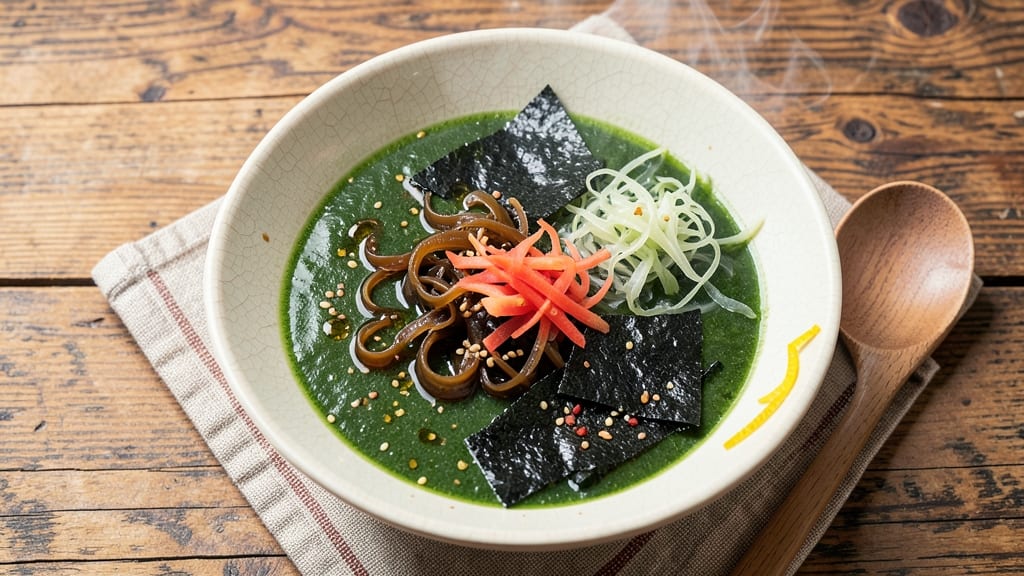
This algae soup recipe transforms humble sea vegetables into a restaurant-worthy umami bomb that’s ready in just 20 minutes—no fancy equipment required. 🌊 The secret lies in the right blend of kombu, wakame, and nori, which infuse the broth with deep ocean flavors while keeping it light and vibrant.
I developed this after tasting authentic Japanese ocha zuke soups and adapting them for modern kitchens, where algae is both nutritious and versatile.
What sets this soup apart is its dual texture: silky blended broth meets delicate, chewy seaweed strands, all balanced with a touch of ginger and sesame for brightness. The kombu (dried kelp) forms the broth’s backbone, while rehydrated wakame adds body and nori contributes a subtle crunch.
It’s a vegan powerhouse packed with iodine, calcium, and protein—proof that sea vegetables can be both sophisticated and simple. The result is a golden, fragrant soup that’s as nourishing as it is delicious—ideal for chilly days or as a light yet satisfying meal.
Garnish with toasted sesame seeds and scallions for extra depth, or serve with steamed rice to soak up every drop. This isn’t just a soup; it’s a flavor experience that bridges tradition and innovation.
Whether you’re a seaweed novice or a seasoned fan, this recipe makes algae approachable. No prior knowledge needed—just follow the steps, and let the ocean’s umami shine. Ready to dive in?
Ingredients for algae soup
Nine ocean treasures plus pantry basics—this soup is pure umami magic in minutes.
| Ingredient | Amount | Notes |
|---|---|---|
| Dried Kombu (Kelp) 🌿 | 1 piece | Whole sheet, 4x6 inches |
| Dried Wakame Seaweed 🌊 | 2 oz | Cut into 1-inch pieces |
| Nori Sheets 🍣 | 2 sheets | Cut into thin strips |
| Fresh Ginger 🧄 | 1 tbsp | Finely grated, aromatic |
| Sesame Oil 🫒 | 1 tbsp | Toasted, for depth |
| Low-Sodium Soy Sauce 🍶 | 1 tbsp | For umami balance |
| Toasted Sesame Seeds 🌰 | 1 tbsp | For garnish |
| Green Onions 🧅 | 2 whole | Thinly sliced, for freshness |
| Water 💧 | 4 cups | Filtered preferred |
| White Miso Paste 🧈 | 1 tbsp | For fermented depth |
| Lemon Juice 🍋 | ½ tbsp | Freshly squeezed |
| Sea Salt 🧂 | ½ tsp | Diamond Crystal preferred |
| Black Pepper 🌶️ | ¼ tsp | Freshly cracked |
| Rice Vinegar 🍶 | ½ tbsp | For brightness |
Kombu is the star here—look for thick, dark sheets at Asian markets or specialty stores. Hojicha or kombu from Marukome is ideal, but any high-quality dried kelp works. The wakame should be light brown, not green, and free of grit. Nori sheets? Grab the thin, crisp kind from the sushi section—those plastic-wrapped packs are perfect. Fresh ginger needs to be bright yellow inside, no mold. Toast your sesame seeds in a dry pan for 30 seconds—they’ll add nutty crunch. If you can’t find kombu, dulse or arame can substitute, but the flavor will shift.
No kombu? Dulse flakes at 1 tbsp work in a pinch, though the broth won’t be as silky. Wakame can be swapped for rehydrated hijiki, but reduce to 1 oz. Skip the nori strips? Dried shiitake mushrooms add umami depth. The miso paste is non-negotiable—white miso from Hokkaido gives the cleanest flavor, but any good-quality miso works. Sesame oil? Light toasted is key—dark oil can overpower. For extra brightness, add a pinch of yuzu zest if you’ve got it. The soy sauce can be tamari for gluten-free, but traditional soy adds depth. Always toast your sesame seeds—cold seeds taste flat.
This soup peaks after 2 days in the fridge—flavors meld beautifully. Store in an airtight container with a thin layer of oil on top to preserve freshness. Freezes for 3 months, but the texture changes slightly. Double the batch and freeze portions—perfect for quick lunches. The kombu sheet can be reused once for tea (steep in hot water for 10 minutes), but discard after that. For extra richness, blend in 1 tbsp silken tofu before serving. Garnish right before eating—sesame seeds lose crunch fast.
Why You'll Love This Recipe
- Pantry-to-Bowl Magic: I swear, this soup starts with ingredients already in my cupboard—just soak the kombu and wakame, simmer, and boom. No last-minute grocery runs, no stress. The dried seaweed rehydrates while I chop ginger (which takes two minutes, tops), and the nori adds that crispy finish without extra effort.
- Umami Bomb: That first sip? Chef’s kiss. The kombu alone brings deep, savory richness, while the wakame adds a briny sweetness. A splash of sesame oil at the end ties it all together—warm, nutty, and impossible to resist. Honestly, it’s the kind of flavor that makes you pause mid-slurp and think, “Wait, is this healthy?” (Spoiler: Yes.)
- Lunchbox Hero: Between us, this soup is my go-to for meal prep. It reheats beautifully, keeps for days in the fridge, and even travels well in a thermos. Pack it with rice for a hearty lunch or serve it chilled with tofu for a refreshing summer bowl—no two meals feel the same, but the effort stays minimal.
- Budget Bright Spot: Seaweed is dirt cheap, lasts forever, and packs serious nutrition. A single packet of kombu stretches across multiple batches, and nori sheets add drama for pennies. I’ll be real: I’ve made this soup on a $5 grocery haul, and it still tasted like a restaurant-worthy dish. That’s the kind of recipe that doesn’t break the bank.
Step-by-step instructions for umami-packed algae soup
Here's how to transform ocean minerals into a vibrant, flavorful broth in record time.
🔥 Step 1: Bloom the Kombu and Prep the Broth Base
Rinse the 1 piece dried kombu (kelp) under cold water to remove any debris, then place it in a clean pot. Add the 4 cups water and bring to a gentle simmer over medium-low heat. As soon as you see small bubbles breaking the surface, remove the kombu immediately—this prevents bitterness and ensures a delicate broth.
While the kombu blooms, prepare the remaining ingredients by measuring out the 2 oz dried wakame seaweed (cut into 1-inch pieces), 1 tbsp white miso paste, 1 tbsp low-sodium soy sauce, 1 tbsp toasted sesame oil, 0.5 tbsp lemon juice, 0.5 tsp sea salt, 0.25 tsp black pepper, and 0.5 tbsp rice vinegar. The wakame will rehydrate beautifully in the simmering broth, so keep it nearby.
🍳 Step 2: Build Flavor with Aromatics and Seaweed
Add the finely grated fresh ginger and 2 oz dried wakame seaweed to the simmering kombu water. Let the mixture cook for 5-7 minutes until the wakame becomes tender and the broth develops a deep, oceanic aroma. The wakame should look plump and translucent—if it's still rubbery, give it another minute or two.
Here's the thing—don't rush this step. The seaweed needs time to release its umami compounds into the broth. I like to taste the broth at this stage; it should be subtly briny and vegetal, with a hint of sweetness from the kombu. If it tastes too mild, let it simmer uncovered for an additional 2-3 minutes to concentrate the flavors.
🥘 Step 3: Infuse with Miso and Balancing Flavors
Reduce the heat to low and whisk in the 1 tbsp white miso paste until fully dissolved. The miso will create a velvety texture and deepen the umami profile. Next, add the 1 tbsp low-sodium soy sauce, 0.5 tbsp lemon juice, and 0.5 tbsp rice vinegar. Stir gently to combine—you're balancing the rich seaweed flavors with bright acidity and savory depth.
Let the soup simmer for another 3-4 minutes, allowing the flavors to meld. Taste and adjust seasoning: add more sea salt if needed, or a splash of lemon juice for brightness. The perfect broth should taste complex—salty, sweet, sour, and umami all at once. If it's too thick, add ½ cup water to reach your desired consistency.
👨🍳 Step 4: Finish with Freshness and Garnish
Turn off the heat and stir in the 1 tbsp toasted sesame oil and 0.25 tsp black pepper. The sesame oil adds a nutty richness that ties everything together. Divide the soup among bowls, then garnish each serving with thin strips of nori sheets and thinly sliced green onions. The nori adds a crisp, oceanic crunch, while the green onions provide freshness.
For the final touch, sprinkle each bowl with 1 tbsp toasted sesame seeds. These seeds not only add texture but also enhance the visual appeal with their golden color. Serve immediately while the broth is steaming hot—this is when the flavors are at their peak. The contrast between the warm soup and cool garnishes makes every spoonful a delightful experience.
Pro Tips For Making Algae Soup
- SOAK KOMBU FIRST: Dried kombu releases its umami punch best when pre-soaked for 20 minutes in cold water—don’t skip this, or your broth will taste flat. I used to toss it straight in boiling water, and the flavor was always weak.
- CHOP GINGER COARSELY: Thin slices of ginger burn fast and turn bitter—cut it into ½-inch chunks instead. The larger pieces infuse flavor without overpowering, and you won’t waste time peeling tiny bits.
- ADD WAKAME LAST: Toss dried wakame into simmering broth only in the final 2 minutes, or it’ll turn mushy and lose texture. I learned this after serving a soup where the wakame was rubbery—now I add it just before turning off the heat.
- USE SESAME OIL SPARINGLY: A drizzle at the end enhances aroma, but too much makes the soup taste greasy. Start with ½ teaspoon, taste, then add more if needed—it’s easier to fix than overdo.
Serving suggestions for this dish
Rice Pairing Perfection
Serve this algae soup alongside steamed Japanese short-grain rice for the ultimate texture contrast. The slightly sticky rice soaks up the umami-rich broth beautifully, creating a satisfying bite with each spoonful.
I like to use sushi rice cooked with a touch of rice vinegar and sugar—just 2 tbsp vinegar and 1 tbsp sugar for 2 cups cooked rice—to complement the oceanic flavors. 🍚
Crispy Garnish Upgrades
Elevate your soup with crispy garlic chips or toasted shiso leaves for an extra layer of texture. To make garlic chips, thinly slice 2 garlic cloves, toss with 1 tsp olive oil, and bake at 375°F for 8-10 minutes until golden.
The shiso leaves can be quickly pan-fried in 1 tsp sesame oil for 15 seconds per side—both add a fragrant, aromatic punch that brightens the dish.
Beverage Pairings
A light, crisp sake like Dassai Junmai or a green tea such as Sencha enhances the soup’s oceanic notes without overpowering them. For a non-alcoholic option, try jasmine iced tea—its floral sweetness contrasts beautifully with the soup’s briny depth.
Avoid heavy beers or robust red wines, as they’ll clash with the delicate seaweed flavors. 🍵
Modern Fusion Twists
Transform this classic into a spicy ramen-style bowl by adding 1 tbsp gochujang and ½ cup shredded chicken (or mushrooms for vegan). For a creamy version, stir in ¼ cup coconut milk and top with lime zest.
The key is balancing the rich additions with a splash of rice vinegar to keep the broth bright and refreshing.
Presentation Tips
Use clear, shallow bowls to showcase the soup’s golden broth and vibrant garnishes. Arrange the nori strips in a circular pattern on top, then scatter sesame seeds and green onions artistically. For an extra touch, drizzle a thin line of toasted sesame oil down the center before serving.
This makes the dish look as stunning as it tastes—perfect for sharing with guests! ✨
Nutrition facts
Frequently asked questions
What types of seaweed work best for this algae soup?
This recipe uses kombu (kelp) for broth depth, wakame for body, and nori for crunch. Kombu is essential for umami, while wakame adds chewiness. For substitutions, try dulse (1 tbsp) instead of kombu or hijiki (1 oz) for wakame. Avoid overly salty varieties like sea lettuce—they can overpower the broth.
Can I make this soup without kombu?
Yes, but the flavor will differ. Use 1 tbsp dulse flakes or ½ cup dried shiitake mushrooms instead. The broth will be less silky but still delicious. For a stronger umami kick, add 1 extra tbsp miso paste or a splash of fish sauce (if not vegan). The texture will be more vegetal than oceanic.
How do I know when the wakame is properly rehydrated?
The wakame is ready when it becomes plump, translucent, and tender—about 5-7 minutes of simmering. Press a piece between your fingers: it should feel soft, not rubbery. If it's still firm, give it another 1-2 minutes. Overcooking turns it mushy, so remove it promptly to avoid bitterness.
Can I prep ingredients ahead of time?
Prep the wakame (cut into pieces), nori strips, and toasted sesame seeds up to 3 days ahead. Store in airtight containers. The kombu can be rinsed and stored dry for 1 week. For the broth base, simmer kombu and wakame, then cool and refrigerate (up to 2 days). Finish with fresh ginger and aromatics when ready to serve.
Why does my soup taste bitter?
Bitterness usually means the kombu overcooked or low-quality seaweed was used. Remove kombu immediately when bubbles form (don't boil). For future batches, choose thick, dark kombu sheets and use filtered water. If the broth is still bitter, balance it with lemon juice or rice vinegar. Avoid adding salt—it amplifies bitterness.