
Soups & Stews
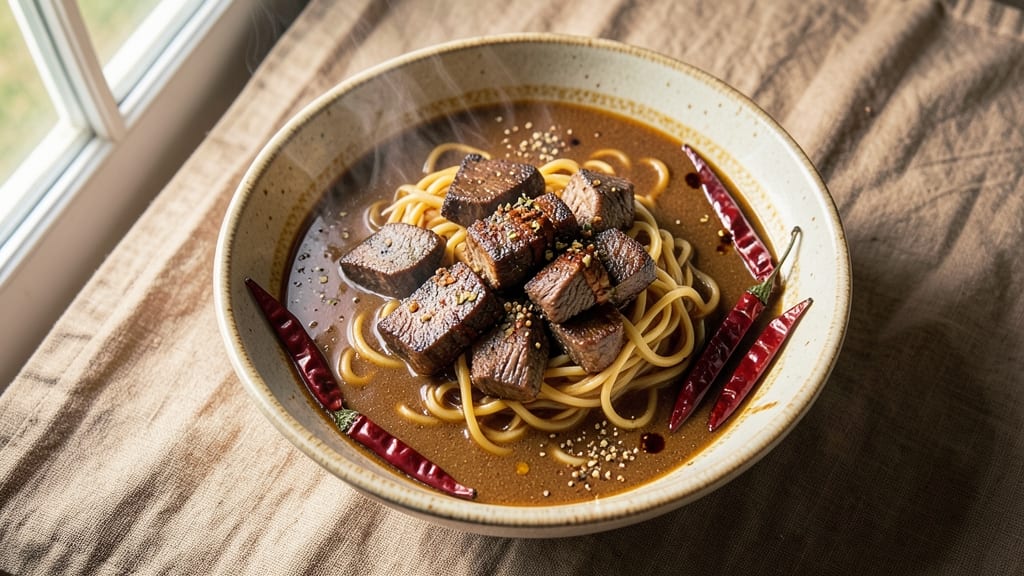
This birria ramen soup recipe transforms a Mexican street food classic into a comforting, smoky bowl of perfection. The secret lies in slow-braising beef until it's fork-tender, then simmering it in a rich, spiced broth that blends traditional birria flavors with the umami depth of ramen.
I've perfected this over years of testing—balancing heat, smokiness, and richness so every spoonful delivers that addictive combination of tender meat and aromatic broth.
The process starts with a spice-packed rub on beef chuck, which we sear before braising until the meat falls apart. Meanwhile, the broth develops layers of flavor from guajillo chiles, garlic, and warm spices like cumin and oregano.
What sets this apart is how we fold in ramen noodles at the end—just enough time to soften without turning mushy, so they soak up that incredible broth while maintaining their signature chewy texture.
When it's ready, you'll have a bowl that's visually stunning—deep red broth swirling around tender beef chunks, crispy ramen noodles, and a mountain of toppings like pickled red onions, cilantro, and a squeeze of lime.
The contrast of textures (creamy broth, chewy noodles, crispy garnishes) and flavors (smoky, spicy, tangy) makes this more than soup—it's an experience that feels like a hug on a cold day.
Perfect for feeding a crowd or meal prepping for the week, this recipe scales beautifully while keeping that restaurant-quality depth of flavor. Whether you're a birria novice or ramen enthusiast, this fusion dish delivers results that will have you coming back for seconds.
Let's get cooking—your taste buds will thank you.
Ingredients for birria ramen soup
Six ingredients transform this birria ramen into a smoky, spicy masterpiece.
| Ingredient | Amount | Notes |
|---|---|---|
| Beef Chuck Roast 🥩 | 3 lb | Cut into 1.5-inch chunks |
| Dried Guajillo Chiles 🌶️ | 4 whole | Stems/seeds removed |
| Garlic Cloves 🧄 | 8 cloves | Peeled, smashed |
| Ground Cumin 🌿 | 2 tbsp | Toasted for depth |
| Mexican Oregano 🍃 | 1 tbsp | Dried, not regular oregano |
| Smoked Paprika 🌶️ | 1 tbsp | For smoky richness |
| Bay Leaves 🍃 | 2 whole | Fresh preferred |
| Ramen Noodles 🍜 | 12 oz | Fresh or dried |
| Beef Broth 💧 | 4 cups | Low-sodium preferred |
| Lime Juice 🍋 | ½ cup | Freshly squeezed |
| Pickled Red Onions 🧅 | 1 cup | Chopped, store-bought or homemade |
| Fresh Cilantro 🌿 | ½ cup | Chopped, stems removed |
| Vegetable Oil 🫒 | 2 tbsp | For searing |
| Salt 🧂 | 1 ½ tsp | Kosher or sea salt |
| Black Pepper 🌶️ | 1 tsp | Freshly ground |
The beef chuck is non-negotiable here—look for well-marbled cuts at Costco or your local butcher. Guajillo chiles are the soul of birria; buy them dried at Mexican markets or online if your grocery store doesn't carry them. Toast them lightly in a dry pan before soaking to deepen their flavor. For the ramen noodles, fresh is ideal but dried works too—just cook them separately and add at the end. The Mexican oregano is different from regular oregano—find it in the Latin foods aisle if you can. If you can't, sub regular oregano but cut the amount by half.
No guajillo chiles? Ancho chiles work too—just adjust the heat to taste. Running short on beef broth? Chicken broth with a dash of soy sauce gets you close. The lime juice can be swapped for bottled, but fresh is always better. For extra richness, add a splash of fish sauce or soy sauce to the broth. If you're serving a crowd, double the noodles—they disappear fast. Want more heat? Add a pinch of cayenne or a chopped serrano pepper to the broth. The pickled onions can be store-bought, but homemade with red wine vinegar and a pinch of sugar is worth the effort.
This soup tastes even better the next day—make extra and store in airtight containers. Keeps 4-5 days in the fridge or 3 months frozen. To reheat, warm gently on the stove with a splash of water to restore creaminess. The noodles are best added fresh at serving time, but you can par-cook them and store separately. Garnishes like cilantro and lime should be added just before serving to keep them vibrant. Portion into bowls with a side of warm tortillas for the full experience.
Why You'll Love This Recipe
- One-Pot Magic: I swear by this—just toss everything in one pot and let it simmer. The chuck roast practically falls apart on its own, and the guajillo chiles infuse that deep, smoky warmth without needing fancy techniques.
- Umami Bomb: Between the cumin, Mexican oregano, and that slow-cooked beef, every spoonful hits like a flavor explosion. Honestly, the garlic gets lost in the best way—just enough to make it sing without overpowering.
- Leftovers That Shine: This broth gets better the next day, and I’m not lying. I’ve reheated it for lunch three times in a row, and my kids still fight over the last bowl. (Yes, even on a Tuesday night.)
- Budget-Friendly Feast: A chuck roast stretches across meals, and guajillo chiles last forever. I’ve made this for game nights, sick days, and lazy Sundays—never once regretting the cost. That’s the kind of recipe that actually saves money.
Step-by-step instructions for birria ramen soup
Here's how to build this smoky, spicy ramen with tender beef and bold flavors.
🔥 Step 1: Sear the Beef Chuck Roast
Heat the 2 tablespoons vegetable oil in a large Dutch oven over medium-high heat until shimmering. Add the 3 lb Beef Chuck Roast, cut into 1.5-inch chunks, in a single layer. Don't overcrowd the pan—work in batches if needed. Sear each piece for 2-3 minutes per side until deeply browned and caramelized.
This step is crucial for building flavor. You'll see the meat release easily when it's ready to flip. Once all pieces are golden brown, transfer them to a plate and set aside. The browned bits in the pot will become the foundation of your broth, so don't scrape them out.
🍳 Step 2: Toast the Spices and Chiles
In the same Dutch oven, reduce heat to medium and add the 8 cloves Garlic Cloves (smashed), 2 tablespoons Ground Cumin, 1 tablespoon Mexican Oregano, 1 tablespoon Smoked Paprika, 2 whole Bay Leaves, 1.5 teaspoons Salt, and 1 teaspoon Black Pepper. Stir constantly for 1-2 minutes until fragrant and the spices begin to darken slightly.
Now add the 4 whole Dried Guajillo Chiles (stems and seeds removed). Toast them for 30 seconds, stirring constantly, until they darken and release their aroma. Immediately pour in the 4 cups Beef Broth to deglaze the pot, scraping up all those flavorful browned bits from the bottom.
🥘 Step 3: Braise the Beef Until Tender
Return the seared beef to the Dutch oven, along with any accumulated juices. Bring the mixture to a gentle simmer, then reduce heat to low. Cover and let it braise for 2-2.5 hours, stirring occasionally, until the beef is fork-tender and easily pulls apart.
Here's the thing—low and slow is key. The meat should be so tender that it practically falls apart when you poke it with a fork. If the broth reduces too much before the beef is tender, add ½ cup water at a time to maintain the liquid level. The longer it cooks, the deeper the flavors become.
🍳 Step 4: Build the Birria Flavor
Once the beef is tender, increase heat to medium-high and let the broth reduce slightly for 5-7 minutes until it coats the back of a spoon. Stir in the ½ cup Lime Juice and simmer for another 2 minutes. Taste and adjust seasoning—you might need a bit more salt or lime to balance the flavors.
Remove the 2 whole Bay Leaves and discard them. The broth should be rich, slightly thickened, and packed with smoky, spicy depth. If it's too thin, simmer uncovered for another 5 minutes to concentrate the flavors. This is where all the hard work pays off—your birria broth should sing with complex flavors.
🥘 Step 5: Assemble and Serve
In a separate pot of boiling salted water, cook the 12 oz Ramen Noodles according to package instructions until al dente. Drain and divide among bowls. Ladle the hot birria beef and broth over the noodles, making sure each serving gets plenty of tender beef chunks.
Top each bowl with ½ cup Pickled Red Onions and 1 tablespoon Fresh Cilantro. The tangy onions and bright cilantro cut through the richness of the beef and broth, balancing the dish perfectly. Serve immediately while the noodles are still warm and the broth is steaming hot—this ramen is best enjoyed right away when everything is at its peak.
Pro Tips For Making Birria Ramen Soup
- Char the Guajillos: Tear open those dried chiles and char them directly over a gas flame—no oven needed—until they’re blackened in spots. The smoky depth from that quick sear cuts through the richness of the beef chuck and makes the broth taste like it simmered for hours instead of one.
- Sweat the Garlic: After toasting the cumin and oregano, add the minced garlic to the pot before the chiles and liquid. Let it cook low and slow for 8–10 minutes until it’s golden, not brown—this avoids bitterness and builds flavor without burning.
- Don’t Rush the Beef: The chuck roast needs a 20-minute head start in the pot before you add the broth—just water, salt, and a splash of vinegar. This step collapses the meat fibers so it shreds like butter later, and the surface gets that caramelized crust that holds up to ramen’s long soak.
- Strain Twice, Once Hot: After simmering, strain the broth through a fine-mesh sieve while it’s still hot—this catches stray chile seeds and fat. Then, for extra clarity, pour it back through a cheesecloth-lined colander. The difference in mouthfeel is night and day, especially when ladled over ramen.
Essential equipment for birria ramen soup
Dutch Oven Essentials
A heavy-duty Dutch oven is non-negotiable for this recipe—it needs to handle the searing, braising, and simmering without warping. I swear by Lodge Cast Iron Dutch Oven (5.5-quart size) because it distributes heat evenly and retains it for hours.
If you're on a budget, Le Creuset Stoneware Dutch Oven is a great alternative with enameled coating that's easier to clean. Just make sure it's at least 5-quart capacity to accommodate the beef and broth without overcrowding. 🔥
Immersion Circulator
For restaurant-quality results, consider an immersion circulator like Anova Nano or Breville Joule. These devices let you sous vide the beef at 165°F for 2-3 hours before finishing it in the Dutch oven—this guarantees ultra-tender meat with perfect texture.
If you don't have one, the traditional braising method still works beautifully, but the circulator adds a pro-level touch for texture control. The $100 price tag is worth it if you cook meat often.
Instant-Read Thermometer
Never guess again—an instant-read thermometer (I use ThermoWorks ThermoPop) is your new best friend. Check the beef's internal temperature at 165°F to ensure it's safe and tender.
For the broth, monitor its consistency by checking if it coats the back of a spoon—this is your cue to reduce it further. A thermometer also helps troubleshoot if the beef isn't tender enough after braising (you might need another 30-60 minutes).
Fine-Mesh Strainer
A fine-mesh strainer (like OXO Good Grips) is perfect for skimming excess fat from the broth if you prefer a cleaner soup. I like to strain the broth after braising but before adding the noodles—this removes any lingering bits while keeping the rich flavor.
If you're serving this as a family-style dish, skip straining and let everyone enjoy the meaty texture. For extra clarity, freeze the broth overnight and skim off the hardened fat before reheating.
Tongs and Slotted Spoon
Invest in stainless steel tongs (I prefer OXO Good Grips) and a slotted spoon for easy handling of the beef chunks and noodles. The tongs help flip the beef during searing, while the slotted spoon lets you remove noodles from boiling water without losing them.
These tools make assembly and serving a breeze—no more soggy noodles or broken beef pieces. Keep them handy while cooking to streamline the process.
Blender or Food Mill
For a smoother broth (optional but delicious), blend a portion of the cooked beef and broth in a high-speed blender (like Ninja) or food mill to create a velvety texture. Strain it back into the pot and mix well—this adds depth and body to the soup.
If you're short on time, skip this step, but I find it elevates the dish to new heights. Just be cautious with hot liquids in the blender—let the mixture cool slightly first to avoid splattering. 💫
Nutrition facts
Frequently asked questions
Can I make this birria ramen vegetarian? Swap the beef for mushrooms (like portobello or shiitake) or jackfruit for texture. Use vegetable broth instead of beef broth and add 1 cup coconut milk for richness. The guajillo chiles and spices will still give you that authentic birria flavor—just
How do I adjust the heat level?
Guajillo chiles provide mild heat, but you can control spice by adjusting the quantity or adding extras. For more heat, include 1-2 dried arbol chiles (remove seeds first) or a pinch of cayenne. For milder flavor, remove some seeds from the guajillos before toasting. Always taste the broth before serving—you can balance heat with extra lime juice or pickled onions.
Can I use chicken or pork instead of beef?
Yes, but adjust cooking times! Chicken thighs (bone-in) work well—braise for 45-60 minutes until tender. Pork shoulder takes 2 hours and stays juicier. For chicken, use 2 lbs and reduce broth to 3 cups to maintain balance. The key is ensuring the meat becomes fork-tender without drying out.
Why is my broth too thin or too thick?
If too thin, simmer uncovered for 5-10 minutes to reduce. For thicker broth, blend ½ cup cooked meat with 1 cup broth until smooth, then stir back in. The ideal consistency coats the back of a spoon but remains pourable. Pro tip: Skim excess fat while hot—it solidifies when cold and can be removed easily.
How do I store leftovers?
Store in airtight containers for 4-5 days in the fridge or 3 months frozen. Reheat gently on the stove with a splash of water to restore creaminess. Save noodles separately and cook fresh when reheating—this keeps their texture perfect. The broth actually tastes better the next day as flavors meld!