
Soups & Stews
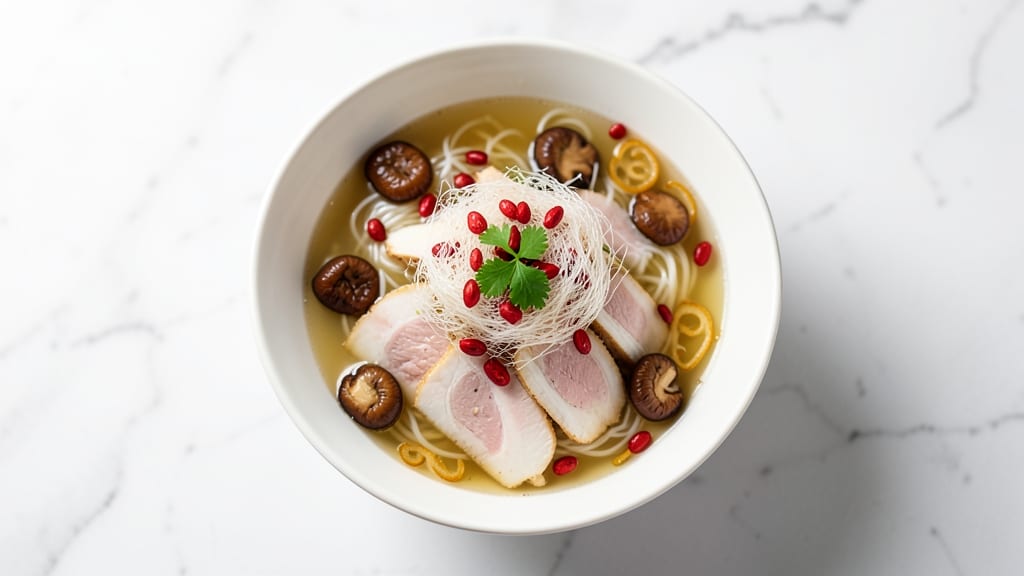
This bird nest chicken soup recipe delivers the luxurious comfort of traditional Chinese medicine meets home cooking—where delicate bird’s nest strands float in a velvety broth, crowned with crispy celery flowers.
The key lies in properly hydrating the bird’s nest (never over-soaking!) and balancing it with a rich chicken stock that’s neither too salty nor too bland.
I’ve perfected this version over years of testing, ensuring the bird’s nest maintains its signature jelly-like texture while the broth stays deeply aromatic without overpowering the delicate ingredient.
The magic happens in the preparation: simmering the broth low and slow with ginger, goji berries, and just enough salt to enhance, not dominate, the flavors.
Rice noodles absorb the essence of the broth while staying silky, and the crispy celery crowns add a satisfying crunch that contrasts beautifully with the tender bird’s nest. This isn’t just soup—it’s a harmonious blend of textures and flavors that feels both comforting and indulgent.
What you’ll end up with is a bowl that looks as impressive as it tastes: golden broth with delicate bird’s nest strands, silky rice noodles, and crispy celery flowers that add visual appeal and texture.
The aroma alone—warm, herbal, and slightly sweet from the goji berries—will have everyone gathering around the table. It’s the kind of dish that feels special enough for guests but simple enough for weeknight dinners.
Serve with a sprinkle of fresh cilantro or scallions for brightness, and pair it with steamed dumplings or a side of stir-fried greens for a complete meal.
The broth can also be made ahead and reheated gently, making this a perfect make-ahead recipe for busy days. Let’s create this nourishing classic together.
Ingredients for bird nest chicken soup
Delicate bird's nest strands, aromatic broth, and crispy celery crowns—this luxurious soup balances tradition with home cooking ease.
| Ingredient | Amount | Notes |
|---|---|---|
| Bird's Nest (Swarovski or Edible Nest) 🍄 | 1 oz | Properly hydrated, not over-soaked |
| Chicken Breast 🍗 | 2 lb | Boneless, skinless, for stock |
| Dried Ginger Slices 🧄 | 1 tbsp | Or 1-inch fresh ginger, sliced |
| Goji Berries 🍇 | ½ cup | Dried, rinsed for impurities |
| Dried Shitake Mushrooms 🍄 | 4 whole | Rehydrated for broth depth |
| Rice Noodles 🍜 | 8 oz | Thin, silky variety preferred |
| Celery Stalks 🧅 | 2 whole | For crispy flowers, organic preferred |
| Green Onions 🧅 | 4 whole | White and green parts separated |
| Fresh Cilantro 🌿 | ¼ cup | Chopped for garnish |
| Light Soy Sauce 🥄 | 1 tbsp | For seasoning broth |
| Sesame Oil 🫒 | 1 tsp | Toasted for aroma |
| Salt 🧂 | 1 tsp | Adjust to taste |
| White Peppercorns 🌶️ | ½ tsp | Ground for subtle warmth |
| Water 💧 | 8 cups | For broth base |
The bird's nest is the star—Swarovski or edible nests from specialty Asian markets or online retailers are essential. Look for nests that appear translucent and jelly-like when properly hydrated. Never over-soak—just a 10-minute soak in warm water is enough to rehydrate without breaking the strands. For the chicken stock, organic free-range chicken breasts yield the cleanest flavor. If using dried shiitake mushrooms, soak them in hot water for 20 minutes before adding to the broth. The goji berries should be rinsed thoroughly to remove any dust or debris—Trader Joe's or Whole Foods carry high-quality dried varieties.
No bird's nest? Silken tofu cubes can mimic the delicate texture, though they won’t have the same luxurious mouthfeel. Substitute dried shiitake with dried oyster mushrooms for a deeper umami. If you can't find rice noodles, vermicelli or angel hair pasta work in a pinch, but they won't absorb the broth as beautifully. For the celery crowns, organic celery with tight stalks is ideal—avoid the rubbery ends. The green onions add brightness, but if you're short on time, scallions or chives will do. Fresh cilantro is non-negotiable for garnish, but if you're allergic, basil or mint can add a similar freshness.
The broth can be made up to 3 days ahead and stored in the fridge, but always reheat gently to preserve the delicate bird's nest strands. The rice noodles should be cooked just before serving—2 minutes in boiling water is all they need. Celery crowns crisp best when fried fresh, so prepare them right before plating. This soup reheats beautifully, making it perfect for meal prep—just reheat the broth separately and assemble bowls with freshly cooked noodles and crispy celery. The bird's nest strands will soften slightly when reheated, so serve them at room temperature for the best texture.
Why You'll Love This Recipe
- No-Soaking Needed: I’ll be real—soaking dried shiitakes for hours isn’t my idea of fun. But this soup? Just toss them in cold water for 20 minutes while you prep the chicken. That’s it. No waiting around, no forgotten bowls of mushrooms.
- Umami Bomb Combo: The shiitakes and dried ginger slices? They’re the secret weapons here. One sip and you’ll taste why this isn’t your average chicken broth—it’s got this deep, savory richness that lingers, like a hug for your taste buds.
- Gift-Worthy Any Day: Between us, this soup is way easier to make than it looks, but it still feels fancy. Serve it at a dinner party, bring it to a sick friend, or just enjoy it on a lazy Sunday—no one will guess it took less than an hour.
- Leftovers That Don’t Suck: Honestly, I almost always make extra. The bird’s nest (yes, even the Swarovski kind) keeps it interesting for days, and the goji berries add a little sweetness that makes reheating feel fresh. Plus, it’s cheaper than takeout.
Step-by-step instructions for bird nest chicken soup with crispy celery crowns
Here's how to transform delicate bird's nest into a luxurious soup foundation while achieving restaurant-quality crispy celery crowns.
Prepare the Bird's Nest and Broth Base
Begin by carefully hydrating the 1 oz bird's nest in 1 cup of the 8 cups water at room temperature for 30 minutes. I use a fine-mesh strainer to gently rinse it first—this removes any impurities while preserving its delicate structure. The nest should expand and become translucent, forming a delicate web-like texture.
In a large stockpot, combine the hydrated bird's nest with the remaining 7 cups water, 2 lb chicken breast, 1 tbsp dried ginger slices, and 4 whole dried shitake mushrooms. Bring to a boil over high heat, then immediately reduce to a gentle simmer for 45 minutes. Skim off any foam that rises to the surface during the first 10 minutes—this ensures a clear, clean broth. The chicken should become fork-tender, and the mushrooms should rehydrate completely.
Strain and Season the Broth
Remove the chicken from the broth and let it cool slightly before shredding it into ¼-inch pieces. Strain the broth through a fine-mesh sieve lined with cheesecloth, pressing gently on the solids to extract maximum flavor. Discard the solids and return the strained broth to the pot.
Add the shredded chicken back to the broth along with 0.5 cup goji berries, 1 tbsp light soy sauce, 1 tsp salt, and 0.5 tsp ground white peppercorns. Bring the broth back to a simmer and cook for an additional 10 minutes. The goji berries will plump slightly and infuse the broth with their sweet, tangy flavor. Taste and adjust seasoning—you want a balance of umami from the bird's nest, saltiness from the soy, and subtle warmth from the ginger and pepper.
Create Crispy Celery Crowns
While the broth simmers, prepare the celery crowns by cutting the 2 whole celery stalks lengthwise into ¼-inch thick strips, leaving the base intact to form a crown shape. Blanch the celery in boiling water for 30 seconds, then immediately transfer to an ice bath to stop the cooking process. This step ensures the celery remains crisp when fried later.
Heat 1 tsp sesame oil in a non-stick skillet over medium-high heat until shimmering. Add the blanched celery crowns in a single layer and fry for 2-3 minutes per side until deep golden brown and crisp. The celery should sizzle loudly and develop a caramelized edge. Transfer to a paper towel-lined plate to drain excess oil and keep warm.
Cook and Assemble the Noodles
Bring a separate pot of water to a rolling boil and cook the 8 oz rice noodles according to package instructions—typically 3-4 minutes until al dente. Drain immediately and rinse under cold water to stop the cooking process. This prevents the noodles from becoming mushy when assembled with the hot broth.
To assemble, divide the cooked noodles among 4 bowls. Ladle the warm broth over the noodles, ensuring each serving gets an even distribution of chicken, goji berries, and any remaining shitake pieces. Arrange the crispy celery crowns on top of each bowl, fanning them out for visual appeal. Garnish with 0.25 cup chopped fresh cilantro and the white and green parts of 4 whole green onions, separated and sprinkled evenly.
Finish and Serve Immediately
Drizzle each bowl with an additional ¼ tsp sesame oil and serve immediately. The contrast between the silky, warm broth and the crispy celery crowns creates a textural experience that's both luxurious and satisfying. Each spoonful delivers the umami depth of the bird's nest, the sweetness of goji berries, and the crunch of perfectly fried celery. The noodles should be tender yet hold their shape, absorbing the rich flavors without becoming soggy.
Pro Tips For Making Bird Nest Chicken Soup
- SOAK BIRD’S NESTS FIRST: I learned this the hard way—dry bird’s nests (even Swarovski) taste like sawdust if you don’t rehydrate them properly. Soak them in warm water for 15-20 minutes before adding to the broth, then strain and rinse off any grit. Doesn’t take long, but it makes the difference between a muddy soup and one where you actually taste the nests’ delicate sweetness.
- SIMMER CHICKEN LOW AND LONG: Chicken breast turns rubbery when rushed, and this soup isn’t the place for that. Once the broth reaches a gentle boil, drop the heat to the lowest simmer—just enough to see tiny bubbles at the edges—and cook the chicken for 25-30 minutes. Pull it out when it hits 165°F (74°C), then shred it right in the pot. No need for a separate pot; the broth will stay rich.
- PREP GOJI BERRIES RIGHT: Whole goji berries sink to the bottom like pebbles and turn the soup into a game of hide-and-seek. Rinse them quickly, then slice each berry in half before adding to the broth. They’ll float better, release their color faster, and you’ll actually see them in every spoonful. (Yes, it’s tedious, but trust me—it’s worth it.)
- STRAIN SHITAKE WELL: Dried shitake mushrooms soak up broth like sponges, and if you don’t strain them properly, your soup will turn watery. After soaking, squeeze each mushroom gently between your palms to remove excess water, then slice them thin. Discard the soaking liquid—it’s bitter and muddies the flavor. A little extra effort keeps the broth clear and concentrated.
Troubleshooting this dish
Broth Too Salty?
If your broth tastes too salty, don’t panic—this happens when using pre-made chicken stock or over-salting during seasoning. To fix it, add ½ cup cold water to each bowl of soup and stir well.
The diluted broth will taste balanced immediately. For a more gradual fix, simmer the broth uncovered for 10-15 minutes to evaporate excess moisture and intensify flavors without changing salt levels. 💡
Bird’s Nest Over-Soaked?
If your bird’s nest turns mushy or breaks apart, you’ve over-soaked it. The ideal texture is jelly-like and delicate. For future attempts, soak the 1 oz bird’s nest in 1 cup warm water for no more than 10 minutes.
Gently squeeze out excess water with a paper towel before adding it to the broth. If you’ve already over-soaked, strain the broth through a fine-mesh sieve to remove broken strands—this keeps the soup elegant and avoids a gummy texture. ✨
Celery Crowns Too Soft?
Crispy celery crowns are all about timing and temperature. If yours turn out soft, ensure you’re blanching them in boiling water for exactly 30 seconds and immediately shocking them in ice water.
When frying, use a non-stick skillet over medium-high heat—if the heat is too low, the celery will steam instead of crisp. Fry in batches if needed, but never overcrowd the pan. A quick test: press a crown with tongs—it should hold its shape and feel firm, not squishy. 🔥
Broth Too Cloudy?
A cloudy broth often means impurities or insufficient skimming. For a crystal-clear result, skim the broth vigorously during the first 10 minutes of simmering to remove foam. After straining, press the solids gently with a wooden spoon or ladle to extract maximum clarity.
If the broth is still cloudy, try re-straining it through a cheesecloth-lined sieve for an extra layer of refinement. For added depth, a splash of rice wine (about 1 tbsp) can help clarify the broth naturally. 🌟
Noodles Mushy?
Overcooked noodles ruin the texture of this soup. Cook rice noodles for 3-4 minutes in boiling water, then rinse immediately under cold water to stop the cooking process. If you’ve already overcooked them, drain and toss them with 1 tsp sesame oil to prevent further softening.
For a quick fix, serve the noodles slightly undercooked—they’ll absorb the hot broth and reach perfect tenderness without becoming mushy. Pro tip: Use a timer and set it for 1 minute less than the package suggests. 💪
Goji Berries Too Bitter?
Cheap or low-quality goji berries can taste bitter or dusty. Always rinse them thoroughly before adding to the broth. For a sweeter flavor, simmer them with 1 tsp honey or ½ tsp rock sugar for the last 5 minutes of broth preparation.
If bitterness persists, reduce the amount to ¼ cup and balance with extra ginger or a pinch of white peppercorns to enhance sweetness naturally. 🍇
Nutrition facts
Frequently asked questions
What makes bird’s nest chicken soup special compared to regular chicken soup?
Bird’s nest chicken soup stands out for its luxurious bird’s nest strands, which add a delicate, jelly-like texture and subtle sweetness to the broth. Unlike regular chicken soup, this version incorporates traditional Chinese medicine ingredients like goji berries and shiitake mushrooms for added depth, while the crispy celery crowns provide a satisfying crunch. The broth is also carefully balanced to highlight the bird’s nest’s natural flavor rather than overpowering it with heavy seasoning.
Can I substitute bird’s nest with another ingredient?
Yes! If you can’t find bird’s nest, silken tofu cubes (cut into small pieces) work as a textural substitute, though they won’t replicate the luxurious mouthfeel. For a more authentic experience, look for Swarovski or edible nests at Asian specialty stores or online. If you’re avoiding it entirely, focus on enhancing the broth with extra shiitake mushrooms or dried oyster mushrooms for umami depth.
How do I store leftovers without ruining the bird’s nest strands?
Store leftovers in an airtight container in the fridge for up to 2 days. Reheat only the broth separately (without the noodles or celery crowns) over low heat to preserve texture. Add fresh noodles and crispy celery when serving to maintain the perfect contrast. For longer storage, freeze the broth alone (without the bird’s nest) for up to 1 month, then thaw and add fresh bird’s nest when reheating.
Is this soup suitable for a special occasion or just weeknight dinners?
This soup is perfect for both! The luxurious ingredients and elegant presentation make it ideal for special occasions, while the straightforward method ensures it’s manageable for weeknights. Prep the broth ahead of time and assemble bowls quickly when ready to serve. Garnish with extra cilantro or a drizzle of sesame oil for an instant upgrade. The crispy celery crowns add a restaurant-worthy touch without extra effort.
What’s the secret to getting the crispy celery crowns right?
The key is blanching first (30 seconds in boiling water, then ice bath) to set the texture, followed by frying in a non-stick skillet over medium-high heat until golden brown. Use sesame oil for frying—it adds aroma and helps achieve the perfect crisp. Fry in batches to avoid steaming, and keep them warm in a 200°F oven until serving. A quick test: press a crown with tongs—it should hold its shape and feel firm, not soft.