
Soups & Stews
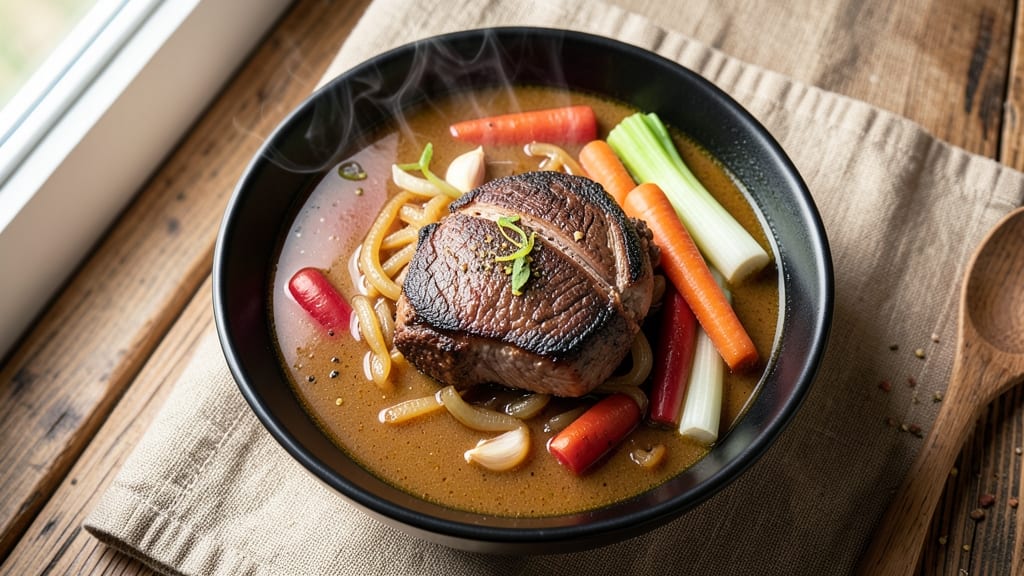
This better than bouillon vegetable beef soup recipe transforms simple ingredients into a slow-simmered masterpiece that outshines bouillon cubes—rich, layered, and brimming with umami depth. The secret lies in building flavor through caramelized aromatics and long, gentle cooking, creating a broth so satisfying it becomes the star.
Unlike store-bought versions, this soup develops complexity through time, with each ingredient contributing its own harmony to the final bowl.
What sets this recipe apart is the celery crown crunch—a delicate garnish of crisp fried celery leaves that adds both texture and visual appeal without overpowering the dish.
The slow simmer allows tough cuts of beef to melt into tender perfection while vegetables soften just enough to release their natural sweetness. Every spoonful delivers a balance of savory, slightly sweet, and subtle acidity that keeps you reaching for more.
The result is a soup so hearty it feels like a hug on a chilly day, yet light enough to enjoy year-round. The beef becomes fork-tender, the vegetables melt into the broth, and the celery crown adds a refreshing contrast that elevates every bite.
This isn't just soup—it's a complete meal that transforms humble ingredients into something extraordinary.
Perfect for meal prep or serving immediately, this recipe scales effortlessly while maintaining its depth of flavor. The slow-cooked broth develops richer notes the longer it sits, making leftovers even more delicious. Whether you're feeding a family or treating yourself, this soup delivers restaurant-quality comfort without the fuss.
Ingredients for better than bouillon vegetable beef soup
Sixteen ingredients crafting a symphony of slow-simmered umami perfection with restaurant-quality depth.
| Ingredient | Amount | Notes |
|---|---|---|
| Chuck Roast 🥩 | 2 lb | Tough cut for maximum tenderness |
| Yellow Onions 🧅 | 2 whole | Diced, medium size preferred |
| Carrots 🥕 | 4 whole | Medium size, peeled and chopped |
| Celery Stalks 🧄 | 4 whole | Including leaves for garnish |
| Garlic Cloves 🧄 | 6 cloves | Peeled, smashed for depth |
| Tomato Paste 🍅 | ½ cup | High-quality, no sugar added |
| Dry Red Wine 🍷 | 1 cup | Bold, like Cabernet Sauvignon |
| Beef Broth 💧 | 4 cups | Homemade or high-quality store |
| Olive Oil 🫒 | ¼ cup | Extra-virgin for richness |
| Fresh Thyme 🌿 | ¼ cup | Leaves only, stems removed |
| Bay Leaves 🍃 | 2 whole | Dried, for subtle aroma |
| Salt 🧂 | 1 ½ tsp | Diamond Crystal preferred |
| Black Peppercorns 🌶️ | 1 tsp | Freshly cracked for intensity |
| All-Purpose Flour 🌾 | ½ cup | For celery crown batter |
| Eggs 🥚 | 1 whole | For celery crown binding |
The chuck roast is non-negotiable—its fat and connective tissue dissolve into velvety richness during the long simmer. Look for well-marbled cuts at butcher shops or the meat department at Whole Foods, where the quality is consistently superior. Fresh thyme and bay leaves elevate the aromatic profile beyond basic bouillon cubes. The tomato paste from San Marzano tomatoes adds concentrated sweetness that balances the acidity of the wine. For the celery crown, select crisp stalks with vibrant green leaves—the fresher, the better for that signature crunch.
No red wine? Substitute with additional beef broth and a splash of balsamic vinegar—it mimics the acidity without altering the flavor profile. Swap fresh thyme for one-third the amount of dried, but toast it first in a dry pan for 30 seconds to deepen its aroma. If you're short on time, pre-chopped vegetables from the freezer section work in a pinch, though they lack the caramelization of fresh. For the celery crown, use cornstarch instead of flour if you're avoiding gluten, though the texture will differ slightly. The beef broth can be homemade or a high-quality store-bought version like Pacific Foods—never the powdered kind.
This soup tastes even better the next day as flavors meld. Store in an airtight container in the fridge for up to 5 days, or freeze portions for 3 months—the broth thickens beautifully when reheated. For meal prep, double the batch and freeze half immediately. The celery crown should be fried fresh before serving—keep the fried leaves in a paper towel-lined container to maintain crispness. If making ahead, fry the celery crown just before serving to preserve that delicate crunch.
Why You'll Love This Recipe
- One-Pot Wonder: I swear by this—just toss the chuck roast, onions, carrots, and celery into a pot with water, let it simmer, and forget about it. No extra pans, no fuss, and the flavors meld into something magical while you do whatever else life throws at you.
- Deep Umami Magic: That slow-cooked chuck roast? It practically dissolves into the broth, turning it into a rich, savory base that’s way better than anything from a cube. The garlic and onions caramelize just enough to give every spoonful a little depth—like a hug in a bowl.
- Weeknight Workhorse: Between us, this is the soup I make when I’m exhausted but still need to feed people. It’s the kind of thing that tastes even better the next day, so I can prep a big batch on Sunday and have dinner covered all week. (Yes, even on a Tuesday night.)
- Budget-Friendly Powerhouse: Chuck roast is cheap, veggies stretch forever, and a single pot feeds four—or five, if you’re generous. I’ve made this for potlucks, sick friends, and my own lazy Sundays, and it never fails to impress without breaking the bank.
Step-by-step instructions for slow-simmered vegetable beef soup
Transform tough chuck roast into melt-in-your-mouth beef using precise technique and layered flavors.
Sear the Chuck Roast for Deep Flavor
Heat 0.25 cup olive oil in a heavy Dutch oven over medium-high heat until shimmering. Pat the 2 lb chuck roast thoroughly dry with paper towels—this ensures maximum browning. Sear the roast on all sides for 4-5 minutes per side, turning only once per side to develop a deep mahogany crust. The goal is caramelization, not burning—watch for golden brown patches that release easily from the pan.
Remove the roast and set it aside. In the same pot, add 2 whole yellow onions (diced), 4 whole carrots (chopped), and 4 whole celery stalks (chopped). Cook for 8-10 minutes until the vegetables soften and release their natural juices, creating a flavorful base for the soup. This step builds the umami foundation that makes homemade soup superior to bouillon cubes.
Build Layers of Flavor with Aromatics and Wine
Reduce heat to medium and add 6 cloves garlic cloves (smashed), 0.5 cup tomato paste, 1 cup dry red wine, and 0.25 cup fresh thyme. Stir vigorously for 2 minutes to deglaze the pot, scraping up all those browned bits from the bottom—this is where the magic happens. The wine should reduce by half, leaving behind concentrated flavors that will infuse the broth.
Add 4 cups beef broth, 2 whole bay leaves, 1.5 tsp salt, and 1 tsp black peppercorns (cracked). Return the roast to the pot, along with any accumulated juices. Bring to a gentle simmer over medium-low heat, then cover partially and cook for 2.5 hours. The key here is patience—the slow simmer breaks down the tough chuck roast into fork-tender beef while allowing all the flavors to meld perfectly.
Shred the Roast and Finish the Soup
Remove the roast from the broth and let it cool slightly. Using two forks, shred the meat directly in the pot, discarding any large fat pieces. The beef should pull apart easily with minimal effort—if it's still tough, return it to the broth for another 30 minutes of simmering. Add the shredded beef back to the pot and stir to combine with the rich broth.
Taste and adjust seasoning if needed. The soup should be deeply flavorful with a perfect balance of saltiness, acidity from the wine, and sweetness from the carrots. If the broth is too thin, simmer uncovered for an additional 10-15 minutes to reduce it slightly. This is where the soup transforms from ordinary to extraordinary—every spoonful should be packed with umami richness.
Create Celery Crown Crunch for Texture Contrast
While the soup simmers, prepare the celery crowns for their signature crunch. Cut the tops off the 4 whole celery stalks (reserving the bottoms for the soup). In a small bowl, whisk together 0.5 cup all-purpose flour, 1 whole egg, and 1 tablespoon water to create a light batter. Dip each celery crown into the batter, coating evenly, then place them on a parchment-lined baking sheet.
Bake at 400°F for 10-12 minutes until the batter is golden brown and crispy. The celery crowns should hold their shape while providing a delightful textural contrast to the silky soup. Keep them warm until serving, as they'll lose crispness if left at room temperature for too long.
Serve with Perfect Garnish and Presentation
Ladle the soup into bowls, placing 2 celery crowns on top of each serving. Garnish with a sprinkle of fresh thyme leaves and a few cracked black peppercorns for visual appeal and added flavor. Serve immediately with crusty bread on the side to soak up every last drop of that rich, slow-simmered broth. The combination of tender beef, velvety vegetables, and crispy celery crowns creates a symphony of textures and flavors that far surpasses any bouillon cube.
Pro Tips For Making Better Than Bouillon Vegetable Beef Soup
- BROWN THE ROAST LONG: I learned this the hard way—rushing the sear on chuck roast means flavorless soup. Get that meat deep golden on all sides (5-7 minutes per side) before pulling it out, even if it looks uneven. The crust locks in juices and builds depth that bouillon cubes can’t match.
- CHOP VEGETABLES UNIFORM: No one wants mushy carrots or celery stalks that stay crunchy while everything else turns to mush. Cut onions into ½-inch chunks, carrots into ¼-inch slices, and celery into ½-inch pieces—consistent sizes ensure even cooking. (Yes, even if it looks like overkill.)
- SWEAT THE AROMATICS LOW: After browning the meat, resist the urge to blast the onions, garlic, and celery with high heat. Cook them on medium-low for 8-10 minutes until soft and translucent—this builds flavor without burning. I used to skip this, and the soup always tasted flat.
- ADD HERBS LATE: Toss in thyme, bay leaves, or parsley after the soup simmers for 45 minutes, not at the start. This keeps their bright flavors intact instead of letting them stew into oblivion. (Pro move: Add a splash of vinegar or lemon juice at the end for brightness.)
Serving suggestions for leftovers
Crusty Bread Pairing
Serve this soup with a warm, crusty baguette or sourdough loaf—I love the Breads Bakery variety from my local grocery store. The dense, chewy texture soaks up the rich broth beautifully, turning each bite into a flavorful experience.
For extra indulgence, brush the bread with garlic-infused olive oil before serving, then sprinkle with flaky sea salt and freshly cracked black pepper. 🥖
Cheese Elevation
Add a sprinkle of grated Parmesan cheese or Pecorino Romano just before serving to deepen the umami profile. I recommend Parmigiano-Reggiano from Italy for its nutty, complex flavor. For a creamy touch, stir in 2 tablespoons of crème fraîche or sour cream per bowl—it adds richness without overpowering the broth.
The cheese melts slightly from the soup's heat, creating a velvety finish.
Herb Garnish Options
Fresh herbs brighten the soup's depth and add visual appeal. A sprinkle of chopped parsley or cilantro provides a fresh contrast to the rich beef and vegetables. For a more sophisticated touch, try microgreens or thinly sliced chives.
I keep a small container of each on hand so I can customize based on what's available. The celery crowns already provide texture, so herbs keep the presentation light and elegant.
Side Salad Balance
A simple side salad cuts through the soup's richness while complementing its flavors. Toss 4 cups mixed greens (like arugula and spinach) with 1 tablespoon lemon vinaigrette—just 2 tablespoons olive oil, 1 tablespoon lemon juice, and a pinch of salt.
Add ¼ cup toasted walnuts or pumpkin seeds for crunch. The acidity in the dressing refreshes your palate between spoonfuls of soup.
Wine Pairing
This soup pairs beautifully with a medium-bodied red wine like Pinot Noir or Chianti. The acidity in the wine mirrors the red wine used in the soup, creating a harmonious balance.
For white wine lovers, a crisp Sauvignon Blanc from New Zealand offers bright citrus notes that complement the dish. Serve the wine slightly chilled (50-55°F) to enhance its refreshing qualities against the warm soup.
Leftovers Reinvention
Transform leftover soup into a hearty beef and vegetable pot pie by topping it with a flaky crust. Use 1 sheet of frozen puff pastry, brush it with egg wash, and bake at 400°F for 15-20 minutes until golden.
For a lighter option, make soup shooters by pouring the soup into small ramekins, topping with breadcrumbs, and broiling until crispy. These make perfect appetizers for your next gathering! 💫
Nutrition facts
Frequently asked questions
Can I make this soup without red wine?
Substitute the 1 cup red wine with 1 cup beef broth plus 1 tablespoon balsamic vinegar to maintain acidity and depth. The balsamic adds a subtle tang that mimics wine's complexity without altering the flavor profile. For a non-alcoholic alternative, use 1 cup apple cider vinegar or white wine vinegar—just reduce the amount to 1 tablespoon since vinegar is more acidic.
How do I make the celery crowns crispier?
For extra-crispy celery crowns, ensure they're completely dry before dipping in batter. Pat them with a paper towel and let them air-dry for 5 minutes before coating. Use cornstarch instead of flour for a lighter, crunchier texture, and bake at 425°F instead of 400°F for 8-10 minutes. Keep them warm in a 200°F oven until serving to maintain crispness.
Can I use ground beef instead of chuck roast?
Ground beef works, but the texture and flavor will differ significantly. Chuck roast's fat and connective tissue create a rich, velvety broth when slow-cooked. If using ground beef, brown it thoroughly first, then proceed with the recipe—but reduce the cooking time to 1 hour since it cooks faster. For best results, use 80/20 ground chuck for maximum flavor.
Why does my homemade soup taste weaker than bouillon?
Bouillon cubes pack concentrated salt and umami boosters, but homemade soup builds flavor through layers. To enhance depth, toast your spices (like cumin or coriander) in oil before adding, use mushrooms or soy sauce for umami, and simmer longer. Taste as you go—adjust with fish sauce (½ teaspoon) or a pinch of MSG if needed. Patience is key!
How long can I store leftovers?
Store in an airtight container in the fridge for up to 5 days, or freeze for 3 months. The broth actually improves with time as flavors meld! Reheat gently on the stove or microwave until steaming. For celery crowns, freeze separately and reheat in a 350°F oven for 5 minutes to restore crispness. The celery crowns won't refry well after freezing, so make them fresh when reheating.