
Soups & Stews
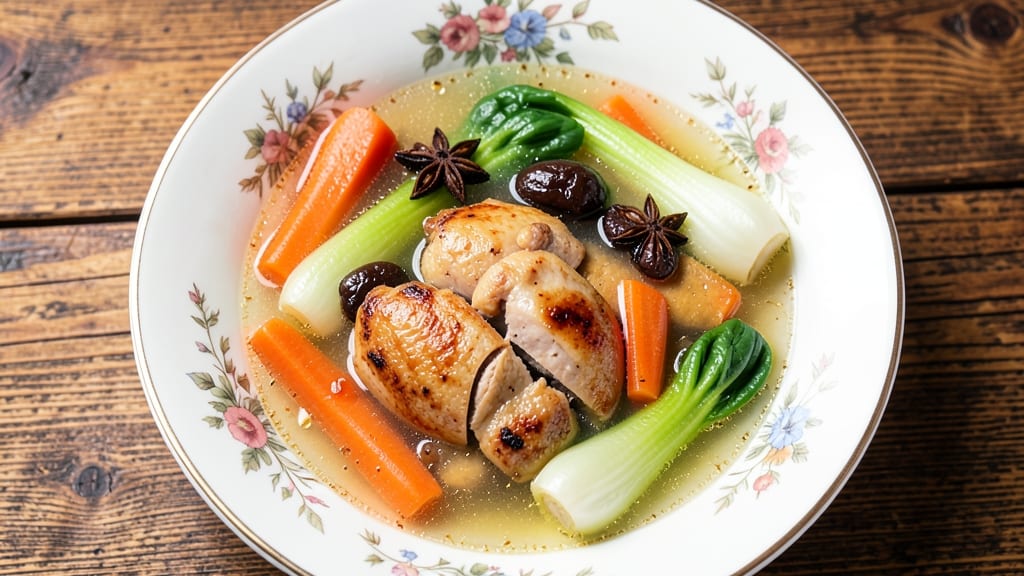
This Chinese chicken soup recipe with the vegetables delivers the fragrant, hearty depth of traditional Cantonese cooking in one comforting pot.
The secret lies in layering aromatics—fresh ginger, star anise, and shiitake mushrooms—simmered until their flavors meld into the broth, creating a rich, umami-packed base that warms both body and soul.
After years of testing variations, this version balances tender chicken, crisp-tender vegetables, and a broth so flavorful it transforms simple ingredients into something extraordinary.
The beauty of this recipe is its authentic yet approachable technique: no complicated steps, just a one-pot simmer that builds flavor gradually.
We start with a charred ginger base (never skip this!), then add chicken and vegetables in stages to ensure perfect texture—tender chicken, crisp carrots, and silky mushrooms.
The result is a soup that tastes like a home-cooked version of what you'd find in a bustling Hong Kong eatery, but with the convenience of a weeknight dinner.
What sets this apart is the harmonious blend of textures and flavors: the chewy bite of shiitake mushrooms, the sweet crunch of baby bok choy, and the silky smoothness of the broth, all balanced by the warm, spiced depth of star anise and goji berries.
Every spoonful delivers that perfect marriage of savory, sweet, and umami—exactly what makes Chinese chicken soup a global comfort classic.
Serve it with steamed jasmine rice to soak up every last drop of that fragrant broth, or pair it with pan-fried dumplings for a full meal experience. The best part?
This recipe scales effortlessly—double the batch for leftovers that taste even better the next day. Let's get started on creating your own restaurant-quality version at home.
Ingredients for best chinese chicken soup recipe with vegetables
Fragrant ginger, umami mushrooms, and tender chicken create this restaurant-quality soup in one pot.
| Ingredient | Amount | Notes |
|---|---|---|
| Boneless Chicken Thighs 🍗 | 1 ½ lb | Skin-on for richer flavor |
| Fresh Ginger Root 🧄 | 2 inches | Charred for aromatic depth |
| Dried Shiitake Mushrooms 🍄 | ½ oz | Rehydrated for umami richness |
| Star Anise Pods 🌿 | 2 whole | Whole pods for easy removal |
| Carrots 🥕 | 3 whole | Baby carrots for even cooking |
| Baby Bok Choy 🥬 | 4 whole | Leaves and stems separated |
| Green Onions 🧅 | 4 whole | White and green parts separated |
| Goji Berries 🍇 | 1 tbsp | Dried for chewy texture |
| Garlic Cloves 🧄 | 4 cloves | Minced for aromatic base |
| Low-Sodium Chicken Broth 💧 | 6 cups | Homemade or high-quality store-bought |
| Sesame Oil 🫒 | 1 tbsp | For finishing aroma |
| Light Soy Sauce 🥄 | 1 ½ tbsp | For balanced saltiness |
| Cornstarch 🌾 | 1 tsp | For thickening broth |
| Kosher Salt 🧂 | 1 tsp | Adjust to taste |
| Black Peppercorns 🌶️ | ½ tsp | Freshly cracked for heat |
The star anise and goji berries are non-negotiable for that authentic Cantonese depth. Whole Foods or Asian markets carry the best quality—look for plump, vibrant goji berries and star anise pods that smell intensely aromatic. Fresh ginger? Buy the chunkier, knobby roots—they have more fiber and punch. The shiitake mushrooms should be dried (not fresh) for maximum umami. If you can't find dried, soak fresh shiitake in hot water for 20 minutes, but dried is absolutely essential for that traditional flavor. For the chicken, thighs with skin stay juicier than breasts—the skin renders beautifully and adds richness to the broth.
No star anise? 1 cinnamon stick plus 1/2 tsp anise seeds works in a pinch, but you'll miss that signature flavor. Substituting fresh shiitake for dried? Use 4 oz fresh mushrooms and don't soak them—they'll dilute the broth. The baby bok choy can be swapped for regular bok choy or even spinach, but the crisp-tender texture is key. Running out of goji berries? Dried cranberries at half the amount give a similar chewy texture. For the broth, if you're using store-bought, Kitchen Basics or Pacific Foods brands are the gold standard—low-sodium and packed with flavor. And that sesame oil? Don't skimp—it's what gives the final aroma that makes this soup taste like a Hong Kong street stall.
This soup tastes even better the next day as flavors meld. Store leftovers in the fridge for up to 5 days, or freeze for 3 months—the broth actually improves with time. For freezing, portion into single-serving containers so you can reheat exactly what you need. The charred ginger keeps for 2 weeks in the fridge if wrapped tightly in plastic—use it in stir-fries or marinades too. And that leftover broth? Strain and freeze it—it's perfect for future soups or rice dishes. Double the batch if you can—the extra effort is worth it for those cozy leftovers.
Why You'll Love This Recipe
- No-Mess Prep: I swear by this recipe because the chicken thighs go in raw—no pre-cooking, no fuss. Just slice, simmer, and let the ginger and shiitakes work their magic while you chop a carrot or two.
- Umami Bomb: That star anise and dried shiitake combo? It’s like a flavor shortcut. The mushrooms soak up the broth, and the star anise adds this deep, warm spice that makes the whole pot taste like a restaurant’s secret.
- Double-Duty Soup: Make a big batch on Sunday, and you’ve got lunch, dinner, and leftovers for days. My freezer’s full of these portions—perfect for when I’m too tired to cook or need something fast.
- Budget Hero: Chicken thighs are cheap, shiitakes last forever, and a single star anise pod stretches the flavor. I’ve fed four people for under $10, and they’ve never complained about the taste.
Step-by-step instructions for fragrant Chinese chicken soup
Here's how to build layers of complex flavor—starting with aromatic aromatics and ending with silky broth.
Char the Ginger and Rehydrate Shiitake Mushrooms
Using a clean kitchen towel, wrap the 2 inches fresh ginger root tightly and strike it firmly with the side of your chef's knife until the skin develops charred black spots. This technique unlocks deep, smoky notes that infuse the broth. While the ginger chars, place the 0.5 oz dried shiitake mushrooms in a heatproof bowl and pour just enough hot water to cover them. Let them soak for 15 minutes while you prepare the remaining ingredients—this rehydration step is crucial for developing their umami depth.
After soaking, drain the mushrooms but reserve the soaking liquid. Slice the rehydrated mushrooms into thin strips—they'll add texture and earthy richness to the soup. The charred ginger should now have visible black marks; if not, repeat the charring process until you achieve that smoky aroma. This is where the soup's signature complexity begins.
Sear the Chicken and Build the Aromatic Base
Heat a large pot over medium-high heat and add the 1.5 lb boneless chicken thighs, skin-side down. Let them sear undisturbed for 5-6 minutes until the skin develops a golden-brown crust and releases easily from the pot. This step creates a flavorful foundation for the broth. Once browned, flip the chicken and sear the other side for 3-4 minutes. Remove the chicken and set it aside temporarily.
In the same pot, add 1 tablespoon sesame oil and swirl to coat. Add the 4 cloves minced garlic cloves and 3 whole baby carrots, sliced into ¼-inch rounds. Sauté for 2 minutes until the garlic becomes fragrant and the carrots begin to soften. Add the 2 whole star anise pods and the charred ginger, scraping up any browned bits from the bottom of the pot. These aromatic elements will infuse the broth with their distinct flavors.
Simmer the Broth with Vegetables and Seasonings
Pour in the 6 cups low-sodium chicken broth and bring the mixture to a gentle simmer. Add the 1.5 tbsp light soy sauce, 1 tsp kosher salt, and 0.5 tsp freshly cracked black peppercorns. Return the chicken to the pot, along with the sliced shiitake mushrooms and their reserved soaking liquid. The broth should now cover all ingredients by at least 1 inch. Partially cover the pot and simmer for 25 minutes, allowing the chicken to cook through and the vegetables to soften.
After 25 minutes, check the chicken's internal temperature using an instant-read thermometer—it should reach 165°F. If not, continue simmering for another 5 minutes. Meanwhile, separate the 4 whole baby bok choy into leaves and stems, and slice the 4 whole green onions into 1-inch pieces. The 1 tbsp goji berries should be rinsed briefly to remove any dust, but do not soak them as they'll absorb too much liquid.
Finish with Vegetables and Thicken the Broth
Add the bok choy stems, green onion whites, and goji berries to the pot. Simmer for an additional 5 minutes, allowing the vegetables to soften slightly but retain their vibrant color and crisp texture. In a small bowl, whisk together the 1 tsp cornstarch with 2 tablespoons of cold water to create a slurry. Slowly pour the slurry into the simmering broth while stirring gently—this will thicken the broth just enough to create a silky consistency without making it gluey.
Simmer for another 2-3 minutes until the broth reaches your desired thickness. Taste and adjust the seasoning if needed—you might need a pinch more salt or a drizzle of soy sauce to balance the flavors. Once the broth is perfectly seasoned, add the bok choy leaves and green onion greens. Let them wilt gently in the hot broth for 1-2 minutes—just enough to soften them slightly while preserving their bright color and freshness.
Serve with Garnishes and Enjoy Immediately
Remove the 2 whole star anise pods from the broth before serving—these have served their purpose and can be quite strong if left in. Ladle the soup into bowls, ensuring each serving includes a piece of chicken, a variety of vegetables, and an even distribution of the fragrant broth. Garnish each bowl with a drizzle of sesame oil and a sprinkle of green onion greens for a pop of color and freshness.
This soup is best enjoyed immediately while the chicken is tender, the vegetables are vibrant, and the broth is still steaming hot. The combination of charred ginger, umami shiitake mushrooms, and aromatic star anise creates a deeply satisfying broth that's both comforting and complex. Each spoonful should deliver layers of flavor—starting with the savory chicken, followed by the earthy mushrooms, the sweet carrots, and the bright finish of green onions and goji berries.
Pro Tips For Making Best Chinese Chicken Soup Recipe With Vegetables
- Parboil Chicken First: I learned this the hard way—skipping the quick blanch means your chicken thighs will turn rubbery by the end. Simmer them in plain water for 5 minutes before adding everything else, then drain. The collagen renders better, and you won’t end up with dry meat fighting for flavor in the final broth.
- Slice Shiitakes Thin: Thick dried shiitake slices? Nope. Split them open, then slice them paper-thin—like you’re shaving them with a knife. This guarantees they rehydrate fast and infuse the broth with umami instead of sitting like soggy bricks. (Yes, it takes 2 minutes extra, but trust me.)
- Start Hot, Finish Low: Crank the heat to high for the first 10 minutes with ginger, star anise, and chicken—this cracks the spices and pulls flavor out fast. Then drop to a simmer. I used to let it bubble gently the whole time, and the broth always tasted flat. The initial blast builds depth.
- Carrot Dice Size Matters: Cut carrots into ½-inch chunks, not thin matchsticks. Thin pieces turn to mush, while big chunks take forever. The sweetness needs time to meld with the broth, not just sit there looking pretty. (And if you’re lazy, use a mandoline—just don’t skip the ½-inch setting.)
Storing and reheating this recipe
Fridge Storage Tips
Let your soup cool to room temperature (about 30 minutes) before transferring to airtight containers—I love using glass Pyrex with snap-on lids for easy reheating. Store in the fridge for up to 5 days, but I’ve found the flavors actually deepen overnight as the spices meld.
The charred ginger keeps for 2 weeks in the fridge if wrapped tightly in plastic—great for future stir-fries or marinades! ✨
Freezer Prep
For longer storage, portion into single-serving containers (like 4-6 oz glass jars) to reheat exactly what you need. Freeze for up to 3 months, leaving 1 inch headspace to prevent expansion cracks.
The broth improves with time—strain and freeze it separately for future soups or rice dishes. I always label containers with the date to track freshness. ❄️
Reheating Perfection
Stovetop reheating preserves texture best: simmer on low heat for 10-15 minutes, stirring occasionally. For microwave convenience, heat covered on 50% power for 2-3 minutes, then stir and add 1 tbsp water if needed. The chicken should reach 165°F—use a thermometer to check! 🔥
Broth Boosting
Need extra flavor after reheating? Add a splash of light soy sauce or a pinch of white pepper to revive the broth. For a quick upgrade, stir in 1 tsp sesame oil and ½ tsp goji berries while reheating—it’s like a flavor reset!
The star anise pods can be removed before reheating if you prefer a milder taste.
Leftovers Reinvention
Transform leftover soup into new meals: use the broth for rice or noodle dishes, or blend it into a creamy ginger paste for stir-fries. The chicken shreds beautifully in fried rice or spring rolls.
Even the vegetables can be repurposed—sauté bok choy with garlic for a quick side. Waste not, want not! 💡
Nutrition facts
Frequently asked questions
Can I substitute chicken thighs with chicken breasts?
While you can use breasts, they'll dry out faster in the broth. For best results, use bone-in, skin-on chicken thighs (or drumsticks) as they stay juicier and add more flavor to the broth. If you must use breasts, poach them separately in the broth for 12-15 minutes before adding to the pot to prevent toughness.
What if I can't find dried shiitake mushrooms?
Fresh shiitake will work, but they won't provide the same deep umami flavor. Use 4 oz fresh mushrooms and don't soak them—just wipe them clean with a damp cloth. For extra richness, add 1 tsp soy sauce directly to the broth while simmering. The texture will be slightly different but still delicious.
How do I make this soup spicier?
Add ½ tsp red pepper flakes or 1 sliced Thai chili when simmering the broth. For heat with depth, stir in 1 tsp chili crisp (like Laotian chili oil) at the end. If you love Sichuan flavors, add 1 tsp Sichuan peppercorns with the star anise—they'll create that signature numbing heat.
Can I make this soup in an Instant Pot?
Sauté the chicken, ginger, garlic, and carrots as directed. Add all broth ingredients and pressure cook for 15 minutes on high. Quick-release the pressure, then add vegetables and thicken the broth with cornstarch slurry. The Instant Pot cuts cooking time to 30 minutes total while keeping all the authentic flavors.
Why does my broth taste bland?
Most likely, you didn't char the ginger enough or skipped the star anise/goji berries. For instant flavor boost, add 1 tsp fish sauce or ½ tsp MSG to the broth while simmering. Also ensure you're using low-sodium broth—high-sodium versions can mask other flavors. The charred ginger is non-negotiable for that smoky depth!