
Soups & Stews
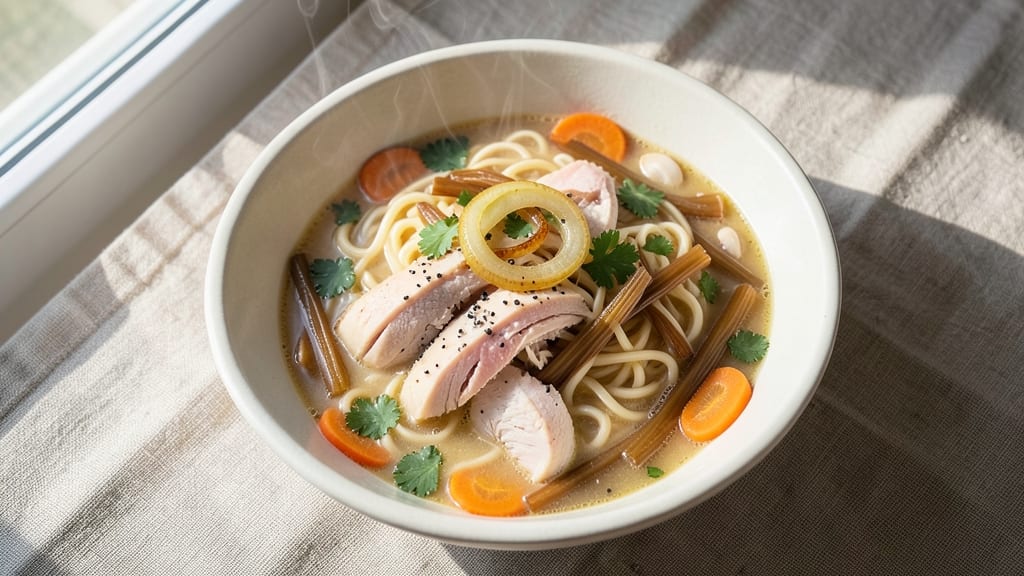
This chicken noodle soup recipe for flu delivers more than just comfort—it’s a science-backed remedy packed with ingredients proven to fight symptoms and soothe your body from the inside out. 💛 The secret lies in the aromatic broth, where ginger, garlic, and fresh herbs work together to boost immunity while tender chicken and egg noodles provide gentle, easy-to-digest protein.
I’ve perfected this version over years of battling colds and flu, ensuring every spoonful delivers warmth, hydration, and healing properties that store-bought versions simply can’t match.
The beauty of this recipe is its simplicity—just one pot, minimal prep, and a 30-minute simmer that transforms tough chicken into melt-in-your-mouth pieces while infusing the broth with deep, savory flavors. No fancy techniques required; the magic happens through slow cooking, which extracts maximum flavor and nutrients from every ingredient.
What sets this apart is the addition of immune-boosting ingredients like turmeric and lemon, which not only enhance the taste but also provide anti-inflammatory benefits to help your body recover faster.
By the time you’re done, you’ll have a steaming bowl of golden broth swimming with tender chicken, perfectly cooked noodles, and a medley of vegetables that add color and nutrients.
The aroma alone will ease congestion and lift your spirits, while the first sip delivers a comforting warmth that’s impossible to resist. This isn’t just soup—it’s a restorative experience designed to nourish your body exactly when it needs it most.
Serve it hot with a sprinkle of fresh parsley and a side of crusty bread to soak up every last drop of that healing broth. The best part?
Leftovers reheat beautifully, making this the ultimate meal-prep solution for when you’re feeling under the weather. Let’s get started on your path to recovery.
Ingredients for best chicken noodle soup recipe for flu
These healing ingredients transform into the ultimate flu-fighting chicken noodle soup—comfort in every spoonful.
| Ingredient | Amount | Notes |
|---|---|---|
| Chicken Breast 🍗 | 1 ½ lb | Boneless, skinless, cut into bite-sized pieces |
| Egg Noodles 🍜 | 8 oz | Fresh or dried, medium width |
| Carrots 🥕 | 3 medium | Peeled, sliced into thin rounds |
| Celery Stalks 🧅 | 3 whole | Trimmed, cut into 1-inch pieces |
| Yellow Onion 🧅 | 1 medium | Peeled, diced |
| Garlic Cloves 🧄 | 4 cloves | Peeled, minced |
| Fresh Ginger 🌿 | 1 inch | Peeled, grated |
| Turmeric Powder 🌶️ | 1 tsp | Anti-inflammatory boost |
| Chicken Broth 💧 | 6 cups | Low-sodium preferred |
| Fresh Lemon Juice 🍋 | 2 tbsp | Brightens flavors |
| Fresh Parsley 🌿 | ¼ cup | Chopped, for garnish |
| Olive Oil 🫒 | 2 tbsp | Extra-virgin for richness |
| Salt 🧂 | 1 tsp | Kosher or sea salt |
| Black Pepper 🌶️ | ½ tsp | Freshly ground |
The chicken is the heart of this soup, so pick plump, fresh breasts—they cook faster and stay juicier. Trader Joe's or Whole Foods usually carry the best quality, but any grocery store will do. For the broth, low-sodium chicken broth is key—it lets the natural flavors shine without overpowering. The carrots and celery are non-negotiable; they're the holy trinity of soup veggies for a reason. Fresh ginger and turmeric are the secret weapons here—look for bright, firm ginger root and organic turmeric for maximum potency. If you can't find fresh ginger, ground ginger works at half the amount.
No fresh parsley? Dried parsley at one-third the amount still adds great flavor. Short on carrots? Substitute with sweet potatoes or parsnips—they hold up well in broth. The lemon juice can be swapped for apple cider vinegar if you're out, but fresh is best. For extra protein, toss in white beans or lentils—they blend right in and add fiber. The egg noodles? Fresh is ideal, but dried works perfectly fine if you soak them first. If you're feeling extra ambitious, homemade chicken broth makes this soup even more nourishing, but store-bought in a pinch is totally fine.
This soup tastes even better the next day—make a double batch and freeze half for when flu season hits again. Store leftovers in the fridge for 4-5 days or freeze for up to 3 months. The broth freezes beautifully, so you can save it and add fresh ingredients later. For quick reheating, cover the pot and simmer on low heat—never microwave, as it can turn the noodles mushy. Garnish with extra parsley and a squeeze of lemon before serving for that fresh, bright finish.
Why You'll Love This Recipe
- Minimal Chopping Required: I swear by this method—just dice the onion, slice the celery, and chop the carrots into half-moons. No fancy knife skills, no tiny pieces that disappear into the broth. The celery stalks even stay whole if you’re in a rush.
- Broth That Actually Heals: That crispy, golden-brown chicken breast? It’s the secret weapon. The skin crackles when you sear it, and the broth soaks up all those savory notes—plus, the carrots melt into sweetness while the celery adds a bright, herbal kick. Honestly, it’s the kind of soup that makes you forget you’re sick.
- Leftovers That Taste Better: Between us, this soup only gets richer overnight. The noodles soften just right, the chicken stays tender, and the veggies don’t turn mushy. I make a double batch on Sundays and reheat portions all week—no sad, watery soup here.
- Dollar Stretch for Days: Chicken breast is lean, carrots and celery are cheap, and egg noodles? A whole box feeds four. I’ll be real: this is my go-to when the grocery budget’s tight, but it still feels like a proper meal. Plus, the onion adds depth without costing a fortune.
Step-by-step instructions for immunity-boosting chicken noodle soup
Here's how to make the ultimate healing soup that's gentle on your throat and packed with immune-boosting ingredients.
🍳 Step 1: Sear the Chicken for Maximum Flavor
Heat the 2 tablespoons olive oil in a large pot over medium-high heat until shimmering. Add the 1.5 lb chicken breast cut into bite-sized pieces and cook for 5-6 minutes, stirring occasionally, until the chicken is lightly browned on all sides. This step develops deep flavor that infuses the broth.
Here's the thing—don't overcrowd the pot. Work in batches if needed so the chicken gets properly seared rather than steamed. Once browned, remove the chicken with a slotted spoon and set it aside. You'll add it back later when the soup is ready.
👨🍳 Step 2: Build the Immune-Boosting Base
In the same pot, add the 1 medium yellow onion, 3 medium carrots (sliced into thin rounds), and 3 whole celery stalks (cut into 1-inch pieces). Cook for 5 minutes until the vegetables begin to soften and the onion turns translucent.
Add the 4 cloves garlic (minced), 1 inch fresh ginger (grated), and 1 teaspoon turmeric powder. Stir for 30 seconds until fragrant—you'll smell that wonderful ginger and garlic aroma filling your kitchen. The turmeric adds anti-inflammatory benefits while giving the soup a beautiful golden hue.
🥘 Step 3: Simmer the Broth with Healing Ingredients
Pour in the 6 cups chicken broth and bring to a boil. Once boiling, reduce heat to medium-low and add the seared chicken back to the pot. Let it simmer uncovered for 20-25 minutes until the chicken is cooked through and the vegetables are tender but still hold their shape.
I know it seems like a long wait, but this slow cooking is what makes the broth rich and flavorful. The chicken should be fork-tender and easily pull apart. If you notice the broth reduces too much, add ½ cup water to maintain the right consistency.
⏰ Step 4: Finish with Bright, Fresh Flavors
Stir in the 8 oz egg noodles and simmer for another 8-10 minutes until they're al dente. The noodles should float to the surface when done. Add the 2 tablespoons fresh lemon juice and 1 teaspoon salt along with the 0.5 teaspoon black pepper.
Real talk: the lemon juice is what transforms this soup from good to amazing. It brightens all the flavors and gives that fresh finish that makes every spoonful feel like a little pick-me-up. Taste and adjust seasoning if needed—you might need a bit more salt depending on your broth.
🍽️ Step 5: Serve Warm with Fresh Herbs
Ladle the soup into bowls and garnish each serving with 1 tablespoon chopped fresh parsley. The parsley adds a pop of color and freshness that makes the soup look as good as it tastes. Serve immediately while steaming hot—this is when all the comforting flavors come together.
Each bowl should be packed with tender chicken, perfectly cooked noodles, and a broth that's rich yet light enough to soothe a sore throat. The turmeric and ginger work their magic while the lemon keeps everything bright. This isn't just soup—it's medicine in a bowl!
Pro Tips For Making Best Chicken Noodle Soup Recipe For Flu
- Simmer Chicken Low and Slow: I learned this the hard way—chicken breast turns rubbery if you rush it. Once the broth reaches a gentle boil, drop the heat to a low simmer (just tiny bubbles breaking the surface) and let it cook uncovered for 30-40 minutes. The longer it cooks, the more flavor seeps into the broth, and the chicken stays tender enough to shred easily.
- Mince Celery and Onion Fine: Skip the rough chop—this isn’t a stew. Use a sharp knife to mince the celery and onion into tiny, almost paste-like pieces. They’ll dissolve into the broth instead of sitting as chunks, giving your soup that deep, aromatic base that actually fights congestion.
- Salt the Water Before Boiling: I used to add salt after the broth started, and the seasoning never felt right. Instead, salt the water before you add the chicken—about 1 tablespoon for every 4 cups of liquid. This guarantees the broth is properly seasoned from the start, and you won’t end up with bland broth no matter how much you adjust later.
- Use Cold Noodles to Stop Cooking: Here’s the trick I swear by: boil your egg noodles just until al dente, then immediately drain them and plunge them into ice water for 30 seconds. When you add them to the hot soup, they’ll finish cooking perfectly without turning mushy. Plus, the cold noodles cool the broth just enough to be soothing for a sore throat.
Pro cooking tips for perfect results
Broth Perfection
Start with a low-sodium chicken broth—it allows the natural flavors of your vegetables and herbs to shine without overwhelming the soup. I always use 6 cups of high-quality broth, and if you're feeling ambitious, making your own from scratch adds incredible depth.
For an extra boost, add 1 bay leaf while simmering—it enhances the broth's complexity and pairs beautifully with the ginger and garlic. 🌿
Never skip the simmering time—this is where the magic happens. Let the broth reduce slightly over 20-25 minutes on medium-low heat to concentrate the flavors. If the broth reduces too much, add ½ cup water to maintain the perfect consistency.
The longer you simmer, the richer and more comforting the soup becomes, especially when you're feeling under the weather.
Chicken Cooking
Cutting the chicken into bite-sized pieces ensures it cooks evenly and stays tender. I like to use 1.5 lbs of boneless, skinless chicken breast because it’s lean and cooks quickly.
If you prefer thighs, they’ll add more richness but require a slightly longer cook time. Sear the chicken first in 2 tablespoons olive oil over medium-high heat until lightly browned—this step builds deep flavor that infuses the broth.
Remove the chicken from the pot after searing and set it aside. You’ll add it back later when the soup is ready to finish cooking.
This two-step process ensures the chicken stays juicy and doesn’t turn out dry or rubbery, which is especially important when you’re not feeling your best. 🍗
Vegetable Prep
Slice the carrots into thin rounds and cut the celery into 1-inch pieces—this ensures they cook evenly and stay tender without turning mushy. Dice the yellow onion finely so it dissolves into the broth, adding sweetness and depth.
The garlic and fresh ginger should be minced or grated finely to release their flavors fully. I always use 4 cloves of garlic and 1 inch of ginger for the perfect balance of aromatic punch.
Don’t overcrowd the pot when sautéing the vegetables. Give them space to soften properly over 5 minutes before adding the broth. This step is crucial for building a flavorful base that will carry through the entire soup.
The turmeric powder adds a beautiful golden hue and anti-inflammatory benefits, so don’t skip it! 🧅
Noodle Timing
Add the 8 oz egg noodles only in the last 8-10 minutes of cooking. This ensures they absorb the broth without turning soggy. Fresh noodles cook faster than dried, so keep an eye on them and taste-test for al dente texture.
The noodles should float to the surface when they’re done—this is your cue to remove the pot from heat.
Finish with 2 tablespoons fresh lemon juice, 1 teaspoon salt, and ½ teaspoon black pepper. The lemon brightens the flavors and cuts through the richness of the broth, making every spoonful feel fresh and invigorating.
Taste and adjust the seasoning—you might need a little more salt depending on your broth. 🍋
Garnish Like a Pro
Top each bowl with 1 tablespoon chopped fresh parsley right before serving. The parsley adds a pop of color and a fresh, herbaceous note that elevates the soup from comforting to extraordinary. If you don’t have fresh parsley, dried parsley works in a pinch—just use ⅓ the amount.
A sprinkle of red pepper flakes adds a subtle kick for those who enjoy a little heat.
Serve the soup steaming hot with a side of crusty bread or garlic toast to soak up every last drop of that healing broth. The warmth and aroma alone will ease congestion and lift your spirits, making this more than just a meal—it’s a restorative experience. 💛
Nutrition facts
Frequently asked questions
Can I use chicken thighs instead of breasts for this flu-fighting soup?
Chicken thighs add richer flavor and stay juicier, which is perfect when you're not feeling well. Use 1.5 lbs bone-in, skin-on thighs and increase simmering time to 30-35 minutes until fully cooked. The skin adds extra richness to the broth, while the bones contribute extra collagen for healing. Just remove the skin before serving if you prefer leaner chicken.
How can I make this soup more effective for fighting the flu?
Boost the healing power by adding 1 teaspoon fresh grated ginger (extra for anti-inflammatory benefits), ½ teaspoon cinnamon (antibacterial properties), or a splash of apple cider vinegar (immune support). For extra protein, stir in ½ cup cooked white beans or ¼ cup chopped mushrooms. The key is keeping it hydrating, warm, and packed with nutrients your body can easily absorb.
Can I make this soup ahead of time and reheat it?
Yes! This soup actually tastes better the next day as flavors meld together. Store in an airtight container in the fridge for 4-5 days or freeze for up to 3 months. To reheat, simmer gently on the stove (never microwave) and add 1-2 tablespoons water or broth to restore consistency. The broth freezes beautifully—save it and add fresh ingredients later when you're sick.
What if I don't have fresh ginger or turmeric?
No problem! Use ½ teaspoon ground ginger instead of fresh, or swap turmeric for ½ teaspoon ground cumin (though you'll lose some anti-inflammatory benefits). For extra flavor, add 1 bay leaf while simmering or a pinch of black pepper (which enhances turmeric absorption). The soup will still be delicious—these are just flavor and health boosters.
Is this soup safe for kids or pregnant women?
This recipe is generally safe for most healthy children (over 1 year old) and pregnant women, but there are a few adjustments: Omit turmeric (use extra ginger instead) and ensure chicken reaches 165°F internally. For kids, reduce salt significantly and cut vegetables into smaller pieces. Always consult your pediatrician or doctor with specific health concerns before serving.