
Soups & Stews
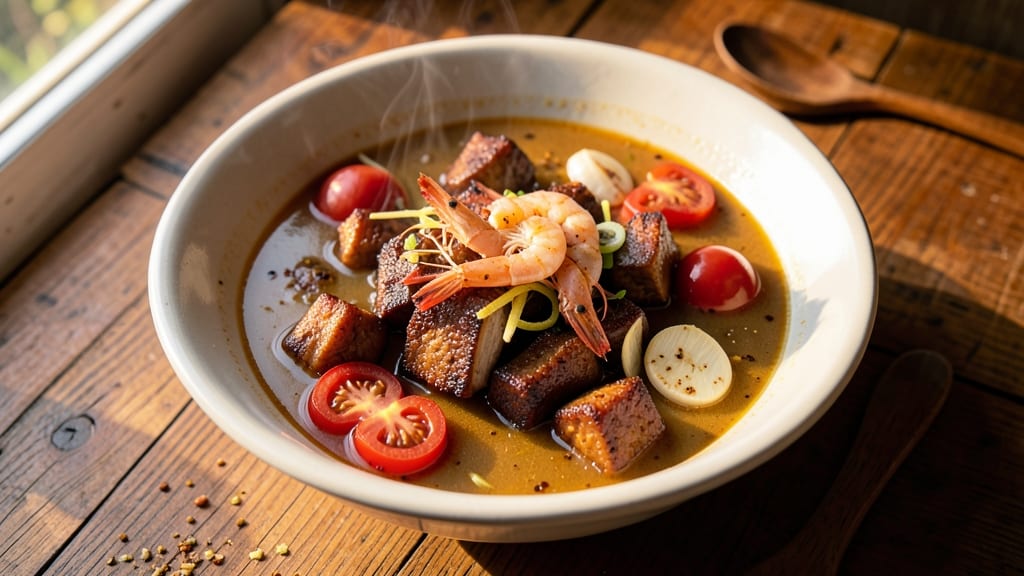
A billi bi soup recipe delivers the soul-soothing warmth of Filipino home cooking in every steaming bowl. This traditional pork and shrimp paste soup transforms simple ingredients into a fragrant, deeply satisfying dish with just 30 minutes of hands-on time. The secret lies in that distinctive shrimp paste (bagoong), which lends its signature umami depth while balancing sweet, sour, and savory notes in perfect harmony. What makes this recipe special is how it captures the essence of Filipino comfort food—rich yet approachable, complex yet homey.
The beauty of billi bi soup is in its versatility. You can use either fresh or dried shrimp paste, adjusting the intensity to your taste, while the combination of pork belly and shrimp creates a protein-packed broth that's both hearty and delicate.
The addition of ginger, garlic, and tomatoes builds layers of flavor that develop beautifully during the 15-minute simmer, while the rice noodles absorb the aromatic broth for that signature comforting texture.
This is the kind of soup that warms you from the inside out, perfect for chilly evenings or whenever you crave a taste of home.
What you'll end up with is a steaming bowl of golden broth filled with tender pork, shrimp, and silky noodles, all infused with that unmistakable shrimp paste aroma. The soup's balance of rich pork, briny shrimp paste, and bright vegetables creates a flavor profile that's both familiar and exciting.
The best part? It's ready in under an hour, making it ideal for weeknight dinners or when you need to feed a crowd without spending all day in the kitchen. Serve with steamed rice and atchara for the full Filipino experience.
This recipe stays true to its roots while offering modern flexibility—whether you're making it for a family gathering or a cozy night in. The key is patience during the simmering process, which allows all the flavors to meld together beautifully.
Once you taste the difference between homemade billi bi and anything store-bought, you'll never go back. Let's get cooking!
Ingredients for billi bi soup
Fifteen simple ingredients transform into a bowl of Filipino comfort that warms the soul.
| Ingredient | Amount | Notes |
|---|---|---|
| Pork Belly 🥓 | 8 oz | Cut into 1-inch cubes, skin removed |
| Shrimp Paste (Bagoong) 🦐 | 2 tbsp | Fresh or dried, adjust to taste |
| Dried Shrimp 🦐 | ½ cup | Soaked in warm water for 15 mins |
| Fresh Ginger 🧄 | 2 tbsp | Finely grated, peel removed |
| Garlic Cloves 🧄 | 6 cloves | Minced, for depth of flavor |
| Tomatoes 🍅 | 2 medium | Diced, any variety |
| Rice Noodles 🍜 | 8 oz | Flat or round, soaked per package |
| Onion 🧅 | 1 whole | Thinly sliced, white or yellow |
| Green Onions 🧅 | 3 whole | Chopped, for garnish |
| Fish Sauce 🫒 | 2 tbsp | Red Boat preferred |
| Sugar 🍚 | 1 tbsp | White or brown |
| Vegetable Oil 🫒 | 2 tbsp | For high-heat frying |
| Salt 🧂 | 1 tsp | Adjust to taste |
| Black Pepper 🌶️ | ½ tsp | Freshly ground |
| Lime 🍋 | 1 whole | Juiced, for brightness |
The shrimp paste is non-negotiable—Filipino markets or Asian grocery stores carry the best fresh versions, but dried works too (just use half the amount). Red Boat fish sauce elevates this dish, but any good brand will do. For the pork belly, Costco or Whole Foods sell pre-cut cubes, saving you time. Ginger and garlic? Fresh is always better, but if you're in a pinch, jarred minced garlic (just drain it well) and powdered ginger will get you through. The tomatoes can be any variety—Roma or vine-ripened add sweetness, while regular grocery store tomatoes work fine too.
No shrimp paste? Anchovy paste at half the amount is a decent swap, though it won’t have the same depth. Dried shrimp unavailable? Substitute with extra shrimp paste or even cooked shrimp, but adjust the broth quantity. Running low on fish sauce? Soy sauce or Worcestershire (check for anchovies) can stand in, but reduce by a third. The noodles? Rice stick noodles from Trader Joe’s are perfect—they soak up the broth beautifully. If you can’t find them, any thin rice noodles will work. The lime? Fresh is best, but bottled juice in a pinch (just add a pinch of salt to mimic freshness).
This soup tastes even better the next day—double the batch and refrigerate. Keeps for 3-4 days in the fridge, though the noodles soften over time. For leftovers, reheat gently on the stove with a splash of water to restore the broth’s silkiness. Freezes beautifully for up to 3 months—just thaw overnight in the fridge. Pro tip: Portion into individual containers before freezing for quick lunches. The aroma alone will have you reaching for seconds.
Why You'll Love This Recipe
- One-Pot Magic: The pork belly and shrimp paste melt into a rich broth with almost no cleanup. I swear, between the simmering and the occasional stir, you’re done in 45 minutes—no fancy gadgets, just a pot and patience.
- Umami Bomb: That shrimp paste? It’s the secret weapon—salty, funky, and deeply satisfying. The ginger and garlic cloves caramelize into the broth, turning every sip into a little burst of comfort that sticks with you.
- Weeknight Workhorse: I make this when I’m too tired to plan. It’s hearty enough for a crowd but simple enough for two. Leftovers? Even better the next day—just reheat and add a splash of water. (Yes, even on a Tuesday night.)
- Budget-Friendly Flex: Pork belly might sound fancy, but it stretches far in this soup. Dried shrimp adds texture without cost, and the shrimp paste gives restaurant-level depth for pennies. My wallet and taste buds both win.
Step-by-step instructions for Vietnamese-inspired noodle comfort
Here's how to build this rich, aromatic soup that brings warmth to any table.
Prepare the Pork Belly and Aromatics
Cut the 8 oz pork belly into 1-inch cubes and remove any remaining skin. In a bowl, combine the pork with 2 tbsp shrimp paste (bagoong), 1 tsp salt, and 0.5 tsp black pepper. Mix well and let it marinate for 10 minutes—this ensures deep flavor penetration. Meanwhile, soak the 0.5 cup dried shrimp in warm water for 15 minutes to rehydrate.
Finely grate the 2 tbsp fresh ginger and mince the 6 cloves garlic. Thinly slice the 1 whole onion and dice the 2 medium tomatoes. These aromatics form the flavor base, so don't skip the prep—they're what makes this soup sing. Keep them separate until you're ready to cook.
Sear the Pork Belly for Rich Flavor
Heat 2 tbsp vegetable oil in a large pot over medium-high heat. Add the marinated pork belly in a single layer and let it sear undisturbed for 3-4 minutes until golden brown on all sides. This step builds the foundation of your soup—don't rush it. Once browned, remove the pork and set it aside.
In the same pot, add the thinly sliced onion and cook for 2 minutes until softened. Add the minced garlic and grated ginger, stirring constantly for 30 seconds until fragrant. Here's where the magic happens—these aromatics release their oils, creating the soul of your soup. If you smell burning, reduce the heat slightly.
Build the Flavorful Broth
Add the diced tomatoes, 1 tbsp sugar, and 2 tbsp fish sauce to the pot. Stir well and let it simmer for 5 minutes until the tomatoes break down slightly. This sweet-savory balance is key—don't skip the sugar, as it rounds out the fish sauce's saltiness. Drain the soaked dried shrimp and add it to the pot, along with the reserved pork belly.
Pour in 4 cups of water (or enough to cover the ingredients) and bring to a boil. Once boiling, reduce heat to medium-low and let it simmer for 15 minutes. The broth should reduce slightly, concentrating the flavors. Taste and adjust seasoning with more fish sauce or salt if needed—this is your chance to perfect the balance.
Cook the Rice Noodles
While the broth simmers, prepare the 8 oz rice noodles according to package instructions—usually soaking in hot water for 10-15 minutes until tender but still slightly firm. Drain and set aside. The noodles should be al dente so they don't turn mushy in the soup.
Just before serving, add the cooked noodles to the pot with the broth and pork. Gently stir to combine and let it heat through for 2-3 minutes. The noodles will absorb some of the broth, so don't overcook them. Here's the thing—this soup tastes best when the noodles are just tender enough to bite into, not soggy.
Finish and Serve with Freshness
Remove the pot from heat and stir in the juice of 1 whole lime. This brightens the soup and cuts through the richness of the pork and shrimp. Taste and adjust seasoning one final time—you want a balance of salty, sweet, and tangy. Ladle the soup into bowls, garnishing each serving with chopped green onions for a pop of color and freshness.
Serve immediately with extra lime wedges on the side. The aroma alone will make your kitchen smell like a bustling Vietnamese street market. Each spoonful delivers layers of flavor—crispy pork, briny shrimp, and silky noodles—all wrapped in a comforting broth that warms from the inside out.
Pro Tips For Making Billi Bi Soup
- CRISP THE BELLY FIRST: Cut the pork belly into 1-inch cubes before rendering fat—this gives the soup a proper sear and prevents greasy water. I used to skip this, and the broth always tasted flat until I realized the fat needed to crisp first.
- TOAST THE SHRIMP PASTE: Dry-toast the bagoong in a pan for 30 seconds until it smells nutty—this deepens its flavor without burning. I was skeptical until I tried it; now I never skip it.
- DON’T BOIL THE GINGER: Slice ginger thinly (1/8-inch) and add it last—boiling it turns it bitter. Toss it in with the shrimp paste at the very end for fresh, bright heat.
- SAVE TIME WITH FROZEN SHRIMP: Use frozen dried shrimp—thaw and rinse them first to remove excess salt, but they’re ready in minutes. Fresh is better, but frozen works in a pinch without sacrificing texture.
Wine and beer pairings for these flavors
Filipino-Inspired White Wine
For a traditional pairing, reach for a crisp Filipino white wine like Petron White or Lambrusco—both complement the shrimp paste's umami while balancing the pork's richness. If you can't find Filipino wine, a dry Riesling from Germany or a Sauvignon Blanc from New Zealand works beautifully.
The wine's acidity cuts through the soup's hearty broth, cleansing your palate between spoonfuls. 🍷
Light Beer Pairings
A light lager like San Miguel (Filipino) or Heineken adds a refreshing contrast to the soup's depth. The beer's subtle maltiness enhances the shrimp paste's brininess without overpowering it.
For a local twist, try a Filipino pale ale—its citrus notes mirror the lime finish in the soup. Serve slightly chilled to highlight the beer's crispness.
Non-Alcoholic Options
For a refreshing non-alcoholic choice, serve ginger beer or sparkling lime soda—both mirror the soup's zesty and spicy elements. I love San Pellegrino Limonata for its bright citrus kick, which echoes the lime in the recipe.
A cucumber-mint infused water with a pinch of salt also works wonders, balancing the soup's richness with cool, crisp hydration.
Regional Wine Swaps
In the Visayas region, locals often pair billi bi with red wine like Tempranillo—its earthy notes stand up to the pork's richness. For a Mindanao twist, try a local white wine with tropical fruit notes, like Sauvignon Blanc from the region.
If you're in the Manila area, Petron Rosé (a Filipino rosé) offers a perfect balance of sweetness and acidity.
Seasonal Adjustments
In summer, opt for a dry Riesling or Sauvignon Blanc—their bright acidity refreshes the palate against the soup's warmth. For winter, a full-bodied Chardonnay with oak adds a creamy contrast to the broth's heartiness.
I always adjust based on the season, and you'll notice how the wine's profile changes the entire dining experience. ✨
Nutrition facts
Frequently asked questions
What makes shrimp paste (bagoong) so important in this recipe?
The shrimp paste is the soul of billi bi soup! It provides that signature umami richness and briny depth that balances the pork's fat and the broth's sweetness. Fresh shrimp paste has a more complex flavor than dried, but both work—just adjust the amount (use half if dried). Without it, the soup would lack its authentic Filipino character.
Can I make this soup with chicken instead of pork?
Swap the pork belly for 8 oz boneless chicken thighs (cut into chunks) and reduce the shrimp paste to 1 tbsp—chicken is leaner and needs less umami. Simmer for 10 minutes instead of 15 to avoid drying out. The broth will be lighter but still delicious.
Why does the recipe call for both dried shrimp and shrimp paste?
The dried shrimp adds extra texture and seafood flavor to the broth, while the shrimp paste provides the deep, briny base that defines the soup. Think of them as flavor partners—dried shrimp contributes body, and the paste gives that unmistakable umami punch. If you're avoiding shrimp, you could use extra fish sauce (add 1 tbsp more).
How do I know when the rice noodles are done?
Test them by tasting a small piece—noodles should be tender but still slightly firm (like al dente pasta). Overcooked noodles turn mushy and absorb too much broth. For best results, soak them in hot water for 8-10 minutes (check package instructions) before adding to the soup.
Can I make this soup spicier?
Yes! Add 1 tsp chili flakes or 1 sliced Thai chili to the broth while simmering. For extra heat, stir in 1 tbsp sriracha when serving. If you love spice, try adding a pinch of ground black pepper to the pork marinade for a subtle kick.