
Soups & Stews
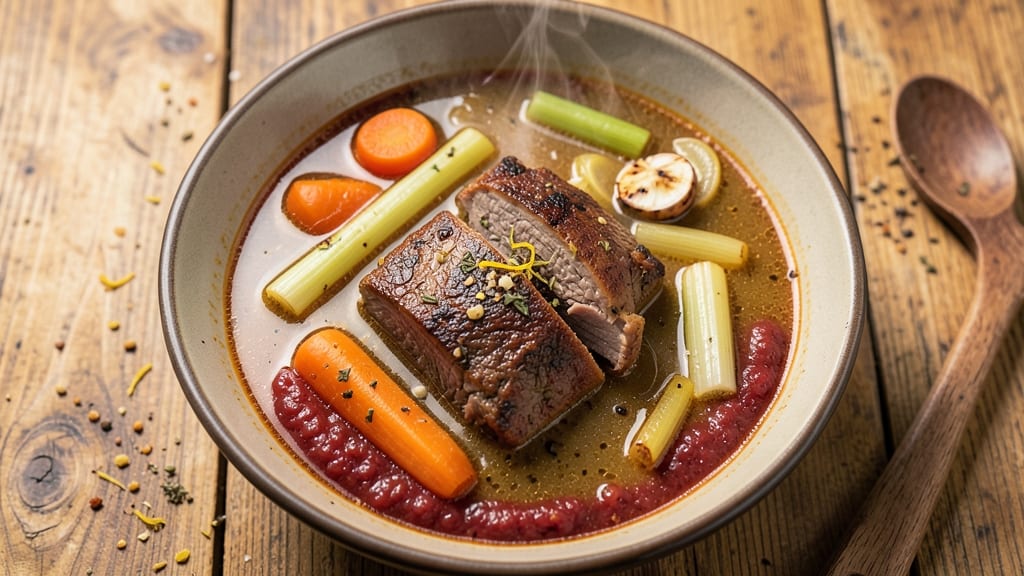
This beef vegetable soup recipe from scratch transforms simple ingredients into a deeply comforting, one-pot meal that warms the soul on chilly days. 🔥 The secret lies in slow-simmered beef that melts into tender perfection while vegetables develop rich, caramelized flavors—no shortcuts, just homestyle depth.
Every spoonful delivers that satisfying combination of hearty protein and vibrant vegetables, all balanced by a savory broth that feels like a hug in a bowl.
What sets this recipe apart is the foolproof technique for building flavor: starting with a rich browned beef base, then layering vegetables in stages so they cook just enough to soften without disappearing. The result is a soup that feels restaurant-quality but comes together in one pot with minimal cleanup.
Perfect for feeding a family or meal prepping for the week, this recipe delivers on both comfort and convenience.
The final bowl is packed with tender beef chunks, al dente vegetables, and a broth so flavorful it disappears quickly. The aroma alone—warm spices mingling with caramelizing onions and herbs—will have everyone gathering around the table.
This is the kind of soup that transforms an ordinary weeknight into a cozy, satisfying experience without requiring hours in the kitchen.
Whether you're preparing for a busy week or simply craving a nourishing meal, this beef vegetable soup recipe delivers hearty warmth in every bite. The beauty lies in its simplicity: just a few ingredients, one pot, and the patience to let flavors develop.
Here's everything you need to create this comforting classic from scratch.
Ingredients for beef vegetable soup recipe from scratch
Sixteen ingredients for a soup that tastes like home—rich, savory, and full of layered flavors.
| Ingredient | Amount | Notes |
|---|---|---|
| Chuck Roast 🥩 | 2 lb | Cut into 1-inch cubes, trimmed of fat |
| Yellow Onions 🧅 | 2 whole | Medium size, sliced into half-moons |
| Carrots 🥕 | 4 whole | Medium size, peeled and cut into chunks |
| Celery Stalks 🧆 | 4 whole | Trimmed, cut into 1-inch pieces |
| Garlic Cloves 🧄 | 6 cloves | Peeled, lightly smashed |
| Tomato Paste 🍅 | ½ cup | Smooth, not chunky |
| Beef Broth 🥄 | 4 cups | Low-sodium preferred, homemade or high-quality |
| Red Wine 🍷 | ½ cup | Dry variety like Cabernet Sauvignon |
| Fresh Thyme 🌿 | 2 tbsp | Leaves only, chopped fine |
| Bay Leaves 🌿 | 2 whole | Dried, standard size |
| Potatoes 🥔 | 2 lb | Yukon Gold, peeled and cubed |
| Green Beans 🌱 | 1 lb | Trimmed, cut into 2-inch pieces |
| Olive Oil 🫒 | 2 tbsp | Extra-virgin, for browning |
| Salt 🧂 | 2 tsp | Diamond Crystal kosher salt |
| Black Peppercorns 🌶️ | 1 tsp | Freshly cracked |
| Parsley 🌿 | ¼ cup | Fresh, chopped for garnish |
The chuck roast is the foundation of this soup—its fat content renders down to create a deeply flavorful broth. Look for well-marbled cuts at your local butcher or the meat department, and ask for it to be trimmed but not overly lean. Costco and Whole Foods often carry excellent quality chuck roast in bulk. For the vegetables, freshness matters most—brightly colored carrots and celery with crisp stems indicate peak quality. Potatoes should feel firm and heavy for their size, signaling starchy perfection. If you're short on time, frozen green beans work just as well as fresh, though they'll need slightly less cooking time.
No red wine? Substitute an extra 0.5 cup of beef broth and add 1 tbsp balsamic vinegar for depth. Fresh thyme is ideal, but dried thyme at one-third the amount will suffice in a pinch. For the tomato paste, Trader Joe's and Whole Foods carry excellent quality in convenient squeeze tubes, which eliminate waste. If you're using pre-cut vegetables, rinse them thoroughly to remove any excess starch that could make the broth cloudy. The potatoes are best added later in the cooking process to prevent them from turning mushy—aim for al dente texture when they're done.
This soup tastes even better the next day as flavors meld together. Store leftovers in an airtight container in the refrigerator for up to 5 days, or freeze portions for 3 months. For meal prep, portion the soup into individual containers before freezing—simply reheat in a saucepan over medium heat, stirring occasionally. The broth can be made ahead and stored separately for up to 3 days in the fridge, then combined with the cooked vegetables and beef when ready to serve. Garnish with fresh parsley just before serving to keep the herbs vibrant and bright.
Why You'll Love This Recipe
- No-Chop Nightmare: I swear by the "soak the chuck roast overnight" trick—it melts into tender perfection with zero guesswork. Toss in whole carrots and celery stalks (peeled, yes, but no dicing), and let the pot do the work while you sip wine. That’s my kind of dinner.
- Umami Bomb: The slow-cooked chuck roast turns into rich, shreddable beef that clings to every bite, while the onions and garlic caramelize into a deep, savory base. Honestly, the first spoonful makes me pause—this isn’t just soup, it’s comfort in a bowl.
- Leftovers That Lie: Between us, I make this on Sundays because the second day is even better. The flavors marry overnight, and reheating a potful feeds a crowd (or my guilty pleasure of eating it straight from the fridge). My roommate still asks for seconds—even after three helpings.
- Budget Beef Boost: A single chuck roast stretches into five meals, and the veggies? You’re using the same pantry staples you’d buy anyway. I’ll be real: this soup saved my wallet during grad school, and it still does. Now it’s my go-to when grocery money’s tight.
Step-by-step instructions for hearty homestyle beef vegetable soup
Transform simple ingredients into deeply flavorful soup through precise technique and patience.
🔥 Step 1: Brown the Chuck Roast for Deep Flavor
Heat a large Dutch oven over medium-high heat and add the 2 tablespoons olive oil. Working in batches if needed, add the 2 lb chuck roast cut into 1-inch cubes. Let them sear undisturbed for 3-4 minutes until deeply browned on all sides.
This browning step creates the Maillard reaction, which develops rich, caramelized flavors that form the foundation of your soup. Don't rush this—you'll know it's ready when the meat releases easily from the pan with a gentle shake. Transfer the browned meat to a plate and set aside.
🍳 Step 2: Sauté the Vegetable Base
In the same Dutch oven, add the 2 whole yellow onions sliced into half-moons, 4 whole carrots cut into chunks, and 4 whole celery stalks cut into 1-inch pieces. Cook for 5-6 minutes until the vegetables soften slightly and begin to release their sweet aromas.
Add the 6 cloves garlic that have been peeled and lightly smashed. Stir for 30 seconds until fragrant—this prevents the garlic from burning quickly. Sprinkle with 1 teaspoon salt and ½ teaspoon black peppercorns (cracked), then stir to combine. The vegetables should be tender but still hold their shape.
🥘 Step 3: Build the Rich Broth Foundation
Stir in the 0.5 cup tomato paste and cook for 1 minute to deepen its flavor. Pour in the 0.5 cup red wine and scrape up any browned bits from the bottom of the pot—this deglazing captures all the meaty flavor you just created.
Add the 4 cups beef broth, 2 tablespoons fresh thyme, and 2 whole bay leaves. Return the browned chuck roast to the pot. Bring to a gentle boil, then reduce heat to low-medium and let it simmer uncovered for 45 minutes. This initial simmer allows the meat to tenderize and the flavors to meld.
⏰ Step 4: Add Potatoes and Green Beans
After the initial 45-minute simmer, add the 2 lb potatoes cubed and 1 lb green beans cut into 2-inch pieces. Stir gently to combine. Increase heat to medium-high and bring back to a boil, then reduce to medium-low and let it simmer uncovered for another 30-35 minutes.
You'll know the soup is nearly done when the potatoes are fork-tender and the green beans are bright green but still crisp. The meat should be effortlessly tender, falling apart at the touch of a fork. Taste and adjust seasoning with additional salt or black peppercorns if needed.
🍽️ Step 5: Finish and Serve
Remove the 2 whole bay leaves from the soup. Ladle the hot soup into bowls and garnish each serving with 1 tablespoon chopped parsley. The bright green parsley provides a fresh contrast to the rich, hearty flavors of the soup.
Serve immediately with crusty bread or over buttered egg noodles. The soup should be thick enough to coat the back of a spoon but still have a satisfying broth consistency. Each spoonful should deliver tender beef, sweet vegetables, and deep, complex flavors that come from the careful layering of ingredients and techniques.
Pro Tips For Making Beef Vegetable Soup Recipe From Scratch
- SEAR THE ROAST FIRST: Chuck roast needs a deep brown crust to build flavor, so don’t skip the sear—even if you’re in a hurry. Heat your pot until a drop of water sizzles violently, then pat the meat very dry with paper towels before adding oil. I used to rush this and ended up with bland soup every time.
- CHOP VEGETABLES UNIFORM: Onions, carrots, and celery should be cut into ½-inch chunks—not too small, or they’ll turn to mush. Use a sharp knife and work in batches if needed; uneven pieces mean some veggies will overcook while others stay crunchy. (Yes, I’ve burned through three bad batches because of this.)
- SALT THE WATER LIBERALLY: The broth starts with the water, so don’t skimp—aim for 1½ teaspoons of salt per quart. This seasoning carries through the entire soup, and you can’t fix it later. I learned this after making a batch that tasted like it needed a whole shaker of soy sauce.
- SIMMER LOW AND COVERED: After the initial boil, reduce heat to a gentle simmer, cover the pot, and let it do its thing. Too high a heat = tough meat and mushy veggies. I used to babysit the pot, but now I set a timer for 2–3 hours, then check—no hovering required.
Pro cooking tips for great beef vegetable soup recipe from scratch
Brown Like a Pro
For maximum flavor, brown the chuck roast in batches if needed—never overcrowd the pan. I use a 12-inch cast iron Dutch oven from Lodge because it retains heat perfectly. The key is patience: let each piece sear for 3-4 minutes until deep golden brown.
This creates the Maillard reaction, which builds complex flavors that transform your soup from ordinary to extraordinary. 🔥
Deglaze with Purpose
After browning, don’t just pour in the wine—scrape up every browned bit from the bottom of the pot using a wooden spoon. These flavorful fond deposits contain caramelized meat juices that form the soul of your soup.
I like to use a dry red wine like Cabernet Sauvignon for its bold, earthy notes that pair perfectly with beef. Let it simmer for 2-3 minutes to integrate fully.
Layer Vegetables Strategically
Add harder vegetables like carrots and celery first—they need more time to soften. Potatoes and green beans go in last because they cook faster. I like to use Yukon Gold potatoes for their creamy texture and fresh green beans for crispness.
Stir gently when adding them to avoid breaking the beans into tiny pieces.
Simmer at the Right Temperature
Keep the heat at low-medium during simmering—too high will make the broth cloudy. I use an instant-read thermometer to check the internal temperature of the beef. It should reach 195°F for perfect tenderness. If the broth reduces too quickly, add ¼ cup hot water to maintain consistency without diluting flavors.
Season as You Go
Taste the soup after the initial 45-minute simmer and adjust seasoning before adding potatoes. I often need an extra ½ teaspoon salt and ¼ teaspoon black pepper because the broth absorbs flavors over time.
Remember, you can always add more salt later, but you can’t remove excess. Use freshly cracked black pepper for the best flavor.
Finish with Fresh Herbs
Remove bay leaves before serving—they can leave a bitter aftertaste. Garnish with chopped parsley just before eating to brighten the dish. For extra depth, I sometimes add a drizzle of high-quality olive oil (like California extra virgin) right before serving.
This adds richness and ties all the flavors together beautifully. ✨
Nutrition facts
Frequently asked questions
Can I substitute ground beef for chuck roast in this recipe?
While it's possible, the texture and flavor will differ significantly. Chuck roast provides tender, melt-in-your-mouth beef when slow-cooked, while ground beef would make the soup thicker and more like a stew. If you prefer ground beef, use 1 lb instead of 2 lb chuck roast and brown it thoroughly for 5-6 minutes to develop deep flavor.
How can I make this soup thicker or thinner?
For a thicker soup, simmer uncovered for an extra 10-15 minutes to reduce the broth. If it's too thick, stir in ¼ cup hot water at a time until you reach your desired consistency. For a thinner soup, simply add more low-sodium beef broth while cooking. The potatoes also help thicken the soup naturally as they break down.
Is it safe to freeze this beef vegetable soup?
Yes, this soup freezes beautifully! Let it cool completely, then store in airtight containers for up to 3 months. For best results, freeze the soup without the parsley garnish. When reheating, warm over medium-low heat and stir occasionally to prevent scorching. The texture may change slightly, but the flavor remains rich and comforting.
What vegetables can I add or swap for dietary preferences?
This recipe is flexible! For a lighter version, swap potatoes for cauliflower or zucchini. Add mushrooms for umami depth or spinach at the end for freshness. If you prefer low-carb, omit potatoes and add green beans only. Just adjust cooking times—harder veggies need longer in the broth.
Why does my beef vegetable soup taste bland?
Bland soup often results from skipping the browning step or not deglazing the pan. Always brown the meat thoroughly and scrape up all browned bits when adding wine. Taste as you go—add extra salt, black pepper, or a pinch of MSG if needed. A splash of red wine or tomato paste at the end can also boost flavor. Remember, slow simmering builds depth!