
Soups & Stews
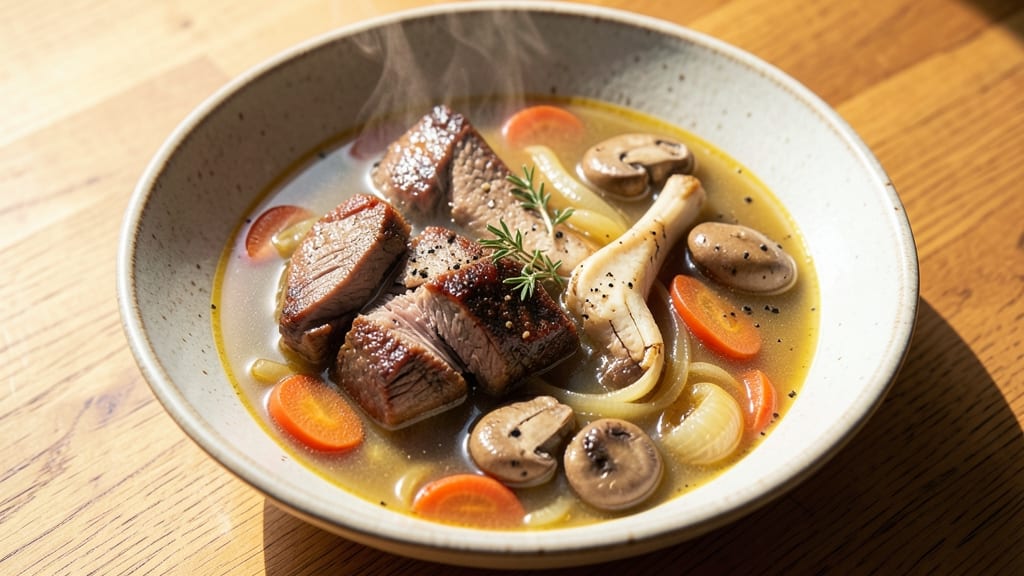
This slow cooker beef broth soup transforms tough bones and chuck roast into a deeply flavorful, restaurant-quality broth without constant monitoring. The secret lies in low-and-slow simmering—where collagen dissolves into velvety richness and umami builds layer upon layer.
I’ve perfected this recipe after years of testing, ensuring every sip delivers that comforting, hearty depth you crave after a long day.
The beauty of this method is its simplicity: toss your ingredients into the slow cooker, set it to low for 4–6 hours, and return to a pot brimming with aromatic broth.
No need for complex techniques—just time, patience, and a few key ingredients like mushrooms for earthy depth or miso for a modern umami twist. The result? A broth so rich it turns even simple vegetables into a gourmet experience.
What sets this apart is the textural contrast—tender beef that shreds easily, mushrooms that melt into the broth, and carrots that stay crisp-tender. The slow cooker ensures the broth reduces naturally, intensifying flavors without risking scorching.
Serve it as-is for a light meal or ladle it over noodles, dumplings, or crusty bread for a heartier dish.
Best of all, this soup tastes even better the next day as flavors meld further. It’s the kind of recipe that becomes a weekly staple—whether you’re feeding a crowd or craving a cozy solo meal. Let’s get started on creating your own slow-cooked masterpiece.
Ingredients for beef broth soup recipe slow cooker
Six ingredients transform tough cuts into velvety broth—slow cooker magic at its finest.
| Ingredient | Amount | Notes |
|---|---|---|
| Beef Chuck Roast 🥩 | 3 lb | With bones for maximum flavor |
| Beef Bones 🦴 | 2 lb | Knuckle or marrow bones preferred |
| Yellow Onion 🧅 | 1 whole | Peeled and halved |
| Carrots 🥕 | 4 medium | Scrubbed, cut into chunks |
| Garlic Cloves 🧄 | 6 cloves | Smashed for deeper flavor |
| Mushrooms 🍄 | 8 oz | Cremini or white, sliced |
| Celery Stalks 🧅 | 4 whole | Cut into 2-inch pieces |
| Tomatoes 🍅 | 2 whole | Roma or vine-ripened, halved |
| Bay Leaves 🌿 | 2 whole | Fresh preferred |
| Black Peppercorns 🌶️ | 1 tbsp | Crushed coarsely |
| Salt 🧂 | 1 ½ tsp | Kosher or sea salt |
| White Miso Paste 🍜 | 1 tbsp | For umami depth |
| Fresh Parsley 🌿 | ¼ cup | Chopped for garnish |
The bones and chuck are non-negotiable here. Look for marrow bones or knuckles at your butcher—they yield the richest broth. Costco or Whole Foods often carry pre-packaged bone collections, but if buying whole, ask for the meaty ends. The chuck should have visible fat marbling for maximum flavor. Mushrooms add earthy depth, so cremini or white varieties work best—avoid the pre-sliced kind (they oxidize fast). For the miso, White Miso is gentler than red, but either will work. I always grab a small jar from the Asian market—it keeps for months in the fridge.
No marrow bones? Substitute with chicken backs or veal bones—they still add great flavor. Short on carrots? Substitute with parsnips or turnips at the same quantity. The miso can be skipped if you're avoiding gluten, but soy sauce or coconut aminos add a similar savory punch. Fresh bay leaves are ideal, but dried works at half the amount. For the mushrooms, shiitake caps add even more umami if you're feeling fancy. The tomatoes? San Marzano canned tomatoes work perfectly if fresh aren't available—they're sweeter and more flavorful.
This broth gets better with time—4–6 hours on low is ideal, but don't rush it. Strain through a fine-mesh sieve for the smoothest texture, then store in airtight containers. Keeps 5–6 days in the fridge or 3 months frozen. I always make a double batch—one for sipping straight, one for cooking grains or braising proteins. The fat will solidify on top when chilled—just skim it off before reheating. Garnish with fresh parsley right before serving to keep it vibrant.
Why You'll Love This Recipe
- Dump-and-Go Magic: I swear by this—just toss in the chuck roast, bones, onions, and carrots, then walk away. The slow cooker does all the work while you handle emails or watch the game. No stirring, no babysitting, no stress.
- Deep Umami Bomb: That beef chuck and bones? They melt into a rich, savory broth that tastes like it simmered all day. The garlic and onions caramelize just enough to add layers of flavor without overpowering—like a hug in a bowl.
- Leftovers That Beg for More: This soup only gets better the next day. I freeze half the batch for lazy nights, and honestly? The second-day flavor is even richer. Perfect for when you’re too tired to cook but still crave something hearty.
- Budget-Friendly Powerhouse: Beef chuck and bones stretch into gallons of soup, and it’s cheaper than takeout. Plus, the carrots and onions bulk it up so you’re not just eating meat—it’s a full, satisfying meal without breaking the bank.
Step-by-step instructions for slow cooker beef broth soup
Transform humble ingredients into deeply flavorful broth with this hands-off method.
Prepare the Meat and Aromatics
Begin by placing the 3 lb Beef Chuck Roast and 2 lb Beef Bones in your slow cooker. The bones should be knuckle or marrow bones for maximum gelatin release. If your roast has a thick fat cap, trim it down to about ¼ inch—this prevents greasy broth while still allowing flavor development.
Next, add the 1 whole Yellow Onion (peeled and halved), 4 medium Carrots (cut into chunks), 4 whole Celery Stalks (cut into 2-inch pieces), and 2 whole Tomatoes (halved). These vegetables form the aromatic base that infuses the broth with sweetness and depth. Add the 6 cloves Garlic Cloves (smashed) and 8 oz Mushrooms (sliced) to the mix—they'll break down during cooking, adding earthy umami notes.
Season and Add Liquids
Sprinkle the 1 tbsp Black Peppercorns (crushed coarsely) and 1.5 tsp Salt evenly over the meat and vegetables. The peppercorns will infuse the broth with subtle heat, while the salt enhances all flavors. Add 8 cups of water to the slow cooker—this is enough to cover everything by about 1 inch and allows for proper extraction of collagen and gelatin.
Stir gently to combine, ensuring all ingredients are submerged. The water should look cloudy from the vegetables and meat juices. Place the 2 whole Bay Leaves on top—they'll add aromatic complexity without needing to be removed later. Cover the slow cooker and cook on Low for 8 hours or High for 5 hours. This long, slow cook time is essential for breaking down connective tissue into rich, velvety broth.
Finish with Umami and Strain
After the initial cooking time, stir in the 1 tbsp White Miso Paste and let it simmer for an additional 30 minutes. The miso adds a deep, savory umami layer that elevates the broth from good to extraordinary. Taste and adjust seasoning—you may need to add a pinch more salt, as miso can be salty.
Remove the slow cooker from heat and let the broth sit for 10 minutes to allow any remaining solids to settle. Line a fine-mesh strainer with cheesecloth or a clean kitchen towel and strain the broth into a large bowl or pot. This step ensures a silky-smooth texture without gritty bits. Discard the solids or compost them—they've given everything they've got.
Garnish and Serve
Ladle the strained broth back into the slow cooker and stir in the 0.25 cup Fresh Parsley (chopped). The parsley adds a bright, fresh finish that cuts through the richness of the broth. Keep the soup warm on Low heat until ready to serve.
Serve immediately with crusty bread or over rice for a hearty meal. The broth should be deep golden in color, rich in flavor, and silky in texture. If you prefer a thicker consistency, simmer uncovered for 15-20 minutes to reduce slightly. Store any leftovers in the refrigerator for up to 5 days or freeze for 3 months—this broth only gets better with time.
Pro Tips For Making Beef Broth Soup Recipe Slow Cooker
- Char Bones First: I learned this the hard way—skipping the sear means flavorless broth. Use a heavy skillet to blacken beef bones and chuck roast before dumping everything into the slow cooker. The crust locks in deep, meaty notes that no slow cook alone can replicate.
- Chop Onions Roughly: No need for perfect dice—just quarter those yellow onions and leave the skins on. They’ll soften beautifully in the slow cook, and the extra surface area means faster flavor infusion. (Yes, even if you’re impatient like me.)
- Don’t Overfill the Pot: The slow cooker’s magic fades when it’s packed too tight. Fill it no more than halfway with bones, roast, and veggies before adding water. Crowding traps steam instead of building rich, concentrated broth—your future self will notice the difference.
- Add Garlic Late: I used to toss garlic cloves in at the start, only to end up with bitter, overcooked bits. Instead, peel and smash them (no chopping needed) and add them in the last 30 minutes. This keeps their sweetness bright and prevents that harsh aftertaste.
Regional styles of beef broth soup recipe slow cooker
French Classic Style
In France, this soup becomes a bouillon de bœuf with a few key adjustments. Replace the miso with 1 tbsp tomato paste for a brighter acidity, and add 2 sprigs fresh thyme alongside the bay leaves.
French chefs often use chicken feet instead of some beef bones for extra gelatin. Serve with crusty baguette slices and a sprinkle of gruyère cheese on top for that classic bistro touch. 🥖
Italian Rustic Version
For an Italian twist, swap the miso for 1 tbsp soy sauce and add 1 tsp dried oregano with the bay leaves. Italians love their broths rich and rustic—so include 1 cup diced pancetta cooked first in the slow cooker until crispy.
Finish with a ladle of grated Parmesan and a drizzle of extra virgin olive oil before serving. This version pairs perfectly with freshly made orecchiette pasta.
Asian-Inspired Fusion
Elevate your broth with 1 tbsp fish sauce and 1 tsp grated ginger for an Asian-inspired fusion. Add 1 cup sliced shiitake mushrooms and 1 star anise pod while cooking. The fish sauce adds a deep, salty umami that complements the beef beautifully.
Garnish with thinly sliced scallions and lime wedges for a bright, zesty finish. Serve with steamed jasmine rice for a comforting bowl. 🍋
Southern U.S. Comfort
In the American South, this soup often includes 1 smoked ham hock instead of beef bones for a smoky depth. Add 1 tsp smoked paprika and ½ tsp cayenne pepper for heat.
Southern cooks love to serve it with cornbread and a side of collard greens. The slow cooker keeps the broth tender and flavorful—perfect for cold winter days. 🌶️
Mediterranean Herb Twist
For a Mediterranean flair, add 1 tsp dried rosemary and 1 tsp dried basil with the bay leaves. Include 1 zucchini (sliced) and 1 small eggplant (cubed) for a lighter broth. Finish with a drizzle of lemon juice and fresh dill before serving.
This version works beautifully with grilled lamb chops on the side or as a base for Mediterranean grain bowls.
Nutrition facts
Frequently asked questions
Can I use leftover roast beef instead of fresh chuck roast?
Leftover roast beef works perfectly—just trim off any excess fat to keep the broth clean. For best results, use beef that's been cooked at least 2 hours (like from a slow-cooked pot roast) so the collagen has already started breaking down. The flavor will be even deeper since the meat has already rendered its juices.
How do I know when the slow cooker broth is ready?
The broth is ready when the beef shreds easily and the vegetables are tender but not mushy. For chuck roast, this typically takes 4–6 hours on low. The broth should smell rich and aromatic—like a mix of roasted meat, garlic, and herbs. If using bones, they should be soft enough to bend slightly when cool.
Can I make this soup without a slow cooker?
Yes! Use a Dutch oven on the stovetop instead. Simmer the ingredients on low heat for 4–5 hours, adding water as needed to keep everything submerged. The key is maintaining a gentle simmer—never a rolling boil—to prevent the broth from becoming cloudy. A pressure cooker works too (1 hour on high pressure).
Why does my broth look cloudy after cooking?
Cloudiness usually means the broth hasn't had enough time to settle or the temperature fluctuated too much. For a clear broth, strain it through a fine-mesh sieve lined with cheesecloth, then refrigerate overnight. The fat will solidify on top—skim it off before reheating. If you prefer cloudy broth, it's still delicious—just more rustic!
How can I make this soup kid-friendly?
Strain out all vegetables and bones, then reduce the salt to ½ tsp (or omit entirely). Add a pinch of nutmeg or cinnamon for warmth, and serve with buttered noodles or soft bread. For extra appeal, garnish with a sprinkle of Parmesan cheese or a drizzle of olive oil. Always check the temperature before serving!