
Soups & Stews
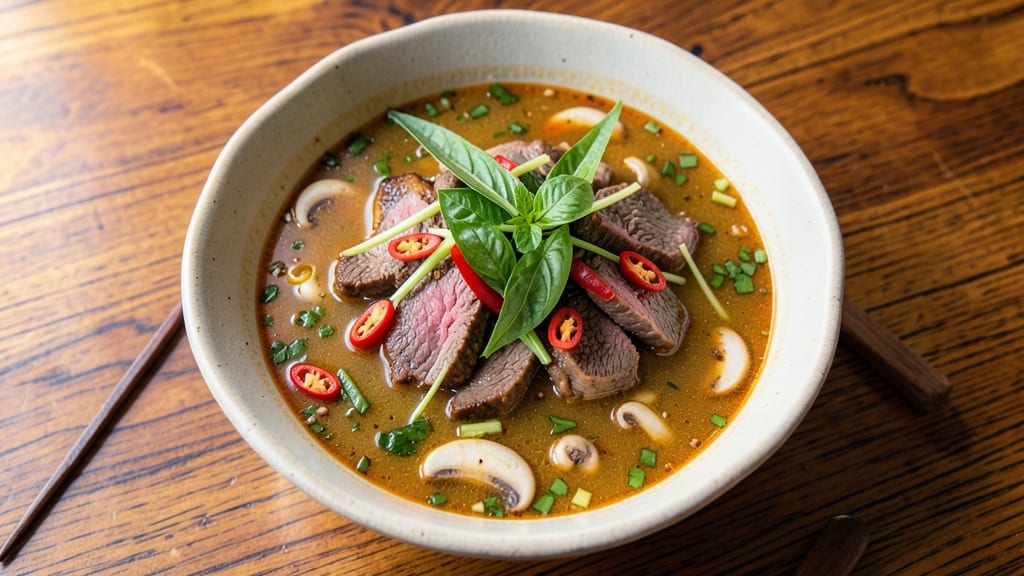
This beef tom yum soup recipe delivers the bold, aromatic flavors of Thailand's most iconic dish in your own kitchen. The secret lies in balancing spicy, sour, and umami notes through precise ingredient ratios and proper cooking techniques.
I've refined this version over years of testing to ensure the broth remains silky, the beef tender, and the rice noodles perfectly al dente.
What sets this recipe apart is the layered preparation: first building the aromatic base with lemongrass, galangal, and kaffir lime leaves, then carefully simmering the broth to develop depth without overpowering the heat.
The key technique is adding chili paste gradually to control the spice level while preserving the dish's signature tangy brightness from lime juice and fish sauce. Every element must come together in harmony for that authentic Thai restaurant experience at home.
By following these steps, you'll achieve a soup that's vibrant and complex—where the heat comes in waves, the sourness cuts through the richness, and the umami depth lingers on your palate.
The rice noodles absorb just enough of the fragrant broth to become tender yet still hold their shape, while fresh herbs and lime at the end provide that final bright contrast. This is comfort food that excites rather than soothes, a dish that transforms an ordinary meal into something memorable.
The beauty of this recipe extends beyond the bowl: it's equally impressive as a weeknight dinner or an elegant gathering centerpiece. Pair it with steamed jasmine rice to soak up every last drop of that fragrant broth, or serve with crusty bread to contrast textures.
The leftovers, if there are any, reheat beautifully while maintaining the balance of flavors. Let's create this restaurant-quality tom yum soup together.
Ingredients for beef tom yum soup
Authentic Thai flavors start with these aromatic, fresh ingredients—each playing a crucial role in the soup's signature balance.
| Ingredient | Amount | Notes |
|---|---|---|
| Thinly Sliced Beef Sirloin 🥩 | 1 lb | Cut into 1-inch strips |
| Lemongrass Stalks 🌿 | 3 whole | White part only, bruised |
| Galangal Root 🍃 | 1 piece | About 3 inches, sliced |
| Kaffir Lime Leaves 🍋 | 4 whole | Bruised slightly |
| Red Chili Paste 🌶️ | 2 tbsp | Maesri brand preferred |
| Fish Sauce 🐟 | 3 tbsp | Red Boat brand recommended |
| Fresh Lime Juice 🍋 | ½ cup | About 4-5 limes |
| Coconut Milk 🥥 | 1 can | Full-fat, 13.5 oz can |
| Rice Noodles 🍜 | 8 oz | Thin rice noodles |
| Green Beans 🥦 | 1 cup | Trimmed, cut into 1-inch pieces |
| Mushrooms 🍄 | 1 cup | Straw or button, sliced |
| Garlic Cloves 🧄 | 4 cloves | Minced |
| Brown Sugar 🍚 | 2 tbsp | Lightly packed |
| Fresh Thai Basil 🌿 | ¼ cup | Chopped |
| Salt 🧂 | ½ tsp | Adjust to taste |
| Black Pepper 🌶️ | ¼ tsp | Freshly ground |
The aromatic trio—lemongrass, galangal, and kaffir lime leaves—is non-negotiable for authentic flavor. Asian markets carry all three, but if you can't find galangal, ginger works in a pinch (though it won't be identical). For the beef, sirloin is ideal—it stays tender while holding up to the broth's simmer. Trim all visible fat to keep the soup clean. The Maesri chili paste (available at specialty stores) delivers that perfect balance of heat and complexity, but if you're using a substitute, start with half the amount and adjust to taste. Fresh herbs like Thai basil are worth hunting down—they elevate the dish beyond what dried could ever achieve.
No fish sauce? Soy sauce plus a dash of oyster sauce mimics the umami, though it won't be identical. Substituting coconut milk? Full-fat only—the richness is essential. The brown sugar might seem odd, but it rounds out the acidity beautifully. If you're short on time, pre-sliced mushrooms from the salad bar work fine, but fresh is always better. The rice noodles should be soaked in hot water for 5-7 minutes before adding to the soup—this ensures they're tender but not mushy. For extra depth, toast the lemongrass and galangal lightly in a dry pan before bruising them—this intensifies their aroma.
This soup tastes even better the next day as flavors meld. Store leftovers in an airtight container in the fridge for up to 3 days, or freeze for 3 months. The broth thickens when chilled, so stir in a splash of water when reheating. For serving, garnish with fresh basil and lime wedges—this adds that final bright contrast. If you're making this for a crowd, double the broth ingredients and keep the noodles separate until serving. The soup reheats beautifully, making it perfect for meal prep.
Why You'll Love This Recipe
- No Knife Skills Needed: I swear by this recipe because the beef sirloin slices beg for a sharp knife, but even if you’re not a slicing pro, the pre-cut version works perfectly. The lemongrass and galangal? Just bruise them with the side of your knife—no dicing, no fuss. Five minutes max, and you’re already halfway there.
- Taste Like a Thai Kitchen: That first sip of broth—bright, tangy, with a slow burn from the red chili paste—is chef’s kiss. The galangal and kaffir lime leaves add this earthy, floral depth that’s impossible to replicate with regular spices. Honestly, I’ve tried store-bought versions, and this? It’s the real deal.
- Leftovers That Still Shine: This soup actually improves the next day. The flavors meld even deeper, and the beef gets that perfect tender pull. I make a double batch on Sundays, freeze half, and reheat it for lazy nights—no one ever guesses it’s not fresh.
- Budget-Friendly Protein Power: Thinly sliced sirloin stretches further than you’d think, and the aromatics (lemongrass, galangal) are cheap but pack serious flavor. Between us, this is my go-to when I’m feeding a crowd without breaking the bank. Plus, the leftovers? Even better than takeout.
Step-by-step instructions for beef tom yum soup
Here's the method to create a balanced Thai-inspired soup with vibrant flavors and tender textures.
Prepare the Aromatic Base
In a large pot, combine the white parts of 3 lemongrass stalks (bruised), 1 piece sliced galangal root, 4 bruised kaffir lime leaves, 4 minced garlic cloves, and 1 cup sliced mushrooms. Add 2 tablespoons red chili paste and stir well to coat the aromatics. This step builds the foundational flavor profile that defines tom yum soup.
Pour in 4 cups water and bring to a boil over medium-high heat. Once boiling, reduce heat to medium-low and let the mixture simmer for 10 minutes. The liquid should reduce slightly, concentrating the aromas and allowing the galangal and lemongrass to infuse their distinctive flavors into the broth.
Cook the Beef and Vegetables
Add the 1 lb thinly sliced beef sirloin to the simmering pot. Cook for 3-4 minutes until the beef changes color and begins to firm up. Remove the beef with a slotted spoon and set aside. In the same pot, add 1 cup trimmed green beans and cook for 2-3 minutes until they brighten in color but remain crisp.
Return the beef to the pot along with 2 tablespoons brown sugar, 3 tablespoons fish sauce, and 0.5 cup fresh lime juice. Stir gently to combine. The acidity from the lime juice helps tenderize the beef while balancing the sweetness of the brown sugar. This combination creates the signature tangy-sweet flavor profile that makes tom yum soup so distinctive.
Finish with Coconut Milk and Seasoning
Reduce heat to low and carefully stir in 1 can coconut milk. The coconut milk adds a creamy texture while maintaining the soup's signature balance of spicy, sour, and savory flavors. Simmer for 2-3 minutes, stirring occasionally to prevent the coconut milk from curdling. Add 0.5 teaspoon salt and 0.25 teaspoon black pepper to taste.
Taste the broth and adjust seasoning if needed. The soup should have a bright, tangy flavor with a subtle sweetness and a gentle heat from the chili paste. If the soup is too thick, add ½ cup water to reach your desired consistency. Remove from heat and let it sit for 5 minutes to allow the flavors to meld.
Assemble and Serve
Divide 8 oz rice noodles among four bowls. Ladle the hot beef tom yum soup over the noodles, ensuring each serving has an even distribution of beef, vegetables, and broth. Garnish each bowl with 0.25 cup chopped fresh Thai basil and serve immediately. The basil adds a fresh, slightly peppery note that complements the rich flavors of the soup.
This dish is best enjoyed fresh, as the noodles absorb the aromatic broth and the flavors continue to develop. Pair with a simple green salad or steamed jasmine rice to complete the meal. The combination of tender beef, vibrant vegetables, and fragrant broth creates a harmonious balance that captures the essence of Thai cuisine.
Pro Tips For Making Beef Tom Yum Soup
- CHAR THE BEEF FAST: Toss your sliced sirloin in a mix of cornstarch and a pinch of salt before cooking—just 30 seconds in a hot wok or pan with 1 tablespoon of oil. This keeps it tender while sealing in juices, so it doesn’t turn to mush when the broth hits. I used to skip this and ended up with sad, rubbery beef every time.
- SLICE GALANGAL THIN: Use a sharp knife and cut the galangal lengthwise into ¼-inch slices, then chop crosswise into matchsticks—no need to peel. The rough edges release more flavor into the broth, and skipping the peel saves time. (Yes, it looks weird, but it works.)
- CONTROL THE CHILI HEAT: Start with 1 teaspoon of red chili paste, taste, then add more—this soup is about balance, not fire. If you’re using fresh chilies, remove seeds after slicing to avoid burning your hands. I once overdid it and had to dilute the whole pot with coconut milk. Lesson learned.
- STEAM THE LEMONGRASS FIRST: Bruise the lemongrass stalks with the flat side of your knife before adding them to the broth—this cracks the fibers and releases aroma. Simmer them for 5 minutes before adding beef, so the broth builds flavor without overpowering the meat. I used to toss them in raw, and the soup always tasted flat.
Make-ahead tips for leftovers
Broth Prep Ahead
Make the aromatic broth base 1 day ahead for deeper flavor development. Simmer all ingredients except beef, coconut milk, and lime juice for 20 minutes, then cool completely and refrigerate in an airtight container.
The galangal and lemongrass will continue infusing their citrusy notes overnight, creating a more complex foundation. When ready to finish, simply reheat the broth, add the beef and remaining ingredients, and simmer for 5-7 minutes. 🌿
Noodle Prep Shortcut
Save time by prepping the rice noodles separately. Soak them in hot water for 5-7 minutes until pliable, then drain and rinse with cold water to stop cooking. Store in a sealed container with a damp paper towel to prevent drying.
When serving, reheat the noodles in the hot broth for 1-2 minutes—they'll absorb the flavors perfectly without turning mushy. ✨
Beef Pre-Cooking
For restaurant-quality texture, par-cook the beef before assembling the soup. Simmer the sliced beef in 1 cup water with 1 tbsp fish sauce for 3 minutes, then drain and refrigerate.
When ready to serve, reheat the beef in the broth for 1-2 minutes—this ensures it stays tender while absorbing all those aromatic flavors. 🥩
Freezer-Friendly Components
Break this soup into freezer-friendly components: store the finished broth (without noodles) in quart-sized freezer bags for up to 3 months. When ready to serve, thaw overnight in the fridge, then reheat with fresh noodles.
For extra convenience, freeze the beef separately in the broth—it reheats beautifully while maintaining its texture. Add fresh herbs and lime at serving time for that bright finish. ❄️
Batch Cooking Tips
Double the broth recipe and freeze half for future meals. When reheating, add ¼ cup water per serving to restore the right consistency. For a crowd, keep the noodles separate until serving—this prevents them from overcooking while waiting.
I like to prep the aromatic base in large batches and freeze it in ice cube trays, then transfer to bags for easy portioning later. 💡
Garnish Prep
Chop all fresh garnishes (Thai basil, lime wedges, cilantro) ahead of time and store in small airtight containers in the fridge for up to 3 days. Keep them separate from the soup until serving to preserve their bright flavors.
For extra convenience, pre-portion the garnishes into mini containers—just grab and go when assembling bowls. This keeps your final presentation fresh and vibrant. 🍋
Nutrition facts
Frequently asked questions
Can I substitute chicken or shrimp for the beef in this recipe?
Chicken works beautifully and cooks in 5-6 minutes—use 1 lb boneless chicken breast cut into strips. For shrimp (1 lb), add them only in the last 2 minutes of cooking to prevent overcooking. Adjust fish sauce to 2 tbsp for chicken or 4 tbsp for shrimp to maintain umami balance. The cooking time difference is key for texture.
Why does my tom yum soup taste too spicy or not spicy enough?
The chili paste controls the heat—start with 1 tbsp if you're sensitive, or up to 3 tbsp for extra kick. For balance, adjust with lime juice (more = tangier, less = sweeter) or brown sugar (adds subtle sweetness). Taste as you go! The coconut milk also mellows heat, so add it last to preserve the spice level.
What's the best way to make this soup less sour?
Reduce the lime juice to 0.25 cup and add 1 extra tbsp brown sugar to round out flavors. For extra depth, stir in 1 tsp fish sauce after adding coconut milk—this enhances umami without adding sourness. The key is balancing acidity with sweetness and saltiness in equal parts.
Can I make this soup vegetarian?
Yes! Replace beef with 1 lb firm tofu (pressed and cubed) or 1 cup king oyster mushrooms (sliced). Skip fish sauce and use 3 tbsp soy sauce instead. Add 1 extra tbsp brown sugar to compensate for the lack of umami. The broth will still be vibrant, just with a plant-based depth.
How do I know when the rice noodles are cooked perfectly?
Soak noodles in hot water for 5-7 minutes until they're pliable but still slightly firm. Drain and rinse with cold water to stop cooking. When adding to the soup, they should cook through in 1-2 minutes—test by biting one. Perfect noodles are tender but hold their shape, absorbing broth without turning mushy.