
Soups & Stews
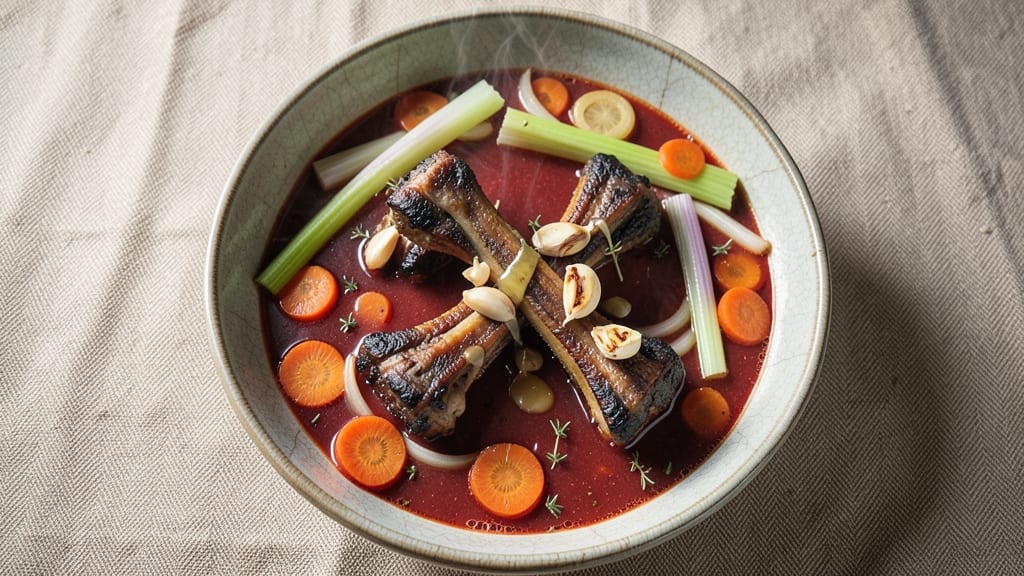
This beef rib bone soup recipe delivers restaurant-quality depth with tender beef that practically melts in your mouth. The secret lies in slow simmering beef bones for hours, extracting rich marrow and collagen that transforms into a velvety, umami-packed broth.
I’ve perfected this technique over years of testing—each step ensures maximum flavor without bitterness or cloudiness.
The process begins with preparing the bones by roasting them to deepen their natural flavors, then simmering them with aromatics like carrots, celery, and onions. A splash of vinegar early on helps break down collagen faster, while a bay leaf and peppercorns add subtle complexity.
The result? A broth so rich it coats every spoonful, with beef so tender it falls apart at the touch.
What makes this recipe stand out is its balance of simplicity and technique—no fancy equipment, just patience and attention to detail.
The slow simmer (6–8 hours) develops layers of flavor that bottled broths can’t match, while the final touch of fresh herbs brightens the dish without overpowering the deep, savory base.
Serve this soup with crusty bread to soak up every last drop, or pair it with a simple green salad for a complete meal. The leftovers? Even better the next day as flavors meld further. Ready to make the most flavorful soup you’ve ever tasted? Let’s get started.
Ingredients for beef rib bone soup
These twelve ingredients transform simple bones into restaurant-quality umami richness.
| Ingredient | Amount | Notes |
|---|---|---|
| Beef Rib Bones 🦴 | 4 lb | With marrow, cleaned and trimmed |
| Yellow Onions 🧅 | 2 whole | Large, cut into chunks |
| Carrots 🥕 | 4 whole | Medium, cut into 2-inch pieces |
| Celery Stalks 🌿 | 6 whole | Cut into 2-inch pieces |
| Garlic Cloves 🧄 | 6 cloves | Smashed, not minced |
| White Wine Vinegar 🍷 | ¼ cup | For collagen breakdown |
| Bay Leaves 🌿 | 2 whole | Fresh preferred |
| Black Peppercorns 🌶️ | 1 tbsp | Crushed, not ground |
| Fresh Thyme Sprigs 🌿 | 4 whole | Or 1 tbsp dried thyme |
| Fresh Parsley 🌿 | ¼ cup | Chopped, for finishing |
| Salt 🧂 | 2 tsp | Kosher or sea salt |
| Water 💧 | 12 cups | Enough to cover bones |
| Olive Oil 🫒 | ¼ cup | For roasting bones |
The beef rib bones are the heart of this soup—look for marrow-rich ends at your butcher or grocery store's meat counter. Costco or Whole Foods often carry them prepped for soup-making, but if you're buying whole, ask for the knuckle ends where marrow pools. Roast them first to deepen flavors—don't skip this step—or you'll miss that caramelized richness. The aromatics (onions, carrots, celery) form the classic 'mirepoix' base, so don't skimp on quality here. Organic produce has more flavor, but regular store-bought works fine if it's fresh.
No white wine vinegar? Apple cider vinegar or lemon juice works in a pinch, though it'll taste different. Fresh bay leaves and thyme are ideal, but dried will work at half the amount—just steep them longer. The crushed peppercorns add subtle heat without overpowering, while the smashed garlic (not minced) releases flavor more slowly, preventing bitterness. For the water, filtered is best—tap water with strong chlorine can mute flavors. If you're short on time, start with 10 cups and add more as needed during simmering to keep bones covered.
This soup tastes even better the next day as flavors meld. Store in airtight containers for up to 5 days in the fridge, or freeze for 3 months. The bones can be simmered ahead and stored in the broth—just reheat gently before serving. For serving, strain the broth if you prefer a smoother texture, or leave it rustic with chunks. The fresh parsley should be added just before serving to keep its bright flavor intact. Leftovers make excellent lunches or can be repurposed into other dishes like risotto or dumplings.
Why You'll Love This Recipe
- Minimal Chopping Required: I swear by the "mirepoix" trick here—just dice those onions, carrots, and celery into rough chunks (no need for julienne precision). Toss them in with the rib bones and garlic, and the slow simmer does all the work. My hands stay clean, my counters stay clear, and the soup still tastes like I spent hours.
- Garlic Bomb Depth: Between us, that first whiff of garlic and beef fat hitting the pot? Pure magic. The rib bones release collagen that melts into the broth, while the garlic softens just enough to add warmth without overpowering. Honestly, I’ve made this soup without the garlic before—don’t. The difference is night and day.
- Leftovers That Shine: This soup only gets better the next day. The flavors meld into something richer, and I love reheating it for lunch or freezing portions for when I’m too tired to cook. My freezer’s stocked with it, and I never get sick of it—even after the third bowl.
- Budget-Friendly Bone Power: Rib bones are the secret weapon here. They’re cheaper than steak but pack way more flavor, turning a simple pot of veggies and water into something restaurant-worthy. I buy them in bulk, roast them first for extra depth, and stretch every penny without sacrificing taste. (Yes, even on a Tuesday night.)
Step-by-step instructions for beef rib bone soup
Transform tough rib bones into velvety soup with rich umami depth using this precise method.
Roast the Bones for Deep Flavor
Preheat your oven to 425°F. Arrange the 4 lb beef rib bones on a rimmed baking sheet in a single layer. Drizzle evenly with the 0.25 cup olive oil and rub to coat completely, ensuring the marrow cavities are well-oiled. This step creates a flavorful crust that infuses the broth.
Roast the bones for 30-40 minutes, turning occasionally, until they develop a deep golden-brown color. You'll notice the fat rendering out and the bones becoming aromatic. This caramelization forms the foundation of your soup's complex flavor profile. Remove from oven and let cool slightly before proceeding.
Build the Flavor Base
In a large Dutch oven, combine the roasted bones with the 2 whole yellow onions (cut into chunks), 4 whole carrots (cut into 2-inch pieces), and 6 whole celery stalks (cut into 2-inch pieces). Add the 6 smashed garlic cloves, 0.25 cup white wine vinegar, 2 whole bay leaves, 1 tbsp crushed black peppercorns, and 2 tsp salt.
The vinegar helps break down collagen in the bones, while the aromatic vegetables create a flavorful base. Pour in 12 cups water to just cover the ingredients. Bring to a boil over high heat, then immediately reduce to a gentle simmer. The liquid should barely bubble at the surface.
Simmer for Maximum Extraction
Add the 4 whole fresh thyme sprigs and partially cover the Dutch oven with a lid. Let the soup simmer gently for 3-4 hours, maintaining a temperature between 180-200°F. You'll notice the bones gradually release their marrow and the broth becomes increasingly rich and opaque.
Check periodically and add water if the liquid level drops below the bones. The longer you simmer, the more gelatinous and flavorful the broth becomes. For best results, simmer until the bones can be easily pulled apart with tongs, indicating maximum collagen extraction.
Strain and Finish
Remove the bones and vegetables from the broth using a slotted spoon. Strain the liquid through a fine-mesh sieve into a clean pot, pressing gently on the solids to extract maximum flavor. Discard the solids or save for stock.
Return the strained broth to the pot and stir in the 0.25 cup chopped fresh parsley. Taste and adjust seasoning with additional salt if needed. The finished broth should have a rich, velvety texture with deep umami flavor from the roasted bones and vegetables.
Serve Warm with Crispy Toppings
Ladle the hot soup into bowls. For presentation, you can top with crispy fried shallots or fresh herbs. Serve immediately with crusty bread to soak up the flavorful broth. The soup should be served piping hot to fully appreciate its rich texture and complex flavors.
Pro Tips For Making Beef Rib Bone Soup
- BLANCH BONES FIRST: Drop those rib bones in boiling water for 3-5 minutes before adding to the pot. This loosens dirt and impurities—trust me, you don’t want that grit in your soup. I used to skip this and always ended up with cloudy broth.
- CHOP ONIONS COARSELY: Tiny onion pieces disappear and turn your soup into onion-flavored water. Cut them into 1-inch chunks so they hold shape and infuse flavor without dissolving. (Yes, even if it looks less "restaurant-perfect.")
- SWEAT VEGETABLES BEFORE BROWNING: Cook onions, carrots, and celery in oil on medium heat until soft and translucent—about 8-10 minutes. Only then crank the heat to sear the bones. Rushing this step means burnt bits instead of deep, caramelized flavor.
- STRAIN TWICE FOR CLEAR BROTH: After simmering, strain through a fine-mesh sieve, then a cheesecloth-lined colander. The second strain removes those stubborn fine particles that make broth look murky. (I know it’s extra work, but the result is worth it.)
Best sauces and condiments for beef rib bone soup
Classic Horseradish Cream
This tangy, creamy condiment cuts through the richness of beef rib bone soup beautifully. Mix ½ cup sour cream with 2 tbsp prepared horseradish (like Budweiser Select), 1 tbsp fresh lemon juice, and a pinch of salt.
Chill for 30 minutes before serving—this lets the flavors meld perfectly. 💛
Garlic Aioli Swirl
For a bold, aromatic twist, blend ½ cup mayonnaise with 2 minced garlic cloves, 1 tsp Dijon mustard, and a splash of lemon juice. Drizzle this vibrant aioli over the soup just before serving, or swirl it into individual bowls.
The garlic enhances the umami depth of the broth while adding a luxurious finish. ✨
Spicy Sriracha Oil
Heat ¼ cup neutral oil (like avocado oil) with 1 tbsp sriracha and 1 tsp toasted sesame oil until shimmering. Drizzle this fiery oil over the soup tableside—it adds a smoky kick that balances the soup’s richness. For extra drama, sprinkle with toasted sesame seeds right before serving. 🌶️
Herbed Butter Drizzle
Softened ¼ cup butter mixed with 1 tbsp chopped chives, 1 tsp chopped parsley, and a pinch of salt makes an elegant finishing touch.
Dot this herbed butter over the soup in the last minute of reheating—it melts into a fragrant, golden blanket that complements the beef’s deep flavors. 💡
Crispy Shallot Topping
Pan-fry ¼ cup thinly sliced shallots in 2 tbsp butter until golden and crispy. Scatter these over the soup just before serving for a textural contrast that adds crunch and sweetness. Store-bought shallot crisps (like La Tourangelle) work in a pinch, but homemade is always better. 🔥
Lemon-Beer Pairing
While not a condiment, a splash of craft lager (like Corona or Leinenkugel’s) or a squeeze of lemon brightens the soup’s richness. Serve the soup with a cold beer on the side—its effervescence cleanses the palate between spoonfuls.
For a non-alcoholic option, sparkling water with lemon works just as well. 🍺
Nutrition facts
Frequently asked questions about beef rib bone soup
Can I use beef shank bones instead of rib bones?
Yes, but the flavor will differ slightly. Beef shank bones are leaner and produce a slightly less gelatinous broth compared to marrow-rich rib bones. For best results, use a mix of both—shank for structure and rib bones for that unmistakable marrow depth. If using only shanks, simmer for 4-5 hours to extract maximum collagen.
Why does my broth look cloudy after simmering?
Cloudiness usually means the broth isn't fully clarified. To fix this, simmer the strained broth uncovered for an additional 15-20 minutes—this evaporates excess moisture and tightens the collagen. For a crystal-clear broth, skim off any fat that rises to the surface during simmering, or use a fat separator after straining.
How do I store and reheat leftovers?
Store in airtight containers in the fridge for up to 5 days or freeze for 3 months. To reheat, warm gently on the stove over medium-low heat—never microwave, as it can make the broth watery. For extra richness, add a splash of water or reserved broth while reheating to restore the velvety texture.
Can I make this soup in a slow cooker?
Follow the same steps for roasting the bones, then transfer everything to your slow cooker. Use the low setting for 8-10 hours, adding water as needed to keep the bones submerged. The slow cooker’s gentle heat works perfectly for collagen extraction, though you may need to strain the broth longer to remove any loose particles.
What if I don't have white wine vinegar?
No problem! Apple cider vinegar or even lemon juice work in a pinch—they’ll add a slightly different brightness but still help break down collagen. Use the same amount (0.25 cup) and adjust seasoning to taste after simmering. For a neutral option, a splash of tomato paste (about 1 tbsp) can also help deepen the broth’s color and flavor.