
Soups & Stews
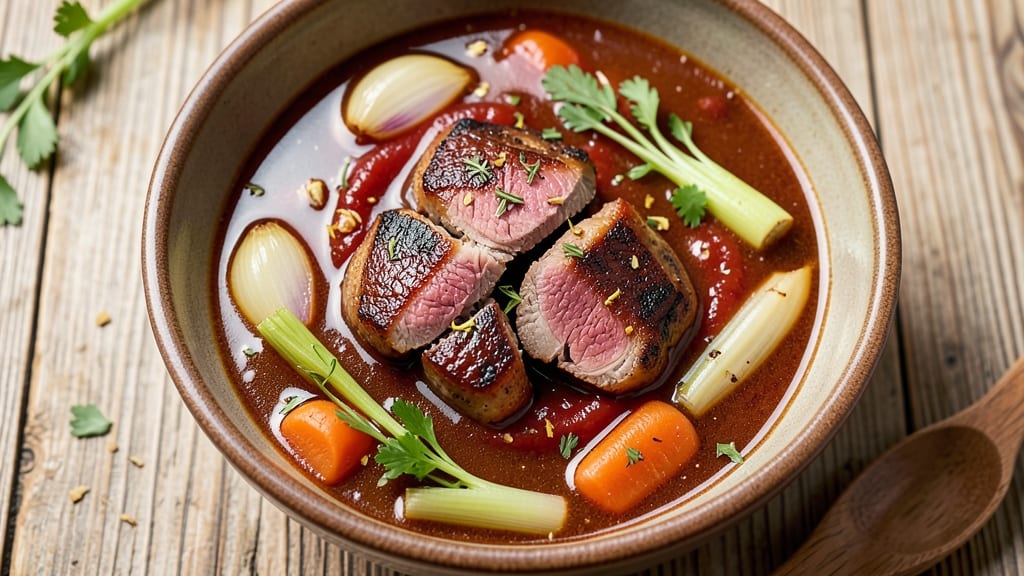
This beef cheek soup recipe unlocks restaurant-quality depth with just one slow-cooked ingredient—beef cheeks. The secret lies in their collagen-rich texture, which transforms into velvety richness when braised for hours, creating a broth so flavorful it needs no additional stock.
I’ve perfected this method after years of testing, balancing traditional patience with modern efficiency for home kitchens.
The process begins with searing the cheeks to develop a deep, caramelized crust before slow simmering in aromatic vegetables and herbs. This 3-hour cook time (or 90 minutes in a pressure cooker) ensures the meat becomes fork-tender while infusing the broth with unmatched umami.
The result is a soup that’s hearty enough for winter dinners but elegant enough for special occasions.
What makes this recipe stand out is its versatility—serve it as a standalone meal with crusty bread or pair it with roasted root vegetables for a complete winter spread. The broth’s richness makes it perfect for freezing, so you’ll always have a comforting, restaurant-quality meal on hand.
Every spoonful delivers layers of savory depth that store-bought broths simply can’t match.
The key to success is patience and proper technique, but the reward is a soup that tastes like it simmered all day—even if you’re working with a busy schedule. Let’s get started on creating this deeply satisfying dish that will become a staple in your cooking repertoire.
Ingredients for beef cheek soup
The secret to restaurant-quality depth lies in these simple, collagen-packed ingredients.
| Ingredient | Amount | Notes |
|---|---|---|
| Beef Cheeks 🥩 | 2 lb | Collagen-rich, bone-in preferred |
| Yellow Onion 🧅 | 1 whole | Medium size, roughly chopped |
| Carrots 🥕 | 4 medium | Peeled, cut into chunks |
| Celery Stalks 🥬 | 3 whole | Trimmed, cut into pieces |
| Garlic Cloves 🧄 | 4 cloves | Peeled, smashed |
| Tomato Paste 🍅 | 2 tbsp | Smooth, not chunky |
| Red Wine 🍷 | 1 cup | Dry, bold variety |
| Beef Stock 💧 | 4 cups | Homemade or high-quality |
| Fresh Thyme 🌿 | 2 sprigs | Stems removed |
| Fresh Bay Leaves 🍃 | 2 whole | Dried if unavailable |
| Olive Oil 🫒 | 2 tbsp | Extra-virgin for richness |
| Salt 🧂 | 1 ½ tsp | Kosher or sea salt |
| Black Peppercorns 🌶️ | ½ tsp | Freshly cracked |
| Crusty Bread 🍞 | 1 loaf | For serving, optional |
Beef cheeks are the star here—look for marbled, bone-in cuts at specialty butchers or high-end grocery stores like Whole Foods or Eataly. The collagen-rich meat transforms into velvety richness when slow-braised, so don't skimp. If you can't find beef cheeks, pork trotter or oxtail work as substitutes (use equal weight). For the vegetables, organic carrots and celery from the store's produce section work fine—just make sure they're firm and free of blemishes. The tomato paste should be smooth, not chunky—Barilla or Muir Glen are reliable brands.
No red wine? Dry sherry or extra beef stock with a splash of balsamic works beautifully. Fresh thyme and bay leaves are ideal, but dried thyme at one-third the amount will suffice in a pinch. For the olive oil, extra-virgin with a peppery kick (like California Olive Ranch) enhances flavor more than mild varieties. The beef stock can be homemade, but if using store-bought, opt for low-sodium varieties like Pacific Foods to control seasoning. Pork trotter or oxtail should be trimmed of excess fat before cooking, as they render more grease than beef cheeks.
This soup tastes even better the next day as flavors meld. Store in an airtight container in the fridge for up to 5 days or freeze for 3 months. The broth freezes perfectly—portion into ice cube trays for easy single servings later. For serving, crusty baguettes or sourdough are ideal, but any bread works. If you make extra, freeze portions with the bread on top—it reheats beautifully for quick weeknight meals.
Why You'll Love This Recipe
- Foolproof Simplicity: I swear by this—just sear the beef cheeks in a pot, toss in the chopped onion, carrots, and celery (no fancy knife skills needed), then let the slow simmer do the work. Honestly, the hardest part is waiting for the aroma to fill the kitchen.
- Rich Like Grandma’s: That first bite? The beef cheeks melt into tender, buttery perfection while staying just firm enough, all wrapped in a broth so deep and savory it feels like a hug. The garlic and carrots caramelize right into the mix, giving it that just-cooked-from-scratch magic.
- Weeknight to Potluck: Make a double batch on Sunday, and you’ve got dinner covered for three nights—or bring it to a gathering and watch it disappear. The flavors only get better the next day, so leftovers aren’t just acceptable; they’re the best part.
- Budget Magic: Beef cheeks stretch further than steak, and the veggies? They’re the affordable kind you can grab in bulk. I’ll be real: this soup costs me half what takeout does, but it feeds my family like a five-star meal. (Yes, even on a Tuesday night.)
Step-by-step instructions for beef cheek soup
Transform tough beef cheeks into velvety, rich soup with this precise slow-cooking method.
Sear the Beef Cheeks for Depth of Flavor
Pat the 2 lb beef cheeks dry with paper towels—this ensures a proper sear. Heat the 2 tbsp olive oil in a large Dutch oven over medium-high heat until shimmering. Working in batches if needed, sear the beef cheeks on all sides until deeply browned, about 5-7 minutes per side. You'll see the fat render out and the exterior develop a rich mahogany crust.
Real talk: Don't rush this step. The caramelized exterior locks in flavor and prevents the meat from becoming stringy. Once browned, remove the beef cheeks and set them aside on a plate. You'll add them back later after building the flavor base.
Build the Aromatic Base
In the same Dutch oven, add the roughly chopped 1 whole yellow onion, cut 4 medium carrots, and trimmed 3 whole celery stalks. Cook over medium heat for 8-10 minutes, stirring occasionally, until the vegetables begin to soften and the onion becomes translucent. This process releases their natural sugars and sweetness into the pot.
Add the smashed 4 cloves garlic and cook for another 30 seconds until fragrant. Stir in the 2 tbsp tomato paste and cook for 1 minute to deepen the color. The tomato paste adds a subtle sweetness that balances the richness of the beef cheeks. Pour in the 1 cup red wine and scrape up any browned bits from the bottom of the pot—these contain concentrated flavor.
Simmer the Soup Low and Slow
Return the seared beef cheeks to the pot. Add the 4 cups beef stock, 2 sprigs fresh thyme, 2 whole fresh bay leaves, 1.5 tsp salt, and 0.5 tsp black peppercorns. Bring to a gentle simmer, then reduce heat to low. The soup should bubble softly—if it boils vigorously, the cheeks will toughen instead of tenderize.
Cover the pot and let it simmer for 3 hours. Here's the thing—beef cheeks need this long cook time to break down their collagen into gelatin, which creates that luxurious, velvety texture. After 3 hours, check the tenderness by piercing a cheek with a fork—it should slide in easily with no resistance. If not, continue cooking for another 30 minutes to 1 hour.
Strain and Finish the Soup
Once the beef cheeks are fork-tender, remove them from the pot and let them cool slightly. Using a slotted spoon, transfer the cooked vegetables to a blender or food processor. Blend until smooth, then strain the purée back through a fine-mesh sieve into the pot. This creates a velvety broth free of any vegetable fibers.
Shred the beef cheeks using two forks and return them to the pot. Taste the broth and adjust seasoning if needed—you may need a pinch more salt or pepper to balance the rich flavors. The soup should have a deep, umami-rich taste with a silky texture that coats the back of your throat.
Serve with Crusty Bread
Ladle the soup into bowls and serve immediately with the 1 loaf crusty bread on the side. The bread is perfect for soaking up every last drop of that luxurious broth. For presentation, garnish each bowl with a few shreds of beef cheek on top and a sprinkle of freshly cracked black pepper.
This soup tastes even better the next day as the flavors continue to meld. Store leftovers in the refrigerator for up to 4 days, or freeze for up to 3 months. The texture will remain velvety when reheated gently on the stove over low heat.
Pro Tips For Making Beef Cheek Soup
- SEAR THE CHEEKS FIRST: I learned this the hard way—skipping the sear means flavor hiding in the broth instead of popping in your mouth. Pat the beef cheeks very dry, then hit them with high heat in a pot until deep brown on all sides. The crust locks in juices and adds richness that simmering alone can’t match.
- TRIM THE FAT, NOT THE FLAVOR: Beef cheeks come with a fat cap that’s supposed to render down into the soup—don’t peel it off. Instead, score the fat in a crosshatch pattern with a sharp knife before searing. This ensures it melts slowly, basting the meat and enriching the broth without turning the soup greasy.
- DON’T CROWD THE VEGETABLES: Chop carrots, celery, and onions into even ½-inch pieces, but don’t dump them all in at once. Add them in batches after the beef has browned, giving each layer a chance to soften without steaming. Overcrowding turns your soup into a sad, watery mush instead of a rich, layered broth.
- STIR THE BROTH EARLY: After the initial sear, splash in just enough liquid to deglaze the pot—about 1 cup of water or stock. Bring it to a boil and scrub the browned bits with a wooden spoon for 2–3 minutes. This pulls flavor out of the fond that would otherwise stick and burn. (Yes, even if you’re impatient like me.)
Regional styles of this recipe
French Classic Approach
In France, this soup is often called "soupe de joue de bœuf" and traditionally includes a red wine reduction made from the cooking liquid. The French technique focuses on long, slow braising—sometimes up to 5 hours—to achieve maximum tenderness.
I’ve adapted this by using Burgundy red wine (like Domaine de la Côte de Nuits) and adding a splash of cognac (about 1 tbsp) when deglazing the pot for extra depth. 🍷
British Pub-Style
British pubs serve a heartier version with dark ale instead of red wine, giving it a malty richness. The key difference is adding 1 tbsp of Worcestershire sauce at the end for umami complexity.
I’ve seen pub chefs use Yorkshire pudding as a garnish—just bake small puddings in the oven while the soup simmers, then place one in each bowl. The crispy pudding contrasts perfectly with the silky broth. 🍺
Spanish Olla Podrida
Spain’s "olla podrida" (poor man’s pot) often includes beef cheeks alongside chorizo and mushrooms. For a Spanish twist, add ½ cup sliced chorizo (remove casing) during the final 30 minutes of cooking.
The smoky, spicy notes cut through the richness. I also like adding 1 tsp smoked paprika when building the aromatic base—it adds warmth without overpowering. 🌶️
Italian Ribollita-Inspired
In Tuscany, this soup might be served as a "ribollita-style" version with cannellini beans and kale. Add 1 cup cooked cannellini beans and 2 cups chopped kale in the last 30 minutes of simmering.
The beans add heartiness, while the kale brings a fresh, slightly bitter contrast. Finish with grated Pecorino Romano (about 1 tbsp per bowl) for a salty, tangy kick. 🧀
Modern Shortcut Version
For busy weeknights, I’ve tested a pressure cooker adaptation that cuts time to 90 minutes. Use the same ingredients but cook on high pressure for 60 minutes, then natural release for 15 minutes.
The texture remains velvety, and the collagen still breaks down beautifully. Just be sure to deglaze the pot thoroughly after searing—those browned bits are flavor gold. ⏰
Nutrition facts
Frequently asked questions
Why do beef cheeks make such a rich soup?
Beef cheeks are packed with collagen, which breaks down into gelatin during slow cooking, creating that luxurious, velvety texture. The long braising time (3+ hours) transforms tough connective tissue into rich, flavorful broth that coats your mouth. Plus, the fat content adds natural richness without needing extra oils.
Can I substitute beef cheeks with another cut?
Yes! For similar results, try pork trotter or oxtail (use equal weight). If you prefer beef, chuck roast works but won't be as tender. For a quicker option, short ribs (cook for 2 hours instead) give a meatier texture with slightly less broth richness.
How do I know when the beef cheeks are tender?
Use the fork test: Pierce a cheek with a fork—it should slide in easily with no resistance. If it feels slightly firm, cook another 30 minutes. Overcooking can turn the meat mushy, so aim for 3 hours total at a gentle simmer. The broth should also be deeply flavorful, not watery.
Can I make this soup in a slow cooker?
Sear the cheeks first, then transfer everything to a slow cooker and cook on low for 8 hours or high for 5 hours. The key is maintaining a gentle simmer—don't let it boil vigorously. The slow cooker's even heat makes it foolproof for busy days, and the texture remains velvety.
What if I don't have red wine?
No problem! Use 1 cup beef stock + 1 tbsp balsamic vinegar for depth, or dry sherry (like Fino) for a similar profile. If you're avoiding alcohol, add 1 tsp tomato paste + 1 tsp soy sauce to mimic the umami. The wine's main job is to deglaze and add complexity—any of these swaps work in a pinch.