
Soups & Stews
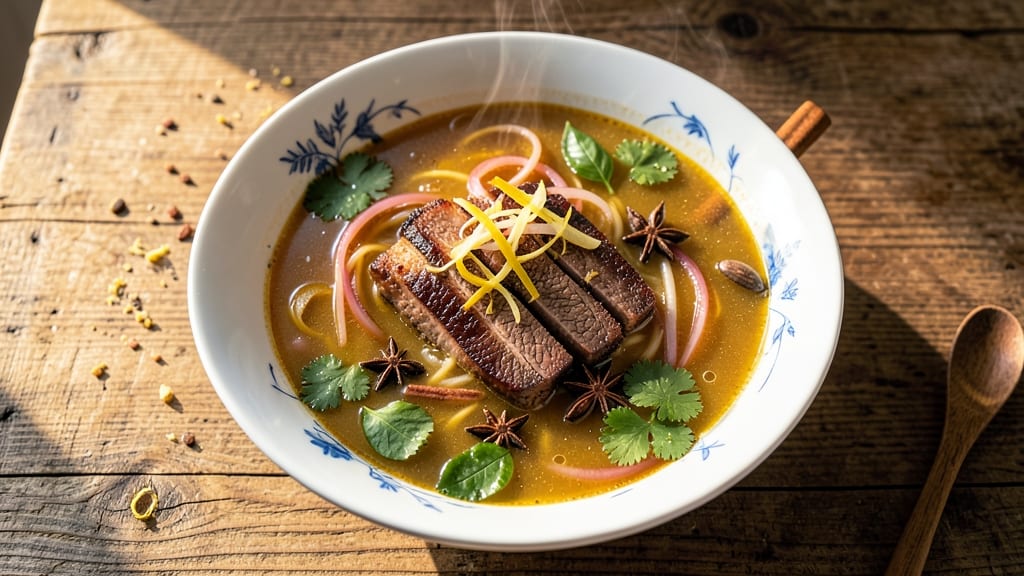
This basic pho soup recipe delivers the aromatic, comforting essence of Vietnamese street food with a few essential techniques. 🌟 The secret lies in slow-simmered spices—star anise, cinnamon, and cardamom—that infuse the broth with deep, warming flavors while keeping the preparation straightforward for home cooks.
I've refined this version over years to balance authenticity with approachability, ensuring every bowl delivers that signature harmony of savory, sweet, and umami.
The foundation of great pho is the broth, where charred onions and ginger form a fragrant base before spices are added. Simmering beef or chicken stock with these aromatics for at least 30 minutes develops complex layers of flavor without requiring specialized equipment.
This method transforms simple ingredients into a restaurant-quality broth that's rich yet light enough to let the fresh herbs and protein shine.
Once the broth is ready, tender brisket or chicken is sliced thin and added just before serving, allowing it to warm through without overcooking. Fresh herbs like cilantro and Thai basil, along with bean sprouts and lime wedges, provide the bright, crisp contrast that makes pho so satisfying.
The result is a bowl that's equally comforting and invigorating—perfect for chilly evenings or when you crave something hearty yet balanced.
This recipe adapts easily to dietary preferences too: swap beef for mushrooms or tofu, and adjust the spice level with chili flakes or fresh jalapeños. The technique remains the same, proving that authentic flavors are within reach for any home cook.
Let's get started on creating your own fragrant, comforting pho.
Ingredients for basic pho soup
These aromatic ingredients transform simple broth into restaurant-quality pho.
| Ingredient | Amount | Notes |
|---|---|---|
| Beef Brisket 🥩 | 1 lb | Thinly sliced against grain |
| Yellow Onions 🧅 | 2 whole | Charred for depth of flavor |
| Fresh Ginger 🧄 | 2 tbsp | Finely grated, peeled |
| Star Anise Pods 🌿 | 2 whole | Whole pods for infusion |
| Cinnamon Sticks 🌿 | 2 whole | 2-inch pieces for aroma |
| Cardamom Pods 🌿 | 4 whole | Lightly crushed |
| Cloves 🌿 | 4 whole | Whole cloves for infusion |
| Beef Stock 🥫 | 6 cups | Homemade or high-quality |
| Fish Sauce 🍶 | 2 tbsp | Red Boat preferred |
| Rock Sugar 🍬 | 1 tbsp | Or granulated sugar |
| Fresh Thai Basil 🌿 | ¼ cup | Stems removed |
| Fresh Cilantro 🌿 | ¼ cup | Chopped for garnish |
| Bean Sprouts 🌱 | 1 cup | Fresh or canned |
| Lime Wedges 🍋 | 4 whole | For serving |
| Jalapeño Slices 🌶️ | 1 piece | Optional for heat |
The spices are non-negotiable for authentic flavor. Whole star anise, cinnamon sticks, and cardamom pods from Penzeys or your local Asian market deliver the deepest aroma—don't use ground versions. Char the onions over a gas flame or under a broiler until blackened in spots; this caramelization builds the broth's complexity. For ginger, fresh is essential—peel and grate it just before adding to the broth to preserve its bright, peppery notes. The beef brisket should be thinly sliced against the grain for tender bites, and Costco's pre-sliced brisket saves time without sacrificing quality.
No star anise? 1 tsp anise seeds work in a pinch, but the flavor won't be identical. Short on fish sauce? Soy sauce at half the amount mimics some of the umami, though it lacks the depth. Rock sugar can be swapped for granulated, but it dissolves more cleanly. For the herbs, Thai basil is critical—regular basil won't cut it. If you can't find it, holy basil is the next best option. The bean sprouts should be crisp; if using canned, drain and rinse thoroughly. For heat, fresh jalapeño slices add brightness, while dried chili flakes provide a different texture.
Store the broth base (without protein or fresh herbs) for 5 days in the fridge or 3 months frozen. Reheat gently over low heat to preserve the spices' delicate flavors. Fresh herbs like Thai basil and cilantro keep best in the fridge, wrapped in damp paper towels, for 3-4 days. Bean sprouts stay crisp for 1 week unopened. For meal prep, assemble bowls without the protein and herbs; add those fresh when serving to maintain crispness and vibrant flavor.
Why You'll Love This Recipe
- One-Pot Simplicity: I swear by this—just a stockpot, a few slices of ginger, and those whole spices (star anise and cinnamon) simmering while I chop. No blenders, no fancy gadgets, just you, the stove, and 45 minutes of hands-off time.
- Deep Umami Magic: That brisket? Slow-simmered until it practically falls apart, soaking up the onions and ginger until the broth tastes like it’s been cooking all day. (Honestly, the star anise alone makes it smell like a Vietnamese café.)
- Leftovers That Beg: The broth gets better the next day—richer, more complex—so I always make extra. Freeze half for lazy nights when I just want that warm, spiced comfort without the effort.
- Budget-Friendly Feast: A single brisket feeds four, and those spices? A few bucks at the grocery store. This isn’t just soup; it’s my go-to for when I need to stretch a meal without sacrificing flavor. (Yes, even on a Tuesday night.)
Step-by-step instructions for fragrant star anise and cinnamon pho
Here's the method to build authentic pho broth and assemble the dish with precision.
🔥 Step 1: Infuse the Broth with Spices and Aromatics
In a large stockpot, combine the 2 whole yellow onions (quartered), 2 tbsp fresh ginger (peeled and sliced), 2 whole star anise pods, 2 whole cinnamon sticks, 4 whole cardamom pods (lightly crushed), and 4 whole cloves. This aromatic bundle forms the soul of pho—don't skip any spices, as each contributes unique depth.
Add the 6 cups beef stock and bring to a gentle simmer over medium heat. Here's the thing—simmering too vigorously will make the broth cloudy. You want to see tiny bubbles breaking the surface, not a rolling boil. Let it steep for 30 minutes, skimming any foam that rises to the surface. The broth should develop a rich amber color and a complex aroma of warm spices and umami.
🍳 Step 2: Char the Onions and Prepare the Brisket
While the broth simmers, heat a dry skillet over medium-high heat. Add the quartered onions and char them until deeply caramelized and blackened in spots—this adds incredible depth of flavor. Transfer the charred onions to a cutting board and roughly chop them.
In a separate bowl, combine the 1 lb beef brisket (thinly sliced against the grain) with 2 tbsp fish sauce and 1 tbsp rock sugar. Let it marinate for 15 minutes while the broth finishes infusing. The sugar will tenderize the meat while the fish sauce adds that essential salty-umami foundation.
🥘 Step 3: Assemble the Pho Base
Strain the spiced broth through a fine-mesh sieve into a clean pot, pressing gently on the solids to extract maximum flavor. Return the broth to medium heat and bring it to a gentle simmer. Add the marinated beef brisket and simmer for 5-7 minutes until the meat is just cooked through—it should still be tender but no longer pink in the center.
Here's where it gets critical: the broth should maintain a gentle simmer, never a boil. If it boils, the broth will break and lose its clarity. Taste and adjust seasoning with additional fish sauce or sugar if needed. The broth should be fragrant, slightly sweet, and deeply savory with a hint of spice from the infusion.
🍽️ Step 4: Prepare the Garnishes and Serve
In four individual bowls, divide the 1 cup bean sprouts, 0.25 cup fresh Thai basil (stems removed), and 0.25 cup fresh cilantro (chopped). Ladle the hot beef broth over the meat, creating a beautiful contrast between the deep amber broth and the pale beef slices.
Serve immediately with the prepared garnishes, 4 whole lime wedges, and 1 piece jalapeño slices on the side. Each bowl should have the vibrant green herbs peeking through the broth, ready for diners to customize their pho to preference. The lime brightens the rich broth, while the jalapeño adds optional heat for those who crave it.
Pro Tips For Making Basic Pho Soup
- CHAR THE ONIONS LOW: I used to rush this step and end up with bitter, blackened bits—no one wants that in pho. Slice the onions thinly (paper-thin, like rice paper) and cook them on low heat for 10-12 minutes until they’re golden but not crispy. Stir occasionally, or they’ll stick like glue to the bottom of your pot.
- PARBOIL THE BRISKET FIRST: Skipping this is how you end up with tough, chewy beef. Before searing, parboil the brisket for 5-7 minutes in salted water—just enough to loosen the fibers. Drain, pat very dry, then sear. The meat stays juicy, and the broth won’t turn cloudy from excess blood.
- CRUSH THE SPICES RIGHT: Whole star anise and cinnamon sticks add depth, but if you leave them whole, they’ll just float like decorative twigs. Lightly crush them with the side of your knife—just enough to bruise, not pulverize. This releases their flavor without turning the broth bitter.
- USE THE GINGER PEEL: I was skeptical until I tried it: peel the ginger and use the outer skin. Simmer it with the broth for the last 10 minutes—it adds a subtle warmth that store-bought paste can’t match. Just scrape it out before serving; no one’s judging you for a little extra work.
Essential equipment for great basic pho soup
Stockpot Essentials
You’ll need a large, heavy-bottomed stockpot (I use my All-Clad 8-quart) to build the pho broth—it prevents scorching and maintains even heat distribution. A fine-mesh strainer (like OXO Good Grips) is critical for filtering the spiced broth without losing precious aromatics.
For simmering, a digital thermometer (such as Thermoworks Thermapen) ensures you maintain that gentle simmer between 180-190°F—never a rolling boil. 🌡️
Charred Onion Tools
A dry skillet (I prefer Lodge cast iron) is perfect for charring onions—its heat retention creates those deep caramelized spots. Keep a heat-resistant spatula (like Mercer Culinary Genius) handy to flip onions evenly.
For safety, use silicon oven mitts (I love Ozeri Touch-N-Go) to handle the hot skillet and charred onions. A sharp chef’s knife (I recommend Victorinox 8-inch) is essential for thinly slicing brisket against the grain.
Spice Management
Whole spices like star anise, cinnamon, and cardamom require a mortar and pestle (like Kuhn Rikon) for light crushing—never grind them, as that releases bitterness. Store spices in airtight containers (I use Glasslock jars) to preserve their aroma.
A small ladle (such as Ozeri 6-inch) helps skim foam from the simmering broth, while a wooden spoon prevents scratching your stockpot.
Serving Essentials
For assembly, wide, shallow bowls (like Villeroy & Boch 10-inch) showcase the vibrant garnishes. A microplane (I use Microplane Zester/Grater) quickly zests lime for garnishes. Keep bean sprouts, Thai basil, and cilantro in separate bowls to maintain freshness.
A small cutting board (like Teakha bamboo) holds lime wedges and jalapeño slices for easy serving. 🍋
Budget-Friendly Swaps
No stockpot? A large Dutch oven (like Le Creuset 6-quart) works just as well. Skip the digital thermometer and use the "hand test"—hover your hand over the broth; if you feel warmth but no steam, it’s at the right simmer.
For charring onions, a broiler pan under the oven broiler is a great alternative. Store spices in small glass jars with tight lids from the dollar store for the same effect.
Nutrition facts
Frequently asked questions
Can I make pho with chicken instead of beef?
Chicken pho is just as delicious and often preferred for its lighter flavor. Use 1 lb boneless, skinless chicken thighs (they stay juicier than breasts) and simmer for 15-20 minutes until fully cooked. For extra richness, add 1 cup chicken stock to the beef stock. The broth preparation remains identical—just swap the protein at the end.
How do I make pho vegetarian?
Replace beef with 1 lb firm tofu or mushrooms (shiitake or oyster work best). Use vegetable stock instead of beef, and add 1 tbsp soy sauce plus 1 tsp miso paste to deepen umami. The broth method stays the same—just adjust the protein and seasoning to match.
Why does my pho broth look cloudy?
Cloudiness usually means the broth boiled too vigorously or wasn't strained properly. Keep the heat at a gentle simmer (tiny bubbles, no rolling boil) and strain through a fine-mesh sieve after simmering. If it's still cloudy, simmer uncovered for 10 more minutes to evaporate excess moisture.
Can I prepare pho ahead of time?
Yes! Make the broth up to 3 days ahead and store it in the fridge. Reheat gently over low heat—never microwave, as it dulls the spices. For full meals, assemble bowls without the protein or fresh herbs (they wilt when reheated). Keep garnishes separate until serving to maintain crispness.
What if I can't find Thai basil?
Regular basil won't work, but holy basil or cilantro are acceptable substitutes. For the best flavor, combine 1 tbsp fresh cilantro + 1 tsp dried basil per serving. If you're missing both, omit the basil entirely—your pho will still taste amazing with just cilantro and bean sprouts.