
Soups & Stews
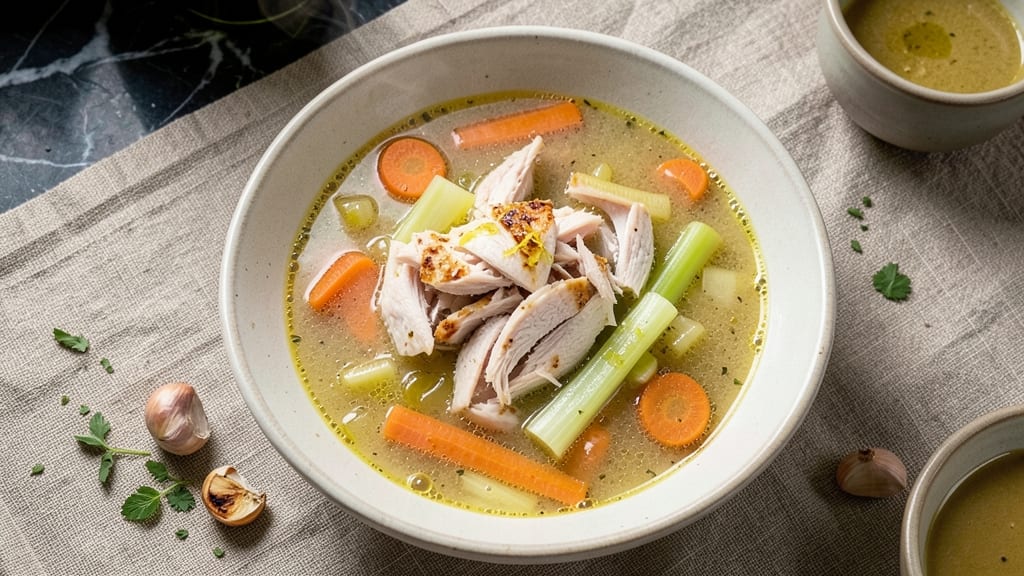
This basic chicken stock soup recipe delivers the soul-soothing warmth of homemade comfort food without requiring hours in the kitchen. The secret lies in building flavor layer by layer—starting with rich stock, then simmering aromatic vegetables until they melt into the broth, and finishing with tender shredded chicken.
I’ve perfected this version to balance simplicity with restaurant-quality depth, so you get a bowl that’s both nourishing and deeply satisfying.
The foundation begins with stock—whether homemade (for maximum flavor) or store-bought (for convenience). Carrots, celery, and onions form the classic aromatic base, while garlic and thyme add depth. Simmering low and slow extracts the best flavors, while skimming any foam ensures a clear, velvety broth.
The result? A soup that’s light enough for lunch but hearty enough to stand in for dinner, with every spoonful packed with umami and warmth.
What makes this recipe truly special is its versatility. Add a splash of lemon for brightness, a sprinkle of fresh parsley for color, or a drizzle of olive oil for richness—each variation keeps the soup fresh and adaptable.
The shredded chicken stays tender and flavorful, while the vegetables retain their natural sweetness. It’s the kind of dish that tastes even better the next day, making it perfect for meal prep or last-minute dinners when you need comfort fast.
Ready in just 30 minutes, this soup proves that homemade doesn’t have to mean complicated. Whether you’re recovering from a cold, craving something warm, or simply seeking a taste of home, this recipe delivers. Let’s get started—your taste buds (and your soul) will thank you.
Ingredients for basic chicken stock soup
Stock, veggies, and chicken—just enough ingredients for a bowl of pure comfort.
| Ingredient | Amount | Notes |
|---|---|---|
| Chicken Breast 🍗 | 1 ½ lb | Boneless, skinless, shredded |
| Chicken Stock 🥣 | 4 cups | Homemade or quality store-bought |
| Carrots 🥕 | 2 medium | Peeled, chopped into chunks |
| Celery Stalks 🧅 | 2 whole | Trimmed, chopped into 1-inch pieces |
| Yellow Onion 🧅 | 1 medium | Peeled, chopped |
| Garlic Cloves 🧄 | 3 cloves | Peeled, minced |
| Fresh Thyme 🌿 | 1 tbsp | Leaves only, chopped |
| Salt 🧂 | 1 tsp | Kosher or sea salt |
| Black Pepper 🌶️ | ½ tsp | Freshly ground |
| Extra-Virgin Olive Oil 🫒 | 1 tbsp | For sautéing |
| Fresh Parsley 🌿 | ¼ cup | Chopped, for garnish |
| Lemon Juice 🍋 | 1 tbsp | Freshly squeezed |
The stock is where the magic happens. Homemade stock gives the deepest flavor, but Pacific Foods or Swanson brands are solid shortcuts. Look for low-sodium options if you're watching salt. Carrots, celery, and onions are the holy trinity of soup bases—buy organic if possible since you're eating the skins. The thyme? Fresh is best, but dried works in a pinch at one-third the amount. I usually grab mine from Whole Foods or the grocery store herb section, but any bright green bunch will do.
No fresh thyme? Dried thyme at one-third the amount keeps the flavor. Short on carrots? Sweet potatoes work too—just adjust the cooking time. The chicken breast should be boneless and skinless for easy shredding. If you can't find medium carrots, baby carrots in a bag are a great shortcut. The lemon juice at the end is optional but adds a nice brightness—freshly squeezed is best, but bottled works if you're in a hurry. For extra richness, stir in a tablespoon of butter or cream at the end.
This soup tastes even better the next day, so make a double batch and store it in the fridge. Keeps for 4-5 days or freezes beautifully for 3 months. I like to portion it into containers for easy lunches. The parsley and lemon juice can be added fresh when reheating—always a good idea since they wilt fast. If you're prepping ahead, store the shredded chicken separately and add it fresh when serving for maximum tenderness.
Why You'll Love This Recipe
- Pantry in Minutes: I swear by this one—just toss in the raw chicken breast, carrots, celery, and onion with the stock, simmer, and boom. No fancy prep, no chopping like it’s a gourmet show. The chicken shreds itself when it’s done, and the veggies soften just enough to melt into the broth.
- Umami Bomb: That chicken stock? It’s the MVP. Rich, deep, and packed with flavor from the get-go, but the real magic happens when the chicken breast breaks down—suddenly you’ve got layers of savory, salty, and slightly sweet all in one spoonful. Honestly, the first time I made this, I nearly spilled my soup.
- Leftovers That Shine: Between us, this soup only gets better the next day. The flavors meld overnight, and reheating it is the easiest way to turn a busy morning into a stress-free breakfast. I’ll pack it for lunch, freeze portions, or serve it cold with a drizzle of soy sauce—it’s that adaptable.
- Budget-Friendly Hero: Chicken breast is affordable, stock is cheap if you make it yourself, and the veggies? They stretch across multiple meals. I’ve fed four people for under $10 with this—plus, the leftovers turn into stir-fries, tacos, or even a quick pasta sauce. My wallet and my taste buds thank me.
Step-by-step instructions for basic chicken stock soup
Here's how to create a comforting, flavorful soup from scratch in under 30 minutes.
Sauté the Aromatic Vegetables
Heat the 1 tablespoon extra-virgin olive oil in a large pot over medium heat. Add the chopped 1 medium yellow onion, 2 medium carrots, and 2 whole celery stalks. Cook for 5-6 minutes until the vegetables soften and the onion becomes translucent.
This step builds the soup's flavor foundation. Don't rush it—you'll know it's ready when the vegetables release their natural juices and begin to caramelize slightly at the edges. Add the 3 cloves minced garlic and 1 tablespoon chopped fresh thyme after 3 minutes of cooking to prevent burning.
Add Chicken and Simmer
Increase heat to medium-high and add the 1.5 lb shredded chicken breast. Stir to coat the chicken with the aromatic vegetables and cook for 2-3 minutes until the chicken begins to turn opaque.
Pour in the 4 cups chicken stock and bring to a gentle boil. Once boiling, reduce heat to low-medium and let the soup simmer uncovered for 10 minutes. This allows the flavors to meld together while keeping the chicken tender. Stir occasionally to prevent sticking at the bottom of the pot.
Season and Finish
Add the 1 teaspoon salt and ½ teaspoon black pepper to the simmering soup. Taste and adjust seasoning if needed—this is where you ensure the soup has the perfect balance of flavors. The chicken should be fully heated through and the vegetables tender but still holding their shape.
Remove the pot from heat and stir in the 1 tablespoon fresh lemon juice. This brightens the soup and cuts through the richness of the chicken and vegetables. Let the soup sit for 5 minutes off the heat to allow the flavors to fully develop.
Serve Warm with Fresh Garnish
Ladle the soup into bowls and garnish each serving with ¼ cup chopped fresh parsley. The parsley adds a fresh, vibrant touch that complements the warm, comforting flavors of the soup. Serve immediately while hot—this soup tastes best fresh from the pot.
This simple yet satisfying soup delivers all the comforting qualities of homemade cooking. The combination of tender chicken, aromatic vegetables, and well-seasoned broth makes it perfect for any day you need a comforting meal. The bright lemon finish ensures it's never too heavy, balancing the richness perfectly.
Pro Tips For Making Basic Chicken Stock Soup
- CHAR THE ONION FIRST: I learned this the hard way—sautéing the onion, celery, and carrots together means the onion burns while the celery stays raw. Instead, cut the onion into ¼-inch slices and cook it alone in the pot for 5-6 minutes over medium heat until it’s soft and just starting to brown. That deep, caramelized flavor is the soul of your soup.
- USE COLD WATER START: Dumping raw chicken breast into hot stock? Big mistake. The outside will seize up while the inside stays cold, leading to uneven cooking. Instead, shock the chicken in ice water for 10 minutes first, then pat it dry and add it to the simmering soup. This guarantees even cooking without tough, rubbery edges.
- SKIP THE CROWDED POT: Tossing everything in at once might seem efficient, but it turns your soup into a mushy mess. After browning the onion, remove it from the pot, then add the celery and carrots (cut into ½-inch pieces) to the empty pot and cook for 5 minutes. This builds flavor without steaming the veggies into oblivion.
- SIMMER LOW AND LONG: High heat = cloudy stock. After adding the chicken and stock, bring it to a gentle simmer (tiny bubbles, not rolling) and cover partially. Let it cook for at least 45 minutes—yes, even if the chicken looks done. The connective tissue breaks down over time, turning your broth from bland to rich. (Your future self will thank you.)
Wine and beer pairings for this dish
Light White Wine
For this comforting soup, a crisp Sauvignon Blanc or Pinot Grigio is my go-to choice. The bright acidity and citrus notes in these wines cut through the richness of the chicken and butter, cleansing your palate with each sip.
I love a New Zealand Sauvignon Blanc—its zesty lime and herbal undertones pair beautifully with the thyme and parsley in the soup. 🍷
If you prefer something slightly richer, a Chardonnay with minimal oak (like a California or Australian variety) adds a buttery note that complements the soup’s creaminess. Avoid heavy, oaked whites—they’ll overpower the delicate flavors of the broth and herbs.
Crisp Lager Beer
A German Pilsner or Belgian Witbier is perfect for balancing the soup’s savory depth. The crisp, clean finish of a Stella Artois or Hoegaarden refreshes your palate between bites, while the subtle spice notes in a Belgian wit (like 3 Fonteinen) enhance the thyme and black pepper.
For a local favorite, a Budweiser or Coors Light works in a pinch—just keep it chilled!
If you’re feeling adventurous, try a sour ale like New Belgium Fat Tire—its tartness mirrors the lemon juice in the soup, creating a harmonious balance. Avoid heavy stouts or IPAs, as their bold flavors will clash with the soup’s delicate profile.
Red Wine Option
While white wines and beers are ideal, a light-bodied red like Pinot Noir can work if you prefer red. Look for a Willamette Valley or Burgundy Pinot Noir—its bright acidity and red fruit notes won’t overpower the soup. Serve it slightly chilled (55-60°F) to enhance its crispness. 🍇
Skip heavy reds like Cabernet Sauvignon or Malbec—they’ll dominate the soup’s flavors. Instead, opt for a red with the same brightness as the soup’s lemon finish, like a Chianti Classico with its herbal and earthy undertones.
Nutrition facts
Frequently asked questions
Can I use store-bought chicken stock instead of homemade?
For convenience, use a high-quality low-sodium store-bought stock like Pacific Foods or Swanson. Look for brands with clean ingredient lists—avoid those with added preservatives. If using regular stock, reduce the added salt by half to prevent over-seasoning. The flavor difference is minimal when paired with fresh herbs and aromatics.
How do I prevent the soup from getting mushy?
Keep the simmering time short—10 minutes max—to maintain vegetable texture. Use firm vegetables like carrots and celery (avoid overcooking potatoes if adding them). For extra insurance, add harder veggies like parsnips or fennel bulbs—they hold up better. Also, never boil vigorously after adding stock; maintain a gentle simmer to preserve integrity.
Can I make this soup ahead of time?
Yes! This soup tastes even better the next day. Store in an airtight container in the fridge for 4-5 days or freeze for 3 months. Reheat gently on the stove (don't boil) and add fresh parsley and lemon juice just before serving. For best texture, store shredded chicken separately and add it fresh when reheating to prevent drying out.
What if I don't have fresh thyme?
Use dried thyme at one-third the amount (so 1/3 tbsp instead of 1 tbsp). For extra depth, substitute with 1/2 tsp dried rosemary or 1 bay leaf (remove before serving). If you have no herbs, a pinch of ground coriander adds warmth. The key is balancing earthy notes with the lemon finish to keep the soup bright.
Can I add other proteins to this soup?
Swap chicken for shredded rotisserie chicken, diced ham, or white fish like cod. For vegetarian, use chickpeas or white beans (add at the end to prevent mushiness). If using meat, cook it separately until fully done before adding to the soup. For seafood, add delicate fish like halibut only at the very end to maintain texture.