
Soups & Stews
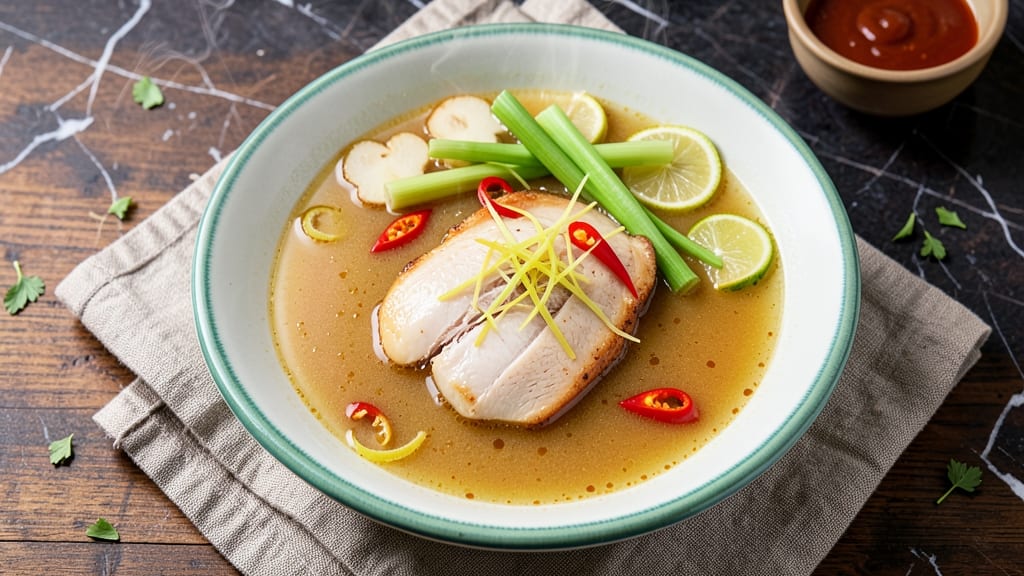
This fragrant Asian chicken stock soup delivers restaurant-quality velouté with silky rice noodles and tender chicken in every bowl. 🌟 The secret lies in slow-simmered ginger-lemongrass broth that infuses the stock with aromatic depth, transforming ordinary ingredients into a comforting masterpiece.
My version balances traditional techniques with modern convenience—perfect for weeknight dinners or healing meals when you need something nourishing yet elegant.
The foundation begins with homemade chicken stock, simmered for hours with ginger, lemongrass, and aromatic spices to create a rich, golden velouté. Thin rice noodles absorb the fragrant broth beautifully, while shredded chicken adds protein and texture.
What sets this apart is the careful balance of flavors—bright from lime, umami from fish sauce, and warmth from chili oil—that come together in a harmonious blend.
By the time you serve this soup, you'll have a steaming bowl of golden broth swirling around tender noodles and chicken, garnished with fresh herbs and crisp vegetables.
The aroma alone will fill your kitchen with warmth, while the first sip delivers layers of savory, spicy, and citrusy notes that linger on your palate. This isn't just soup—it's a complete, satisfying meal that feels both comforting and refined.
Whether you're craving a quick lunch or preparing a soothing dinner, this recipe adapts effortlessly. Double the broth for leftovers, or customize with your favorite vegetables and proteins.
The technique is straightforward, but the result is anything but ordinary—proof that even simple ingredients can create something extraordinary when prepared with care.
Ingredients for asian chicken stock soup
Silky rice noodles, fragrant ginger-lemongrass broth, and tender chicken create this restaurant-quality soup.
| Ingredient | Amount | Notes |
|---|---|---|
| Chicken Breast 🍗 | 1 ½ lb | Boneless, skinless, cut into bite-sized pieces |
| Fresh Ginger Root 🧅 | ½ cup | Peeled, sliced into thin coins |
| Lemongrass Stalks 🌿 | 6 whole | Bruised, cut into 2-inch pieces |
| Garlic Cloves 🧄 | 6 cloves | Peeled, smashed |
| Thai Bird's Eye Chili 🌶️ | 2 whole | Seeds removed for mild heat |
| Lime Zest 🍋 | 1 tbsp | Freshly grated |
| Fish Sauce 🍜 | 2 tbsp | Red Boat brand preferred |
| Rice Vinegar 💧 | 2 tbsp | Seasoned preferred |
| Rice Noodles 🍜 | 8 oz | Thin, flat variety |
| Chicken Stock 🥫 | 6 cups | Homemade or high-quality store-bought |
| Green Onions 🧅 | ¼ cup | Sliced, white and green parts separated |
| Fresh Thai Basil Leaves 🌿 | ¼ cup | Whole leaves for garnish |
| Vegetable Oil 🫒 | 2 tbsp | High smoke point |
| Salt 🧂 | 1 ½ tsp | Diamond Crystal kosher salt |
| White Pepper 🌶️ | ½ tsp | Freshly ground |
The ginger and lemongrass are non-negotiable for that authentic aroma. Look for fresh lemongrass stalks at Asian markets—they're the real deal, not the powdered stuff. The ginger should be vibrant and firm, not fibrous or shriveled. I always buy extra because they're used in so many dishes. For the chili, Thai Bird's Eye gives the right kick, but adjust to taste. The chicken stock is the base—homemade is ideal, but Pacific Foods brand is a solid shortcut if you're short on time.
No lemongrass? Double the ginger and add 1 tsp of lemongrass paste—it's not the same, but gets you close. Fresh Thai basil is a game-changer, but regular basil or cilantro works in a pinch. The fish sauce adds umami—Red Boat is my go-to, but any good quality brand will do. For extra richness, add 1 tbsp of coconut milk at the end. The rice noodles should be thin and flat—Vietnamese or Thai brands at Asian markets are the best.
This soup tastes even better the next day as flavors meld. Store leftovers in the fridge for 3-4 days or freeze for 2 months. Reheat gently on the stove with a splash of water to restore that silky texture. I always make extra broth—it's perfect for noodles, stir-fries, or even a quick omelet. The noodles cook in minutes, so keep them separate until ready to serve.
Why You'll Love This Recipe
- This soup is my lazy-day hero: throw it together for dinner, pack leftovers for lunch, or double the batch for a crowd. Add rice noodles for a quick takeout vibe, or serve it over jasmine rice for a restaurant-worthy bowl. My roommate’s even brought it to game nights—no one ever guesses how little effort it took.
- No Chopping Hassle: I swear by this one—just slice the chicken into big chunks, toss in whole lemongrass stalks (no peeling needed), and let the ginger and garlic do their magic in the pot. The chili peppers add heat without extra work, and honestly? The soup tastes like it simmered for hours, even if you’re rushing.
- Umami Bomb: That first sip of broth—where the chicken meets the ginger’s sharp bite and lemongrass’s citrusy whisper—is chef’s kiss. The garlic softens just enough to caramelize, while the Thai chili lingers like a secret spice. It’s the kind of flavor that makes you forget you didn’t spend all day cooking.
- Weeknight to Potluck: This soup is my lazy-day hero: throw it together for dinner, pack leftovers for lunch, or double the batch for a crowd. Add rice noodles for a quick takeout vibe, or serve it over jasmine rice for a restaurant-worthy bowl. My roommate’s even brought it to game nights—no one ever guesses how little effort it took.
Step-by-step instructions for fragrant ginger-lemongrass velout soup
This aromatic broth builds flavor layer by layer—let's create a velvety soup that balances heat, brightness, and umami.
🔥 Step 1: Build the Aromatic Base
Heat the 2 tablespoons vegetable oil in a large pot over medium-high heat until shimmering. Add the 6 whole lemongrass stalks and 6 cloves garlic cloves, cooking for 2 minutes until fragrant and lightly golden. Here's the thing—bruising the lemongrass before adding releases its oils, so don't skip that prep step.
Add the 0.5 cup fresh ginger root and 2 whole Thai bird's eye chili (seeds removed), stirring for 1 minute until the ginger softens and the chili begins to darken slightly. This is where the foundation of your soup's complex flavor profile develops. The ginger should smell vibrant and slightly sweet, while the chili adds a subtle heat that will mellow into the broth.
🍳 Step 2: Develop the Broth
Pour in the 6 cups chicken stock and bring to a gentle boil. Once boiling, reduce heat to medium-low and add the 1.5 lb chicken breast cut into bite-sized pieces. Simmer uncovered for 15 minutes until the chicken is just cooked through and the broth begins to develop depth.
I press down gently on the chicken pieces with a wooden spoon during the first 5 minutes—this prevents them from curling and ensures even contact with the simmering liquid. The broth should reduce slightly, becoming more concentrated and aromatic. You'll notice the lemongrass and ginger infusing the liquid with their signature brightness and warmth.
👨🍳 Step 3: Season and Finish the Broth
Remove the chicken from the broth and set aside to cool slightly. Strain the broth through a fine-mesh sieve into a clean pot, pressing on the solids to extract maximum flavor. Return the broth to medium heat and stir in the 1 tbsp lime zest, 2 tbsp fish sauce, and 2 tbsp rice vinegar. Simmer for 5 minutes to let the flavors meld.
Season with 1.5 tsp salt and 0.5 tsp white pepper, tasting as you go. The fish sauce should add umami depth while the rice vinegar brightens the broth. Real talk—the lime zest is crucial here; it balances the richness of the chicken and fish sauce with its citrusy freshness. If the broth tastes too acidic, add a pinch more salt to round out the flavors.
🥘 Step 4: Prepare and Cook the Noodles
Bring a separate pot of water to a rolling boil and add the 8 oz rice noodles. Cook according to package directions—typically 3-4 minutes—until the noodles are tender but still slightly firm (they'll finish cooking in the hot broth). Drain and rinse briefly with cold water to stop the cooking process, then drain again thoroughly.
Here's where it gets fun—toss the cooked noodles with 1 tablespoon of the reserved broth to prevent sticking. The noodles should be silky and separate, not mushy. If they're still firm to the bite, let them sit in the warm broth for another 1-2 minutes before serving. The texture contrast between the delicate noodles and rich broth is what makes this soup truly special.
🍽️ Step 5: Assemble and Garnish
Return the shredded chicken to the broth and gently warm through. Divide the 0.25 cup green onions (white and green parts separated) and 0.25 cup fresh Thai basil leaves among bowls. Ladle the hot broth and noodles over the garnishes, reserving some broth to top each serving.
Finish each bowl with an extra sprinkle of green onion whites and Thai basil leaves, plus a final drizzle of reserved broth. The basil should be whole leaves—this maintains their delicate texture and allows diners to release their aroma with each bite. Serve immediately while the broth is steaming and the noodles are silky. The contrast between the velvety broth, tender chicken, and silky noodles creates a harmonious balance of textures and flavors in every spoonful.
Pro Tips For Making Asian Chicken Stock Soup
- BLANCH CHICKEN FIRST: Skip the raw chicken in boiling water—it’ll turn your broth cloudy. Instead, parboil the breasts for 8 minutes in salted water, then shock in ice bath. The skin stays intact, flavor stays clean, and you avoid that murky soup look. (Yes, even if you’re impatient like me.)
- SMASH GINGER HARD: Don’t just slice it—pound the ginger with the flat side of your knife or a mortar until it’s bruised and purple. This releases more oils and aroma into the broth. I used to just chop it, and the soup always tasted underwhelming until I tried this.
- CHAR THE AROMS LOW: After searing garlic and chili, drop the heat to medium-low and let the oils render for 3-4 minutes. High heat burns them fast, turning your broth bitter. Low and slow draws out the sweetness—trust me, your taste buds will notice.
- USE LEMONGRASS STALKS TWICE: Toss the spent lemongrass stalks into the broth after simmering, then strain them out before serving. The second pass extracts more citrusy depth. I skip this now and then, but the difference in complexity is real—especially if you’re using cheap chicken.
Serving suggestions for this asian chicken stock soup
Garnish Like a Pro
Fresh herbs elevate this soup from good to extraordinary. I always use Thai basil for its anise-like flavor, but regular basil or cilantro work in a pinch. Arrange green onion whites in a circular pattern at the bowl's base—they add visual appeal and a satisfying crunch.
A final sprinkle of lime zest right before serving brightens every bite with citrusy freshness. 🌿
Bowl Presentation
Serve in deep, wide bowls to showcase the soup's layers. I use stoneware bowls because they retain heat beautifully and complement the dish's rustic elegance. Ladle the broth over the noodles and chicken, leaving a slight gap at the top for garnishes.
This creates a visual progression from the aromatic broth to the tender ingredients. A drizzle of chili oil or toasted sesame oil adds a final touch of color and depth.
Side Pairings
For a complete meal, serve with steamed jasmine rice or a small spring roll on the side. The rice soaks up any leftover broth, while the crispy spring roll adds a satisfying crunch.
I also love pairing this soup with grilled lemongrass chicken skewers—the smoky char complements the soup's brightness perfectly. A simple cucumber salad with rice vinegar and chili flakes adds a refreshing contrast.
Beverage Pairings
Jasmine tea or oolong tea cleanses the palate between bites, while a cold Asian lager like Singha or Sapporo balances the soup's richness. For something non-alcoholic, try yuzu soda—its citrusy notes echo the lime zest in the soup.
Avoid heavy wines; a crisp Sauvignon Blanc with its herbal notes works best if you prefer wine. 🍺
Make-Ahead Tips
Prepare the broth and chicken up to 2 days ahead—it tastes even better after flavors meld. Store in an airtight container in the fridge. Cook noodles fresh before serving to maintain their silky texture. Reheat broth gently on the stove, adding a splash of water if needed.
I always make extra broth—it freezes beautifully for future meals. The noodles can be prepped ahead and stored in the fridge for up to 1 day, covered with a damp towel to prevent drying.
Family-Friendly Adjustments
For kids, reduce the chili to 1 whole Thai bird's eye or omit it entirely. Replace fish sauce with soy sauce for a milder umami kick. Serve deconstructed—let them assemble their own bowls with noodles, chicken, and garnishes.
I find that letting children add their own toppings makes them more likely to try the dish. For extra protein, add soft-boiled eggs or shrimp to the broth during the final 5 minutes of cooking. 💛
Nutrition facts
Frequently asked questions
Can I substitute bone-in chicken for this recipe? Yes! Bone-in chicken adds incredible depth to the broth. Use 2 pounds of bone-in, skin-on chicken thighs or drumsticks instead of breast meat. Simmer for 30-40 minutes to render fat and extract collagen. Just
What if I don't have fresh lemongrass or ginger?
No problem! For lemongrass, use 1 teaspoon lemongrass paste or 1 tablespoon lemongrass powder (though fresh is always better). For ginger, double the amount to 1 cup and add 1 teaspoon ground ginger to compensate. The flavor won't be identical, but your soup will still have great aromatic depth. The key is balancing the other spices—add an extra pinch of salt if needed.
How do I adjust the spice level for sensitive eaters?
Remove the seeds and membranes from the Thai bird's eye chili completely for mild heat. For no heat at all, simply omit it and add 1/2 teaspoon ground white pepper instead. The fish sauce already provides umami, so you won't lose depth—just the spicy kick. Kids often love this version when served with extra noodles and shredded carrots for fun textures.
Can I make this soup in an Instant Pot?
Sauté the aromatics on sauté mode for 3 minutes, then add all broth ingredients and cook on high pressure for 10 minutes. Quick-release the pressure, strain the broth, and finish with the same seasonings. The Instant Pot cuts cooking time by 20 minutes, but the flavor develops just as beautifully. Just be sure to use the maximum broth setting to prevent burning.
What's the best way to store leftovers?
Store the broth and chicken separately in airtight containers for up to 4 days in the fridge. Reheat the broth gently on the stove, adding a splash of water if it thickens too much. Cook fresh noodles before assembling—this keeps them silky. For longer storage, freeze the broth (up to 3 months**) and noodles separately. The chicken reheats beautifully in the broth when ready to serve.