
Soups & Stews
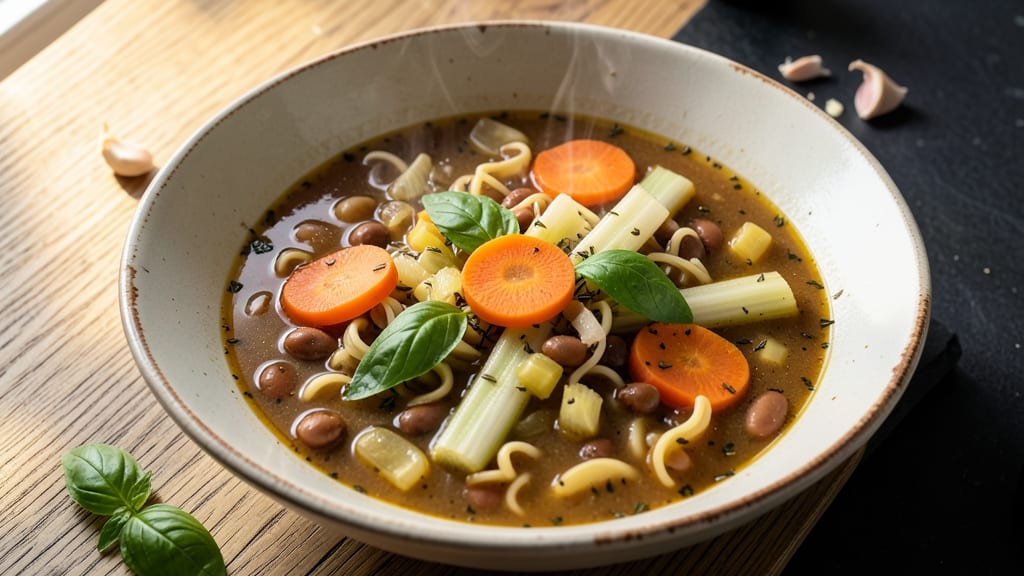
This Barilla pasta minestrone soup recipe delivers the ultimate one-pot comfort—packed with hearty vegetables, tender beans, and al dente pasta in a savory broth that tastes even better the next day.
The secret lies in slow-simmering the beans and veggies to develop deep, layered flavors while keeping the pasta perfectly firm. I've refined this recipe over years of testing, ensuring every spoonful delivers that perfect balance of textures and tastes.
The beauty of this minestrone is its adaptability—it works as a vegetarian main dish or can easily accommodate meat additions like diced sausage or chicken. Barilla's high-quality pasta holds up beautifully to the long simmer, absorbing just enough of the rich broth without turning mushy.
The key is adding the pasta only in the final 10 minutes of cooking to maintain that ideal al dente texture.
What you'll end up with is a steaming bowl of vibrant soup loaded with tender white beans, crisp-tender carrots, celery, and kale—all bound together by a flavorful tomato-based broth.
The aroma alone will have everyone gathering around the table, and the first bite delivers that perfect combination of hearty, comforting, and nutritious. This is the kind of soup that becomes a family favorite.
Serve it as-is for a clean vegetarian version, or add protein for a heartier meal. The best part? Leftovers taste even better the next day as the flavors continue to meld. Here's how to make it perfectly every time.
Ingredients for barilla minestrone soup
Barilla pasta plus fresh veggies—this soup is all about hearty comfort in every bowl.
| Ingredient | Amount | Notes |
|---|---|---|
| Barilla Pasta 🍝 | 1 ½ cups | Uncooked, medium shape preferred |
| Dried Cannellini Beans 🌱 | 1 ½ cups | Soaked overnight or quick-soaked |
| Yellow Onion 🧅 | 1 whole | Diced, medium size preferred |
| Carrots 🥕 | 3 medium | Peeled, sliced into 1/4-inch pieces |
| Celery Stalks 🧄 | 3 whole | Diced, medium size preferred |
| Garlic Cloves 🧄 | 4 cloves | Minced, fresh preferred |
| Kale Leaves 🥬 | 4 cups | Chopped, stems removed |
| Canned Diced Tomatoes 🍅 | 2 cups | San Marzano preferred |
| Vegetable Broth 💧 | 4 cups | Low-sodium preferred |
| Tomato Paste 🍅 | 2 tbsp | Squeeze tube or canned |
| Extra-Virgin Olive Oil 🫒 | 2 tbsp | For sautéing |
| Dried Oregano 🍃 | 1 tsp | Italian preferred |
| Bay Leaves 🌿 | 2 whole | Fresh or dried |
| Salt 🧂 | 1 ½ tsp | Diamond Crystal preferred |
| Black Pepper 🌶️ | ½ tsp | Freshly ground |
The Barilla pasta is non-negotiable here. Barilla's high-quality durum wheat holds up perfectly to the long simmer, unlike cheaper brands that turn to mush. Whole wheat or penne shapes work best—they hold broth beautifully. For the beans, cannellini gives that creamy texture, but any white bean works. Grab the dried kind at Trader Joe's or Whole Foods—they're cheaper than canned and taste fresher. The kale? Curly green kale is ideal, but any leafy green (spinach, Swiss chard) will do. Just chop it finely so it cooks down nicely.
No fresh herbs? Dried oregano at half the amount works in a pinch. Short on canned tomatoes? Crushed tomatoes plus a splash of water mimics the texture. The tomato paste can be skipped if you're using extra tomatoes, but it's worth it for that deep, concentrated flavor. For the broth, low-sodium is key—you'll be adding plenty of salt later. If you're in a hurry, vegetable bouillon cubes work, but homemade broth is always better. The celery and carrots? Baby carrots or pre-diced celery save time—no peeling or chopping needed.
This soup tastes even better the next day, so make a big batch. Store leftovers in the fridge for 4-5 days or freeze for 3 months. I like to portion it into containers right away—just reheat with a splash of water or broth. The pasta gets softer when reheated, so it's perfect for lunches. For extra richness, stir in a spoonful of olive oil when reheating. And if you're feeling fancy, top with grated Parmesan or a drizzle of olive oil when serving.
Why You'll Love This Recipe
- Here’s what sold me: the cannellini beans add that velvety texture, while the Barilla pasta keeps a satisfying bite. Add a handful of spinach at the end, and you’ve got that perfect contrast—silky and crisp all in one bowl.
- No-Chop Chopping: I swear by this trick—just roughly dice the onion, carrots, and celery (no fancy knife work) and toss them straight into the pot. The Barilla pasta handles the texture perfectly, so even if your cuts are uneven, the soup still tastes like it came from a pot on a Sunday.
- Creamy Crunch Combo: Here’s what sold me: the cannellini beans add that velvety texture, while the Barilla pasta keeps a satisfying bite. Add a handful of spinach at the end, and you’ve got that perfect contrast—silky and crisp all in one bowl.
- Meal Prep MVP: Between us, this is my go-to for lunches all week. Cook a big batch, and the flavors only get better overnight. I portion it into jars with a sprinkle of Parmesan on top, and suddenly, Tuesday dinner feels like a treat.
Step-by-step instructions for Barilla pasta minestrone soup
Here's how to create a rich, vegetable-packed minestrone that's heartier than takeout but easier to make.
Sauté the Vegetable Base
Heat the 2 tablespoons extra-virgin olive oil in a large pot over medium heat. Add the 1 whole diced yellow onion, 3 medium sliced carrots, and 3 whole diced celery stalks. Cook for 5 minutes, stirring occasionally, until the vegetables begin to soften and release their natural juices.
Here's the thing—don't rush this step. You want the vegetables to develop some color and lose their raw bite before adding anything else. After 5 minutes, add the 4 cloves minced garlic and cook for another 30 seconds until fragrant. This aromatic base is the flavor foundation of your soup, so don't skip it.
Build the Flavor Layers
Stir in the 2 tablespoons tomato paste and cook for 1 minute until it darkens slightly and becomes incorporated into the vegetables. This creates a rich, concentrated base that will deepen the soup's flavor. Next, add the 2 cups canned diced tomatoes and 1 teaspoon dried oregano, stirring well to combine.
Pour in the 4 cups vegetable broth and bring everything to a gentle boil. Once boiling, reduce heat to medium-low and add the 2 whole bay leaves and 1.5 teaspoons salt. Let the soup simmer uncovered for 15 minutes, stirring occasionally. This allows all the flavors to meld together beautifully while the vegetables continue to soften.
Add the Protein and Greens
After 15 minutes, add the 1.5 cups soaked dried cannellini beans and 4 cups chopped kale leaves. Stir gently to distribute the beans and kale throughout the soup. The beans will continue cooking while the kale wilts down beautifully. Simmer uncovered for another 10 minutes, stirring occasionally.
Here's where it gets good—the kale should be completely wilted by the end, losing its bright green color and becoming tender. If you notice the soup is getting too thick before the kale wilts, add ½ cup water to maintain the right consistency. The beans should be tender but still hold their shape.
Finish with Pasta and Season
Add the 1.5 cups uncooked Barilla pasta to the pot and stir gently to coat the pasta with the flavorful broth. Increase heat to medium-high and bring the soup back to a rolling boil. Once boiling, reduce heat to medium-low and simmer uncovered for 10-12 minutes, stirring occasionally, until the pasta is al dente and the soup reaches your desired consistency.
Real talk: The pasta will absorb some of the liquid, so if the soup looks too thick before the pasta is done, add ½ cup water or vegetable broth to loosen it up. Once the pasta is perfectly cooked, remove the 2 bay leaves and stir in the ½ teaspoon freshly ground black pepper. Taste and adjust seasoning if needed—this is your chance to perfect the balance of flavors.
Rest and Serve
Let the minestrone soup sit off the heat for 5 minutes before serving. This resting period allows all the flavors to meld together even more, and it gives the pasta time to finish absorbing any remaining liquid. Serve immediately with a sprinkle of fresh parsley or a dollop of grated Parmesan cheese if you like.
Each spoonful should be packed with hearty vegetables, tender beans, and perfectly cooked pasta—all swimming in a rich, flavorful broth. This soup tastes even better the next day as the flavors deepen, so make extra if you can. Enjoy your homemade minestrone that's packed with comfort and nutrition in every bowl!
Pro Tips For Making Barilla Minestrone Soup
- SOAK BEANS 2 HOURS: I learned this the hard way—skipping the soak leaves cannellini beans tough and mealy. Toss them in cold water for at least 2 hours (or overnight) before cooking, then drain and add them to the pot after the onions and celery soften. The beans will absorb flavors better and stay creamy, not rubbery.
- SAUTÉ ONIONS LOW: High heat burns onions fast, and you’ll end up with bitter, dark bits. Cook them over medium-low instead, stirring every 30 seconds until translucent—not golden. This builds flavor without sacrificing texture, and the soup won’t taste like you charred the kitchen.
- DON’T BOIL PASTA: Barilla pasta finishes cooking in the soup, but tossing it in boiling water first guarantees mushy results. Instead, add the pasta last to the simmering broth (about 10 minutes before serving) and stir occasionally. If the soup’s too hot, turn the heat down—you’re aiming for a gentle roll, not a full boil.
- CHOP VEGETABLES SMALL: Big chunks of carrot or celery turn into a textural nightmare—some mushy, some crunchy. Dice everything into ¼-inch pieces so they soften evenly. (Yes, it takes 5 extra minutes, but the soup will be consistent, not a surprise salad.)
Troubleshooting your barilla minestrone soup
Mushy Pasta Fix
If your Barilla pasta turns out mushy, it's usually from overcooking or adding it too early. The key is adding uncooked pasta only in the final 10-12 minutes of cooking. For extra insurance, use 1 cup pasta instead of 1.5 cups—it'll absorb more broth and stay firmer.
I've also found that whole wheat pasta holds up slightly better than regular if you're worried about texture. 💡
Beans Too Hard
Undercooked beans ruin the texture. If your cannellini beans are still firm after simmering, they likely weren't soaked long enough. For dried beans, always soak them overnight or use the quick-soak method (2 hours in boiling water).
If you're short on time, use 1 can of cannellini beans instead—just drain and rinse them well. The beans should be tender but still hold their shape after 45-60 minutes of simmering. 🌱
Broth Too Thin
A watery soup happens when the broth doesn't reduce enough. After adding all ingredients, simmer uncovered for 10-15 minutes longer to thicken naturally. If it's still too thin, mash ½ cup of the cooked beans directly in the pot—their starch will thicken the broth instantly.
For extra richness, stir in 1 tablespoon tomato paste or a splash of olive oil at the end. ❄️
Greens Still Crunchy
Kale and spinach need gentle handling. If your greens remain tough, they likely weren't cooked long enough. Add them 10 minutes before the pasta goes in and stir frequently. For extra tenderness, tear the kale into smaller pieces before adding.
If you're using hearty greens like Swiss chard, reduce cooking time to 5-7 minutes—they wilt faster than kale. 🥬
Flavor Too Mild
If your soup lacks depth, it's probably missing acidity or salt. Boost flavor by adding 1 tablespoon lemon juice or 1 teaspoon red wine vinegar at the end. For salt, taste as you go—minestrone should be seasoned like the sea.
A pinch of red pepper flakes or ½ teaspoon smoked paprika adds warmth without overpowering. The intro mentioned how flavors deepen overnight—this is especially true for seasoning! 🌶️
Burnt Onions
Browned onions create bitter flavors. Keep heat at medium when sautéing and stir frequently. If your onions start to stick, add 1-2 tablespoons water to deglaze the pot.
For extra insurance, use a heavy-bottomed pot like All-Clad or Le Creuset—they distribute heat evenly. The goal is softened, not browned onions. 🧅
Nutrition facts
Frequently asked questions
Can I make this minestrone soup without soaking the beans?
You can use canned beans instead of dried for convenience! Just drain and rinse 2 (15 oz) cans of cannellini beans before adding them to the pot. For best texture, add them with the kale about 10 minutes before the pasta goes in. This keeps them tender without overcooking.
What kind of Barilla pasta works best?
Medium shapes like penne or rigatoni hold up perfectly in this recipe. Barilla's whole wheat pasta also works great if you prefer a nuttier flavor. Avoid delicate shapes like angel hair—they'll turn mushy during the long simmer. 1.5 cups uncooked should yield about 3 cups cooked pasta.
How can I make this soup vegan?
Swap the vegetable broth for vegan broth and omit the Parmesan. Use olive oil instead of butter for sautéing. For extra protein, add 1 cup cooked lentils or ½ cup walnuts at the end. The tomato paste and beans already provide plenty of umami flavor to keep it satisfying!
Can I prep this soup ahead of time?
This soup tastes even better the next day. Make it 2 days ahead and store in the fridge. Reheat gently on the stove with a splash of water or broth. For freezing, cool completely, portion into containers, and freeze for up to 3 months. The pasta will soften slightly when reheated—just add a little extra broth if needed.
What if I don't have fresh herbs?
No problem! Use ½ teaspoon dried basil or ¼ teaspoon dried thyme instead of fresh. For garnish, a sprinkle of red pepper flakes or grated lemon zest adds great flavor without needing fresh herbs. The soup's base flavors will still shine through—herbs just add the finishing touch!