
Soups & Stews
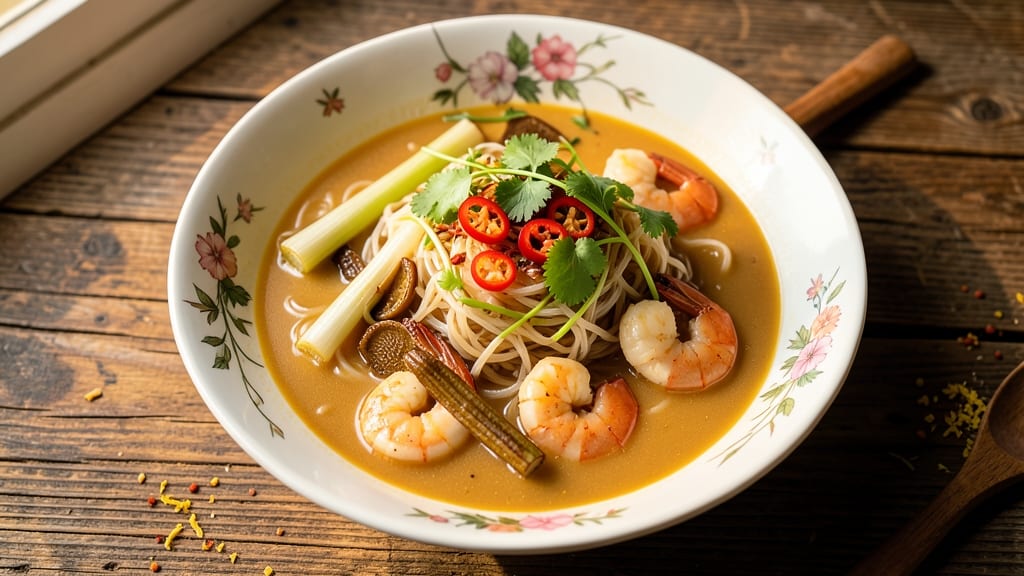
This Bangkok coconut soup recipe brings the aromatic streets of Thailand into your kitchen with its signature fragrant broth. The secret lies in the perfect balance of lemongrass, galangal, and coconut milk, creating a velvety, spiced base that's both comforting and invigorating.
I've perfected this version to deliver authentic flavors while keeping it approachable for home cooks—no Thai market required.
The beauty of this dish is its versatility. You can use shrimp, chicken, or tofu as your protein, and adjust the spice level to suit your taste. The broth simmers for just 30 minutes, releasing deep, earthy aromas that transform simple ingredients into something extraordinary.
Fresh herbs and lime finish it with a bright, zesty contrast that cuts through the richness.
What you'll end up with is a bowl of soup that's creamy yet light, aromatic yet refreshing—each spoonful delivers layers of flavor from the spiced broth to the delicate rice noodles.
The galangal and lemongrass infuse the coconut milk with complex, citrusy notes, while chili and lime add the perfect balance of heat and tang. This is the kind of soup that warms the soul while exciting the palate.
Serve it with a sprinkle of fresh cilantro and a wedge of lime for that authentic Thai touch. The recipe scales beautifully, making it perfect for weeknight dinners or gathering friends. Let's create this fragrant masterpiece that tastes like a trip to Bangkok.
Ingredients for bangkok soup
Fragrant lemongrass and galangal meet creamy coconut milk for this soul-warming Bangkok masterpiece.
| Ingredient | Amount | Notes |
|---|---|---|
| Lemongrass Stalks 🌿 | 3 whole | Bruised and cut into 2-inch pieces |
| Galangal Slices 🍃 | 3 inches | Fresh, peeled, sliced thinly |
| Coconut Milk 🥥 | 1 ½ cups | Full-fat, canned preferred |
| Vegetable Broth 💧 | 4 cups | Low-sodium preferred |
| Rice Noodles 🍜 | 8 oz | Thin, dried, soaked in warm water |
| Shrimp 🦐 | 1 lb | Peeled, deveined, medium size |
| Tofu 🍫 | 1 lb | Firm, pressed and cubed |
| Lime Juice 🍋 | ¼ cup | Freshly squeezed |
| Fish Sauce 🍶 | 1 tbsp | Red Boat preferred |
| Brown Sugar 🍚 | 2 tbsp | Packed lightly |
| Garlic Cloves 🧄 | 4 cloves | Minced finely |
| Red Chili Peppers 🌶️ | 2 whole | Thai or serrano, sliced thin |
| Fresh Cilantro 🌿 | ¼ cup | Chopped, for garnish |
| Salt 🧂 | 1 tsp | Kosher or sea salt |
| Black Pepper 🌶️ | ½ tsp | Freshly ground |
The galangal and lemongrass are your flavor anchors here. Thai markets have the freshest, but most grocery stores carry them in the Asian aisle—just make sure they're firm and smell citrusy. Red Boat fish sauce is the gold standard, but any good-quality brand works. For the coconut milk, full-fat is non-negotiable—it creates that signature velvety texture. If you can't find fresh galangal, ginger works in a pinch, though it'll be slightly different. The shrimp should be medium-sized so they cook perfectly without turning rubbery.
No shrimp? Chicken or tofu works beautifully—just adjust cooking time. The tofu needs to be firm and pressed (wrap in a towel, place a heavy pan on top for 20 minutes). Running out of fish sauce? Soy sauce at half the amount gets you close. Thai chili peppers can be hard to find—serrano or jalapeño work if you need a substitute. The brown sugar might seem odd, but it balances the sour and salty notes perfectly. Pro tip: Toast your garlic in the broth for 30 seconds before adding other ingredients—it deepens the flavor instantly.
This soup tastes even better the next day as flavors meld. Store leftovers in the fridge for up to 4 days—the broth keeps well, and you can always add fresh noodles when reheating. For a crowd of 8, simply double the broth, noodles, and protein. The galangal and lemongrass can be prepped ahead and stored in the freezer for up to 3 months—just thaw before using. Freeze the broth separately if you want to make it in batches.
Why You'll Love This Recipe
- No Chopping Chaos: I swear by this recipe’s shortcuts—just pound the lemongrass and galangal with the flat side of a knife (no knife skills needed) and toss in pre-sliced veggies. The broth simmers while you boil noodles—minimal effort, maximum reward.
- Creamy-Zing Balance: That coconut milk and lemongrass combo? It’s like a hug for your taste buds—rich but bright, with a citrusy kick that lingers. Honestly, the galangal adds a peppery depth that turns this into something special, not just another noodle dish.
- Lunchbox Magic: Between us, this soup reheats like a dream and tastes even better the next day. Pack it in jars for work lunches, or serve it cold with extra herbs for a refreshing summer meal. My college kid still texts me for the recipe.
- Budget Bright Spot: Vegetable broth and rice noodles stretch this into four servings without breaking the bank. Plus, frozen galangal (yes, it exists!) keeps costs down while delivering real flavor. Not the prettiest, but the taste makes up for it every time.
Step-by-step instructions for Bangkok coconut soup
Transform simple ingredients into a fragrant, restaurant-quality Thai coconut soup with this easy method.
Build the Aromatic Broth Base
In a large pot, combine the 4 cups vegetable broth, 3 whole lemongrass stalks (bruised and cut into 2-inch pieces), 3 inches galangal slices, 4 cloves minced garlic, and 2 whole red chili peppers (sliced thin). Bring to a boil over medium-high heat, then immediately reduce to a simmer for 15 minutes. The broth should develop a golden hue and fill your kitchen with that unmistakable Thai aroma.
Here's the thing—don't rush this step. The galangal and lemongrass need time to infuse their earthy, citrusy flavors. You'll notice tiny oil droplets rising to the surface—that's your sign the broth is properly aromatic. After 15 minutes, strain out the solids using a fine-mesh sieve, pressing gently to extract every last bit of flavor. Discard the used aromatics and return the strained broth to the pot.
Create the Creamy Coconut Base
Add the 1.5 cups coconut milk to the strained broth and stir gently to combine. Increase heat to medium and let the mixture simmer for 5 minutes, allowing the coconut to meld with the broth. This is where the soup starts to develop its signature velvety texture and rich flavor profile.
While simmering, taste the broth and adjust seasoning with 1 teaspoon salt and ½ teaspoon black pepper. You'll want it to be balanced—savory from the broth, slightly sweet from the coconut, with a hint of spice from the chilis. This is also when you'll add the 2 tablespoons brown sugar and 1 tablespoon fish sauce, stirring well to incorporate. The fish sauce might seem like a lot, but trust me—it's essential for that authentic umami depth.
Prepare the Protein and Noodles
While the broth simmers, prepare the tofu and shrimp. In a separate pan, heat 1 tablespoon neutral oil over medium heat. Add the 1 pound cubed tofu and cook for 4-5 minutes until lightly golden on all sides. Remove and set aside. In the same pan, add another 1 tablespoon oil and cook the 1 pound shrimp for 2-3 minutes per side until pink and opaque. Season both proteins with a pinch of salt and pepper as they cook.
Meanwhile, prepare the 8 ounces rice noodles by soaking them in warm water for 10-12 minutes until pliable but still slightly firm. Drain and set aside. The noodles should be tender but not mushy—you want them to finish cooking in the hot broth. If they're fully cooked before the soup is ready, give them a quick rinse under cold water to stop the cooking process.
Combine Everything for Perfect Texture
Return the cooked tofu and shrimp to the pot with the coconut broth. Stir gently to warm through, being careful not to overcook the shrimp. Add the drained rice noodles and ¼ cup lime juice, stirring to distribute evenly. The lime juice will brighten the flavors and prevent the coconut from becoming too heavy.
Taste and make final adjustments—perhaps a touch more fish sauce for saltiness or lime juice for acidity. The soup should be fragrant, creamy, and balanced with all those complex flavors working together. Let it simmer for just 2 more minutes before serving immediately. The noodles will absorb some of the broth, so don't worry if they look slightly undercooked—they'll finish in the bowl.
Serve with Fresh Garnishes
Ladle the hot soup into bowls and garnish each serving with ¼ cup chopped fresh cilantro. The cilantro adds a fresh, bright contrast to the rich coconut broth. Serve immediately while the noodles are hot and the flavors are at their peak. I like to pair this with a side of steamed greens or a simple cucumber salad to balance the richness.
Here's the secret to serving it right—don't let the soup sit too long before eating. The noodles will continue to soften, and the flavors will meld even more in the bowl. Each spoonful should deliver that perfect combination of creamy coconut, aromatic broth, tender proteins, and fresh herbs. Enjoy your taste of Bangkok!
Pro Tips For Making Bangkok Soup
- BLEND LEMONGRASS AND GALANGAL: Toss the lemongrass stalks and galangal slices into the pot whole first—let them steep for 5 minutes on low heat before blending. I learned this the hard way: rushing to blend too soon means you’re just pulverizing raw, under-extracted flavors. The first 5 minutes of simmering unlocks the real aroma.
- SIMMER COCONUT MILK LOW: Coconut milk curdles faster than you think—keep the heat gentle once you add it. I used to crank the stove up to save time, and half my soup turned into a greasy mess. Aim for a bare simmer, and stir occasionally. (Yes, even if you’re impatient like me.)
- SOAK NOODLES SEPARATELY: Don’t toss the rice noodles straight into the hot broth—soak them in warm water for 10 minutes first. This keeps them from turning mushy when they hit the soup. Pro move: Drain them just before serving so they absorb the broth’s flavor without getting soggy.
- STRAIN THE BROTH FIRST: If your vegetable broth has chunks or bits, strain it before combining with the coconut milk. I skipped this once and ended up with a soup that tasted more like a stew. A fine-mesh sieve takes 2 minutes and makes the texture silky. (Your future self will thank you.)
Storing and reheating this bangkok soup
Broth Storage Secrets
The aromatic broth is where this soup shines, and it keeps beautifully in the fridge. Store it in an airtight container for up to 4 days—the flavors actually deepen as the galangal and lemongrass infusions meld.
I like using glass mason jars because they preserve the rich color and aroma better than plastic. For longer storage, freeze the broth in 1-cup portions—thaw overnight in the fridge before reheating. 🥥
Noodle Prep Ahead
Rice noodles are trickier to store than broth, so I recommend cooking them fresh when reheating. If you must prep ahead, soak the noodles in warm water for 8 minutes (instead of 10-12), drain, and store them in a sealed container with a damp paper towel to prevent drying.
They'll keep in the fridge for 2 days—just reheat with a splash of water or broth for 1-2 minutes before adding to the soup. ⏰
Protein Reheating
The shrimp and tofu reheat best separately. For shrimp, warm them in a skillet with 1 tablespoon oil over medium heat for 1-2 minutes—they should just reach 145°F to maintain tenderness. Tofu reheats better in the broth itself, so add it directly when warming.
If using chicken instead, shred and reheat in the broth for 3-4 minutes until warmed through. Never microwave proteins—they'll turn rubbery. 💡
Reheating the Full Soup
For the complete soup, combine all components in a pot and heat over low-medium heat for 5-7 minutes, stirring occasionally. Add 1-2 tablespoons water or broth if the noodles look dry. The coconut milk may separate slightly when cold—just stir vigorously to re-emulsify.
Taste and adjust seasoning with fish sauce, lime juice, or brown sugar as needed. I find the soup tastes even more balanced after reheating. ✨
Freezer-Friendly Tips
For maximum freshness, freeze the broth and proteins separately. Assemble the soup fresh when ready to eat. If you must freeze the complete soup, leave out the noodles and add them fresh when reheating.
Store in a freezer-safe bag with ½ inch headspace to prevent ice crystals. Thaw overnight in the fridge before reheating—never microwave from frozen. 🧊
Garnish Refresh
Fresh garnishes make all the difference. Store chopped cilantro in a small airtight container with a paper towel for up to 3 days in the fridge. Lime wedges keep for 5 days—squeeze them just before serving to maintain brightness.
If you're freezing the soup, add garnishes fresh after reheating for that restaurant-quality finish. 🌿
Nutrition facts
Frequently asked questions
What's the difference between this Bangkok coconut soup and Tom Yum?
While both are Thai classics, this coconut soup is creamy and comforting with lemongrass, galangal, and coconut milk, while Tom Yum is a spicy, tangy, broth-based soup without coconut. Think of this as the cozy winter version versus Tom Yum's bright, zesty summer appeal. The coconut adds richness that balances the aromatic herbs beautifully.
Can I make this soup vegetarian or vegan?
Simply replace the shrimp with extra tofu or mushrooms and use vegan fish sauce (like soy sauce + a pinch of sugar). For a richer broth, add 1 tablespoon soy sauce and ½ teaspoon miso paste. The coconut milk is already plant-based, so the soup remains creamy and satisfying. Just omit the fish sauce entirely for fully vegan.
Why does my coconut soup taste too sweet or bland?
Too sweet? Reduce the brown sugar to 1 tablespoon and add extra lime juice (1-2 tbsp) to cut the sweetness. Bland? Boost umami with ½ teaspoon fish sauce or soy sauce and extra garlic (1-2 cloves). The key is balance—taste as you go! The coconut milk should complement, not overpower, the aromatic herbs.
How can I make this soup spicier?
Add 1-2 extra Thai chili peppers (whole or sliced) to the broth, or stir in ½ teaspoon chili flakes at the end. For heat lovers, squeeze in extra lime juice (it enhances spice perception). Pro tip: Toast the chili peppers in a dry pan for 30 seconds before adding to deepen their flavor. Adjust to taste!
What's the best way to serve this soup?
Garnish with fresh cilantro, lime wedges, and crushed peanuts for texture. Serve with steamed greens or a simple cucumber salad to balance the richness. For extra authenticity, add Thai basil leaves (if available) or a sprinkle of toasted sesame seeds. Pair with warm rice or baguette to soak up the broth.