
Soups & Stews
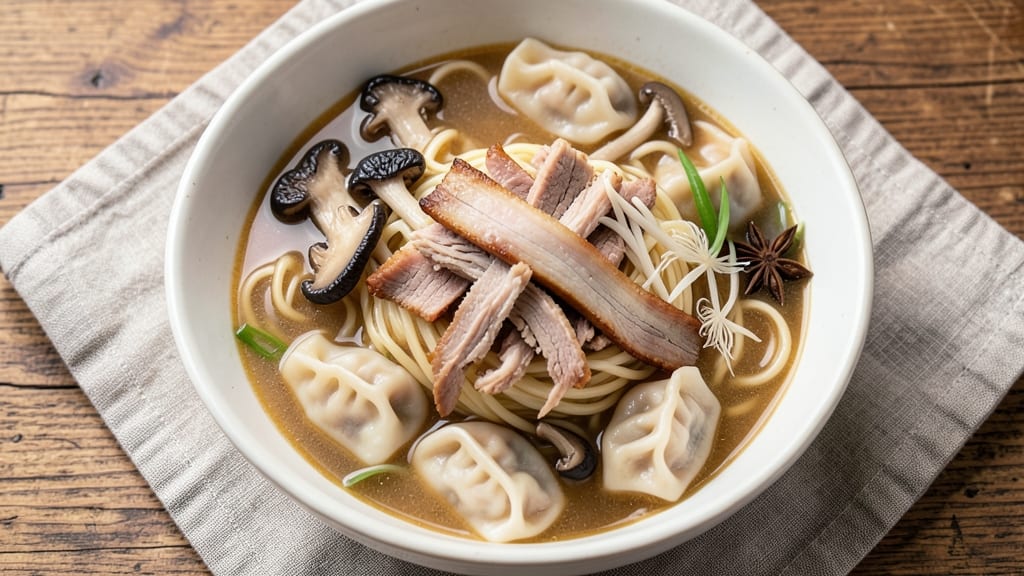
This authentic wonton noodle soup recipe delivers the perfect harmony of delicate wontons, silky broth, and chewy noodles—just like your favorite Chinese takeout, but better. The secret lies in a rich, slow-simmered chicken-pork stock infused with star anise and ginger, paired with hand-folded wontons that burst with flavor in every bite. I’ve perfected this recipe over years of testing, ensuring every element—from the broth’s depth to the wontons’ satisfying crunch—comes together seamlessly.
What sets this recipe apart is the balance of tradition and approachability. While the broth builds flavor over hours, the wontons can be prepped ahead, making this a foolproof weeknight dinner.
The filling—a classic pork and shrimp blend—is seasoned with Shaoxing wine and sesame oil for authenticity, but a vegetarian version works just as well. The noodles cook in the broth itself, absorbing its rich flavors while maintaining their signature chew.
By the time you’re done, you’ll have a steaming bowl of soup with golden wontons floating in a fragrant, umami-packed broth, topped with scallions and cilantro for freshness. The first slurp reveals layers of savory, slightly sweet, and aromatic notes—exactly what makes wonton noodle soup a comfort classic.
This recipe stays true to tradition while making it accessible for home cooks.
The beauty of this dish is its versatility: serve it as a light lunch or a hearty dinner, and adjust the spice level with chili oil or a dash of Sichuan peppercorns. Here’s how to make it—step by step, with tips to ensure every bowl is restaurant-quality.
Ingredients for authentic wonton noodle soup
The backbone of this soup: aromatic broth, handmade wontons, and chewy noodles—all built on tradition.
| Ingredient | Amount | Notes |
|---|---|---|
| Chicken Breast 🍗 | 1 ½ lb | Boneless, skinless, cut into chunks |
| Pork Shoulder 🐖 | 1 ½ lb | Cut into 1-inch chunks |
| Dried Shiitake Mushrooms 🍄 | 8 whole | Rehydrated for broth depth |
| Dried Wood Ear Mushrooms 🍄 | 4 whole | Rehydrated for texture |
| Fresh Ginger 🧄 | 2 tbsp | Minced, peeled, fresh preferred |
| Star Anise 🌟 | 2 whole | Whole pods for infusion |
| Shaoxing Wine 🍷 | ½ cup | For authentic umami |
| Sesame Oil 🫒 | 1 tbsp | Toasted for aroma |
| Ground White Pepper 🌶️ | ½ tsp | Freshly ground preferred |
| Wonton Wrappers 🥟 | 24 pieces | Square, store-bought or homemade |
| Ground Pork 🐖 | 1 lb | Lean, for wonton filling |
| Shrimp 🦐 | ½ lb | Peeled, deveined, chopped |
| Green Onions 🧅 | 4 whole | Thinly sliced for garnish |
| Cilantro 🌿 | ¼ cup | Chopped, for garnish |
| Dried Egg Noodles 🍜 | 8 oz | For chewy texture |
The broth is where the magic happens. Chicken and pork shoulder (not ground meat) build depth, while dried shiitake and wood ear mushrooms add umami without overpowering. For the ginger, fresh is non-negotiable—the dried stuff loses punch fast. Star anise might sound fancy, but it’s a must for that subtle anise note. Buy whole pods from Asian markets or the international aisle at Whole Foods—they’re cheaper than pre-ground. Shaoxing wine? Don’t substitute with cooking wine—it’s worth the splurge for this one dish. If you can’t find it, dry sherry in a pinch works, but it won’t be identical.
Wonton wrappers are the difference between homemade and takeout. Store-bought works fine (King Noodle or T&T are my go-tos), but if you’re ambitious, homemade wrappers are a game-changer. For the filling, ground pork and shrimp keep it classic, but a tofu and mushroom blend makes an excellent vegetarian swap. The sesame oil is for aroma only—add it at the very end. No sesame oil? A pinch of toasted sesame seeds on top gives the same vibe. The green onions and cilantro should be fresh—wilted herbs ruin the presentation. If you’re short on time, freeze prepped wontons on a tray before bagging for easy assembly later.
Broth freezes beautifully—double the recipe and freeze half for next time. Wontons can be prepped a day ahead and parboiled before freezing to save time. Noodles? Cook them separately and add to bowls at serving time so they don’t turn mushy. Garnishes like chili oil or Sichuan peppercorns should be added after serving—they pack heat. Store leftovers in airtight containers for up to 3 days, but the flavor actually improves after a night in the fridge as everything melds together.
Why You'll Love This Recipe
- No-Fuss Prep: I swear by soaking those dried mushrooms overnight—they practically melt into the broth, adding depth without effort. Even the pork shoulder? Just sear and simmer. No fancy techniques, just hands-off flavor.
- Umami Bomb: That combo of shiitake, wood ear, and ginger? It’s like a flavor explosion in a bowl. The mushrooms soak up the broth’s richness, while the ginger keeps everything bright—no heavy cream or weird additives needed.
- Leftover Goldmine: This soup only gets better the next day. Reheat the broth, toss in fresh wontons, and boom—still packed with flavor. I make double batches on Sundays because it’s my go-to for lazy nights or unexpected company.
- Budget Stretch: Pork shoulder and chicken breast stretch across multiple meals, and dried mushrooms last forever. Honestly, I’ve made this for under $10 per serving, and it still tastes like a restaurant dish—no takeout needed.
Step-by-step instructions for authentic wonton noodle soup
Here's the method that delivers restaurant-quality wonton noodle soup with rich broth and delicate dumplings.
Prepare the Broth Base
In a large stockpot, combine the 1.5 lb chicken breast and 1.5 lb pork shoulder cut into chunks. Add the 8 whole dried shiitake mushrooms and 4 whole dried wood ear mushrooms (soaked in hot water for 20 minutes first). Pour in 8 cups water and bring to a boil over high heat. Once boiling, reduce to a simmer and skim off any foam that rises to the surface.
Add the 2 tbsp minced fresh ginger, 2 whole star anise pods, and 0.5 cup Shaoxing wine. Simmer uncovered for 1 hour, stirring occasionally. The broth should develop deep color and aroma. Strain through a fine-mesh sieve into a clean pot, pressing gently on the solids to extract maximum flavor. Discard the solids and return the broth to the pot.
Build the Wonton Filling
In a mixing bowl, combine the 1 lb ground pork with the 0.5 lb chopped shrimp. Add 2 tbsp minced fresh ginger, 0.5 tsp ground white pepper, and 1 tbsp toasted sesame oil. Mix gently with your hands until just combined - don't overwork or the filling will become tough. Cover and refrigerate for 30 minutes to firm up slightly.
Roll out the 24 wonton wrappers one at a time on a floured surface. Place 1 teaspoon of filling in the center of each wrapper. Dip your finger in water and moisten the edges, then fold and pinch to create pleats, forming classic wontons. Set aside on a floured plate.
Cook the Wontons and Noodles
Bring the prepared broth back to a gentle simmer. Add the wontons in batches, cooking for 3-4 minutes until they float to the surface. Remove with a slotted spoon and set aside. Repeat until all wontons are cooked.
In the same pot, add the 8 oz dried egg noodles and cook according to package directions until al dente. The noodles should have a pleasant chewiness - they'll continue cooking slightly in the hot broth. Drain 1 cup of broth separately before draining the noodles completely.
Assemble and Finish the Soup
Return the cooked wontons to the broth along with the cooked noodles. Stir gently to combine. Add the reserved 1 cup broth to adjust consistency if needed. The soup should be rich but not overly thick.
Divide among 4 bowls, garnishing each with 1 whole sliced green onion and 1 tablespoon chopped cilantro. Serve immediately with extra wontons on the side for slurping. The broth should be silky with visible meat particles, and each wonton should be tender yet maintain its shape.
Pro Tips For Making Authentic Wonton Noodle Soup
- VELVET THE PORK: Don’t skip the overnight marinade—pork shoulder needs time to break down. I used to rush it and end up with chewy chunks; now I toss it with soy sauce, Shaoxing wine, and a pinch of sugar the night before. The texture difference is night and day.
- SOAK MUSHROOMS SEPARATELY: Wood ear mushrooms take forever to rehydrate—like, way longer than shiitakes. Soak them in warm water for 30 minutes first, then add the shiitakes for 20. Crowd the bowl and they’ll turn to mush; give them space to unfurl properly.
- STIR-FRY THE GINGER: Fresh ginger isn’t just for flavor—it’s for aroma. After boiling the broth, pull out the ginger slices and quickly sear them in a dry pan until fragrant. Toss them back in the broth for 30 seconds; this adds depth without bitterness. (Yes, even if you’re impatient like me.)
- SIMMER THE BROTH LOW: High heat now means weak broth later. Once everything’s in the pot, reduce to a bare simmer—just small, occasional bubbles—and let it cook uncovered for 45 minutes. Skim the foam, but don’t stir constantly; you’re not making risotto here. Patience here guarantees a rich, clear broth.
Pro cooking tips for authentic wonton noodle soup
Broth Perfection Tips
Start with cold water in your stockpot—it helps extract more collagen from the meat, resulting in a richer broth. After adding your chicken and pork shoulder, bring to a rolling boil for exactly 5 minutes to break down proteins before reducing to a simmer.
Skim off any foam that rises during the first 15 minutes of simmering—this removes impurities and keeps your broth crystal clear. 🌡️
For extra depth, toast your dried shiitake and wood ear mushrooms in a dry pan for 1-2 minutes before adding to the broth. This enhances their nutty, umami flavors.
If you're short on time, use instant mushroom powder (like Mushroom Powder from Penzeys)—just ½ teaspoon will add the same depth. The star anise should be removed after simmering, but don’t discard it—save it for your next batch of broth!
Wonton Mastery
Keep your wonton filling cold while working—this prevents the pork from overcooking and keeps the texture tender. If the filling feels too sticky, add ½ teaspoon cornstarch to absorb excess moisture.
For hand-folding perfection, use a small pastry brush to moisten the edges instead of your finger—it gives you more control and cleaner pleats. 🥟
To test if your wontons are cooked through, gently press one with chopsticks. If it holds its shape and releases a silky white broth, it’s ready. Overcooking will make them tough—3-4 minutes per batch is ideal.
For a restaurant-style finish, quickly sear the wontons in a hot wok with 1 teaspoon neutral oil for 30 seconds before adding to the broth for a crispy exterior.
Noodle Secrets
Use dried egg noodles specifically labeled for soup—they’re designed to absorb broth without turning mushy. Cook them just one minute less than package instructions suggest, as they’ll finish cooking in the hot broth. If your noodles stick together, rinse them under cold water before adding to the soup.
For a silky texture, reserve ½ cup broth before draining and toss the noodles in it before serving. 🍜
For a textural contrast, add thinly sliced wood ear mushrooms (rehydrated and drained) to the soup along with the noodles. They’ll soak up broth and add a delicate chew that complements the wontons.
If you’re serving leftovers, reheat the noodles separately in a small pot with a splash of water to prevent them from absorbing too much broth and becoming dry.
Garnish Like a Pro
Fresh green onions and cilantro should be added right before serving—they wilt quickly in hot broth. For a colorful presentation, use micro cilantro (available at Asian markets) instead of chopped leaves.
A drizzle of chili oil (like Lao Gan Ma) or a sprinkle of toasted sesame seeds adds both flavor and visual appeal. 🌿
For an extra touch, place a small wonton on top of each bowl and let guests slurp it first—they’ll love the hot, crispy exterior that contrasts with the silky broth.
If you’re serving a crowd, keep a small pot of broth warm on the stove to replenish bowls without reheating the entire pot, which can make the wontons soggy.
Nutrition facts
Frequently asked questions
Can I make this wonton noodle soup vegetarian?
Swap the pork and shrimp filling for a mix of finely chopped shiitake mushrooms, tofu, and water chestnuts for texture. Use vegetable broth instead of chicken/pork stock and add 1 teaspoon soy sauce plus ½ teaspoon sesame oil to the filling for umami depth. The wonton wrappers will stay the same—just ensure your broth is rich enough to carry the flavors.
How do I prevent my wontons from falling apart?
Underfilling is key—use 1 teaspoon or less per wonton, and don’t overwork the filling. Chill the filling for 30 minutes before shaping to firm it up. When folding, press edges firmly together and pleat tightly. For extra strength, dip your finger in ice water instead of warm water when sealing. If they still fall apart, your broth may be too hot—simmer gently and cook wontons in batches.
Can I use fresh wonton wrappers instead of dried?
Fresh wonton wrappers (like fresh egg roll wrappers) work perfectly! They’re more delicate, so handle them gently and fold slightly faster. Keep them covered with a damp towel to prevent drying. For the best texture, use them within 2 hours of making the filling. If they shrink while cooking, your broth temperature is too high—reduce heat to a gentle simmer.
What’s the best way to reheat leftovers?
Reheat wontons and noodles separately to avoid sogginess. Warm wontons in a steamer basket over simmering water for 3-4 minutes, then toss with a splash of broth. Reheat noodles in a small pot with ½ cup fresh broth and 1 teaspoon sesame oil for 2 minutes. Combine only when ready to serve. Never microwave—the texture suffers! For extra flavor, add a pinch of white pepper when reheating.
Why does my broth look cloudy?
Cloudy broth usually means proteins didn’t break down properly. For clearer results, simmer longer (up to 2 hours) and skim foam aggressively during the first 20 minutes. If using store-bought stock, opt for low-sodium chicken broth and add 1 extra bay leaf while simmering. For instant clarity, strain through a cheesecloth-lined sieve after cooking. A slight haze is normal—it won’t affect flavor!