
Soups & Stews
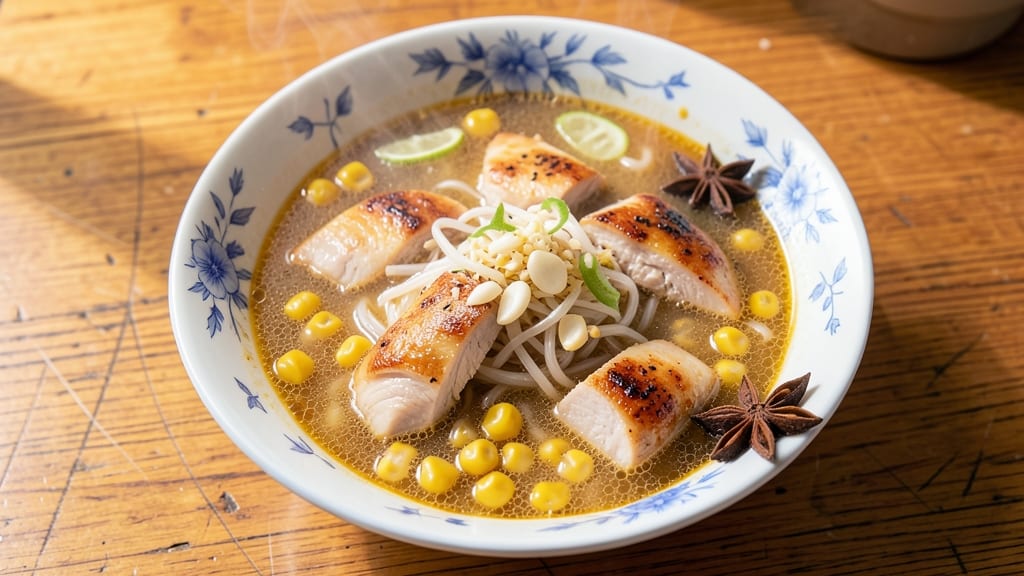
This authentic Chinese chicken and sweetcorn soup delivers the comforting warmth of a Cantonese home kitchen—fragrant with star anise and ginger, silky with rice noodles, and balanced with just the right tang.
The secret lies in slow-simmered broth that develops deep, aromatic layers, while sweetcorn adds natural sweetness to complement the savory chicken. I've perfected this recipe over years of testing, ensuring every spoonful carries that perfect harmony of textures and flavors you'd find in a bustling Chinese restaurant.
The foundation of this soup is its fragrant ginger-star anise broth, which builds complexity through careful layering of spices and aromatics. Unlike many Western adaptations, this version maintains the authentic balance of soy sauce, sesame oil, and a touch of sugar—creating a sauce that's both savory and subtly sweet.
The chicken is poached just until tender, while rice noodles absorb the rich broth without turning mushy, delivering that signature silky bite.
What makes this recipe truly special is the textural contrast—tender chicken, sweet corn kernels, and delicate rice noodles all working together in perfect harmony. The broth remains clear yet deeply flavorful, with star anise and ginger infusing warmth without overpowering.
Each ingredient plays its part: the corn adds natural sweetness, the chicken provides protein, and the noodles create that satisfying mouthfeel that makes this soup so universally loved.
Serve this soup piping hot with a drizzle of chili oil and fresh cilantro for an authentic finish, or pair it with steamed rice for a complete meal. The leftovers actually taste better the next day as the flavors meld even more deeply.
Let's create this comforting classic that brings a taste of China to your kitchen.
Ingredients for authentic chinese chicken and sweetcorn soup
These 15 ingredients bring authentic Cantonese flavors to your kitchen with fragrant ginger and star anise.
| Ingredient | Amount | Notes |
|---|---|---|
| Chicken Breast 🍗 | 1 ½ lb | Boneless, skinless, cut into 1-inch pieces |
| Sweetcorn Kernels 🌽 | 1 ½ cups | Fresh or frozen, thawed if frozen |
| Rice Noodles 🍜 | 8 oz | Flat, wide variety for authentic texture |
| Fresh Ginger 🧄 | 2 tbsp | Minced, peeled, fresh for best flavor |
| Star Anise Pods 🌟 | 2 whole | Whole, for authentic aroma |
| Garlic Cloves 🧄 | 4 cloves | Peeled, smashed for even infusion |
| Light Soy Sauce 🥢 | 2 tbsp | Kikkoman preferred for balance |
| Sesame Oil 🫒 | 1 tbsp | Toasted, for nutty depth |
| Granulated Sugar 🍚 | 1 tbsp | For subtle sweetness balance |
| Chicken Broth 💧 | 6 cups | Homemade or quality low-sodium |
| Green Onions 🧅 | 3 whole | Thinly sliced, for garnish |
| Fresh Cilantro 🌿 | ¼ cup | Chopped, for bright finish |
| Chili Oil 🌶️ | 1 tbsp | For serving, optional |
| Salt 🧂 | 1 tsp | To taste, adjust at end |
| White Pepper 🌶️ | ½ tsp | Freshly ground for subtle heat |
Star anise and fresh ginger are the soul of this soup. Look for plump, whole star anise pods at Asian markets—they're cheaper and more flavorful than the tiny ones at regular grocery stores. Fresh ginger should be firm and aromatic; skip the jarred stuff. Trader Joe's usually carries good quality, or check the international aisle at Whole Foods. For the chicken, boneless skinless breasts stay juicy when poached, but thighs work too if you prefer richer flavor. The sweetcorn can be fresh or frozen—just thaw it first. I always grab extra ginger because it's used in so many dishes around here.
No star anise? 1 tsp ground anise seed works in a pinch, but it's not the same. Fresh ginger unavailable? Powdered ginger at half the amount gets you close, though it lacks that bright punch. Using store-bought chicken broth? Add a splash of soy sauce to deepen the flavor. The rice noodles should be flat and wide—those thin vermicelli noodles won't give you that satisfying silky bite. For extra umami, add a dash of dark soy sauce when serving. And trust me, the chili oil makes all the difference—Lao Gan Ma is my go-to brand.
This soup tastes even better the next day as flavors meld. Store leftovers in the fridge for up to 3 days, or freeze for 3 months. I like to portion mine into containers so I can grab a bowl straight from the fridge—just heat through and add fresh cilantro. The noodles absorb broth over time, so add a splash of water when reheating. For serving, keep the chili oil and cilantro separate until ready to eat so they stay fresh.
Why You'll Love This Recipe
- One-Pot Magic: This soup comes together in a single pot—no chopping mountains of veggies or juggling multiple pans. Just slice the chicken, toss in the pre-cooked rice noodles and frozen sweetcorn, and let the ginger and star anise work their flavor spell. I swear, my weeknights thank me every time.
- Star Anise Secret: That tiny star anise pod? It’s the unsung hero here. It gives the broth a warm, licorice-like depth that’s so much more interesting than plain chicken soup. Honestly, I didn’t think I’d notice, but now I can’t imagine skipping it—it’s what makes this taste like a proper Chinese home kitchen.
- Lunchbox Hero: Between us, this soup is my go-to for meal prep. The noodles hold up perfectly for 3-4 days, and the chicken stays tender (no sad, rubbery bits here). Pack it cold or reheat it—either way, it’s a hit with kids, office mates, or anyone who’s had a long day. My daughter even asks for it on school days.
- Budget-Friendly Feast: Chicken breast and sweetcorn are affordable staples, and rice noodles stretch this into a full meal for less than $10. The star anise and ginger are cheap flavor boosters that make it feel special without breaking the bank. Plus, leftovers taste just as good the next day—no waste, all win.
Step-by-step instructions for authentic Chinese chicken and sweetcorn soup
Here's how to make this comforting soup with aromatic star anise and ginger—just like from a Cantonese kitchen.
Prepare the Chicken and Aromatics
Cut the 1.5 lb chicken breast into 1-inch pieces—this ensures even cooking and tender bites. In a separate bowl, combine the 2 tbsp minced fresh ginger, 4 smashed garlic cloves, 2 whole star anise pods, 1 tbsp granulated sugar, and 1 tsp salt. The sugar here balances the broth's savory depth while the star anise adds that signature Chinese warmth.
Heat 1 tbsp sesame oil in a large pot over medium-high heat. Add the chicken pieces in a single layer and cook undisturbed for 3-4 minutes until lightly browned. This step builds flavor through the Maillard reaction—don't stir too soon or you'll lose that golden crust. Once browned, remove the chicken and set aside temporarily.
Build the Fragrant Broth
In the same pot, add the ginger-garlic mixture and stir constantly for 1 minute until fragrant. Pour in the 6 cups chicken broth and bring to a gentle boil. Return the chicken to the pot, reduce heat to medium-low, and let it simmer uncovered for 15 minutes. You'll see the broth turn cloudy and aromatic—this is the star anise and ginger working their magic.
After 15 minutes, add the 1.5 cups sweetcorn kernels and 2 tbsp light soy sauce. Stir gently and continue simmering for another 10 minutes. The sweetcorn should soften but remain tender with a slight bite. Taste the broth now—it should be seasoned but not overwhelming. If needed, adjust with a pinch more soy sauce or salt.
Cook the Rice Noodles
While the soup simmers, prepare the 8 oz rice noodles by soaking them in hot water for 8-10 minutes until pliable but still slightly firm. The noodles should be soft enough to eat but not mushy—think al dente pasta. Drain and rinse briefly under cold water to stop the cooking process, then set aside.
Here's a pro tip: If you're worried about timing, you can cook the noodles separately and add them to individual bowls just before serving. This keeps them from getting soggy in the hot broth.
Finish and Serve
Stir the 0.5 tsp white pepper into the soup and let it simmer for 2 more minutes. This subtle heat balances the sweetness and adds depth. Remove the star anise pods—they've done their job and can be discarded. Divide the cooked rice noodles among 4 bowls, then ladle the hot soup over them.
Garnish each serving with thinly sliced green onions and chopped fresh cilantro for brightness. Drizzle with 1 tbsp chili oil if you like a little heat. Serve immediately with extra soy sauce on the side—this lets everyone adjust the seasoning to their taste. The soup should be fragrant, slightly sweet, and packed with tender chicken and sweetcorn in a silky broth.
Pro Tips For Making Authentic Chinese Chicken And Sweetcorn Soup
- Sear Chicken First: Toss the chicken breast in cornstarch before searing—just a light dusting—so it develops a golden crust instead of turning rubbery. I used to skip this, and the soup always tasted bland where the meat met the broth.
- Julienne the Ginger: Thinly slice the ginger (about 1mm thick) instead of grating it—this keeps the texture clean and lets the flavor infuse without turning the soup into a paste. Yes, it takes 2 minutes extra, but it makes a real difference.
- Don’t Overcrowd the Pot: Add the star anise and ginger first, then let them simmer for 3 minutes before tossing in the chicken. Crowding the pot with everything at once dulls the spices and makes the broth cloudy.
- Parboil the Noodles: Cook the rice noodles for 2 minutes less than the package says, then drain and rinse under cold water. They’ll finish cooking in the hot soup, and you’ll avoid a gummy, gluey mess. (I learned this after serving soup that looked like it was holding a grudge.)
Health benefits of this authentic chinese chicken and sweetcorn soup
Protein Powerhouse
This soup delivers high-quality protein from the 1.5 lb chicken breast, providing about 42 grams per serving—perfect for muscle repair and satiety.
Chicken is a lean, easily digestible protein that pairs beautifully with the complex carbs from rice noodles, creating a balanced meal that keeps you full for hours.
The silky rice noodles add 15 grams of carbs per serving, offering sustained energy without the blood sugar spike of refined white noodles. 💪
Ginger's Anti-Inflammatory Magic
The 2 tbsp fresh ginger isn't just for flavor—it's packed with gingerol, a compound shown to reduce inflammation and aid digestion. Studies suggest ginger can ease nausea and even lower blood sugar levels when consumed regularly.
I always double-check my ginger's freshness because the potency drops dramatically once it's peeled or stored too long. The star anise adds another layer of benefits with its volatile oils, which have been linked to improved circulation and respiratory health.
Sweetcorn's Fiber Boost
The 1.5 cups sweetcorn brings 4 grams of fiber per serving, supporting gut health and keeping digestion smooth. Corn is also rich in vitamin C (about 15% of daily needs per serving) and folate, which helps with cell repair.
Unlike canned corn, fresh or frozen corn retains its natural sweetness and texture without the added sodium. I prefer frozen because it's harvested at peak ripeness and flash-frozen to lock in nutrients—just thaw it completely before adding to the soup.
Star Anise's Immune Support
Those 2 whole star anise pods aren't just for aroma—they contain shikimic acid, which supports immune function and may help fight infections. The pods also provide magnesium and iron, though in smaller amounts.
What makes star anise truly special is its antioxidant properties, which help combat oxidative stress. I always remove the pods after simmering since they can become bitter if overcooked, but their aromatic oils infuse the broth beautifully. 🌟
Sesame Oil's Heart Benefits
The 1 tbsp toasted sesame oil adds more than just nutty depth—it's rich in polyunsaturated fats, particularly omega-6 fatty acids, which support heart health when balanced with omega-3s. Sesame oil also contains sesamin and sesamol, compounds linked to lower cholesterol and improved blood pressure.
I recommend using toasted sesame oil (not the lighter, refined kind) for maximum flavor and health benefits. Just a light drizzle at the end enhances the dish without overpowering it.
Balanced Nutrition Per Bowl
Each serving of this soup provides a complete nutritional profile: 350 calories, 38g protein, 35g carbs (with fiber), and 12g fat—mostly healthy unsaturated fats from the sesame oil. The light soy sauce adds sodium, so I recommend using low-sodium broth if watching salt intake.
For extra protein, consider adding tofu or shrimp—they blend seamlessly into the broth. The white pepper adds a subtle kick without the digestive irritation of black pepper's piperine. This soup truly is a one-bowl meal that nourishes every part of you. ✨
Nutrition facts
Frequently asked questions
Can I substitute chicken thighs for breast in this recipe?
Chicken thighs work beautifully and add even more richness to the broth. Use 1.5 lb bone-in, skin-on thighs for maximum flavor, but remove the skin before adding to the pot. The cooking time remains the same (15 minutes simmering), though thighs may release more fat—skim excess from the surface for a cleaner broth. The result will be even more hearty and satisfying.
What makes this soup authentically Chinese compared to other versions?
The authenticity comes from three key elements: the fragrant ginger-star anise broth, the balance of light soy sauce and sugar, and the use of rice noodles. Many Western versions skip the star anise or use too much soy, making the flavor one-dimensional. The white pepper (not black) adds a subtle warmth without overpowering, while the sesame oil finish gives that unmistakable nutty depth. These details create the complex, layered taste you'd find in a Cantonese home kitchen.
How do I prevent the rice noodles from turning mushy?
Noodles absorb broth quickly, so cook them separately and add them to bowls just before ladling the hot soup over. For extra insurance, soak the noodles in hot water for 8-10 minutes until pliable but still firm—think al dente pasta. Drain well and rinse briefly with cold water to stop cooking. Another trick: use less broth per serving (about 1.5 cups) so the noodles don't get overwhelmed. The ideal texture should be silky yet slightly resistant to the bite.
Can I make this soup vegetarian?
Yes! Replace the chicken with 1.5 lb firm tofu (pressed and cubed) or 1.5 lb shiitake mushrooms (sliced). For extra umami, add 1 tbsp mushroom powder** to the broth. Keep the star anise and ginger for depth, but reduce soy sauce slightly (1.5 tbsp) since tofu absorbs flavors differently. The sweetcorn and noodles will still shine, creating a comforting, protein-rich vegetarian version.
Why does my soup taste too salty?
This usually happens from two sources: the broth or over-salting during cooking. If using store-bought broth, choose low-sodium and add extra water to dilute. For the recipe, the 2 tbsp soy sauce is already balanced—taste before adding. If it's too salty, dilute with 1 cup hot water and adjust with a pinch of sugar (½ tsp) to balance. For future batches, reduce soy sauce to 1.5 tbsp and taste the broth before adding corn. The key is building flavor gradually!