
Soups & Stews
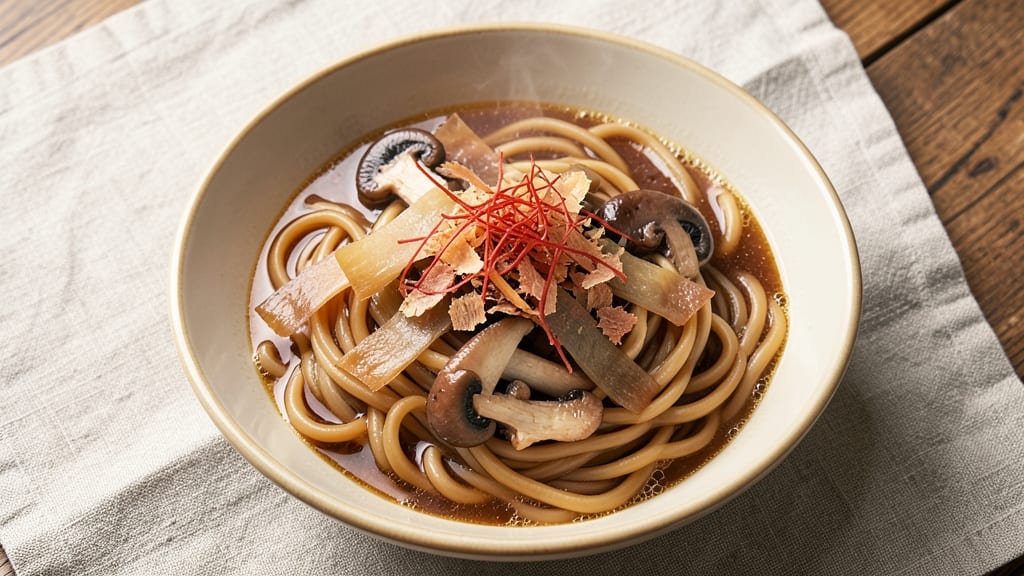
This authentic udon soup recipe captures the essence of Japanese comfort food—slippery noodles floating in a silky, umami-rich broth that balances saltiness with subtle sweetness. The foundation lies in a carefully crafted dashi, simmered with kombu and shiitake mushrooms, while bonito flakes add depth.
Every element comes together to create a harmonious bowl that feels like a warm embrace after a long day.
The secret to authentic udon lies in the broth: simmering kombu and dried shiitake for hours extracts their natural flavors, while bonito flakes infuse the liquid with a delicate, savory aroma.
The noodles must cook just right—firm yet tender—to hold their shape while absorbing the broth’s essence. Toppings like kamaboko, green onions, and nori add texture and visual appeal, completing the experience.
What makes this recipe special is the balance of traditional techniques with approachable simplicity. No shortcuts here—simmering, straining, and layering flavors require patience, but the result is a bowl of udon that transports you to a bustling Tokyo ramen shop.
The broth should be clear yet deeply flavorful, the noodles perfectly al dente, and every bite a testament to Japanese culinary precision.
Serve this udon hot, garnished with your choice of toppings, and pair it with a cold beer or green tea for the full experience.
The harmony of textures—slippery noodles, chewy kamaboko, crisp nori—and the interplay of umami, salt, and subtle sweetness make this more than just soup; it’s a moment of pure, comforting satisfaction.
Ingredients for authentic udon soup
Japanese comfort food begins with kombu, shiitake, and bonito flakes for authentic umami broth.
| Ingredient | Amount | Notes |
|---|---|---|
| Dried Udon Noodles 🍜 | 8 oz | Thick wheat udon preferred |
| Dried Kombu 🍃 | 1 piece | Whole sheet, 7-inch |
| Dried Shiitake Mushrooms 🍄 | 4 whole | Stems removed, rehydrated |
| Bonito Flakes 🐟 | 1 tbsp | High-quality, premium grade |
| Dried Shredded Ginger 🧄 | 1 tsp | For aromatic depth |
| Soy Sauce 🍶 | ½ cup | Japanese-style, low-sodium |
| Mirin 🍶 | ¼ cup | Sweet cooking rice wine |
| Sake 🍶 | ¼ cup | Dry, neutral variety |
| Kamaboko 🐟 | 4 oz | Sweet red fish cake |
| Green Onions 🧅 | 4 whole | Thinly sliced, white and green parts |
| Nori Sheets 🍜 | 4 sheets | Thin, for garnish |
| Sesame Oil 🫒 | 1 tsp | Toasted, for finishing |
| Neutral Oil 🫒 | 2 tbsp | For kamaboko topping |
| Water 💧 | 8 cups | Filtered preferred |
| Salt 🧂 | 1 tsp | Adjust to taste |
The foundation of authentic udon lies in the dashi, where dried kombu and shiitake mushrooms are essential. Source kombu from specialty Asian markets—Marukome or Koyo brands excel in quality. For shiitake, dried varieties from Hokkaido offer superior umami depth. Bonito flakes should be premium grade, like those from Nishin or Katsuobushi brands, to avoid bitterness. The dried ginger adds aromatic complexity without overpowering the delicate broth balance.
No kombu? Dashi powder works in a pinch, though it lacks the nuanced depth. Substitute shiitake with enoki mushrooms if unavailable, but reduce to 2 whole dried for milder flavor. Mirin can be swapped with equal parts sugar and water, though the authentic sweetness is compromised. For kamaboko, store-bought vacuum-packed versions suffice, but traditional handmade offers superior texture. Green onions should be fresh, crisp varieties—avoid wilted stems. Nori sheets must be high-quality, thin cuts; thicker varieties overpower the dish.
Store dried kombu and shiitake in airtight containers away from light to preserve freshness for up to 6 months. Rehydrated shiitake can be refrigerated for 3 days or frozen for 3 months. Kamaboko and nori sheets last 2 weeks unopened at room temperature. The broth base, once strained, keeps for 5 days refrigerated or 3 months frozen. For optimal texture, cook udon noodles al dente—they’ll soften further in the hot broth.
Why You'll Love This Recipe
- I swear by this trick: just soak the dried shiitake and kombu together—no prepping, no mess. The mushrooms rehydrate while infusing the broth with that deep, umami punch, and the kombu dissolves into pure savory magic without a single knife touch.
- No-Chop Necessary: I swear by this trick: just soak the dried shiitake and kombu together—no prepping, no mess. The mushrooms rehydrate while infusing the broth with that deep, umami punch, and the kombu dissolves into pure savory magic without a single knife touch.
- Umami Bomb: That first sip of broth—where the bonito flakes dance with ginger and shiitake—is like a flavor hug. The dried ingredients wake up in the water to create a broth so rich, it turns even the simplest udon into a restaurant-worthy bowl.
- Leftovers That Don’t Suffer: Between us, most soups get sad in the fridge. Not this one. The noodles stay tender, the broth deepens overnight (yes, really), and I’ve reheated it three mornings in a row with zero complaints—just add hot water and a sprinkle of flakes.
Step-by-step instructions for authentic udon soup
Master the balance of umami and texture with this traditional udon preparation.
Prepare the Dashi Broth Foundation
Begin by rinsing the 1 piece dried kombu under cold water and patting it dry with paper towels. Place it in a clean pot with the 8 cups water and bring to a gentle simmer over medium-low heat. Once small bubbles form at the edges, remove from heat and let steep for 10 minutes—this extracts the kombu's natural glutamate without bitterness.
Strain through a fine-mesh sieve, discarding the kombu. Return the broth to the pot and bring back to a simmer. Add the 4 whole dried shiitake mushrooms (previously rehydrated in hot water for 20 minutes) and 1 tsp dried shredded ginger. Simmer for 5 minutes to infuse the broth with earthy depth.
Build Umami Layers with Seasonings
Increase heat to medium-high and add the 1 tbsp bonito flakes, stirring constantly for 30 seconds until they dissolve completely. This creates the signature umami richness of authentic udon. Remove from heat and whisk in the 0.5 cup soy sauce, 0.25 cup mirin, and 0.25 cup sake. Taste and adjust with 1 tsp salt if needed—the broth should be seasoned but not salty.
Return the broth to a gentle simmer, then reduce heat to low and maintain at 185°F—this temperature prevents the noodles from overcooking later. Keep the broth covered to preserve its delicate flavors.
Cook the Udon Noodles Perfectly
While the broth simmers, prepare the 8 oz dried udon noodles according to package instructions—typically 4-5 minutes in boiling water. The key is to cook them until they're just al dente, as they'll finish cooking in the hot broth. Drain immediately and rinse briefly with cold water to stop cooking.
Divide the cooked noodles evenly among 4 bowls. Ladle the hot broth over the noodles, ensuring each serving gets ample liquid. The noodles should float slightly as they absorb the broth's heat.
Assemble with Kamaboko and Garnishes
Heat the 2 tbsp neutral oil in a small skillet over medium heat until shimmering. Add the 4 oz kamaboko, cut into thin strips, and cook for 1-2 minutes per side until golden brown. This creates a crispy contrast to the soft noodles.
Arrange the kamaboko strips over each bowl of udon. Top with the 4 whole green onions, thinly sliced, and the 4 sheets nori sheets, lightly toasted by passing over a gas flame for 10 seconds per sheet. Drizzle with 1 tsp sesame oil just before serving to enhance aroma and add nutty depth.
Serve Immediately for Optimal Texture
Serve the udon immediately while the broth is steaming hot. The noodles should be slippery yet firm, with the broth clinging to each strand. Each spoonful should deliver a harmonious balance of umami from the dashi, sweetness from the mirin, and subtle heat from the ginger.
For authenticity, use wide, shallow bowls that allow diners to appreciate the soup's visual layers. The kamaboko should be crisp at the edges while remaining tender inside, and the nori should add a delicate seaweed aroma with each bite.
Pro Tips For Making Authentic Udon Soup
- SOAK KOMBU FIRST: Toss the dried kombu into cold water 10 minutes before boiling—this jumpstarts the umami extraction. I used to just drop it in with the hot water, but the broth ends up flat and one-dimensional. The cold soak pulls out deeper flavor without bitterness.
- TOAST SHIITAKES UNTIL FRAGRANT: Dry-toast the shiitake slices in a pan for 2-3 minutes until they smell like a forest after rain. This concentrates their earthy notes and prevents them from turning to mush in the broth. Skip this, and your soup tastes like sad, waterlogged mushrooms.
- STIR IN BONITO LAST: Add bonito flakes right before serving so they sizzle dramatically and release their aroma instantly. If you toss them in with the kombu, they’ll just dissolve into the background. The contrast of hot flakes against warm broth is what makes udon feel special.
- DON’T OVERCOOK THE UDON: Check the noodles at 2 minutes—authentic udon should be al dente, not mushy. Overcooking turns them into glue. If your package says 5 minutes, halve it and taste-test. They’ll finish cooking in the hot broth.
Flavor customization for these flavors
Spicy Miso Udon
Transform your udon into a fiery bowl by adding 2 tbsp red miso paste to the simmering broth after removing the kombu. Stir until fully dissolved, then add 1 tsp gochugaru (Korean chili flakes) and ½ tsp sesame seeds for depth.
Top with a soft-boiled egg and sliced serrano peppers for extra heat. The miso adds umami while the chili brings a bold kick that pairs perfectly with the noodles' slippery texture. 🌶️
Creamy Sesame Udon
For a luxurious twist, blend ¼ cup tahini with 2 tbsp warm water and 1 tsp honey until smooth. Stir this mixture into the finished broth just before serving. Garnish with toasted sesame seeds and crispy fried shallots for crunch.
The tahini creates a velvety coating on the noodles, balancing the broth's saltiness with nutty richness. This version feels indulgent yet remains light.
Vegetarian Mushroom Udon
Skip the bonito flakes and replace with 1 tbsp dried shiitake powder (or 2 tbsp finely chopped enoki mushrooms). Boost umami by adding 1 tbsp soy sauce and 1 tsp white miso.
For depth, sauté ½ cup shiitake mushrooms and ¼ cup leeks in 1 tbsp sesame oil until caramelized, then place them on top of the broth. The earthy mushrooms mimic the dashi's complexity while keeping the dish vegetarian-friendly. 🍄
Spicy Tantanmen Udon
Inspired by Chinese-Japanese fusion, stir 1 tbsp chili bean paste (doubanjiang) into the broth after simmering. Add 1 tsp sugar to balance the heat and top with thinly sliced scallions, crushed peanuts, and cilantro.
The chili bean paste introduces a smoky, tangy depth that contrasts beautifully with the udon's mild flavor. Serve with a side of sriracha for extra customization.
Creamy Corn Udon
Blend ½ cup frozen corn with 2 tbsp warm water until smooth, then stir into the broth. Add 1 tsp butter and ½ tsp white pepper for a creamy, slightly sweet twist. Garnish with crispy fried corn kernels and chives.
The corn adds natural sweetness and a silky texture, making this a comforting, family-friendly variation. Perfect for those who love a touch of sweetness in their soup. 🌽
Smoky Yuzu Udon
Infuse the broth with 1 tbsp yuzu juice (or substitute with lemon juice) and ½ tsp smoked paprika for a bright, citrusy aroma. Top with thinly sliced yuzu zest, toasted nori, and a sprinkle of furikake seasoning.
The yuzu's acidity cuts through the richness, while the paprika adds a subtle smokiness. This version feels refreshing yet deeply flavorful, ideal for warmer weather. 🍋
Nutrition facts
Frequently asked questions
Can I use instant udon noodles for this recipe?
While possible, we don't recommend it for authentic results. Instant udon often contains additives that alter the texture and flavor. For the perfect slippery yet firm bite, use thick wheat udon noodles specifically designed for soups. They cook faster than fresh pasta and hold their shape beautifully in the broth.
How do I make the broth clearer like in restaurants?
The key is simmering gently and straining properly. After removing the kombu, simmer the broth uncovered for 10 minutes to evaporate excess surface foam. Use a fine-mesh sieve lined with cheesecloth for straining—this removes tiny particles that cloud the liquid. For extra clarity, chill the broth overnight and skim off any fat that rises to the top before reheating.
What's the best way to store leftover udon broth?
Store broth in an airtight container in the fridge for up to 5 days or freeze for 3 months. For freezing, portion into ice cube trays first—this makes reheating easier later. When reheating, warm gently over low heat and add a splash of water if it becomes too thick. Never boil frozen broth directly to preserve its delicate flavors.
Can I make this recipe gluten-free?
Traditional udon contains wheat, but you can adapt this recipe. Replace the udon with rice noodles (like udon-shaped rice noodles) and use gluten-free soy sauce. For the broth, ensure your kombu and shiitake are certified gluten-free. The flavor profile will differ slightly but still deliver comforting umami.
Why does my broth taste bitter?
Bitterness usually comes from overcooking the kombu or bonito flakes. Remove kombu immediately when bubbles form at the edges—never let it boil. For bonito, stir constantly for only 30 seconds and strain immediately. If bitterness persists, add a pinch of sugar or a splash of mirin to balance the flavors. Taste as you go!