
Soups & Stews
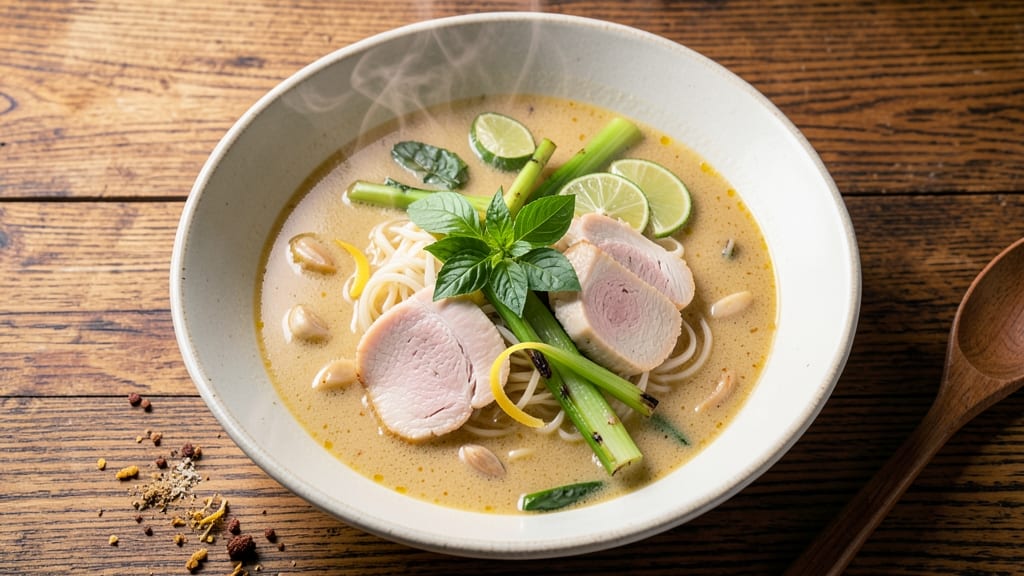
This authentic Thai lemongrass soup recipe transports you to Bangkok with its fragrant broth, silky noodles, and perfect balance of sour, spicy, and savory flavors. The secret lies in slow-simmered aromatics—lemongrass, galangal, and kaffir lime leaves—that infuse the broth with layers of herbal complexity.
I’ve perfected this recipe through years of testing, ensuring every spoonful delivers the restaurant-quality experience you crave.
The broth is where the magic happens: coconut milk creates a velvety base for Tom Kha-style soup, while a touch of lime juice and chili paste add brightness and heat. For a lighter Tom Yum version, simply omit the coconut milk and increase the lime and chili.
The key is patience—letting the broth simmer until the flavors meld together creates depth that shortcuts can’t replicate.
What you’ll end up with is a steaming bowl of authentic Thai lemongrass soup—silky rice noodles floating in a fragrant, perfectly balanced broth. The aroma alone will have everyone gathering around the table, and each sip delivers a harmonious blend of herbal, tangy, and spicy notes.
This is comfort food at its finest, crafted with traditional techniques for modern kitchens.
Whether you’re serving it as a light lunch or a cozy dinner, this soup adapts effortlessly. Garnish with fresh cilantro, lime wedges, and chili slices to let everyone customize their heat level.
Ready in under an hour, it’s the kind of recipe that turns weeknight dinners into a taste of Thailand.
Ingredients for authentic thai lemongrass soup
Herbal aromatics meet velvety coconut milk for a bowl of pure Thai comfort.
| Ingredient | Amount | Notes |
|---|---|---|
| Fresh Lemongrass Stalk 🌿 | 4 whole | Bruised and cut into 2-inch pieces |
| Galangal Root 🌿 | 2 pieces | About 2 inches each, sliced thinly |
| Kaffir Lime Leaves 🍋 | 4 whole | Lightly bruised for aroma |
| Coconut Milk 🥥 | 1 ½ cups | Full-fat for creaminess |
| Chicken or Vegetable Broth 💧 | 4 cups | Homemade preferred |
| Rice Noodles 🍜 | 8 oz | Flat or round, uncooked |
| Lime Juice 🍋 | ¼ cup | Freshly squeezed |
| Red Curry Paste 🌶️ | 2 tbsp | Or Thai chili paste |
| Fish Sauce 🍶 | 1 tbsp | Red Boat preferred |
| Palm Sugar 🍬 | 2 tbsp | Or brown sugar |
| Fresh Cilantro 🌿 | ¼ cup | Chopped, for garnish |
| Thai Chili Slices 🌶️ | ½ cup | Or sliced jalapeños |
| Garlic Cloves 🧄 | 4 cloves | Minced for depth |
| Shallots 🧅 | 2 whole | Thinly sliced |
| Salt 🧂 | 1 tsp | Adjust to taste |
The lemongrass and galangal are non-negotiable for that authentic Thai aroma. Asian markets are your best bet for fresh galangal—it’s often sold near the lemongrass. Bruise the lemongrass with the side of a knife before cutting to release its oils. Kaffir lime leaves? Trader Joe’s usually carries them frozen, which works in a pinch. If you can’t find galangal, ginger is a decent substitute (use half the amount), but it won’t be the same. For the broth, homemade is ideal, but Swanson or Pacific Foods low-sodium versions work fine if you’re short on time. The rice noodles should be fresh—not dried—so check the Asian aisle or freeze them if you can’t find them fresh.
No coconut milk? Full-fat Greek yogurt thinned with broth gives a similar richness, though it won’t be identical. Fish sauce is essential for umami, but if you’re avoiding it, soy sauce plus a splash of vinegar can mimic the depth. Palm sugar is the traditional choice, but dark brown sugar works in a bind—just taste as you go. The curry paste can vary in heat, so start with less if you’re sensitive. For the noodles, if you can’t find rice noodles, egg noodles are a last resort, but they’ll change the texture. And if you’re making this Tom Yum-style without coconut milk, bump the lime juice to 1/3 cup and add an extra 1 tbsp of chili paste.
This soup tastes even better the next day—let the flavors meld overnight. Store leftovers in an airtight container for up to 4 days in the fridge, or freeze for 3 months. The broth reduces as it sits, so add a splash of water when reheating. For serving, keep the garnishes separate: cilantro for freshness, chili slices for heat, and lime wedges for that bright finish. Double the broth if you’re serving a crowd—it’s the star of the show, and you’ll want plenty.
Why You'll Love This Recipe
- No Chopping Chaos: I swear by this recipe because you only need to bruise the lemongrass and slice the galangal—no mincing, no dicing, no mess. That first whiff of bruised galangal and lime leaves? It’s like a flavor shortcut without any actual shortcuts.
- Creamy-Bright Magic: The coconut milk and broth play this perfect balance—creamy but never heavy, with that zesty kick from the lime leaves. Honestly, the first sip makes me pause mid-spoonful because it’s just that good.
- Weeknight to Party Table: This soup goes from "I’m too tired to cook" to "I made this for my book club" without breaking a sweat. Swap chicken for tofu, add mushrooms for texture—it’s the kind of dish that adapts without losing its soul.
- Leftovers That Lie: Between us, this soup tastes better the next day. The flavors meld like old friends, and it reheats in seconds. I make a double batch on Sundays just to avoid decision fatigue later—my future self thanks me.
Step-by-step instructions for authentic Thai lemongrass soup
Here's how to build this aromatic, balanced soup with layers of herbal brightness and tender noodles.
Build the Herbal Base
In a large pot, combine the 4 whole fresh lemongrass stalks (bruised and cut into 2-inch pieces), 2 pieces galangal root (sliced thinly), 4 whole kaffir lime leaves (lightly bruised), 2 whole shallots (thinly sliced), and 4 cloves garlic (minced). Let these aromatics sit for 5 minutes - you'll smell the galangal's peppery bite and lemongrass's citrusy punch.
Add the 2 tablespoons red curry paste and stir to coat the aromatics completely. Cook over medium heat for 3-4 minutes until fragrant - the paste should release its deep, spicy aroma. Here's the thing: don't rush this step. The flavors need time to meld before we add liquids. If the paste starts to darken too quickly, reduce heat slightly to prevent burning.
Simmer the Broth and Infuse Flavors
Pour in the 4 cups chicken or vegetable broth and bring to a gentle boil. Once boiling, reduce heat to medium-low and let it simmer uncovered for 10 minutes. This slow simmer extracts maximum flavor from the herbs while keeping the broth clear. You'll notice the lemongrass releases its oils and the galangal softens slightly - both signs the broth is properly infused.
After 10 minutes, taste the broth and adjust seasoning with 1 teaspoon salt and 1 tablespoon fish sauce. The fish sauce should enhance the umami depth while balancing the herbal notes. If using vegetable broth, you might need an extra ½ teaspoon salt - homemade chicken broth typically carries more natural saltiness.
Add Coconut Milk and Sweeten
Gently stir in the 1.5 cups coconut milk and 2 tablespoons palm sugar. The coconut milk should blend smoothly - if you see separation, whisk vigorously for 30 seconds to emulsify. Let the soup simmer for another 5 minutes until the sugar dissolves completely. You'll smell the coconut's creamy sweetness mingling with the herbal base - this is where the soup's signature balance begins to form.
Real talk: Don't skip the sugar. The palm sugar (or brown sugar) isn't just for sweetness - it helps round out the herbal bitterness and enhances the coconut's richness. If you prefer less sweetness, reduce to 1 tablespoon but taste first - Thai soups often have subtle sweetness that balances heat.
Prepare and Cook the Noodles
While the broth simmers, prepare the 8 ounces rice noodles according to package instructions - typically soaking in hot water for 5-7 minutes until pliable but still firm. The noodles should be tender but not mushy when tested. Drain immediately and set aside.
Here's the crucial part: Add the cooked noodles to the soup pot and stir gently to distribute them evenly. Simmer together for 2-3 minutes - just enough to heat the noodles through without making them soggy. The broth should coat the noodles lightly, not turn them into a thick slurry. If it looks too thick, add ½ cup hot broth to loosen.
Finish with Acid and Garnish
Remove from heat and stir in the ¼ cup lime juice and ½ cup Thai chili slices. The lime brightens all the flavors while cutting through the richness of the coconut. Taste immediately - you should detect all three essential Thai flavors: sweet (palm sugar), sour (lime), and spicy (chili). If needed, add more fish sauce for saltiness or lime for acidity.
Ladle the soup into bowls and garnish with ¼ cup chopped fresh cilantro. The cilantro adds freshness and a pop of green color that makes the dish visually appealing. Serve immediately with extra chili slices on the side - this lets everyone adjust the heat to their preference. The soup should be aromatic, herbal-forward with creamy coconut notes, and perfectly balanced in every spoonful.
Pro Tips For Making Authentic Thai Lemongrass Soup
- BLEND GALANGAL FIRST: I learned this the hard way—adding whole galangal slices later means you’ll just taste a faint peppery hint. Pulse 2-3 slices in a food processor until it looks like coarse sand, then stir it into the broth before adding coconut milk. That way, the heat develops the flavor instead of sitting as a bitter afterthought.
- SIMMER LEMONGRASS LOW: Lemongrass burns faster than you’d think. Once you add the stalk (bruised and cut into 3-inch pieces), keep the heat at a bare simmer—no higher than a gentle bubble. If you let it boil, the citrusy aroma turns bitter in 10 minutes flat.
- SKIP PRE-SOAKED KAFFIR: Your future self will thank you if you tear the lime leaves dry and add them whole to the simmering broth. Soaking them first mutes their floral punch. Just crumple them slightly between your palms before dropping in—enough to release oils, not enough to turn the soup into tea.
- USE THICK COCONUT MILK: The canned stuff labeled "light" or "thin" is a crime in this soup. Splurge on a full-fat, thick coconut milk (like Thai brands) and add it last, letting the soup simmer for 5 minutes after stirring it in. That’s when the creaminess actually blends—any earlier, and you’ll end up with curdled streaks.
Storing and reheating your authentic thai lemongrass soup
Refrigerator Storage
Let your soup cool to room temperature (about 1 hour) before transferring to airtight containers—I use glass Pyrex with snap-on lids to preserve freshness. Store in the fridge for up to 4 days, but I recommend eating within 2-3 days for peak flavor.
The broth will thicken slightly as it rests, so add ¼ cup hot water or broth when reheating to restore its silky texture. 💫
Freezer Storage
For longer storage, freeze the soup in quart-sized freezer bags or airtight containers, leaving 1 inch headspace for expansion. It keeps for 3 months without significant quality loss, though the noodles may soften slightly upon thawing.
To reheat, transfer frozen soup to a pot and add ½ cup water or broth, then simmer over medium heat until heated through (10-15 minutes). Stir occasionally to prevent sticking.
Reheating Methods
My preferred method is stovetop reheating: place soup in a pot over medium-low heat and bring to a gentle simmer. Avoid boiling, which can make the noodles mushy. For microwave reheating, cover with a microwave-safe lid and heat in 1-minute intervals on 70% power, stirring between each interval.
The goal is to reach 165°F internal temperature without overcooking the noodles.
Noodle Preservation
If you're only storing the broth (without noodles), freeze it separately and cook fresh rice noodles when ready to serve. The broth freezes beautifully and can be used as a base for other dishes.
For the noodles, store them in a separate airtight container with a damp paper towel to prevent drying. When reheating, cook the noodles separately in hot water for 2-3 minutes before adding them to the warmed broth.
Flavor Restoration
Reheated soup may lose some brightness, so always finish with fresh garnishes: a squeeze of lime juice, a sprinkle of chopped cilantro, and Thai chili slices. If the soup tastes flat, add a pinch of fish sauce or a dash of palm sugar to restore balance.
The key is to treat reheating as a chance to customize—adjust flavors to match your current mood or dietary needs. ✨
Nutrition facts
Frequently asked questions
Can I make this soup without coconut milk?
For a lighter Tom Yum-style version, simply omit the coconut milk and increase the lime juice to ⅓ cup while adding an extra 1 tbsp of chili paste for brightness. The broth will be clearer and more tangy, with a sharper herbal kick. This version is perfect for hot weather or if you prefer a less creamy texture.
What's the difference between galangal and ginger?
Galangal has a peppery, citrusy flavor with a sharp, almost piney aroma that's completely different from ginger's warm, spicy notes. While ginger can substitute in a pinch (use half the amount), it won't replicate galangal's unique complexity. For authentic flavor, seek out fresh galangal at Asian markets—it's often sold near lemongrass.
How do I adjust the spice level?
Start with the 2 tbsp chili paste in the recipe, then adjust to taste. For milder heat, reduce by ½ tbsp at a time. For extra spice, add 1-2 tbsp more chili paste or serve with additional Thai chili slices on the side. Remember, you can always add more heat, but you can't remove it once it's in!
Why does my soup taste bitter?
Bitterness usually comes from overcooking the aromatics (lemongrass, galangal) or using too much chili paste. To fix it, add 1 tbsp palm sugar or a splash of lime juice to brighten the flavors. For prevention, never let the broth boil vigorously—keep it at a gentle simmer to preserve the delicate herbal notes.
Can I use dried lemongrass instead of fresh?
Fresh lemongrass is essential for authentic flavor—dried lacks the bright citrusy aroma and intense oils. If you absolutely must use dried, soak it in warm water for 10 minutes before adding to the pot, but the results won't be the same. Fresh lemongrass is widely available at grocery stores and Asian markets, so it's worth seeking out for the best experience.