
Soups & Stews
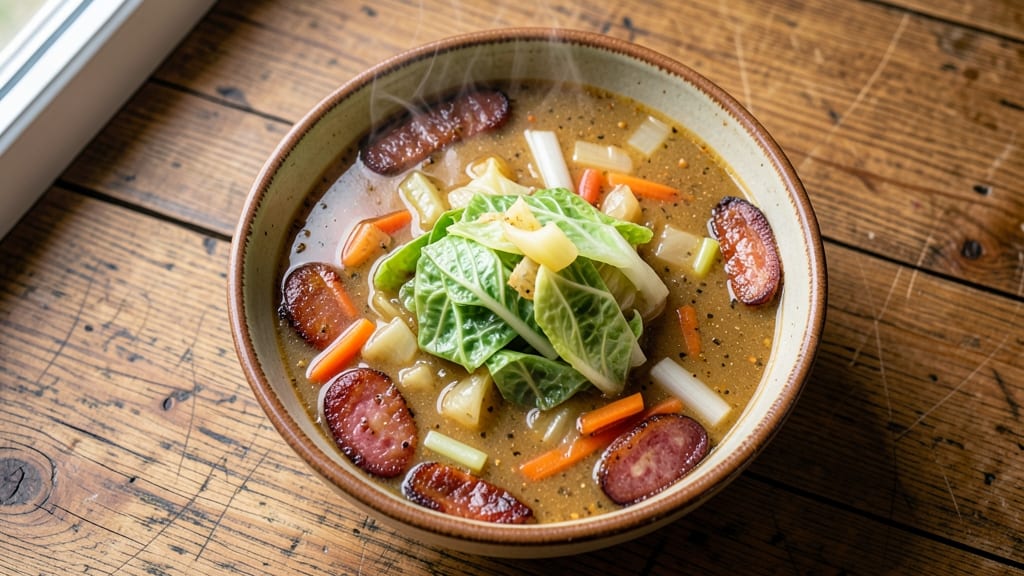
This Austrian cabbage soup recipe brings hearty Alpine comfort to your table with its rich blend of tender sausage, cabbage, and root vegetables simmered to perfection. The secret lies in slow braising—layering flavors through onions, carrots, and celery before adding cabbage and smoked sausage for depth. What makes this dish special is its balance: the cabbage softens just enough to absorb the savory broth, while the sausage adds smoky richness without overpowering.
The traditional method calls for a long simmer, allowing the vegetables to meld into a harmonious broth that's both nourishing and deeply satisfying. You'll start with a base of onions, carrots, and celery cooked until golden, then add cabbage and sausage to let the flavors develop over 45 minutes.
The result is a soup that's rustic yet refined, perfect for chilly days or family gatherings. This recipe stays true to Austrian roots while being adaptable—swap the sausage for mushrooms or lentils for a vegetarian version.
By the time you serve it, you'll have a steaming bowl of soup with tender cabbage, flavorful sausage, and a broth so rich it feels like a hug in a bowl. The aroma alone—smoky, earthy, and slightly sweet—will have everyone at the table anticipating the first spoonful.
It's the kind of dish that feels like home cooking but tastes like a restaurant special. Let's get started on creating this Austrian classic.
This soup is versatile enough for weeknight dinners or holiday feasts, and it reheats beautifully, making it perfect for meal prep. The key to success is patience—letting the flavors develop slowly is what transforms simple ingredients into something extraordinary.
Whether you're following the traditional recipe or making it your own, the result will be a comforting bowl of soup that warms both body and soul.
Ingredients for austrian cabbage soup
Root vegetables, cabbage, and smoked sausage create this Austrian classic's hearty foundation.
| Ingredient | Amount | Notes |
|---|---|---|
| Smoked Sausage 🌭 | 1 ½ lb | Kielbasa or similar smoked variety |
| Green Cabbage 🥬 | 1 large | Heads weigh ~2-3 lbs each |
| Yellow Onion 🧅 | 2 large | Yellow or red preferred |
| Carrots 🥕 | 4 medium | Whole, peeled and sliced |
| Celery Stalks 🌿 | 4 whole | Trimmed and chopped |
| Garlic Cloves 🧄 | 4 cloves | Freshly minced |
| Potatoes 🥔 | 2 medium | Russet or Yukon gold |
| Tomato Paste 🍅 | 2 tbsp | Smooth, no sugar added |
| Bay Leaves 🌿 | 2 whole | Fresh preferred |
| Black Peppercorns 🌶️ | 1 tsp | Freshly cracked |
| Salt 🧂 | 2 tsp | Kosher or sea salt |
| Vegetable Broth 💧 | 6 cups | Low-sodium preferred |
| Apple Cider Vinegar 🍎 | 1 tbsp | For brightness |
| Parsley 🌿 | ¼ cup | Fresh, chopped for garnish |
The sausage and cabbage are non-negotiable for authentic flavor. Look for kielbasa or similar smoked sausage at Whole Foods or your local butcher—they often carry European-style varieties. For cabbage, green heads are traditional, but purple or red cabbage adds visual interest. The root vegetables (carrots, celery, onions, potatoes) should be fresh but firm—no limp celery or soft spots. Trader Joe's often has pre-sliced carrots and celery for convenience, though whole is always better. Garlic cloves should be plump and free of sprouts, and potatoes should be starchy for that creamy texture in the soup.
No smoked sausage? Mushrooms or lentils work beautifully for a vegetarian version—just increase the broth by 1 cup. Swap yellow onions for red if you prefer milder flavor, but yellow adds that classic depth. The tomato paste can be omitted if you dislike tomatoes, but it's worth the 2 tablespoons for umami richness. For extra smokiness without sausage, add 1 teaspoon smoked paprika. The broth should be low-sodium to let the flavors shine, but you can always adjust seasoning at the end. Fresh herbs like parsley or dill brighten the dish—dried works at half the amount, but fresh is ideal.
This soup tastes even better the next day as flavors meld. Store in an airtight container in the fridge for up to 5 days, or freeze for 3 months. For meal prep, double the recipe—it reheats beautifully. The cabbage will soften further upon reheating, so start with slightly firmer cabbage if you're prepping ahead. Garnish with fresh parsley or a drizzle of apple cider vinegar before serving to cut through the richness. Leftovers make excellent lunches or quick dinners—just warm and enjoy.
Why You'll Love This Recipe
- One-Pot Magic: I swear by this recipe when I’m too tired to wash extra dishes—just slice, simmer, and let the smoked sausage and cabbage do all the work. The onions and celery soften into a fragrant base while the carrots hold their bite, and honestly? I’ve never met a soup this easy that still feels like a proper meal.
- Smoky Depth: That first bite of crisp-tender cabbage wrapped around juicy sausage? It’s the kind of flavor that lingers. The smoked sausage adds richness without overpowering, and the onions caramelize just enough to make every spoonful taste like it’s been simmering all day (even if it didn’t).
- Leftovers That Shine: Between us, this soup only gets better the next day. The flavors meld into something deeper, and it’s my go-to for lunches or quick dinners—just reheat and serve. I’ve even turned cold leftovers into a hearty stuffed cabbage roll the next night, and no one ever guesses it’s repurposed.
- Budget-Friendly Powerhouse: A whole head of cabbage, a bunch of carrots, and a pack of sausages stretch into four or five servings without breaking the bank. It’s the kind of meal that makes grocery day feel like a win, especially when you’re feeding a crowd or just trying to eat well on a tighter budget.
Step-by-step instructions for Austrian cabbage soup
A hearty soup with layers of smoky sausage and tender vegetables—this method delivers restaurant-quality depth.
Prep and Sear the Smoked Sausage
Slice the 1.5 lb smoked sausage into ½-inch thick rounds (about 12 pieces). Heat a large Dutch oven over medium-high heat and add the sausage slices. Cook undisturbed for 3-4 minutes per side until deeply browned and crispy in spots. This step builds the soup's rich, smoky foundation.
Remove the sausage with a slotted spoon and set aside. The rendered fat in the pot will later form the flavor base for your soup. If there's not enough fat (less than 2 tablespoons), add 1 tablespoon olive oil to ensure proper browning for the vegetables.
Sauté Vegetables for Depth of Flavor
In the same Dutch oven, add the 2 large yellow onion, 4 medium carrots (sliced into ¼-inch rounds), and 4 whole celery stalks (chopped into ½-inch pieces). Cook over medium heat for 6-8 minutes, stirring occasionally, until the vegetables soften slightly and develop a golden hue.
Add the 4 cloves garlic cloves (minced) and the 2 tbsp tomato paste, stirring constantly for 1 minute until fragrant. The tomato paste will deepen the soup's color and add a subtle umami richness. If the mixture sticks to the bottom, add 2 tablespoons vegetable broth to deglaze and scrape up all the browned bits.
Build the Soup Base
Return the seared sausage to the pot. Add the 2 medium potatoes (cut into 1-inch cubes), 1 large green cabbage (chopped into 1-inch wedges), 2 whole bay leaves, 1 tsp black peppercorns, and 2 tsp salt. Pour in the 6 cups vegetable broth and bring to a rolling boil over high heat. Once boiling, reduce heat to medium-low and let it simmer uncovered for 30 minutes.
During simmering, stir occasionally to prevent sticking. The potatoes should be tender when pierced with a fork, and the cabbage should soften but retain some structure. This simmering time ensures the flavors meld while keeping the vegetables intact for texture.
Finish and Balance the Flavor
After 30 minutes, stir in the 1 tbsp apple cider vinegar. This adds brightness to cut through the richness of the sausage and vegetables. Taste and adjust seasoning—add more salt if needed, but be mindful of the broth's saltiness. Simmer uncovered for another 10 minutes to let the vinegar integrate fully.
Remove the bay leaves and discard. Ladle the soup into bowls, garnishing each serving with ¼ cup parsley (chopped). The parsley adds freshness and a pop of color, balancing the hearty flavors. Serve immediately with crusty bread to soak up every savory bite.
Pro Tips For Making Austrian Cabbage Soup
- CRISP THE SAUSAGE FIRST: Slice that smoked sausage into half-moons before adding it to the pot—it renders fat faster and crisps up in minutes. I learned this the hard way: throwing in whole links means you’re left with soggy meat instead of flavor-packed bites that actually hold their shape.
- CHOP CABBAGE UNIFORM: Cut the green cabbage into 1-inch wedges, not shreds—this keeps the texture interesting and prevents mush. (Yes, it looks less "restaurant-pretty," but it tastes better.) If you’re lazy, a mandoline set to 1-inch works, but don’t skip the core—it’s the toughest part and needs extra time.
- SWEAT THE AROMATICS LOW: Cook the onions, carrots, and celery in a dry pot for 5 minutes before adding liquid—this caramelizes the edges and builds depth. After burning three batches, I finally figured out: low heat is your friend here. Add a splash of water if it sticks, but don’t rush it.
- SALT THE WATER WELL: Use 1 tablespoon of salt per 4 cups of water—this seasoning penetrates the veggies and balances the smoky sausage. I was skeptical until I tried it: bland soup is the fastest way to ruin a good recipe, and this guarantees it won’t happen. (Your future self will notice.)
Common mistakes when making perfect results
Overcooking Cabbage
Cabbage is delicate—once it turns mushy, there's no bringing it back. I've learned the hard way that simmering for longer than 45 minutes total will turn your soup into a sad, watery mess. The goal is tender but still slightly crisp texture.
If your cabbage is still firm after 30 minutes, reduce heat to low and cover the pot to trap steam. This keeps it from breaking down too quickly. 🥬
Skipping the Sear
That first step of searing the sausage isn't just about flavor—it's about building depth. If you skip browning or only cook the sausage lightly, your soup will taste flat and one-dimensional. The Maillard reaction creates those rich, caramelized notes that make this soup special.
I recommend using a cast iron Dutch oven for even better browning. Don't rush this step—patience here makes all the difference. 🔥
Using Low-Quality Broth
Store-bought broth can make or break your soup. If you're using low-sodium broth, that's great—but if it's also low-quality, your soup will taste bland. I prefer Imagine or Pacific Foods low-sodium broths for their clean, vegetable-forward flavor.
For extra depth, consider making your own broth from vegetable scraps. Even a small upgrade here transforms your soup from good to exceptional. The broth should taste like something worth drinking on its own. 💧
Ignoring the Vinegar
The apple cider vinegar might seem like an afterthought, but it's what balances all the rich flavors. Without it, your soup can taste heavy and one-note. Add the 1 tablespoon during the final 10 minutes of cooking so it has time to mellow out.
If you dislike vinegar's sharpness, try a splash of lemon juice instead—it adds brightness without the same tang. Trust me, this small addition makes a big difference. 🍎
Not Adjusting Seasoning
Taste as you go! Many home cooks forget to check seasoning until the very end, only to realize their soup needs more salt. I recommend tasting after 30 minutes of simmering and again after adding vinegar. The sausage and broth can vary in saltiness, so adjust gradually.
Remember, you can always add more salt, but you can't take it out. A pinch of smoked paprika or fresh thyme can also elevate flavors if needed. 🧂
Rushing the Simmer
This soup needs time to develop its complex flavors. If you rush the simmering process, the vegetables will release too much starch too quickly, making the broth cloudy and the soup gluey.
After the initial 30 minutes, let it simmer uncovered for another 10 minutes—this allows excess moisture to evaporate, concentrating the flavors. Patience here ensures a rich, satisfying bowl of soup rather than a watery one. ⏳
Nutrition facts
Frequently asked questions
Can I make this soup without smoked sausage?
For a vegetarian version, swap the sausage with 1 cup mushrooms (sliced) or 1 cup cooked lentils. Increase the vegetable broth by 1 cup to maintain consistency. The mushrooms add earthy depth, while lentils provide protein and heartiness. Both work beautifully with the cabbage and root vegetables.
How do I store and reheat leftovers?
Store in an airtight container in the fridge for up to 5 days or freeze for 3 months. Reheat gently on the stove over medium-low heat, stirring occasionally, until steaming hot. Avoid microwaving—it can make the cabbage mushy. Add a splash of broth or water if the soup seems too thick after reheating.
What's the best way to prep the cabbage?
Remove the outer wilted leaves, then cut the cabbage into 1-inch wedges (keep the core intact). This ensures even cooking and prevents the center from staying tough. For faster prep, quarter the cabbage first, then slice each quarter into wedges. The key is to keep pieces uniform so they cook at the same rate—no one wants a mushy wedge next to an undercooked one!
Can I make this soup in a slow cooker?
Yes! Follow the same steps for searing the sausage and sautéing the vegetables, then transfer everything to a 6-quart slow cooker. Add the broth and simmer on low for 6-7 hours or high for 3-4 hours. The slow cooker's gentle heat will make the flavors even more melded. Just check the cabbage after 4 hours—it should be tender but not falling apart.
Why does my soup taste too salty?
Broth and sausage can sometimes overpower the flavor. If it's too salty, add 1-2 potatoes (peeled and cubed) or ½ cup cooked rice to dilute the saltiness. Alternatively, stir in ½ cup milk or cream to balance the flavors. For future batches, use low-sodium broth and taste as you go—seasoning builds up over time!