
Soups & Stews
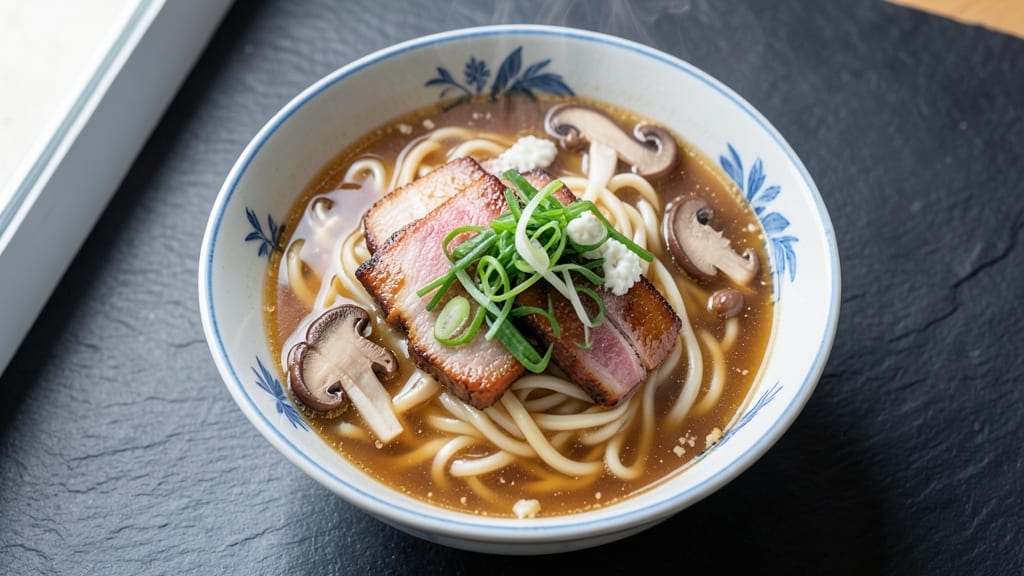
This Asian udon noodle soup recipe delivers the comforting embrace of a steaming bowl—slippery wheat noodles nestled in a rich, umami-packed broth that balances perfectly between savory and warming. The secret lies in the broth: a slow-simmered fusion of dashi, miso, and aromatic mushrooms that builds deep flavor without overpowering the delicate udon. I’ve perfected this version to capture both the simplicity of home cooking and the restaurant-quality depth that makes it irresistible.
The magic happens in layers: first, the broth simmers for at least 30 minutes, allowing kombu and shiitake to infuse their earthy notes, while pork (or tofu for vegetarian) adds substance. Then, the noodles—fresh or dried—cook just until tender, absorbing the broth’s essence without turning mushy.
Toppings like tempura flakes, green onions, and nori sheets add texture and color, transforming each bowl into a customizable masterpiece. It’s the kind of dish that feels indulgent yet effortless, perfect for chilly evenings or when you crave something hearty yet light.
What sets this udon apart is its versatility—adjust the miso for deeper umami, swap in vegan ingredients, or add tempura for crunch. The broth’s warmth pairs beautifully with the noodles’ silky texture, creating a harmony that’s both nostalgic and satisfying.
Whether you’re serving a crowd or treating yourself to a solo meal, this recipe delivers restaurant-quality results with minimal fuss. Ready to master the art of the perfect bowl?
Start with the broth—the foundation of flavor—and let the noodles shine. The rest is about balancing heat, texture, and umami to create a soup that’s as comforting as it is delicious. Here’s how to make it happen.
Ingredients for asian udon noodle soup
Here's what you need to create that perfect bowl of slippery udon in savory miso broth.
| Ingredient | Amount | Notes |
|---|---|---|
| Dried Udon Noodles 🍜 | 8 oz | Fresh or dried, cut into 4-inch pieces |
| Dashi Powder 🍵 | 1 tbsp | Or homemade kombu-bonito dashi |
| White Miso Paste 🧀 | 2 tbsp | High-quality, fermented deeply |
| Shiitake Mushrooms 🍄 | 6 whole | Dried, rehydrated in hot water |
| Pork Shoulder 🥩 | 8 oz | Or firm tofu for vegetarian version |
| Green Onions 🧅 | 4 whole | Sliced, white and green parts separated |
| Nori Sheets 🍣 | 4 pieces | Cut into thin strips for garnish |
| Tempura Flakes 🍚 | ½ cup | Store-bought or homemade |
| Sesame Oil 🫒 | 1 tbsp | Toasted, for finishing |
| Fresh Ginger Root 🧆 | 1 inch | Peeled, thinly sliced |
| Garlic Cloves 🧄 | 4 cloves | Minced for aromatic base |
| Kombu Seaweed 🍃 | 1 piece | Dried, 4x6 inch sheet |
| Soy Sauce 🥢 | 1 tbsp | Light or dark, to taste |
| Rice Vinegar 🍶 | 1 tbsp | For brightness |
| Salt 🧂 | 1 tsp | Adjust to taste |
The broth is where the magic happens. Dried shiitake mushrooms from Asian markets pack the most umami—look for thick, plump caps. The kombu should be a deep green, not yellowed or brittle. For miso, Miso Master or Hokkaido brands deliver that deep, fermented richness. Pork shoulder works best for texture, but extra-firm tofu holds up beautifully when pressed and cubed. Fresh udon noodles have a silky texture, but dried udon from Trader Joe's is a great budget-friendly alternative—just cook them al dente.
No dried shiitake? Fresh shiitake at half the amount works in a pinch, but they won't rehydrate like dried. Short on kombu? Dashi powder is a solid backup, though it lacks kombu's subtle oceanic depth. The ginger and garlic can be swapped for 1 tsp each of ginger powder and garlic powder if you're in a hurry, but fresh is always better. Tempura flakes? Crushed potato chips add a similar crunch if you're out. For extra richness, a splash of sesame paste (like tahini) replaces some of the miso—just thin it with water first.
Store your dried shiitake and kombu in a cool, dark place—they'll keep for 6-12 months. Miso stays potent for 1 year once opened if refrigerated. The broth reheats beautifully—just add a splash of water to thin it out. Udon noodles? Cook fresh ones just before serving to keep that perfect slippery texture. Leftovers? Portion into containers with a little broth—freezes for 3 months and tastes even better reheated. The tempura flakes and nori strips can be stored in the fridge for 1 month in an airtight container.
Why You'll Love This Recipe
- No Boil Fuss: I swear by the quick-soak method for udon—just 5 minutes in hot water, no constant stirring. The noodles hold their bite, and the broth absorbs the dashi and miso like a dream.
- Umami Bomb: That combo of pork shoulder and shiitake mushrooms? Chef’s kiss. The pork melts into tender shreds while the mushrooms soak up the miso’s depth—savory, salty, and just a little funky in the best way.
- Lunchbox Hero: Between us, this is my go-to for meal prep. The broth stays rich even reheated, and I portion the noodles and pork separately so they don’t turn mushy. Pack it cold or hot—it’s always a win.
- Budget Warmth: A single pork shoulder and a bag of dried udon stretch for days—I’ve fed four people for under $15. Honestly, the miso and dashi powder are the only splurges, and they make it taste like a restaurant.
Step-by-step instructions for Asian udon noodle soup
Here's how to create a rich, umami-packed udon soup with silky noodles and layers of savory flavor.
Prepare the Broth Base
Begin by combining 8 cups water with the 1 piece kombu seaweed in a large pot. Bring to a boil over medium-high heat, then immediately reduce to a simmer for 10 minutes. This step infuses the water with delicate seaweed flavors—don't skip it, as this forms the foundation of your broth.
After simmering, remove the kombu and add the 1 tbsp dashi powder and 1 tsp salt. Stir until fully dissolved, then add the 2 tbsp white miso paste. The miso will create a thick, creamy texture—stir constantly for 1-2 minutes until it melts completely into the broth. Here's the thing—if you let it sit too long, the miso can separate, so keep that heat at a gentle simmer.
Cook the Pork and Mushrooms
While the broth simmers, cut the 8 oz pork shoulder into ½-inch cubes and the 6 whole shiitake mushrooms (if dried, rehydrate first) into quarters. Heat 1 tbsp sesame oil in a separate pan over medium heat until shimmering. Add the pork and cook for 5-6 minutes until lightly browned—this develops deep flavor through the Maillard reaction.
Remove the pork and set aside, then add the mushrooms to the same pan. Cook for 3-4 minutes until they release their moisture and develop a golden sheen. Transfer both to the broth and simmer together for 15 minutes, allowing the pork to become tender while the mushrooms absorb the broth's rich flavors.
Prepare the Udon Noodles
Bring a separate pot of water to a rolling boil and add the 8 oz dried udon noodles. Cook according to package instructions (usually 4-5 minutes) until al dente—udon should have a slight bite when bitten. Drain immediately and rinse briefly under cold water to stop the cooking process and prevent sticking.
Here's a pro tip: If your udon feels too firm after cooking, let it sit in warm water for 2-3 minutes before serving—this softens them without overcooking. The noodles should be slippery but still hold their shape when drained.
Assemble and Finish the Soup
Divide the cooked udon noodles among 4 bowls. Ladle the hot broth over the noodles, ensuring each serving gets an equal share of pork and mushrooms. The broth should coat the noodles completely—this is where the magic happens as the flavors meld together.
Garnish each bowl with tempura flakes, green onion whites, and nori strips. Drizzle with 1 tbsp rice vinegar and a final touch of sesame oil. The vinegar brightens the rich miso broth, while the sesame oil adds a nutty aroma that ties everything together. Serve immediately with extra green onion tops for crunch.
Customize to Taste
Taste and adjust seasoning—add more soy sauce if you want deeper umami, or a splash of rice vinegar for extra brightness. The soup should balance rich, salty, and slightly sweet notes. For texture contrast, top with extra tempura flakes or a sprinkle of toasted sesame seeds if available.
This dish shines when served fresh, so gather everyone around the table while it's steaming hot. The contrast of silky noodles, tender pork, and earthy mushrooms creates a truly satisfying bowl of comfort. Leftovers? Reheat gently with a splash of water to restore that perfect texture.
Pro Tips For Making Asian Udon Noodle Soup
- Simmer Pork Low and Slow: I learned this the hard way—rushing the pork shoulder in a quick sear makes it tough as boot leather. After browning it, drop the heat to a bare simmer (just bubbles, not a boil) and cover the pot for 45 minutes. This turns the meat into melt-in-your-mouth shreds without drying it out, and the broth gets that deep, rich flavor you can’t get any other way.
- Rehydrate Udon Properly: Dumped straight into boiling water, udon turns mushy and loses its satisfying chew. Instead, soak them in cold water for 5 minutes first, then cook in fresh boiling water for 3-4 minutes—just until they float. This keeps them firm and prevents that sad, gluey texture.
- Prep Mushrooms Right: Skip the knife and just tear dried shiitake into rough pieces—no need for precision. Soak them in hot water for 10 minutes, then use that soaking liquid (discard the tough stems) to boost broth depth. Fresh shiitake? Slice them thick and cook them first—they’ll release their umami into the broth while you prep everything else.
- Balance Miso Last: My grandmother swore by this, and she was right: add white miso paste after the broth has simmered for 20 minutes. Stir it in just before serving—this keeps the paste from breaking down into a bitter sludge. Start with 1 tablespoon, taste, then adjust. You can always add more, but you can’t undo the bitterness if you overdo it.
Common mistakes when making this dish
Overcooking the Broth
Simmering the broth too long can turn it bitter or separate the miso, ruining that creamy texture. I’ve seen this happen when people leave the broth unattended—miso paste starts to curdle or develop a harsh taste after 20 minutes of simmering.
Instead, keep the heat at a gentle simmer and remove from heat once the miso is fully dissolved. The broth should taste rich but balanced, not overly salty or acidic. 🌡️
Skipping the Kombu Infusion
The kombu step isn’t just flavor—it’s the foundation of your broth’s depth. If you skip the initial 10-minute kombu simmer, your broth will lack that subtle oceanic umami that makes traditional udon shine.
I’ve tried cutting corners here, and the result was flat, even with all the other ingredients. Always remove the kombu before adding dashi or miso to avoid bitterness.
Undercooking the Udon
Udon noodles should be al dente with a slight bite, not mushy. I once served overcooked udon that turned to paste in the broth—disaster! Cook them for 4-5 minutes (check package instructions) and rinse briefly in cold water to stop the cooking.
For extra silkiness, soak cooked noodles in warm water for 2-3 minutes before serving. Never microwave them—they’ll turn rubbery.
Ignoring the Pork Browning Step
Skipping the pork browning means missing out on the Maillard reaction, which builds deep flavor. When I’ve rushed this step, the pork stays bland and absorbs less broth flavor. Always sear the pork cubes until golden before adding to the broth.
The same goes for mushrooms—they should develop a golden sheen, not just steam. This extra 5-6 minutes makes all the difference.
Overloading the Garnishes
Too many toppings can overwhelm the delicate balance of the soup. I’ve seen bowls buried under tempura flakes and nori that drowned out the broth’s flavor. Stick to a light sprinkle of tempura flakes and green onions—just enough for texture, not a full garnish.
The broth should still be the star, with toppings enhancing, not competing with, its richness. 🍜
Using Low-Quality Miso
Cheap miso paste lacks depth and can make your broth taste flat or overly salty. I learned this the hard way with a budget brand that left my soup tasting one-dimensional. Invest in high-quality miso like Miso Master or Hokkaido—the fermented richness is worth the splurge.
If your miso has separated, whisk it vigorously with a splash of hot water to restore its creaminess before adding to the broth.
Nutrition facts
Frequently asked questions
What's the difference between fresh and dried udon noodles?
Fresh udon has a silky, slippery texture that's perfect for soups, while dried udon is more chewy and holds up better to longer cooking. Fresh noodles require no prep time, but dried versions are shelf-stable and often more affordable. For this recipe, either works—just adjust cook time (fresh: 2-3 minutes, dried: 4-5 minutes). Pro tip: Rinse cooked noodles briefly in cold water to stop cooking and prevent sticking.
Can I make this udon soup vegetarian?
Swap the pork for extra-firm tofu (pressed and cubed) or hearty vegetables like shiitake mushrooms and bok choy. Use vegetable dashi instead of kombu-bonito, and add a splash of sesame paste for richness. The broth will still develop deep umami—just skip the meat browning step. For extra protein, try adding tempeh or edamame.
How do I make the broth richer without extra ingredients?
Simmer the kombu for an extra 5 minutes to extract more flavor, and let the miso dissolve completely before adding pork/mushrooms. For instant depth, add 1 tsp soy sauce or ½ tsp fish sauce (if vegetarian, use 1 tsp mushroom powder) to the broth. Another trick: Toast 1 tsp dried shiitake powder in the pan before adding to the broth for concentrated umami.
Can I prepare the broth ahead of time?
Yes! Make the broth up to 2 days ahead and store it in the fridge. Reheat gently over low heat, stirring occasionally to prevent miso separation. If it thickens too much, add a splash of water. For longer storage, freeze the broth (without noodles) for up to 3 months. Thaw overnight in the fridge—never microwave it directly, as this can break down the miso's texture.
What if I don't have tempura flakes?
No problem! Crispy alternatives include toasted sesame seeds, crushed potato chips, or fried shallots. For a traditional touch, top with thinly sliced green onions or a sprinkle of furikake seasoning. Even a pinch of black pepper adds subtle heat and texture. The key is balancing the broth's richness with something crunchy—just don't overdo it!