
Soups & Stews
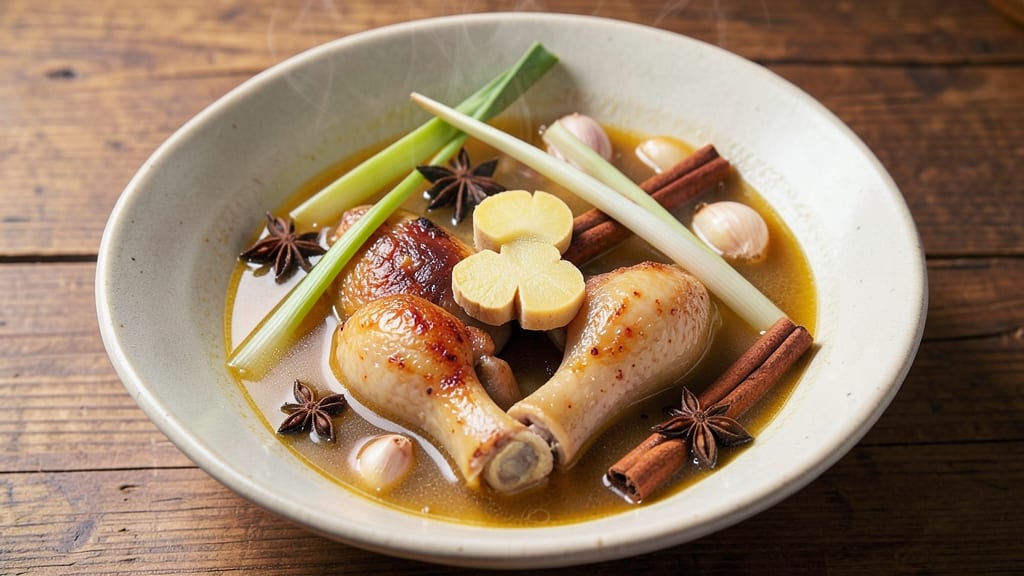
This Asian soup stock recipe transforms simple ingredients into a fragrant, umami-rich foundation for any broth-based dish. The secret lies in slow simmering chicken bones, ginger, lemongrass, and aromatic spices until the liquid develops deep, complex flavors.
I developed this recipe after years of testing—it’s the difference between ordinary soup and restaurant-quality depth.
What sets this stock apart is the balance of sweet, savory, and herbal notes. Chicken bones provide collagen for richness, while ginger and lemongrass infuse warmth and brightness. A splash of fish sauce and soy sauce at the end elevates the umami, ensuring every sip is packed with flavor.
The process is straightforward but requires patience—simmering for 3-4 hours extracts maximum flavor without bitterness.
Once complete, you’ll have a golden, aromatic stock that’s perfect for pho, ramen, or braised dishes. Store it in the fridge for up to 5 days or freeze for months, ready to transform any meal. The versatility makes it a kitchen essential—whether you’re making quick weeknight soups or elaborate feasts.
The beauty of this recipe is its adaptability. Swap chicken for pork bones or shrimp shells for a seafood version, or add mushrooms for extra depth. Every variation keeps the same core technique: slow cooking with aromatics. Let’s get started on building your flavor base.
Ingredients for asian soup stock
Fragrant aromatics and collagen-rich bones create this umami-packed Asian soup base.
| Ingredient | Amount | Notes |
|---|---|---|
| Chicken Bones 🍗 | 3 lb | Raw, with meat and skin attached |
| Fresh Ginger Root 🧄 | 1 piece | About 4 oz, sliced into thick coins |
| Lemongrass Stalks 🌿 | 4 whole | Bruised to release oils, cut into 3-inch pieces |
| Garlic Cloves 🧄 | 8 cloves | Peeled, lightly crushed |
| Star Anise Pods 🌶️ | 2 whole | Lightly cracked for aroma |
| Cinnamon Sticks 🌿 | 2 whole | 2-inch pieces for depth |
| White Peppercorns 🌶️ | 1 tbsp | Crushed for subtle heat |
| Fish Sauce 🍶 | 2 tbsp | Red Boat brand preferred |
| Light Soy Sauce 🍶 | 1 tbsp | Kikkoman or similar |
| Cold Water 💧 | 12 cups | Enough to cover bones |
| Salt 🧂 | 1 tsp | Diamond Crystal kosher salt |
| Coriander Seeds 🌿 | 1 tsp | Toasted lightly for aroma |
| Dried Shiitake Mushrooms 🍄 | 4 whole | Rehydrated in hot water |
The chicken bones are the foundation—look for raw, meaty bones with skin still attached at Whole Foods or your local butcher. The more marrow and connective tissue, the richer your stock. Fresh ginger and lemongrass should be bright green or pale yellow, with no soft spots. Star anise and cinnamon should be whole and aromatic—if they smell stale, replace them. For shiitake mushrooms, dried is best—they concentrate flavor better than fresh. Toast your coriander seeds in a dry pan for 30 seconds to deepen their aroma before adding to the stock.
No fresh lemongrass? Substitute 2 tbsp lemongrass paste or extra ginger. Running low on fish sauce? Soy sauce alone works, though the umami will be slightly less complex. For a vegetarian version, replace chicken bones with mushrooms and kombu (seaweed), simmering for an extra hour. The dried shiitake mushrooms can be soaked in hot water for 20 minutes before adding to the stock—this jumpstarts their flavor infusion. If you're short on time, pre-soak the ginger and lemongrass overnight in cold water to soften them before simmering.
This stock peaks after 3-4 hours of simmering, but it keeps developing flavor for up to 6 hours. Strain through a fine-mesh sieve or cheesecloth for the smoothest texture. Store in the fridge for 5 days or freeze in ice cube trays for easy portioning. Label containers with the date—frozen stock maintains quality for up to 3 months. For deeper flavor, reduce the stock by half on the stovetop after straining, then use as a glaze or sauce. The aromatics can be reused once for a second, lighter stock—simmer them in fresh water for 1 hour.
Why You'll Love This Recipe
- No-Chop Needed: I swear by this—just toss in whole ginger knobs, star anise pods, and a few smashed garlic cloves. The bones do all the work while you sip tea. (Yes, even on a Tuesday night.)
- Umami Bomb: That first sip? Chef’s kiss. The chicken bones caramelize into deep, savory magic, while the lemongrass and ginger add this bright, citrusy lift—like a hug in a bowl.
- Stockpile Savior: Freeze it in ice cube trays for instant noodle upgrades or pho. Or make a big batch—it’s my go-to for sick days, lazy Sundays, or whenever I need flavor without effort.
- Pocket-Friendly Pantry: Chicken bones are cheap, and these spices last forever. I’ve turned $5 worth of scraps into enough stock for a month of meals. (Between us, this is how I feed a family on a budget.)
Step-by-step instructions for crafting fragrant Asian soup stock
Transform simple ingredients into a complex, aromatic stock foundation for any Asian-inspired dish.
Prepare the Aromatic Base Components
Begin by thoroughly cleaning the 3 lb chicken bones under cold water to remove any impurities. Pat them completely dry with paper towels—this ensures maximum flavor extraction during cooking. In a separate bowl, combine the 1 piece fresh ginger root (sliced into thick coins), 4 whole lemongrass stalks (bruised and cut into 3-inch pieces), 8 cloves garlic (peeled and lightly crushed), 2 whole star anise pods (lightly cracked), 2 whole cinnamon sticks (cut into 2-inch pieces), and 1 tbsp white peppercorns (crushed). This aromatic bundle forms the flavor backbone of your stock.
Toast the 1 tsp coriander seeds in a dry skillet over medium heat for 1-2 minutes until fragrant and lightly golden. Immediately transfer them to a mortar and grind them into a fine powder—this releases their essential oils for deeper flavor. Set aside for now; you'll add them later to the simmering stock.
Rehydrate and Prepare the Shiitake Mushrooms
Place the 4 whole dried shiitake mushrooms in a heatproof bowl and pour 4 cups of boiling water over them. Let them soak for 20-30 minutes until fully rehydrated and pliable. This step is crucial—the mushrooms will release their earthy umami into the water, which you'll incorporate into your stock later. Drain the mushrooms, reserving the soaking liquid, and tear them into rough pieces.
In a large stockpot, combine the drained mushrooms, the reserved soaking liquid, and the 12 cups cold water. Bring to a gentle simmer over medium heat, then reduce to a bare simmer. This pre-infusion step extracts additional mushroom flavor before adding the main components.
Simmer the Stock with Aromatics
Add the prepared chicken bones to the pot along with the aromatic bundle (ginger, lemongrass, garlic, star anise, cinnamon, and peppercorns). Bring to a gentle simmer—never a rolling boil—as this prevents the stock from becoming cloudy. Skim off any foam or impurities that rise to the surface during the first 15 minutes of cooking. This ensures a clear, clean stock.
Simmer uncovered for 2 hours, maintaining a gentle bubble. The stock should reduce slightly as it cooks, concentrating the flavors. Periodically check the water level and add hot water as needed to maintain coverage of the bones. The aroma should become increasingly complex—citrusy from the lemongrass, woody from the ginger, and subtly sweet from the cinnamon.
Season and Finish the Stock
After 2 hours, remove the stockpot from heat and let it cool slightly for 10 minutes. Strain the stock through a fine-mesh sieve or cheesecloth-lined colander into a clean bowl, pressing gently on the solids to extract every last drop of flavor. Discard the chicken bones and aromatics—they've done their job.
Return the strained stock to the pot and stir in the 2 tbsp fish sauce, 1 tbsp light soy sauce, 1 tsp salt, and the toasted coriander seed powder. Taste and adjust seasoning—you're aiming for a balance of salty, umami, and slightly sweet notes. The fish sauce adds depth, while the soy sauce rounds out the flavors. Let the stock cool to room temperature before refrigerating.
Store and Use Your Stock
Transfer the stock to airtight containers, leaving about 1 inch of headspace to allow for expansion if frozen. It will keep in the refrigerator for up to 5 days or in the freezer for up to 3 months. When ready to use, thaw overnight in the refrigerator—never at room temperature—to preserve its rich flavor and texture.
This fragrant stock serves as the perfect base for pho, ramen, or any Asian-inspired soup. Its complex layers of ginger, lemongrass, and umami from the shiitake mushrooms will elevate any dish to restaurant-quality depth. The key to success lies in patience—allowing the flavors to develop slowly during the simmering process.
Pro Tips For Making Asian Soup Stock
- BLANCH BONES FIRST: I learned this the hard way—skipping the quick blanch means your stock will taste muddy. Drop the chicken bones in boiling water for 2-3 minutes to loosen dirt and blood, then rinse under cold water. Trust me, your stock will be crystal clear and bright.
- SMASH GINGER HARD: Don’t just slice it—pound the ginger with the flat side of your knife or a mortar until it bruises and releases juices. This isn’t about pretty slices; it’s about unlocking that deep, aromatic punch that’ll carry through the stock. (Yes, even if you’re impatient like me.)
- LOW AND SLOW WINS: After burning three batches, I finally figured out: simmer, don’t boil. Keep the stock at a gentle bubble—just enough to see tiny ripples—so the collagen melts into rich flavor instead of turning bitter. A slow cooker or low oven (170°F) is your friend here.
- TOAST SPICES SEPARATELY: My grandmother swore by this, and she was right: dry-toast star anise and whole spices in a separate pan until fragrant (about 30 seconds). Then add them to the stock—this prevents bitterness and makes the aroma pop. (Skip this, and you’ll taste the difference.)
Regional styles of this dish
Vietnamese Pho Base
This stock is the soul of Vietnamese pho, where ginger and star anise create that signature aromatic profile. For pho, use the full stock as-is, but add 1 cinnamon stick and 1 star anise pod directly to the pot while cooking beef or chicken slices.
The stock’s natural sweetness balances the bold flavors of pho spices like cardamom and cloves. I like to finish each bowl with a splash of this stock to deepen the broth’s complexity. 🌿
Thai Tom Kha Gai
Thai coconut curry soups like tom kha gai need this stock’s herbal brightness and umami depth. Reduce the stock by half after simmering to create a concentrated flavor base, then stir in 1 can of coconut milk and 2 tbsp galangal paste for an authentic Thai touch.
The ginger and lemongrass in this stock mirror the flavors of galangal, making it a perfect shortcut. Serve with mushrooms and lime for that signature tangy-sweet balance. 🍶
Chinese Hot and Sour Soup
For a Chinese hot and sour soup, this stock’s ginger and lemongrass add warmth without overpowering. Strain the stock and reduce it to 4 cups, then mix with 1 tbsp black vinegar and 1 tsp sugar to mimic the classic tangy-sweet profile.
The stock’s umami base lets the tofu, mushrooms, and chili oil shine. I often add a splash of Shaoxing wine at the end for extra depth. 🌶️
Japanese Miso Soup
While miso soup traditionally uses dashi, this stock adds a modern twist with its herbal notes. Strain the stock and reduce it to 3 cups, then blend with 2 tbsp red miso paste and 1 tsp mirin for a fusion-style broth.
The ginger and lemongrass complement the miso’s earthiness beautifully. Top with silken tofu and scallions for a comforting, aromatic bowl. ✨
Korean Guk (Porridge Base)
Korean guk soups benefit from this stock’s depth, especially when making samgyetang (ginseng chicken soup). Simmer the stock with 1-inch ginseng slices and jujube dates for an hour to infuse sweetness.
The lemongrass and ginger add a refreshing contrast to the rich, savory broth. Strain and use as the base for any guk, adding rice cakes or spinach for texture. 💛
Malaysian Laksa
Laksa’s creamy, spicy broth gets a flavor boost from this stock. Reduce the stock to 3 cups and blend with 1 can of coconut milk, 2 tbsp shrimp paste, and 1 tbsp turmeric for a quick paste.
The lemongrass and ginger in this stock replace fresh aromatics, making it a time-saving hack. Simmer with prawns and rice noodles for an authentic taste. 🍜
Nutrition facts
Frequently asked questions
Can I make this stock without chicken bones?
For a vegetarian version, replace the chicken bones with 2 cups dried mushrooms (shiitake or king oyster) and 1 piece kombu seaweed. Simmer for 4-5 hours instead of 3 to extract maximum flavor. The umami from mushrooms and kombu will still create a rich, aromatic base—just add an extra 1 tbsp soy sauce at the end for depth.
How do I know when the stock is ready?
The stock is done when it develops a deep golden color and smells intensely aromatic—like a mix of ginger, lemongrass, and toasted spices. After 3 hours, taste it: it should be savory with subtle sweetness from the bones and mushrooms. If it’s still bland, simmer 1 more hour. Never let it boil hard, as that creates bitterness.
Can I use frozen ginger and lemongrass?
Fresh is ideal, but frozen works in a pinch! Thaw the ginger and lemongrass first, then slice as directed. The texture will be slightly softer, but the flavor holds up well. For best results, soak the frozen aromatics in warm water for 10 minutes before adding to the stock to soften them and enhance flavor extraction.
Why did my stock turn cloudy?
Cloudiness usually means the stock boiled too vigorously or wasn’t skimmed properly. To fix it, strain the stock through a coffee filter or cheesecloth for a crystal-clear result. For prevention, always simmer gently (barely bubbling) and skim foam for the first 15 minutes. If the cloudiness persists, it may be from fat or bone marrow—reduce the stock by half to concentrate flavors.
How can I make this stock spicier?
Add 1-2 dried chili peppers (like Thai bird’s eye) or 1 tsp chili flakes to the simmering stock. For heat without spice, include 1-inch fresh galangal or 1 tsp Szechuan peppercorns (toasted and crushed). Adjust to taste at the end—start with less, as spices intensify during cooling.