
Soups & Stews
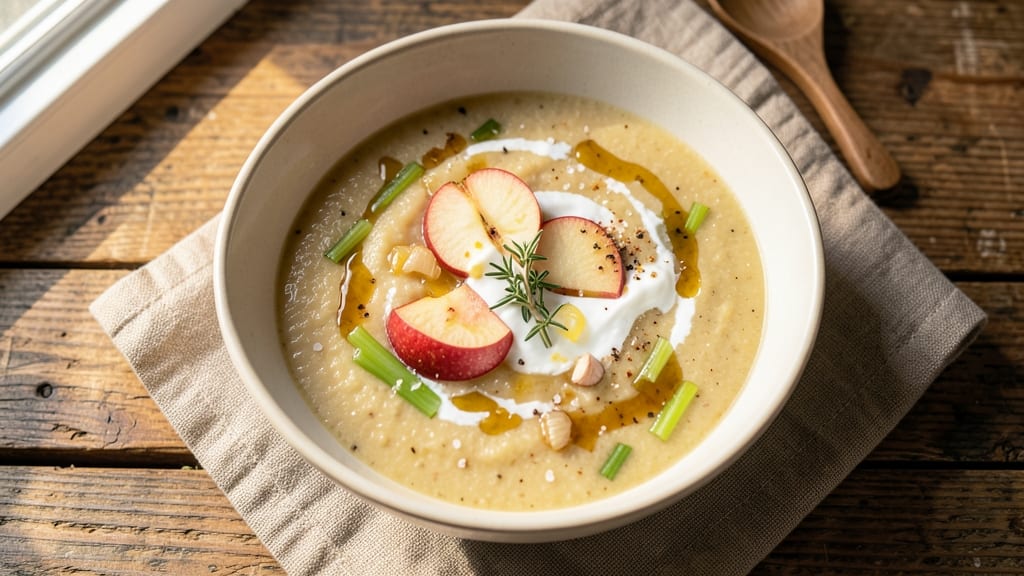
This apple rutabaga soup recipe transforms humble root vegetables and crisp apples into a velvety, spiced comfort dish that tastes like autumn in a bowl. 🍂 The secret lies in slow-simmering rutabaga and apples until tender, then blending them into a smooth, aromatic broth infused with cinnamon and nutmeg—no heavy cream needed for richness.
I developed this version after discovering how rutabaga’s natural sweetness pairs perfectly with apples when caramelized gently on the stovetop.
The beauty of this recipe is its versatility—it works equally well as a light vegetarian main or a hearty side for roasted meats.
A 30–45 minute simmer on the stovetop yields a soup with just the right balance of earthy rutabaga and sweet apple, while optional garnishes like toasted pumpkin seeds or a swirl of cream (or coconut milk for vegan) add texture.
The cinnamon warmth lingers long after the last spoonful, making it ideal for chilly evenings or holiday gatherings.
What sets this apart is the technique: peeling and dicing rutabaga into even chunks ensures even cooking, while apples add natural sweetness that brightens the earthy flavors. The broth reduces beautifully, concentrating the spices without overpowering the vegetables.
For a shortcut, an Instant Pot cuts prep time by half, but the stovetop method delivers deeper flavor development.
Perfect for meal prep or last-minute comfort food, this soup keeps well in the fridge for up to 5 days and tastes even better reheated. Serve with crusty bread or a sprinkle of fresh thyme for a restaurant-quality finish. Let’s get cooking!
Ingredients for apple rutabaga soup
Transform humble roots and apples into velvety cinnamon-spiced comfort with these 14 ingredients.
| Ingredient | Amount | Notes |
|---|---|---|
| Rutabaga 🥕 | 1 ½ lb | Peeled, diced into even chunks |
| Apples 🍎 | 2 medium | Peeled, cored, diced (Honeycrisp or Fuji) |
| Yellow Onion 🧅 | 1 whole | Chopped, medium dice |
| Celery Stalks 🧅 | 3 whole | Trimmed, diced (about 1 cup) |
| Garlic Cloves 🧄 | 3 cloves | Peeled, minced |
| Vegetable Broth 💧 | 4 cups | Low-sodium preferred |
| Extra-Virgin Olive Oil 🫒 | 2 tbsp | For sautéing |
| Ground Cinnamon 🌶️ | 1 tsp | Freshly ground preferred |
| Ground Nutmeg 🌶️ | ¼ tsp | Freshly grated if possible |
| Salt 🧂 | ½ tsp | Kosher or sea salt |
| Black Pepper 🌶️ | ¼ tsp | Freshly ground |
| Fresh Thyme Leaves 🌿 | 1 tbsp | Or 1 tsp dried thyme |
| Heavy Cream (or Coconut Milk) 🥛 | ¼ cup | Optional, for richness (omit for vegan) |
| Apple Cider Vinegar 🍎 | 1 tbsp | Balances sweetness |
Rutabaga is the star here—look for firm, unblemished tubers at the grocery store's produce section. Whole Foods or local farmers' markets often carry the freshest, but regular supermarkets work too. The apples should be crisp and sweet—Honeycrisp or Fuji are ideal, but whatever's in season will do. Peel and dice them evenly so they cook through without turning mushy. For the broth, low-sodium options like Pacific Foods keep the flavors balanced without added salt. Fresh thyme makes a difference, but dried works in a pinch if you're short on time.
No rutabaga? Substitute equal parts peeled, diced sweet potato—it adds natural sweetness too. Short on apples? Pear or butternut squash work beautifully. The apple cider vinegar can be swapped for lemon juice if that's what you've got. For extra depth, toast your cinnamon and nutmeg in a dry pan for 30 seconds before adding to the soup—this releases their aromatic oils and intensifies the flavor. If you're making this vegan, skip the heavy cream and use full-fat coconut milk instead.
This soup tastes even better the next day as flavors meld. Store in an airtight container in the fridge for up to 5 days. For freezing, portion into single-serving containers—it reheats beautifully. To save time, prep all your veggies ahead and store them in the fridge until ready to cook. The spices keep well in a cool, dark cabinet for up to 6 months, so buy in bulk if you'll be making this often.
Why You'll Love This Recipe
- Here’s what sold me: the apples bring this soup to life. Their natural sweetness cuts through the earthy rutabaga, while garlic and thyme add that warm, cozy depth. It’s like autumn in a bowl—creamy but bright, never boring.
- One-Pot Magic: I swear by this recipe when I’m too tired to wash pots. Just toss chopped rutabaga, onions, celery, and apples into a pot with broth—no fancy prep, no stress. The rutabaga softens while the apples caramelize, and honestly? That’s half the battle won.
- Sweet-Savory Balance: Here’s what sold me: the apples bring this soup to life. Their natural sweetness cuts through the earthy rutabaga, while garlic and thyme add that warm, cozy depth. It’s like autumn in a bowl—creamy but bright, never boring.
- Weeknight to Potluck: Between us, this soup is my go-to for lazy dinners and holiday gatherings. Serve it with crusty bread for a simple meal, or ladle it into mugs for a crowd—it’s equally at home in a mug or a big pot. (Yes, even on a Tuesday night.)
Step-by-step instructions for apple rutabaga soup
Here's how to create a velvety, spiced soup where sweet apples and earthy rutabaga shine together.
🍳 Step 1: Sauté the Vegetable Base
Heat the 2 tablespoons extra-virgin olive oil in a large pot over medium heat. Add the chopped yellow onion, celery stalks, and minced garlic cloves, stirring occasionally for 5-6 minutes until the vegetables soften and become fragrant. You'll notice the garlic releases its aroma just before the onions turn translucent.
This step builds the flavor foundation. If the garlic starts to brown too quickly, reduce the heat slightly. The vegetables should be tender but not crisp—this ensures they blend smoothly later. Stir in the 1 tablespoon fresh thyme leaves and cook for another 30 seconds to infuse their earthy notes.
👨🍳 Step 2: Add Rutabaga and Apples
Increase heat to medium-high and add the 1.5 lb diced rutabaga and 2 medium diced apples. Stir to coat the vegetables in the aromatic oil mixture. Cook for 3-4 minutes, stirring occasionally, until the rutabaga begins to soften slightly at the edges but still holds its shape.
Here's the thing—rutabaga can be stubborn. If you see the edges caramelizing too quickly, reduce heat to medium to prevent burning. The goal is to develop flavor without cooking through completely. You'll see the rutabaga release its natural sweetness as it softens.
🥘 Step 3: Simmer with Broth and Spices
Pour in the 4 cups vegetable broth, scraping up any browned bits from the bottom of the pot. Add the 1 teaspoon ground cinnamon, 0.25 teaspoon ground nutmeg, 0.5 teaspoon salt, and 0.25 teaspoon black pepper. Bring to a boil, then reduce heat to low and let it simmer uncovered for 25-30 minutes, stirring occasionally.
Watch for the soup to develop a rich color and aroma. You'll know it's ready when the rutabaga and apples are fork-tender and the flavors meld beautifully. If the soup reduces too quickly, add a splash of water to maintain the proper consistency. The spices should be fragrant but not overpowering.
⏰ Step 4: Blend to Silky Perfection
Once the vegetables are tender, carefully transfer half the soup to a blender or immersion blender. Blend until completely smooth, then return to the pot. Repeat with the remaining soup. For a chunkier texture, leave some vegetables unblended. Stir in the 1 tablespoon apple cider vinegar and taste—this balances the sweetness beautifully.
I like to blend just until smooth because this creates a luxurious texture. If you prefer some texture, leave about ¼ of the vegetables unblended. The vinegar might seem like a small addition, but it cuts through the richness and enhances the apple's natural acidity. Taste and adjust seasoning if needed.
🍽️ Step 5: Finish and Serve Warm
Return the pot to low heat and stir in the 0.25 cup heavy cream (or coconut milk for a vegan option). Heat gently for 2-3 minutes until warmed through but not boiling—this prevents the cream from curdling. The soup should be velvety with a beautiful sheen from the cream.
Ladle the soup into bowls and garnish with a sprinkle of fresh thyme or a drizzle of olive oil. Serve immediately while warm. The spices should be warm and inviting, the apples sweet but not overpowering, and the rutabaga adding a satisfying earthiness. Each spoonful should deliver that perfect balance of sweet, spiced, and savory flavors.
Pro Tips For Making Apple Rutabaga Soup
- SWEAT THE ONIONS FIRST: Peel and dice that yellow onion, then cook it in butter or oil until it’s actually soft—no, not just translucent, but downright mushy at the edges. This step builds flavor before anything else even hits the pot, and skipping it means your soup will taste like it’s missing something.
- PEEL RUTABAGA AFTER COOKING: Rutabaga skins are tough to peel raw, so toss whole, peeled (or unpeeled) chunks into the pot first—peel them after cooking when they’re easier to handle. I learned this the hard way after spending 15 minutes scrubbing and peeling a stubborn rutabaga that still turned out lumpy.
- USE TART APPLES ONLY: Skip the sweet varieties like Gala or Fuji—you want Granny Smith or Braeburn for that sharp bite that cuts through the earthiness of rutabaga. Sweet apples turn this soup into dessert, and nobody wants that unless they’re actually making apple pie.
- BLEND IN BATCHES: If you’re using an immersion blender, work in two passes: first, blend until smooth, then simmer for 5 minutes to let flavors meld. If you’re transferring to a countertop blender, fill it halfway with hot soup first to avoid splattering—trust me, you don’t want hot soup on your ceiling fan.
Regional styles of this recipe
New England Tradition
In New England, this soup is a beloved autumn staple, often called "turnip-apple soup" due to rutabaga's traditional name. Locals sweeten it with maple syrup instead of apples—try 1 tbsp maple syrup for a regional twist.
The cold winters make this a comforting staple, especially when paired with crusty whole-grain bread from local bakeries like Bread & Salt. The cinnamon-nutmeg blend reflects Dutch colonial influences still cherished in the region. 🍁
Midwest Farmhouse Style
The Midwest embraces this soup as a hearty side for holiday meals, often thickened with mashed potatoes instead of blending. Use 1 cup mashed potatoes per batch for a rustic texture.
Add ½ cup diced bacon (optional) for a smoky depth that pairs perfectly with the apples' sweetness. Serve with cornbread muffins from local markets like Hy-Vee for a true farmhouse experience.
Pacific Northwest Adaptation
West Coast cooks lighten the soup by omitting cream and using coconut milk for richness. Substitute 1 cup pear slices for apples to complement local fruit availability. Add 1 tsp fresh ginger for a zesty twist that balances the rutabaga's earthiness.
Garnish with toasted hazelnuts for crunch—this version thrives in the region's mild autumns. 🌲
Southern Comfort Twist
Southern kitchens sweeten the soup with ½ cup apple cider instead of vinegar, and finish with hot sauce for a spicy kick. Add 1 smoked sausage link, sliced, for a smoky depth that's a regional favorite.
Serve with buttermilk biscuits from local bakeries like Sister Schubert's for dipping. The combination of sweet, spicy, and smoky makes this a crowd-pleaser.
German-Inspired Variation
German immigrants brought their love of root vegetables, so this soup often includes ½ cup diced parsnips alongside the rutabaga for extra sweetness. Add 1 bay leaf while simmering and remove before blending.
Finish with a sprinkle of fresh dill for brightness—a nod to traditional German soups. Serve with dark rye bread** for a hearty meal that feels like home. 🥖
Nutrition facts
Frequently asked questions
Can I make this soup without blending for a chunkier texture?
Skip the blending step entirely and let the rutabaga and apples soften until fork-tender during the 25-30 minute simmer. For extra heartiness, leave the vegetables slightly larger—about 1-inch cubes—so they hold their shape. This version works beautifully as a rustic side dish with crusty bread.
How do I adjust the sweetness if my apples aren't very sweet?
Add 1 tablespoon maple syrup or ½ teaspoon vanilla extract during the final simmer to enhance the apple flavor. For extra depth, try 1 teaspoon apple cider instead of vinegar—it adds natural sweetness while balancing the spices. Tart apples like Granny Smith work well too, as their acidity pairs perfectly with the cinnamon.
Can I use rutabaga greens in this soup?
Rutabaga greens are edible but have a strong, bitter flavor that doesn't complement this dish. If you have them, sauté them separately with garlic and olive oil for a side salad instead. The starchy tubers are the star here—their natural sweetness and texture are perfect for blending into a velvety soup.
What's the best way to reheat leftovers without making the soup watery?
Reheat gently on the stovetop over low heat with the lid slightly ajar, stirring occasionally. If it thickens too much, add 1-2 tablespoons broth or water per serving. For microwave reheating, use 30-second intervals on medium power, stirring between each. The cream will separate if heated too quickly, so always warm it gently.
Is this soup naturally gluten-free?
Yes! The recipe contains no gluten ingredients, but always verify your broth and spices for cross-contamination. For extra safety, use certified gluten-free vegetable broth. The rutabaga and apples are naturally gluten-free, and the optional cream can be substituted with coconut milk for a completely plant-based version.