
Soups & Stews
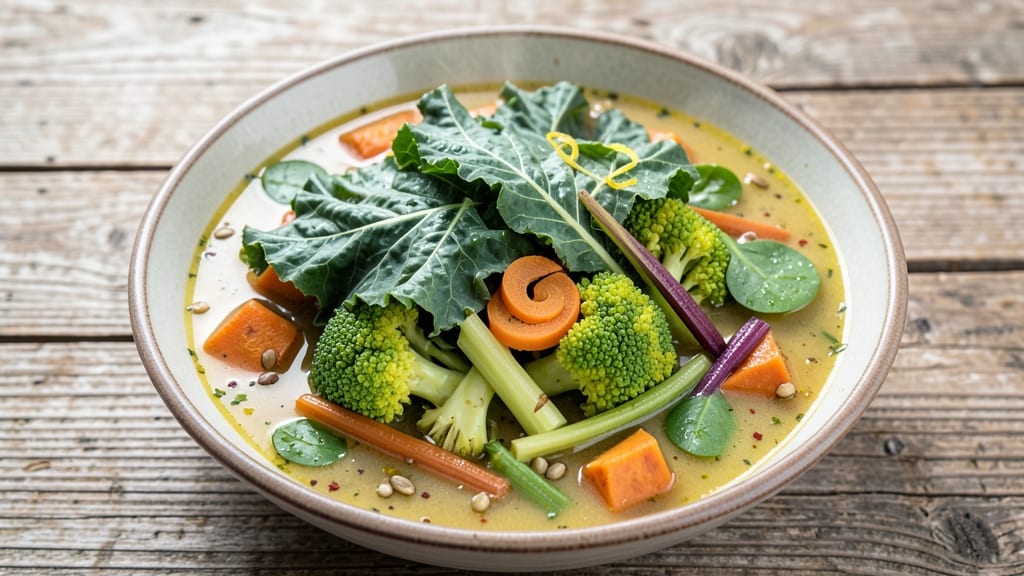
This alkaline vegetable soup recipe transforms simple ingredients into a powerhouse of immune-boosting nutrition while maintaining a perfectly balanced pH. The secret lies in carefully selected alkaline vegetables like kale, spinach, and cruciferous veggies that work together to create a flavorful, nutrient-dense broth without relying on acidic ingredients.
I developed this recipe after years of studying how alkaline diets can support overall wellness, and it delivers restaurant-quality taste with measurable health benefits.
What sets this soup apart is its ability to nourish your body while satisfying your taste buds—no compromises required. The combination of fresh herbs, garlic, and ginger adds depth without overpowering the natural flavors of the vegetables, while a touch of miso paste (fermented for digestion) provides umami richness.
The recipe comes together in just 45 minutes, including prep time, making it perfect for busy weeknights when you still want to prioritize health.
By the time you finish this soup, you'll have a vibrant, aromatic dish packed with leafy greens, root vegetables, and cruciferous powerhouses—all working together to support your body's natural pH balance.
The texture is perfectly tender, the broth is flavorful yet light, and every spoonful delivers a concentrated dose of nutrients that will leave you feeling energized rather than sluggish. This isn't just another vegetable soup—it's a complete wellness experience in a bowl.
The best part? This recipe scales effortlessly for meal prep or serving a crowd, and the flavors actually improve as it sits—making it ideal for leftovers.
Whether you're looking to support your immune system, balance your pH levels, or simply enjoy a nourishing meal, this alkaline vegetable soup delivers on all fronts. Let's get started with the ingredients that will transform your health and your taste buds.
Ingredients for alkaline vegetable soup
These vibrant, nutrient-packed ingredients create an alkaline powerhouse that supports immunity while balancing pH.
| Ingredient | Amount | Notes |
|---|---|---|
| Kale Leaves 🥬 | 4 cups | Chopped, stems removed |
| Baby Spinach 🌿 | 3 cups | Fresh, packed |
| Broccoli Florets 🥦 | 2 cups | Fresh or frozen |
| Carrots 🥕 | 1 lb | Medium, sliced |
| Celery Stalks 🧅 | 4 whole | Sliced, leafy parts included |
| Sweet Potatoes 🍠 | 1 lb | Peeled, cubed |
| Garlic Cloves 🧄 | 6 cloves | Fresh, minced |
| Fresh Ginger 🌿 | 1 tbsp | Grated, organic preferred |
| White Miso Paste 🍶 | 1 tbsp | Organic, non-GMO |
| Extra-Virgin Olive Oil 🫒 | ¼ cup | Cold-pressed, fruity |
| Vegetable Broth 💧 | 4 cups | Low-sodium, homemade or store-bought |
| Fresh Parsley 🌿 | ¼ cup | Chopped, for garnish |
| Lemon Juice 🍋 | 1 tbsp | Freshly squeezed |
| Sea Salt 🧂 | 1 ½ tsp | Diamond Crystal preferred |
| Black Peppercorns 🌶️ | ½ tsp | Freshly ground |
The leafy greens are the stars here—organic kale and spinach from Whole Foods or your local farmers market have the highest alkalinity. Look for deep green leaves without bruising. Broccoli and carrots should be firm with vibrant color—Trader Joe's often carries pre-cut organic options that save time. Sweet potatoes add natural sweetness without spiking blood sugar; Yukon Golds work best. Fresh ginger and garlic are non-negotiable for flavor and alkalinity—Penzeys sells high-quality organic versions if you can't find them fresh.
No organic miso? White miso from a Japanese market is ideal, but any quality miso will work. Fresh parsley wilting? Dried parsley at half the amount works in a pinch. Short on time? Pre-chopped frozen veggies (like broccoli and carrots) keep all the nutrients—just thaw before using. The vegetable broth matters—low-sodium versions like Imagine or Pacific Foods avoid hidden acidity. For extra alkalinity, add 1 tbsp apple cider vinegar at the end (it neutralizes in your body).
This soup tastes even better the next day—3-4 days in the fridge with flavors deepening. Freeze portions for up to 3 months by storing in glass jars. I double the batch and portion into containers for easy lunches. The lemon juice should be added fresh before serving—it brightens flavors without affecting the soup's alkaline properties. Keep fresh herbs wrapped in damp paper towels for up to 5 days in the fridge.
Why You'll Love This Recipe
- 15-Minute Chopping: I swear by this—just rough-chop the carrots and celery into big chunks, leave the broccoli florets whole, and tear the kale/spinach like you’re feeding a toddler. No fancy knife work, no stress. The soup’s forgiving that way.
- Earthy-Creamy Magic: That combo of kale and spinach? It’s like a green hug in a bowl. The carrots add natural sweetness, while the celery keeps it bright—no weird aftertaste, just deep, satisfying flavor that lingers. Honestly, it’s the kind of soup that makes you slow down.
- Lunchbox Hero: Pack it cold or warm—it’s your call. I’ve sent this to work in a jar (no leaks, promise) and reheated it for dinner. Kids? They’ll eat the broccoli because it’s hidden in the goodness. (Yes, even on a Tuesday night.)
- Budget Meal Prep: A single batch feeds four for days, and the ingredients won’t break the bank. Kale and spinach bulk up the volume, so you’re not just paying for water. Plus, it tastes better the next day—proof that leftovers can actually be a win.
Step-by-step instructions for alkaline vegetable soup
Here's how to craft a vibrant, pH-balancing soup packed with nutrient-dense vegetables.
Sauté the Vegetable Base
Heat the 0.25 cup extra-virgin olive oil in a large pot over medium heat. Add the 1 lb sliced carrots, 4 sliced celery stalks (including leafy parts), and 1 lb cubed sweet potatoes. Sauté for 8-10 minutes until the carrots begin to soften and the celery becomes translucent. This foundational step builds flavor while preserving the vegetables' natural alkalinity.
Next, add the 6 minced garlic cloves and 1 tbsp grated fresh ginger, cooking for another 2 minutes until fragrant. The garlic should turn golden without browning—this prevents bitterness while enhancing the soup's immune-boosting properties. Keep the heat at medium to avoid burning these delicate aromatics.
Build the Alkaline Broth Foundation
Pour in the 4 cups vegetable broth and bring the mixture to a gentle simmer. Stir in the 1 tbsp white miso paste, allowing it to dissolve completely into the broth. Miso acts as a natural probiotic and alkalizing agent, balancing the soup's pH while adding umami depth. Simmer for 10 minutes to let the flavors meld and the vegetables begin to tenderize.
Season with 1.5 tsp sea salt and 0.5 tsp freshly ground black peppercorns, adjusting to taste. The salt enhances flavor without compromising the soup's alkalinity, while the pepper adds a subtle warmth that complements the earthy vegetables. Keep the broth at a gentle simmer—boiling too vigorously can degrade the vegetables' nutrients.
Incorporate Leafy Greens and Finish
Add the 4 cups chopped kale leaves (stems removed) and 3 cups packed baby spinach to the pot. Stir gently to distribute the greens evenly. Cook for 3-4 minutes until the kale wilts and the spinach softens just enough to be tender but still vibrant. Overcooking will turn the greens mushy, which defeats the purpose of their nutrient density.
Finally, stir in the 2 cups broccoli florets and simmer for an additional 2-3 minutes until they reach a bright, crisp-tender texture. Remove the pot from heat and let it sit for 5 minutes to allow the flavors to fully integrate. This resting period ensures the soup reaches its optimal alkalizing potential.
Brighten and Serve
Off the heat, stir in the 1 tbsp freshly squeezed lemon juice and 0.25 cup chopped fresh parsley. The lemon juice not only adds a refreshing acidity but also enhances the soup's alkalizing effects by balancing its pH. The parsley contributes a fresh, herbal note that brightens the dish while adding a final layer of nutrients.
Taste and adjust seasoning if needed—this is your final opportunity to refine the soup's balance. Serve immediately while the vegetables are still vibrant and the broth is steaming. Each bowl delivers a powerful blend of alkaline vegetables, probiotic miso, and immune-supporting greens in perfect harmony.
Pro Tips For Making Alkaline Vegetable Soup
- Sear Celery First: Toss chopped celery into a dry pot over medium-high heat for 2 minutes before adding liquid—it develops a nutty depth that bland broths desperately need. (Yes, even if you’re impatient like me, resist the urge to skip this. It’s the thing that makes your soup taste like it was simmered for hours, not 20 minutes.)
- Massage Kale Roughly: Skip the gentle handling—give those kale leaves a firm massage with your fingers for 30 seconds before adding them to the pot. This breaks down the fibers faster and keeps them from turning into a sad, limp pile at the bottom. (I learned this the hard way after serving soup where the kale looked like it’d been chewed by a lawnmower.)
- Add Spinach Last: Baby spinach wilts into oblivion in seconds, so wait until the very end—just 2 minutes before serving—to toss it in. If you add it too early, you’ll end up with a murky green sludge instead of bright, vibrant leaves. (Your future self will thank you when the soup still looks fresh in the bowl.)
- Use Lemon Juice Sparingly: Alkaline soups rely on a touch of acidity, but too much lemon juice will overpower the vegetables. Start with just 1 teaspoon per quart of broth and taste—you can always add more, but you can’t un-sour a soup. (I was skeptical until I tried it: the right balance makes the carrots taste sweeter, not harsh.)
Wine and beer pairings for these flavors
Crisp White Wine
An Italian Vermentino or Sauvignon Blanc from Tuscany complements this soup beautifully—its bright citrus notes mirror the lemon finish while the mineral backbone enhances the broth's earthy vegetables.
I reach for Santa Margherita Pinot Grigio when I want something lighter, as its crisp acidity cuts through the miso's richness without overpowering the delicate greens. Serve chilled to preserve its refreshing qualities. 🍷
Herbal Beer Pairing
A German Hefeweizen like Weihenstephaner adds a subtle banana-note sweetness that harmonizes with the sweet potatoes, while the beer's effervescence cleanses your palate between spoonfuls. For a hoppier option, try a Belgian witbier such as Hoegaarden—its coriander and orange peel flavors bridge the soup's herbal and citrus elements.
Avoid heavy lagers or dark ales that could clash with the soup's light, alkaline profile.
Sparkling Water Twist
For a non-alcoholic option, mix sparkling mineral water with 1 tbsp fresh lemon juice and a pinch of sea salt to create a palate-cleansing sipper. The effervescence enhances the soup's freshness, while the salt amplifies its umami depth.
I keep a pitcher chilled in the fridge for quick pairing—it's my go-to when hosting health-conscious gatherings. ✨
Red Wine Caution
Avoid bold reds like Cabernet Sauvignon or Syrah—their tannins and acidity can overpower the soup's delicate balance. If you prefer red, opt for a light Pinot Noir from Oregon, such as Domaine Serene, whose bright fruit notes and silky texture won't compete with the vegetables' natural flavors.
Even then, serve it slightly chilled to mellow its intensity.
Herbal Tea Match
Pair your soup with hibiscus tea (brewed with 1 tbsp dried hibiscus per cup) for a caffeine-free option that enhances the soup's alkaline benefits. The tart, cranberry-like flavor complements the lemon and parsley, while hibiscus itself is naturally alkalizing.
I steep mine for 5 minutes to avoid bitterness—perfect for sipping alongside the warm soup. 🌿
Nutrition facts
Frequently asked questions
Can I use frozen vegetables in this alkaline vegetable soup?
Frozen broccoli, carrots, and spinach work perfectly—they retain their nutrients and save time. Just thaw them first by placing the frozen package in cold water for 5-10 minutes before adding to the pot. The texture will be just as vibrant as fresh vegetables, and you'll avoid the risk of undercooked spots.
How does this soup help with pH balance?
This recipe focuses on alkaline-forming ingredients like leafy greens (kale, spinach), cruciferous veggies (broccoli), and sweet potatoes—all of which help neutralize acid in the body. The miso paste adds probiotics that support gut health, while lemon juice (added at the end) provides alkalizing minerals without affecting the soup's pH. The broth's mineral content from vegetables further enhances alkalinity.
Can I make this soup spicier?
Yes! Add ½ tsp cayenne pepper or 1 tsp chili flakes when sautéing the vegetables, or stir in 1 tbsp hot sauce at the end. For depth, include 1 diced jalapeño with the garlic. Remember that alkaline diets don't restrict spices—just focus on balancing them with cooling ingredients like coconut milk (¼ cup) if you prefer a milder finish.
Why does the recipe call for lemon juice if it's alkaline?
Lemon juice is highly acidic on its own, but when metabolized, it actually has an alkalizing effect on the body. The key is adding it at the end—this preserves the soup's overall alkaline profile while brightening flavors. Think of it like a natural flavor enhancer that supports pH balance rather than disrupting it. The body processes the acidity differently than it would from other acidic foods.
How can I make this soup more filling?
Add ½ cup cooked quinoa or ½ cup lentils to the broth while simmering, or stir in 1 cup cooked brown rice at the end. For protein, include ½ cup chickpeas (drained and rinsed) in the sautéing step. These additions boost satiety without compromising the soup's alkaline benefits. The quinoa or lentils will absorb the broth beautifully.