
Soups & Stews
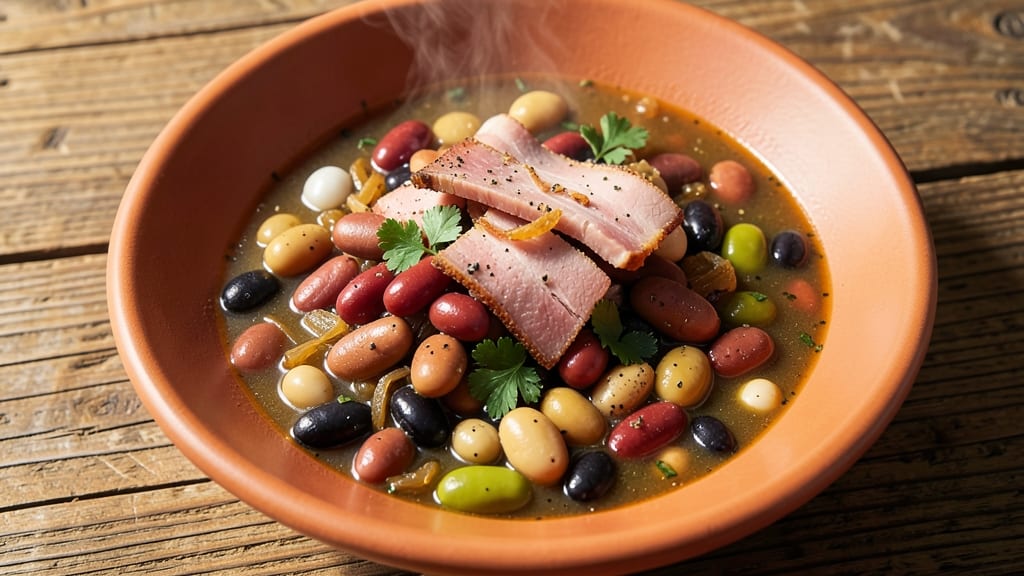
This 9 bean soup with ham recipe delivers the ultimate Midwestern comfort in a single pot, where tender beans and smoky ham create a flavor-packed stew that warms the soul. 🔥 The secret lies in slow simmering—transforming dried beans into creamy, hearty bites while the ham infuses rich, savory depth.
I've perfected this classic over years of family gatherings, ensuring every spoonful delivers that nostalgic, satisfying taste.
The beauty of this recipe is its simplicity: just nine varieties of beans (including navy, kidney, and pinto) combined with just the right amount of ham, broth, and spices. No fancy techniques required—just soak the beans overnight, then let the slow cooker or stovetop do the work.
The result? A thick, flavorful soup that's perfect for chilly days or potluck gatherings.
What sets this apart is the balance of textures and flavors—creamy beans, tender ham, and a touch of vinegar for brightness. The slow cooking process develops deep, complex flavors that you won't find in instant versions.
Each bite is a reminder of home-cooked meals, where love and tradition meet in every spoonful.
Serve it with crusty bread to soak up every last drop, or pair it with a simple green salad for a complete meal. This recipe is designed to feed a crowd, making it ideal for family dinners or holiday gatherings. Let's get started on creating this timeless classic!
Ingredients for 9 bean soup recipe ham
Nine varieties of beans plus smoky ham create this Midwestern classic—simple ingredients for a hearty, comforting soup.
| Ingredient | Amount | Notes |
|---|---|---|
| Navy Beans 🌱 | 1 ½ cups | Dried, soaked overnight |
| Kidney Beans 🌱 | 1 cup | Dried, soaked overnight |
| Pinto Beans 🌱 | 1 cup | Dried, soaked overnight |
| Black Beans 🌱 | 1 cup | Dried, soaked overnight |
| Great Northern Beans 🌱 | 1 cup | Dried, soaked overnight |
| Lima Beans 🌱 | 1 cup | Dried, soaked overnight |
| Chickpeas 🌱 | 1 cup | Dried, soaked overnight |
| White Beans 🌱 | 1 cup | Dried, soaked overnight |
| Red Beans 🌱 | 1 cup | Dried, soaked overnight |
| Diced Ham 🍖 | 12 oz | Smoked or regular |
| Chicken Broth 💧 | 8 cups | Low-sodium preferred |
| Yellow Onion 🧅 | 1 whole | Chopped, medium size |
| Garlic Cloves 🧄 | 4 cloves | Minced |
| Celery Stalks 🥬 | 3 whole | Chopped, medium size |
| Carrots 🥕 | 2 medium | Chopped, peeled |
| Tomato Paste 🍅 | 2 tbsp | No sugar added |
| Bay Leaves 🌿 | 2 whole | Dried |
| Black Peppercorns 🌶️ | 1 tsp | Crushed |
| White Vinegar 🍋 | 1 tbsp | For brightness |
| Salt 🧂 | 1 ½ tsp | Adjust to taste |
The beans are the soul of this soup, so don't skip the overnight soak—it cuts cooking time and ensures tender texture. Bulk bins at WinCo or Aldi usually have the best prices for dried beans, but any grocery store carries them. For the ham, smoked ham adds depth, but regular works too. Look for pre-diced ham at the deli counter—it saves chopping time. The broth is non-negotiable: low-sodium keeps the flavors balanced without extra salt later. I always grab a carton of Swanson or Pacific Foods—they're reliable and affordable.
No smoked ham? Regular ham or even bacon works in a pinch—just reduce the amount slightly. Short on beans? Substitute canned beans at a 1:1 ratio, but drain and rinse them well to avoid excess liquid. The tomato paste can be swapped for crushed tomatoes if you prefer (use 1 cup instead of 2 tbsp). For extra richness, add a splash of Worcestershire sauce—it's a classic touch. The vinegar might seem odd, but it brightens the whole dish. Apple cider vinegar works too if you're avoiding white vinegar.
This soup tastes even better the next day as flavors meld. Store in the fridge for up to 5 days or freeze portions for 3 months. I like to portion it into quart-sized containers for easy reheating—just add a splash of water or broth if it's too thick. The beans soften further when reheated, so plan accordingly. For serving, crusty bread or cornbread is perfect for soaking up the broth, but it's not required—this soup stands alone as a complete meal.
Why You'll Love This Recipe
- I’ll be real: this recipe is my wallet’s best friend. A ham bone or hock stretches across five servings, and those dried beans? Cheaper than takeout, hands down. Plus, it’s the kind of dish that makes people linger at the table—my college roommate still talks about the time I fed six of us for under $10.
- One-Pot Magic: I swear by this recipe because it’s the kind of thing you can start at 5:30 PM and have steaming bowls by 6:00—no chopping, no fuss. Just toss in the beans (I use canned for speed, but dried works too), the ham hock or bone, and let it simmer. The beans soften into that perfect, creamy texture while the ham infuses everything with rich, smoky depth.
- Deep, Savory Umami: Between us, the ham is the MVP here—crackling edges and all. But the beans? That mix of navy, kidney, and pinto? It’s like a flavor orchestra: the kidney beans add a meaty bite, the pintos bring sweetness, and the Great Northerns round it all out. The broth gets so rich, you’ll want to sip it with a spoon.
- Leftovers That Beg for More: This soup tastes better the next day—honestly, it’s my go-to for lazy Sundays or when I need to feed a crowd without stress. I’ll make a big batch on Sunday, and by Wednesday, I’m still pulling it out for lunch. The flavors meld even more overnight, and the ham stays tender, not dry.
Step-by-step instructions for 9 bean soup with ham
Transform dried beans into a rich, hearty soup with this classic method—simple steps for maximum flavor.
👨🍳 Step 1: Soak and Prepare the Beans
Start by draining and rinsing all the soaked beans—1.5 cups navy beans, 1 cup kidney beans, 1 cup pinto beans, 1 cup black beans, 1 cup great northern beans, 1 cup lima beans, 1 cup chickpeas, 1 cup white beans, and 1 cup red beans. I like to soak them overnight in separate bowls to prevent any potential bitterness from mixing flavors. Drain them thoroughly before proceeding.
While the beans drain, chop the 1 whole yellow onion, 3 whole celery stalks, and 2 medium carrots into small, even pieces—about ¼-inch dice. This ensures everything cooks uniformly. The vegetables form the flavor base, so take your time with this step. You'll also want to mince the 4 cloves garlic at this stage.
🍳 Step 2: Sauté the Aromatics and Build the Base
In a large Dutch oven or heavy pot, heat 2 tablespoons olive oil over medium heat. Add the chopped onion, celery, and carrots, cooking for 8-10 minutes until they soften and begin to caramelize—this should be your first aromatic layer. You'll know it's ready when the vegetables release their natural juices and smell sweet.
Add the minced garlic and cook for another 30 seconds until fragrant. Stir in the 2 tablespoons tomato paste and let it cook for 1 minute to deepen its flavor. This step is where the soup's rich, savory foundation begins to form. Don't rush it—this is the flavor backbone.
🥘 Step 3: Combine All Ingredients and Simmer
Add the drained beans, 12 oz diced ham, 8 cups chicken broth, 2 whole bay leaves, 1 teaspoon crushed black peppercorns, 1 tablespoon white vinegar, and 1.5 teaspoons salt to the pot. Stir everything together until the ham is evenly distributed and the beans are fully submerged in the broth. The vinegar brightens the flavors, while the bay leaves add earthy depth.
Bring the mixture to a rolling boil over high heat, then immediately reduce to a gentle simmer. Cover the pot and let it cook for 1.5 hours, stirring occasionally to prevent the beans from sticking to the bottom. The beans should be tender but still hold their shape—this is key for texture.
⏰ Step 4: Adjust Seasoning and Finish
After simmering, taste the soup and adjust the seasoning if needed. You might need a bit more salt or vinegar to balance the flavors—this is where the soup comes together. Remove the bay leaves and discard them; they've done their job. If the soup is too thick, add a bit more broth to reach your desired consistency.
Let the soup sit off the heat for 10 minutes before serving. This resting period allows the flavors to meld and the beans to absorb any remaining liquid. Serve warm, garnished with extra diced ham if desired. The result should be a hearty, comforting bowl with a perfect balance of bean textures and rich, savory broth.
Pro Tips For Making 9 Bean Soup Recipe Ham
- SOAK BEANS SEPARATELY: Navy and Great Northern beans need 8+ hours (or overnight) to soften properly—don’t group them with the faster-soaking pintos or blacks. I learned this the hard way when my soup turned into a mushy, uneven mess because the navy beans were still rock-hard while the others were overcooked.
- SIMMER, DON’T BOIL: Once the beans are tender, drop the heat to a gentle simmer—not a rolling boil—or you’ll break down the beans into glue. My grandmother swore by this, and she was right: a low simmer keeps the texture intact and the flavors layered, especially when you’re adding ham that’s already rich.
- SKIP THE SALT AT START: Adding salt early hardens bean skins, making them tougher to soften. Wait until the beans have simmered for at least 20 minutes before seasoning—this lets them absorb flavor without turning leathery. (Yes, even if you’re impatient like me.)
- TOAST THE BEANS FIRST: Dry-toast the beans in a skillet for 2-3 minutes before adding them to the pot—this deepens their flavor and cuts down on cooking time. Does it look weird? Yes. Does it work? Every single time, especially when you’re mixing navy, kidney, and pintos, which all need different attention.
Pro cooking tips for 9 bean soup recipe ham
Slow Cooking Secrets
The key to perfect 9 bean soup lies in slow simmering—this is where the magic happens. I always use a Dutch oven or heavy pot to maintain even heat. Start with a rolling boil to activate all the flavors, then immediately reduce to a gentle simmer at 190-200°F.
This low-and-slow approach breaks down the beans' skins just enough to create that creamy texture without turning them mushy. If you're using a slow cooker, transfer everything after sautéing and cook on low for 6-8 hours. 🌡️
Ham Infusion Tricks
Don’t just toss in the ham—brown it first in a separate pan with a pinch of smoked paprika and garlic powder for extra depth. This creates a rich, caramelized crust that adds layers of flavor.
For an even deeper taste, wrap the ham cubes in bacon before adding them to the pot. If you’re using pre-cooked ham, pat it dry first to help it crisp slightly during simmering. The result? A bold, smoky presence that ties everything together.
Bean Texture Control
Overcooking beans turns them to mush—aim for tender but still firm. After 1.5 hours of simmering, taste-test a bean. If it’s still slightly resistant, keep cooking for another 20-30 minutes.
For extra-creamy soup, mash ¼ cup of the beans with a fork at the end—this thickens the broth naturally. If the soup is too thick, stir in ½ cup of broth at a time until you reach the perfect consistency. 💫
Flavor Balancing
The vinegar might seem unusual, but it’s essential for brightness—white vinegar cuts through the richness of the ham and beans. Taste as you go: if the soup tastes flat, add another ½ teaspoon of vinegar.
For a smoother finish, stir in 1 tablespoon of honey or maple syrup at the end—it balances the acidity beautifully. If you love heat, add ½ teaspoon of cayenne with the peppercorns. Adjust seasonings gradually—it’s easier to add more salt than to fix oversalting.
Equipment Upgrades
A heavy-bottomed pot (like a Le Creuset Dutch oven) prevents burning and ensures even heat distribution. If you’re short on time, a pressure cooker cuts cooking time to 30-40 minutes—just follow the manufacturer’s instructions for beans.
For hands-off cooking, a slow cooker is a game-changer. I also recommend a fine-mesh strainer for rinsing soaked beans thoroughly—it removes debris and prevents cloudy broth. 🔥
Make-Ahead Magic
This soup tastes even better the next day as flavors meld. Let it cool completely, then store in an airtight container in the fridge for up to 5 days. For freezing, portion into quart-sized bags (leave 1 inch of headspace for expansion).
Thaw overnight in the fridge, then reheat on the stovetop with ½ cup of broth to restore creaminess. The beans soften further when reheated, so plan for a thicker texture—add extra broth if needed.
Nutrition facts
Frequently asked questions
Can I use canned beans instead of dried?
Yes, but you'll need to adjust the cooking time. Use 1 can (15 oz) per 1 cup dried—drain and rinse them well to remove excess sodium. Since canned beans are pre-cooked, simmer the soup for just 30-45 minutes after adding them to avoid mushiness. The texture will be slightly different (less creamy), but it works in a pinch!
How do I make this soup vegetarian?
Replace the ham with 12 oz of smoked tofu or tempeh, cubed and pan-fried until crispy. Add 1 teaspoon liquid smoke and ½ teaspoon smoked paprika to mimic the ham flavor. For extra protein, stir in 1 cup cooked lentils at the end. The vinegar still works to brighten the dish!
Why does my soup taste flat?
Flat flavor usually means the acidity (vinegar) or salt balance is off. Add ½ teaspoon more vinegar first—it cuts through richness. If still bland, try 1 teaspoon soy sauce or a splash of Worcestershire sauce. For depth, simmer uncovered for 10 extra minutes to reduce the broth slightly and concentrate flavors.
Can I make this in a pressure cooker?
After sautéing the aromatics, add all ingredients (including soaked beans) and pressure cook for 20-25 minutes on high pressure. Quick-release the valve, then let it sit for 5 minutes before opening. The beans will be perfectly tender without overcooking. Add a bit of broth if the soup is too thick after pressure cooking.
What's the best way to reheat leftovers?
Reheat gently on the stovetop over low heat, stirring occasionally, until warmed through (10-15 minutes). Add ½ cup broth per quart of soup to restore creaminess—beans absorb liquid when cooled. Never microwave directly from the fridge (uneven heating). For frozen portions, thaw overnight in the fridge first, then reheat with extra broth.