
Soups & Stews
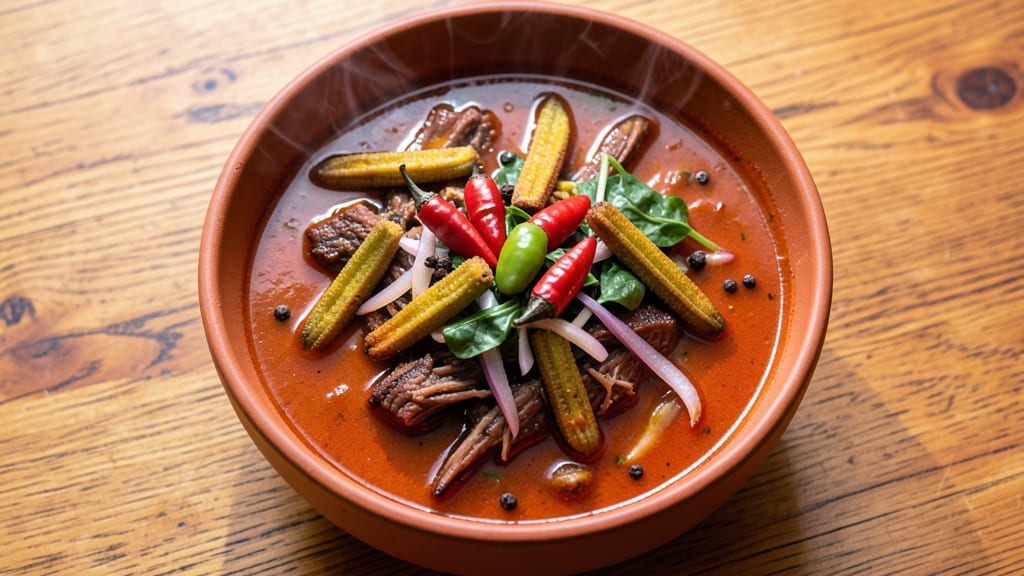
This Nigerian okra soup recipe delivers the perfect balance of crispy okra bites and rich, smoky palm oil base that defines West African cuisine.
The secret lies in properly preparing the okra—slicing it thinly and frying until golden—before simmering it in a flavorful broth with leafy greens, meat, and aromatic spices. After years of perfecting this dish, I can confidently say this is the most authentic version you'll find outside Nigeria.
The foundation of great okra soup starts with the palm oil, which gives that signature deep red hue and distinctive smoky flavor. We build the soup with a blend of protein—traditionally beef, goat meat, or fish—and fresh leafy greens like spinach or bitter leaf for that authentic taste.
The okra itself transforms from slimy to delightfully crispy when fried properly, adding a satisfying texture contrast to the creamy broth.
What you'll achieve is a restaurant-quality soup with tender meat, vibrant greens, and those signature crispy okra pieces that melt in your mouth. The aroma alone will transport you to a Nigerian dining table, where this soup is traditionally served with pounded yam, amala, or rice.
Every spoonful delivers layers of flavor—smoky, savory, slightly spicy—that make this more than just a soup.
This recipe maintains cultural authenticity while being approachable for home cooks. The key steps—proper okra preparation, slow simmering of the broth, and balancing the seasoning—ensure professional results without requiring advanced techniques.
Whether you're serving this for family gatherings or special occasions, it's a dish that will impress even the most discerning palates.
Ingredients for african okra soup recipe nigerian
Six fresh ingredients transform into this iconic West African dish with crispy okra and smoky palm oil.
| Ingredient | Amount | Notes |
|---|---|---|
| Fresh Okra 🍆 | 1 ½ lb | Sliced into 1-inch pieces |
| Palm Oil 🫒 | ½ cup | Red palm oil preferred |
| Beef or Goat Meat 🥩 | 1 ½ lb | Cubed, boneless preferred |
| Fresh Spinach or Bitter Leaf 🌿 | 4 cups | Chopped, packed |
| Fresh Tomatoes 🍅 | 2 whole | Blanched and peeled |
| Onions 🧅 | 1 whole | Chopped, medium size |
| Garlic Cloves 🧄 | 6 cloves | Minced, fresh preferred |
| Fresh Ginger 🌿 | 1 inch | Grated, peeled |
| Fresh Red Bell Pepper 🌶️ | 1 whole | Diced, any color |
| Locust Beans (Iru) 🌱 | ¼ cup | Fermented, optional for depth |
| Ground White Pepper 🌶️ | 1 tsp | Freshly ground preferred |
| Salt 🧂 | 1 ½ tsp | Adjust to taste |
| Vegetable Oil 🫒 | ½ cup | For frying okra |
| Stock Cubes 🍲 | 2 whole | Beef or vegetable |
The okra is non-negotiable—look for firm, bright green pods at your local African market or well-stocked grocery store. Costco or Whole Foods often carry it fresh in the produce section, but frozen works in a pinch. Palm oil gives the signature color and flavor, so don't substitute with regular vegetable oil. For the meat, goat is traditional but beef works fine—just make sure it's cubed evenly for consistent cooking. Fresh ginger and garlic should smell vibrant; if they're musty, skip them. Locust beans (iru) are the secret weapon for that authentic umami depth, but they're hard to find outside specialty stores. If you can't get them, a dash of soy sauce or fish sauce works in a bind.
No palm oil? Coconut oil or a mix of vegetable oil with a pinch of paprika mimics the color, though it won't taste identical. Swapping beef for chicken? Use dark meat thighs—they stay juicier. Fresh spinach is ideal, but kale or collard greens work too. The tomatoes can be canned if fresh aren't available—just drain and rinse them well. For the okra, slice it uniformly (about 1-inch pieces) so it fries evenly. The stock cubes should be low-sodium if you're watching salt, but traditional recipes use regular. And if you're feeling adventurous, add a dash of nutmeg to the broth for warmth.
This soup tastes even better the next day—make a double batch if you're serving a crowd. Store in airtight containers for 4-5 days in the fridge, or freeze for up to 3 months. The okra loses crispness when reheated, so fry fresh portions if you're serving leftovers. Palm oil solidifies in the fridge, so reheat gently over low heat and stir until fully melted. For extra authenticity, serve with pounded yam or jollof rice—the combo is legendary.
Why You'll Love This Recipe
- One-Pot Magic: I swear by this recipe—just one pot, minimal cleanup, and no fancy skills needed. The okra thickens naturally as it cooks, so you’re not stuck stirring every two minutes like with some other soups. Honestly, I’ve made it on nights when I’m too tired to wash extra bowls.
- Deep, Rich Umami: That palm oil isn’t just for color—it’s the soul of the dish. When you fry the beef or goat meat in it first, the fat renders into the soup, creating this irresistible depth. Add the tomatoes and spinach, and suddenly you’ve got a flavor that’s both hearty and bright, like a hug in a bowl.
- Weeknight to Celebration: This soup works everywhere. Too lazy for a big meal? It’s ready in under an hour. Hosting Sunday dinner? Double the batch and serve it with pounded yam or rice. Between us, I’ve even brought it to potlucks—people always ask for the recipe.
- Budget-Friendly Powerhouse: Okra and bitter leaf are cheap, and a little palm oil goes a long way. You can stretch this soup for days—taste even better reheated, if you ask me. Plus, using goat meat (which is often cheaper than beef) keeps costs down without sacrificing flavor. My wallet and my family thank me.
Step-by-step instructions for Nigerian okra soup
Here's how to create that signature crispy okra texture in a rich, smoky palm oil broth.
Fry the Okra to Perfect Crispiness
Heat the 0.5 cup vegetable oil in a deep skillet over medium-high heat until shimmering. Add the 1.5 lb sliced okra in batches to avoid crowding - you want them to sizzle without steaming. Fry for 3-4 minutes until the edges turn deep golden brown and the okra feels crisp when squeezed gently between fingers.
Remove with a slotted spoon and drain on paper towels. I press down lightly on the okra during frying to prevent curling - this ensures even contact with the hot oil. Don't skip this step - the crispy okra is what makes this soup uniquely satisfying. Keep the fried okra warm in a bowl while you prepare the rest.
Build the Smoky Palm Oil Base
In the same skillet (no need to clean it - those flavor bits matter), reduce heat to medium and add the 0.5 cup palm oil. Let it heat for 1 minute until it begins to smoke slightly - this releases the rich, nutty aromas. Add the 1.5 lb cubed beef or goat meat and brown on all sides for 4-5 minutes until deeply caramelized.
Here's where the magic happens: add the 1 whole chopped onions, 6 cloves minced garlic, 1 inch grated ginger, and 1 whole diced red bell pepper. Cook for 5 minutes until the onions soften and the mixture becomes fragrant. The palm oil should now have a beautiful reddish hue with visible smoke particles suspended in it.
Develop the Flavor Foundation
Stir in the 2 whole stock cubes (crumbled) and pour in 4 cups water. Bring to a gentle boil, then reduce heat to low-medium and let it simmer uncovered for 20 minutes. This allows the flavors to meld and the meat to tenderize. Skim off any foam that rises to the surface - this keeps your soup clear and clean.
Add the 2 whole blanched and peeled tomatoes (chopped), 0.25 cup locust beans (iru), 1.5 tsp salt, and 1 tsp ground white pepper. Simmer for another 15 minutes until the tomatoes break down into a smooth paste. The soup should now have a thick, velvety consistency with a rich, earthy aroma. Taste and adjust seasoning - the locust beans add a subtle fermented depth that's characteristic of authentic Nigerian okra soup.
Finish with Leafy Greens and Crispy Okra
Stir in the 4 cups chopped fresh spinach or bitter leaf and cook for 3-4 minutes until just wilted. The greens should retain some texture - they'll continue cooking when you remove the soup from heat. Finally, add the fried okra and gently fold it into the soup. The contrast between the crispy okra and silky broth is what makes this dish so special.
Let the soup sit off heat for 5 minutes before serving. This allows the flavors to fully integrate and the okra to reabsorb some of the broth, making each bite even more satisfying. Serve immediately with pounded yam, fufu, or eba to soak up that delicious palm oil broth.
Pro Tips For Making African Okra Soup Recipe Nigerian
- BLEND OKRA FIRST: Skip slicing—drop whole okra into boiling water for 3-4 minutes, then blend with the stock. This stops sliminess and keeps the soup thick and rich. I learned this the hard way after serving a soup that looked like glue.
- SEAR MEAT LOW AND SLOW: Don’t rush the beef or goat—cook it on medium-low heat for 20-25 minutes until fork-tender. High heat makes it tough, and you’ll regret it when you’re left with chewy chunks instead of melt-in-your-mouth meat.
- SALT THE STOCK LATE: Hold off on adding salt until after the tomatoes and spinach/bitter leaf go in. Early salting makes the okra release its slimy texture faster, and you’ll end up with a soup that’s more like a thick stew than a smooth broth.
- UPGRADE WITH PEELED TOMATOES: Skip the canned tomatoes—peel and blend fresh ones for a cleaner, brighter base. The skins add bitterness, and the flavor is noticeably richer. It takes 10 extra minutes, but the difference is worth it.
Flavor customization for african okra soup recipe nigerian
Spice Level Control
Adjust the heat with scotch bonnet peppers—start with ½ tsp minced for mild, 1 tsp for medium, or 1.5 tsp for fiery. I like adding them during the 15-minute tomato simmer so their heat infuses the broth evenly.
For a smoky kick, add ½ tsp smoked paprika with the locust beans. 🌶️
Umami Depth Boosters
If locust beans (iru) are unavailable, substitute with 1 tbsp soy sauce or 1 tsp fish sauce—both add that fermented umami punch. For extra richness, stir in 2 tbsp palm fruit pulp (the solid part of palm oil) with the meat.
It deepens the flavor without altering texture. Trust me, it’s a game-changer.
Vegetarian Adaptations
Replace meat with 1 lb smoked tofu or 2 cups mushrooms (cremini or oyster) for heartiness. Boost umami with 1 tbsp mushroom powder or 1 tsp vegan fish sauce.
For protein, add 1 cup cooked black-eyed peas—they absorb the broth beautifully. The key is balancing the earthy flavors with enough salt and pepper.
Smoky Variations
Swap palm oil for ½ cup coconut oil + 1 tbsp liquid smoke for a smoky twist, though the color won’t be as vibrant. For a nutty depth, add ½ cup ground peanuts (toasted) with the greens—they blend into the broth for a creamy texture.
This works surprisingly well with chicken or tofu.
Regional Twists
For a Yoruba-style version, add ½ cup blended plantains to the broth for sweetness. Igbo cooks often include ½ cup ground crayfish (or shrimp paste) for a briny note.
In Benin, they might use ½ cup palm wine (or substitute with ¼ cup white wine) in the broth for a lighter, slightly tangy profile.
Texture Play
Want extra crunch? Add ½ cup fried plantain chips or toasted pumpkin seeds as garnishes. For a silky finish, blend 1 cup of the broth** after cooking and stir it back in—this creates a velvety consistency while keeping the okra crisp. The contrast is pure magic. ✨
Nutrition facts
Frequently asked questions
Why does Nigerian okra soup need fried okra?
The crispy fried okra is what makes this soup uniquely satisfying! When raw okra turns slimy, frying transforms it into a delightful textural contrast against the creamy palm oil broth. This technique is essential for authentic Nigerian okra soup—it's the signature element that sets it apart from other West African soups.
Can I make this soup without palm oil?
Yes, but the flavor will differ. Use ½ cup coconut oil + 1 tbsp liquid smoke for a smoky alternative, or ½ cup vegetable oil + 1 tsp paprika for color. The soup will still taste good, but the signature deep red hue and rich aroma will be missing. Palm oil is worth seeking out for authentic results.
What's the best way to store leftovers?
Store in airtight containers for 4-5 days in the fridge, or freeze for up to 3 months. The okra loses crispness when reheated, so fry fresh portions if serving leftovers. Reheat gently over low heat to prevent the palm oil from separating. The soup actually tastes better the next day!
What's the difference between okra soup and egusi soup?
Okra soup uses okra pods as the thickener and key ingredient, while egusi soup relies on ground melon seeds. Okra soup has crispy fried okra pieces and a lighter texture, whereas egusi soup is thicker and creamier. Both are delicious but serve different purposes—okra soup is often lighter and served with pounded yam.
How do I know when the okra is fried properly?
The okra should be deep golden brown and feel crisp when squeezed gently between fingers. If it's still pale or feels soft, fry for another 1-2 minutes. The secret is not overcrowding the pan—cook in batches for even browning. Properly fried okra should sizzle loudly when added to the soup.