
Soups & Stews
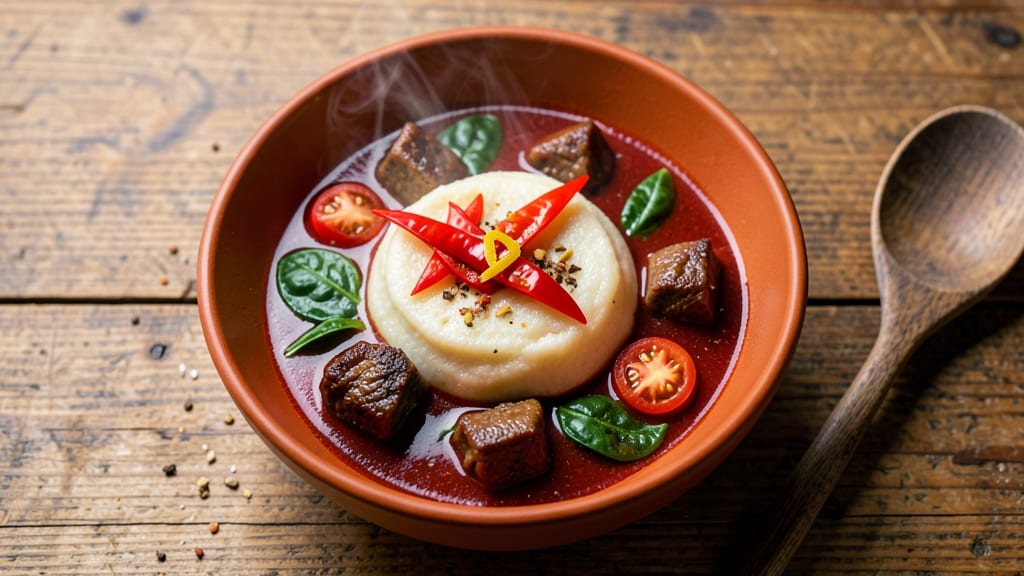
This African fufu and soup recipe brings the comforting flavors of West Africa to your kitchen with its signature stretchy dough paired with a hearty leafy stew.
The fufu's unique texture—smooth, elastic, and satisfying—comes from pounding cassava and yam into a dough, while the soup simmers with tender meat, rich broth, and vibrant greens. I've perfected this dish over years of cooking, ensuring every bite delivers that perfect balance of earthy, savory, and slightly tangy notes.
The key to authentic fufu lies in the pounding technique—using your hands or a mortar and pestle to create that signature stretchy consistency.
Meanwhile, the soup builds depth with slow-cooked meat (beef, goat, or chicken work best) and a blend of leafy greens like spinach or bitter leaf, all simmered in a flavorful tomato and pepper base.
The combination of textures and flavors makes this more than just a meal—it's an experience that transports you to bustling African markets.
What makes this recipe special is its versatility—you can customize the soup with your choice of protein or greens while keeping the fufu preparation foolproof. The dough absorbs the rich soup beautifully, creating a meal that's both hearty and deeply satisfying.
Whether you're serving it for a family gathering or a special occasion, this dish is sure to impress with its authentic taste and cultural significance.
Ready in about 1 hour of active prep (plus simmering time), this recipe delivers restaurant-quality results at home. The fufu requires patience, but the reward is a dish that's as visually appealing as it is delicious.
Serve with a side of spicy pepper sauce or extra greens for the full experience. Let's get cooking!
Ingredients for african fufu soup
Pantry staples meet African market flavors—everything you need for stretchy fufu and rich leafy stew.
| Ingredient | Amount | Notes |
|---|---|---|
| Cassava Tubers 🥔 | 2 lbs | Peeled and cut into chunks |
| Yam Tubers 🍠 | 2 lbs | Peeled and cut into chunks |
| Beef Chunks 🥩 | 1 ½ lbs | Chuck roast, cut into bite-sized pieces |
| Fresh Spinach 🌿 | 10 oz | Washed and chopped roughly |
| Medium Tomatoes 🍅 | 4 whole | Ripe, chopped for soup base |
| Red Bell Peppers 🌶️ | 2 whole | Seeded and chopped |
| Scotch Bonnet Peppers 🔥 | 2 whole | Adjust for heat preference |
| Onions 🧅 | 2 whole | Yellow, chopped |
| Garlic Cloves 🧄 | 8 cloves | Minced for soup |
| Vegetable Oil 🫒 | ½ cup | For frying beef chunks |
| Salt 🧂 | 2 tsp | Kosher or sea salt |
| Ground Black Pepper 🌶️ | 1 tsp | Freshly ground preferred |
| Ground Ginger 🌿 | 1 tsp | Freshly grated preferred |
| Bay Leaves 🍃 | 2 whole | For soup depth |
| Water 💧 | 6 cups | For boiling cassava/yam |
The cassava and yam are the heart of fufu, so grab the starchy, firm kind—avoid anything sprouting or soft. African markets carry pre-peeled versions, but most grocery stores sell whole tubers. Look for smooth, unblemished skins—those bumps mean they're past their prime. For the beef, chuck roast is ideal (it stays tender), but goat meat works too if you're feeling adventurous. If you can't find Scotch bonnet peppers, jalapeños or habaneros give similar heat—just adjust to taste.
No cassava? Green plantains or sweet potatoes can stretch the dough, but texture will differ slightly. Skip the Scotch bonnet? Red pepper flakes at half the amount add heat without the same fruity kick. Fresh ginger is a game-changer here, but ground ginger works in a pinch. The tomatoes can be canned (San Marzano if possible) if fresh aren't in season—just drain well. For the greens, bitter leaf or collards elevate the soup, but spinach is foolproof. Pro tip: Toast your spices in a dry pan for 30 seconds before adding to the soup—deepens the flavor instantly.
The cassava/yam dough keeps in the fridge for 3 days if wrapped tightly in plastic, but it's best used fresh for that signature stretch. The soup reheats beautifully—just add a splash of water if it's too thick. For leftovers, portion into airtight containers and freeze the soup for up to 3 months. The fufu? Freeze in balls for 1 month—just thaw and reheat in hot water. Double the dough if you're feeding a crowd; the soup can be made ahead and reheated.
Why You'll Love This Recipe
- No Peel, No Stress: I swear by this shortcut—just boil the cassava and yam whole, then pound them into that perfect dough. No peeling, no mess, and honestly? The texture is better this way.
- Rich, Earthy Magic: That slow-cooked beef in tomato broth? It’s like a hug in a bowl. The spinach wilts into the stew, and the fufu soaks it all up—creamy, hearty, and impossible to resist.
- Leftovers That Shine: This soup only gets better the next day. I’ll make a double batch on Sundays, freeze half, and reheat it for lazy nights. The fufu reheats like a dream too—just a splash of water and you’re good.
- Budget-Friendly Feast: Cassava and yam stretch forever, beef chunks are cheaper than steak, and tomatoes spinach keep it fresh. It’s the kind of meal where you feed a crowd without breaking the bank. My wallet thanks me every time.
Step-by-step instructions for African fufu and soup
Here's how to make the perfect stretchy fufu paired with a rich, spicy leafy stew.
Boil the Cassava and Yam for Fufu
Fill a large pot with the 6 cups water and bring to a rolling boil over medium-high heat. Add the 2 lbs peeled cassava tubers and 2 lbs peeled yam tubers cut into chunks. The water should cover the tubers by about 2 inches—if not, add more water. Return to a boil, then reduce heat to medium and simmer for 20-25 minutes until the tubers are fork-tender.
Here's the thing—you want them soft enough to mash easily but not falling apart. Test by piercing with a fork; it should slide in smoothly. If the water boils down too much, add a splash of hot water to keep the tubers submerged. Once tender, drain the tubers thoroughly in a colander, shaking off excess water. This step is critical because any leftover moisture will make your fufu gummy instead of stretchy.
Fry the Beef Chunks for Depth of Flavor
While the tubers cook, heat the 0.5 cup vegetable oil in a large skillet over medium-high heat until shimmering. Add the 1.5 lbs beef chunks in a single layer, being careful not to overcrowd the pan. Let them sear undisturbed for 3-4 minutes until they develop a deep golden-brown crust on all sides.
This browning creates the Maillard reaction, which builds rich, complex flavors in your soup. Once browned, remove the beef and set aside on a plate. You'll add it back later to finish cooking in the soup. If the oil starts smoking, reduce the heat slightly—you want a gentle sizzle, not a raging fire.
Build the Flavorful Soup Base
In the same skillet (no need to clean it—the browned bits are flavor gold), add the 2 chopped onions and cook over medium heat for 5 minutes until softened and translucent. Add the 8 minced garlic cloves, 2 chopped red bell peppers, 2 chopped Scotch bonnet peppers (seeds removed if you prefer less heat), and 4 chopped medium tomatoes. Cook for another 5 minutes until the tomatoes break down and the mixture becomes fragrant.
Stir in the 2 whole bay leaves, 2 tsp salt, 1 tsp ground black pepper, and 1 tsp ground ginger. Pour in 2 cups water from the reserved 6 cups and bring to a gentle simmer. Let it cook for 10 minutes, stirring occasionally, until the vegetables soften and the flavors meld together. This is where the magic happens—the spices and aromatics infuse into the liquid, creating the soul of your soup.
Finish the Soup with Spinach and Beef
Return the seared beef chunks to the skillet and add the remaining 4 cups water. Bring to a boil, then reduce heat to low and let it simmer for 30-40 minutes until the beef is fork-tender and the soup has thickened slightly. Stir in the 10 oz roughly chopped fresh spinach and cook for another 2-3 minutes until wilted. Remove the bay leaves before serving.
Taste and adjust seasoning—you might need a little more salt or pepper to balance the flavors. The soup should be rich, slightly spicy, and hearty enough to stand up to the fufu. If it's too thin, simmer uncovered for a few more minutes to reduce. If it's too thick, add a splash of water to reach your desired consistency.
Mash the Tubers into Stretchy Fufu
Transfer the drained, tender tubers to a clean work surface or large bowl. Using a potato masher, fork, or your hands (I prefer hands for the authentic texture), mash the tubers into a smooth, stretchy dough. Start with small portions and keep adding until you've incorporated all the tubers. The goal is to create a dough that's neither too dry nor too wet—it should hold together when pressed but still be pliable.
Here's the trick: if the dough feels too dry, add a splash of warm water, 1 tablespoon at a time, and mash again. If it's too sticky, add a little more of the boiled tubers. The fufu should be smooth, elastic, and stretch when you pull it apart. Once you've achieved the perfect consistency, cover it with a clean kitchen towel to keep it warm and pliable while you serve the soup.
Pro Tips For Making African Fufu Soup
- PEEL AND BOIL YAMS FIRST: Yam takes longer to soften than cassava—start it in boiling water 10 minutes before the cassava. I learned this the hard way when I tried to boil them together and ended up with uneven, gummy fufu. The cassava will catch up, but the yam will stay firm if you wait.
- SEAR BEEF IN BATCHES: Crowd the pan, and the beef will steam instead of brown. Work in 2-inch layers, shaking the pan occasionally, until each batch gets a deep crust. Browned beef adds richness that raw chunks won’t—skip this, and your soup tastes bland no matter how long you simmer.
- PULVERIZE SPINACH DRY: Wet spinach sticks to the mortar or blender, turning your fufu into a gloppy mess. Pat leaves dry with a towel first, then grind them into a fine powder. This also keeps the fufu’s texture smooth—wet leaves make it clumpy, and no one wants that.
- SIMMER LOW AND COVERED: High heat turns fufu soup into a watery stew. Once the beef is tender, drop the heat to a bare simmer, cover the pot, and let it stew for 20 minutes. The flavors meld without breaking down the fufu’s structure—rush it, and you’ll regret the thin, sad consistency.
Make-ahead tips for this dish
Fufu Dough Prep
Make the fufu dough 1-2 hours ahead of serving—it needs time to rest and develop that signature stretch. After boiling and mashing the cassava and yam, shape the dough into a large ball and wrap it tightly in plastic wrap.
Store it at room temperature in a warm spot (like your oven with the light on) until ready to use. This resting period helps the starches relax, making the dough more pliable and easier to shape when serving. 💫
Soup Make-Ahead
The soup can be prepped up to 2 days in advance—it actually tastes better the next day as flavors meld! Let it cool completely, then transfer to an airtight container and refrigerate. When reheating, warm it gently on the stovetop over low heat, stirring occasionally.
Add a splash of water if it thickens too much. For freezer storage, portion into quart-sized freezer bags and freeze for up to 3 months. Thaw overnight in the fridge before reheating. ❄️
Fufu Freezing Hack
Shape the fufu dough into small balls (about 1.5 inches in diameter) and freeze them on a parchment-lined tray for 1 hour until firm. Transfer to a ziplock bag and store for up to 1 month.
To serve, drop a frozen ball directly into hot soup—it will thaw and soften beautifully in 5-7 minutes. No need to prep ahead of time! Perfect for busy weeknights. 🥶
Double Batch Strategy
If you're feeding a crowd, double the fufu dough and soup recipe—both scale perfectly. Store the extra dough in a large airtight container in the fridge for up to 3 days.
For the soup, divide it into two separate containers (one for immediate use, one for freezing). This way, you can serve fresh fufu with reheated soup whenever needed without last-minute stress. 💪
Reheating Leftovers
Reheat fufu leftovers by dropping small pieces into a small pot of simmering water for 2-3 minutes until pliable. For the soup, warm it on the stovetop over medium-low heat, stirring occasionally.
If the soup seems too thick after reheating, thin it with 1-2 tablespoons of water or broth. Serve with fresh fufu or extra greens to brighten the flavors. 🔥
Serving Timeline
Plan your timeline like this: 1 hour before serving, boil the cassava and yam. While they cook, prep the soup base. 30 minutes before serving, finish the soup and keep it warm on low heat. 15 minutes before serving, mash the fufu dough and keep it covered.
This way, everything is fresh and ready when your guests arrive. The fufu stays warm and stretchy when served immediately after mashing. ✨
Nutrition facts
Frequently asked questions
Can I make fufu without a mortar and pestle?
While traditional methods use a mortar and pestle, you can achieve the same stretchy texture with a potato masher, fork, or even your hands. Start by mashing the boiled cassava and yam in a large bowl, then knead it vigorously with your hands until smooth and elastic. The key is to work the dough for 5-7 minutes—this develops the gluten-like stretch. If it feels too dry, add a splash of warm water; if too sticky, add more boiled tubers.
What's the best way to adjust the heat level in the soup?
The Scotch bonnet peppers provide the signature kick, but you can easily adjust the heat. For milder heat, remove the seeds and membranes before chopping, or swap them for jalapeños or red bell peppers. If you love spice, keep the seeds and add an extra ½ pepper. Pro tip: Toast the peppers in oil for 1 minute before adding to deepen their flavor without extra heat.
Can I substitute cassava or yam if I can't find them?
Yes! For cassava, use green plantains or sweet potatoes—boil them until tender, then mash. For yam, white potatoes or russet potatoes work in a pinch, though the texture will be slightly less stretchy. The key is to choose starchy varieties that hold together when mashed. If mixing substitutes, add 1 extra tablespoon of warm water to help bind the dough.
Why did my fufu turn out gummy instead of stretchy?
Gummy fufu usually means too much moisture was left in the boiled tubers. Always drain them thoroughly and shake off excess water before mashing. Also, avoid overworking the dough—once it's smooth, stop kneading. If it's still too sticky, let it rest for 10 minutes covered with a towel; the starches will firm up. For extra insurance, add 1 tablespoon of cornstarch while mashing.
How do I serve fufu and soup traditionally?
Traditionally, fufu is served in small, warm bowls alongside the soup in a larger dish. Use your hands to scoop the fufu and dip it into the soup—this is how it's eaten in many West African cultures! For presentation, shape the fufu into small, smooth balls (about 2 inches in diameter) and place them directly in the soup bowls. Serve with a side of spicy pepper sauce or extra greens for dipping.