
Soups & Stews
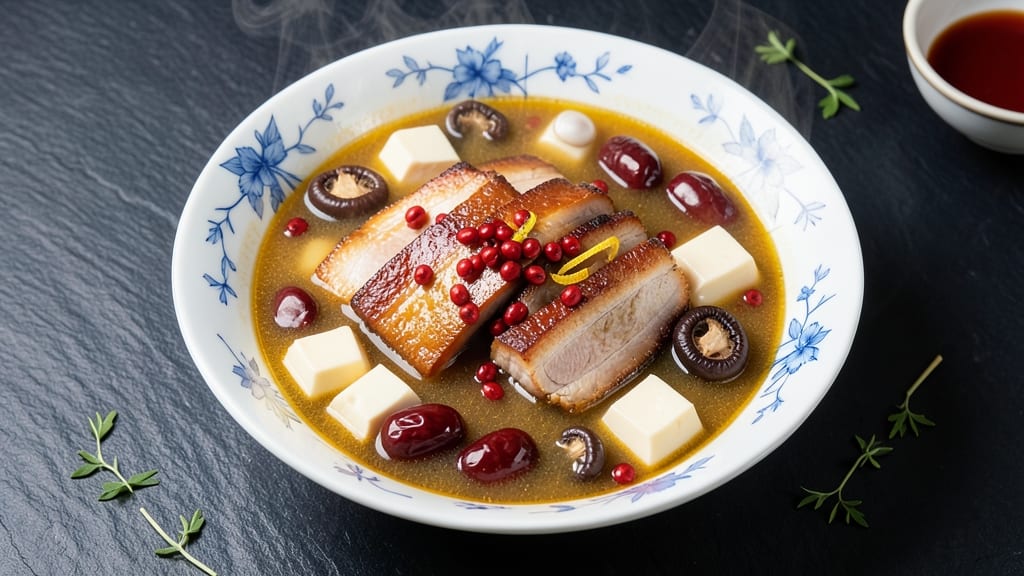
This 8 Treasure Soup recipe brings the heart of Mainland China's traditional cuisine to your kitchen, where eight carefully selected ingredients harmonize into a nourishing bowl of comfort. 💛 Born from centuries of medicinal wisdom, this soup balances textures—tender meat, silky tofu, and chewy mushrooms—with flavors that dance between savory, herbal, and subtly sweet.
It’s more than a meal; it’s a celebration of health and togetherness, often served during holidays or to restore vitality after illness.
The magic lies in its simplicity: eight star ingredients—each chosen for their unique properties—simmered together until their flavors meld into perfect harmony.
You’ll start with a fragrant broth infused with ginger and star anise, then layer in ingredients like pork belly, goji berries, and red dates, each contributing to the soup’s restorative qualities.
The result is a dish that’s both deeply comforting and packed with nutritional benefits, proving that tradition and wellness go hand in hand.
By the time you ladle the first spoonful, you’ll taste the depth of this recipe’s heritage—rich yet light, warming yet refreshing. The pork belly adds a luxurious depth, while the goji berries and lotus seeds introduce a subtle sweetness that brightens every bite.
This is the kind of soup that feels like a hug in a bowl, perfect for family gatherings or when you need a moment of nourishment and joy.
Whether you’re preparing it for a special occasion or simply treating yourself to a taste of Mainland China’s culinary traditions, this 8 Treasure Soup delivers on both flavor and tradition. Let’s get started on creating a dish that’s as meaningful as it is delicious.
Ingredients for 8 treasure soup recipe mainland china
Eight treasures, one nourishing bowl—simple ingredients that pack centuries of tradition.
| Ingredient | Amount | Notes |
|---|---|---|
| Pork Belly 🐖 | 8 oz | Skin-on for richer flavor |
| Silken Tofu 🍲 | 1 block | Firm or medium texture preferred |
| Dried Shiitake Mushrooms 🍄 | 4 whole | Rehydrated in warm water |
| Goji Berries 🍇 | ½ cup | Dried, rinsed if dusty |
| Red Dates 🍠 | 6 whole | Pitted and halved |
| Lotus Seeds 🌸 | ½ cup | Dried, soaked overnight |
| Dried Longan Fruit 🍈 | ¼ cup | Peeled if skin remains |
| Fresh Ginger 🧄 | 1 inch | Thinly sliced, peeled |
| Star Anise 🌟 | 2 whole | Whole pods for infusion |
| Dried Scallops 🦪 | ¼ cup | Rehydrated in warm water |
| Light Soy Sauce 🍶 | 2 tbsp | For umami depth |
| Rock Sugar 🍬 | 1 tbsp | Or granulated sugar |
| Chicken Broth 💧 | 4 cups | Homemade preferred |
The pork belly is non-negotiable here—look for thick-cut pieces with good marbling at Whole Foods or your local Asian market. If you can't find pork belly, pork shoulder works too, but it won't be as luxurious. For the mushrooms, dried shiitake is essential—they rehydrate beautifully and add that deep umami flavor. I always buy mine in bulk from Trader Joe's or H Mart, where they're usually sold in those little mesh bags. The goji berries? No substitutions here—they're the sweet contrast to the savory broth, but if they're dusty, just rinse them before using. The dates and lotus seeds should be plump, not shriveled—check the Asian grocery section for the best quality.
No pork belly? Extra-firm tofu or chicken breast can stand in, but the texture won't be the same. Running low on goji berries? Raisins at half the amount add sweetness, though they lack the chewy texture. The dried scallops are tricky to find outside Asian markets, but dried shrimp works in a pinch—just reduce the quantity by half. For the broth, homemade chicken broth is ideal, but a good-quality store-bought version like Kitchen Basics or Pacific Foods will do. The star anise is what gives the soup its signature aroma—don't skip it, but if you're sensitive to anise flavors, you can reduce it to 1 pod. The rock sugar? It's worth tracking down for its delicate sweetness, but white granulated sugar is a fine substitute if that's all you've got.
This soup tastes even better the next day—make a big batch and store it in the fridge for up to 5 days. The flavors meld beautifully overnight, so plan ahead if you're serving it for a gathering. For storage, keep the ingredients separate until you're ready to simmer—this prevents the tofu and mushrooms from getting mushy. If you've got leftovers, freeze it for up to 3 months, but thaw it gently in the fridge before reheating. The broth can be made ahead too—just store it separately and combine with the other ingredients when you're ready to cook. Pro tip: Save any leftover broth for another use—it's packed with flavor!
Why You'll Love This Recipe
- I’ll be real: pork belly isn’t cheap, but you stretch it here. A few slices go a long way, and the dried ingredients cost pennies. Plus, it’s the kind of dish that makes frugal eating feel special—like you’re serving something restaurant-worthy without the price tag.
- Pantry Magic: I swear by this soup because it’s the kind of recipe that lets you use what’s already in your cupboard. No last-minute grocery runs—just dried shiitake, a handful of goji berries, and red dates you’ve had for months. The pork belly adds richness, but even if you swap it for chicken, it still works.
- Umami Bomb: That first sip? Pure flavor payoff. The shiitake mushrooms soak up the broth like a sponge, while the pork belly melts into tender, savory strands. Silken tofu adds a silky contrast, and the goji berries? They burst with a sweet-tart punch that makes every spoonful feel like a little celebration.
- Weeknight Workhorse: Between us, this is my go-to when I’m too tired to plan. Simmer it all in one pot, and by the time the pork belly is fork-tender, dinner’s ready. Leftovers? Even better—it tastes richer the next day, and I always have a stash for when someone’s running late.
Step-by-step instructions for 8 treasure soup
Here's how to create this nourishing Chinese classic with balanced textures and flavors.
🍳 Step 1: Prepare the Base Ingredients
Start by rehydrating the 4 whole dried shiitake mushrooms and 0.25 cup dried scallops in separate bowls of warm water for 20-30 minutes. The mushrooms should plump up and become pliable, while the scallops will regain their chewy texture. Drain both, reserving the soaking liquid—you'll use about ¼ cup of it later for depth of flavor.
Soak the 0.5 cup lotus seeds overnight in cold water to soften them completely. For the 6 whole red dates, remove pits and halve them lengthwise. Rinse the 0.5 cup goji berries under cold water to remove any dust, then set aside. Peel and thinly slice the 1 inch fresh ginger—this will infuse the broth beautifully.
🔥 Step 2: Simmer the Pork Belly and Broth
In a large pot, combine the 8 oz pork belly (skin-side down) with the 4 cups chicken broth, 2 whole star anise, 1 tbsp rock sugar, and 2 tbsp light soy sauce. Bring to a boil over medium-high heat, then reduce to a gentle simmer. Cover and cook for 45-50 minutes until the pork belly is tender but not falling apart.
Here's the thing—don't lift the lid during cooking. Every time you peek, you lose heat and steam, which can make the pork belly tough. When the pork is nearly done, carefully remove it with tongs, let it cool slightly, then slice into ½-inch thick pieces. Return the slices to the broth to finish cooking while you prepare the other ingredients.
👨🍳 Step 3: Build the Eight-Ingredient Harmony
Add the rehydrated shiitake mushrooms, scallops, lotus seeds, red dates, dried longan fruit, and goji berries to the pot. Stir gently and simmer for 10-12 minutes until all ingredients are heated through and the flavors meld together. The lotus seeds should be tender but still hold their shape, while the scallops will become plump and translucent.
Add the sliced fresh ginger and reserved soaking liquid from the mushrooms and scallops. Taste and adjust seasoning—you might need a touch more soy sauce or sugar to balance the flavors. The soup should be fragrant with notes of umami from the pork and mushrooms, sweetness from the dates and sugar, and a subtle spice from the star anise.
🥘 Step 4: Incorporate the Silken Tofu
Gently add the 1 block silken tofu, cut into ½-inch cubes, to the pot. The tofu should be added last to maintain its delicate texture—it cooks in just 2-3 minutes of gentle simmering. Don't boil vigorously, or the tofu will turn rubbery. Stir occasionally to distribute the heat evenly.
Here's where the magic happens: the tofu absorbs the rich broth while adding a silky contrast to the chewy scallops and tender pork. The eight ingredients now work together in perfect balance—each component contributes its unique texture and flavor while complementing the others. The result should be a harmonious blend where no single ingredient overpowers.
⏰ Step 5: Rest and Serve
Remove the pot from heat and let the soup rest for 5 minutes. This resting period allows the flavors to fully meld together. Ladle the soup into bowls, being careful not to break the silken tofu cubes. The presentation should showcase the vibrant colors of the eight treasures—deep brown pork, white tofu, black mushrooms, red dates, and golden scallops.
Serve immediately with steamed rice on the side. Each spoonful should deliver a symphony of textures—tender pork, chewy scallops, silky tofu, and soft lotus seeds—all bathed in a fragrant, well-balanced broth. The star anise and ginger will linger on the palate, creating a warming, comforting experience that's perfect for any occasion.
Pro Tips For Making 8 Treasure Soup Recipe Mainland China
- PARBOIL PORK FIRST: I learned this the hard way—skipping the parboil means your pork belly will fight you the whole time. Simmer it 15 minutes in water with a splash of vinegar before adding to the soup; this tenderizes it faster and keeps it from turning rubbery when you later braise it.
- SOAK MUSHROOMS 30 MINUTES: Dried shiitake mushrooms are stubborn. Soak them 30 minutes in hot water (not boiling) to soften, then slice thick—about ½ inch. Thin slices dissolve into mush, and no one wants that in their "treasures."
- DON’T CROWD THE POT: I used to dump everything in at once, and the soup would turn murky. Instead, add ingredients in stages: pork first (simmer 10 mins), then mushrooms and dates (5 mins), then tofu and goji berries last. This keeps flavors bright and textures distinct.
- SAVE TIME WITH FROZEN GOJI: Fresh goji berries are pricey, but frozen ones work just as well—no soaking needed. Rinse them quickly to remove excess ice crystals, then toss straight into the soup. The flavor’s identical, and you skip the waiting.
Perfect pairings for this dish
Steamed Rice Pairing
This soup is traditionally served with steamed jasmine rice—its delicate floral aroma complements the soup’s rich umami and sweet notes perfectly. I like using Daybreak Jasmine Rice from Trader Joe’s because it stays light and fluffy.
For extra flair, sprinkle a pinch of fresh cilantro or green onions on top of the rice before serving. 🌱
Garnish Ideas
Fresh herbs elevate the soup’s presentation and flavor. Try thinly sliced scallions or cilantro for brightness, or add a sprinkle of toasted sesame seeds for nutty depth.
For a luxurious touch, drizzle with chili oil (just ½ teaspoon) to add a subtle kick. The contrast of textures and temperatures makes every bite exciting.
Tea Pairings
A warm cup of jasmine tea or pu-erh tea enhances the soup’s flavors. Jasmine tea’s floral notes mirror the soup’s delicate sweetness, while pu-erh’s earthy depth complements the umami-rich broth.
Avoid overly sweet or citrusy teas—they can clash with the soup’s balanced profile. I always keep a pot of Bigelow Jasmine Pearl on hand for this dish. ☕
Side Dish Suggestions
For a full Mainland Chinese meal, pair the soup with stir-fried bok choy or blanched gai lan. The crisp-tender greens cut through the soup’s richness, while their mild bitterness balances the dish’s sweetness.
Another great option is pan-fried dumplings—the crispy exterior and soft filling add a satisfying contrast to the soup’s silky textures. 🥢
Beverage Pairings
For a non-tea option, try a lightly sparkling jasmine green tea (like Hain Celestial’s version)—the effervescence cleanses the palate between spoonfuls. If you prefer alcohol, a dry Riesling or Sauvignon Blanc works beautifully.
The wine’s acidity brightens the dish without overpowering its delicate flavors. Avoid heavy reds or sweet wines—they’ll compete with the soup’s natural sweetness. 🍷
Nutrition facts
Frequently asked questions
What makes this soup different from other Chinese eight-treasure recipes?
This recipe stays true to Mainland China's traditional version by using pork belly (instead of chicken or beef) and emphasizing the balance of textures—chewy scallops, silky tofu, and tender mushrooms. The star anise and ginger infusion gives it that authentic aromatic depth you won't find in Hong Kong or Taiwanese variations. The key is the long simmering time that lets all ingredients meld without overpowering each other.
Can I substitute any of the dried ingredients if I can't find them?
For dried scallops, use dried shrimp (reduce by half). Lotus seeds can be replaced with tapioca pearls, and goji berries work with raisins (use half the amount). The red dates are essential for sweetness—substitute with dried apricots if needed. Just remember these swaps may slightly alter the traditional texture and flavor balance.
How do I know when the pork belly is fully cooked?
The pork belly should reach an internal temperature of 195°F and be fork-tender but still hold its shape. Test it by piercing with a knife—if it slides in easily and the juices run clear, it's done. Never let it boil vigorously after slicing, or it'll turn rubbery. The 45-50 minute simmer time should be enough, but check early if your pork is particularly thick.
Why does the recipe call for resting the soup before serving?
Resting for 5 minutes lets the flavors fully integrate and allows the tofu to absorb the broth without breaking apart. This step is crucial for achieving that perfect harmony of textures and tastes. It also gives the broth time to settle slightly, making each spoonful more cohesive. Think of it like letting a fine wine breathe—patience pays off!
Can I make this soup vegetarian?
Yes! Replace the pork belly with extra-firm tofu or mushroom stems, and use vegetable broth instead of chicken. Keep all other ingredients the same—this maintains the dish's traditional flavor profile while making it plant-based. The tofu should be pressed first to remove excess water, and you may want to add ½ tsp MSG to enhance umami depth.