
Soups & Stews
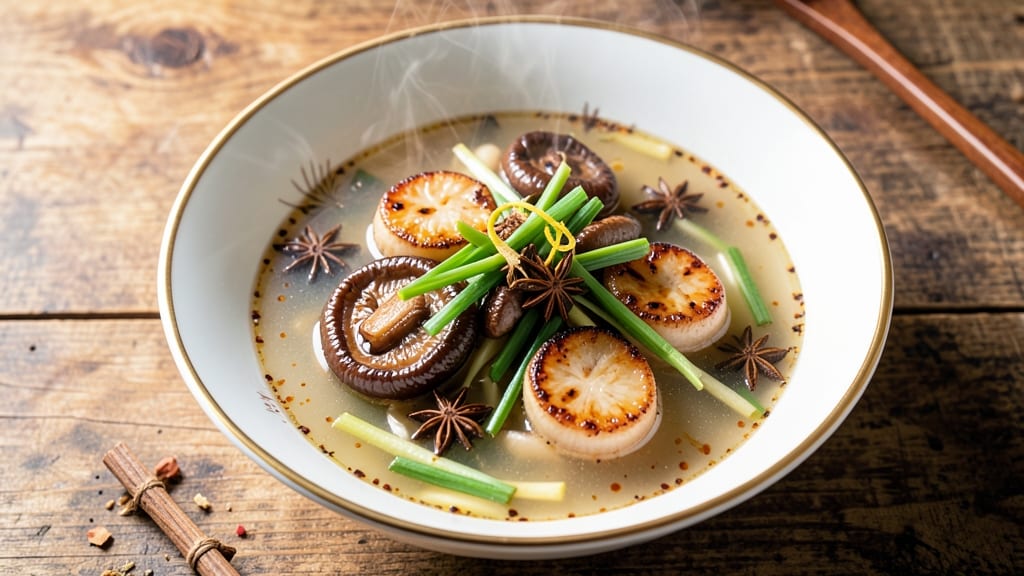
This Chinese scallop soup recipe transforms delicate scallops into the star of a fragrant, golden broth that balances briny sweetness with aromatic ginger and star anise.
The secret lies in gently poaching the scallops—just 3 minutes in a simmering broth—to preserve their tender, melt-in-your-mouth texture while infusing them with the soup’s complex flavors. I developed this version after years of refining restaurant-style techniques at home, ensuring every spoonful delivers that perfect harmony of texture and depth.
The foundation of this soup is a clear, lightly seasoned broth that lets the scallops shine, yet still packs layers of flavor from ginger, scallions, and a touch of soy sauce.
Traditional methods call for simmering seafood bones, but this adaptation uses a quick-chilled stock base for convenience without sacrificing authenticity. The result? A broth so delicate it feels like liquid silk, with scallops that stay plump and flavorful rather than rubbery or overcooked.
What sets this recipe apart is the balance—crisp scallion garnishes add brightness, while a drizzle of toasted sesame oil and a sprinkle of black pepper elevate each bite. Serve it steaming hot in deep bowls, surrounded by soft steamed rice to soak up every drop of that aromatic broth.
The soup is elegant enough for dinner parties but simple enough for a weeknight, making it a versatile addition to any meal rotation.
For those watching their sodium intake, reduce the soy sauce to 1 tablespoon or use a low-sodium version, and feel free to swap the scallops for shrimp or mushrooms if needed.
The technique remains the same—gentle cooking preserves the natural sweetness of the seafood while letting the broth’s aromatics take center stage. Let’s get started on this restaurant-quality dish that’s surprisingly easy to recreate at home.
Ingredients for chinese scallop soup
Fourteen ingredients balance delicate scallops with aromatic ginger and star anise for a restaurant-worthy soup.
| Ingredient | Amount | Notes |
|---|---|---|
| Dry Scallops 🦪 | 1 lb | Fresh or previously frozen, patted dry |
| Dried Shiitake Mushrooms 🍄 | 4 whole | Rehydrated in warm water |
| Fresh Ginger Root 🧄 | 2 tbsp | Finely minced, about 1-inch piece |
| Scallions 🧅 | ½ cup | White and green parts, thinly sliced |
| Star Anise Pods 🌟 | 2 whole | Lightly crushed for aroma |
| Light Soy Sauce 🥢 | 2 tbsp | Low-sodium preferred |
| Sesame Oil 🫒 | 1 tbsp | Toasted, for finishing |
| Black Peppercorns 🌶️ | ½ tsp | Freshly cracked |
| Green Onions 🧅 | 3 whole | Thinly sliced, for garnish |
| Jasmine Rice 🍚 | 1 cup | Uncooked, for serving |
| Water 💧 | 4 cups | For broth base |
| Seafood Stock 🍲 | 2 cups | High-quality, chilled |
| Coconut Milk 🥥 | ¼ cup | Full-fat, optional for richness |
| Cornstarch 🌾 | 1 tbsp | For thickening broth |
| Cold Water 💧 | 1 tbsp | For cornstarch slurry |
The scallops are the star, so quality matters. Fresh or previously frozen works—just pat them completely dry before cooking. Look for plump, opaque scallops with no graying at the edges. For the broth, high-quality seafood stock is non-negotiable—Pacific Foods or Knorr Seafood are solid choices. If you can't find dried shiitake mushrooms, fresh shiitake stems work too, but don't skip them—they add umami depth. The ginger should be fresh and aromatic, not fibrous or dried out, and always mince it just before using for maximum flavor.
No star anise? One cinnamon stick works in a pinch, but the anise flavor is essential here. Short on soy sauce? Coconut aminos or low-sodium tamari are great alternatives. The coconut milk is optional but adds a luxurious richness—use full-fat canned coconut milk for best results. If you're watching sodium, reduce the soy sauce to 1 tablespoon or use a low-sodium version. The cornstarch slurry is key for thickening, but if you prefer a clearer broth, you can skip it entirely and let the mushrooms and scallops build body naturally. For extra brightness, add a pinch of white pepper instead of black.
This soup tastes even better the next day as flavors meld. Store in an airtight container in the fridge for up to 3 days. Reheat gently over low heat—never boil—to preserve the delicate texture of the scallops. The broth freezes beautifully for up to 3 months, though the scallops are best cooked fresh. For meal prep, make a double batch of broth and freeze it separately. Garnish with extra scallions and a drizzle of toasted sesame oil right before serving—this step makes all the difference. Serve with steamed jasmine rice to soak up every drop of that aromatic broth.
Why You'll Love This Recipe
- Pantry Magic: I swear by this recipe when my fridge is bare. Dry scallops and shiitake mushrooms soak up broth like sponges—no fresh seafood needed, just flavor. Honestly, the star anise and ginger turn even the simplest stock into something special.
- Umami Bomb: That first sip? Pure satisfaction. The shiitake mushrooms add deep, earthy richness while the scallops bring a delicate chew—no fishy aftertaste, just clean, satisfying texture. The star anise gives it this subtle, warm complexity that lingers.
- Weeknight Wonder: Between us, this is my go-to when I’m too tired for fancy meals. It reheats beautifully for lunch the next day, and the scallions add a fresh pop even when cold. My college-aged son would rather eat cereal, but he’ll finish this soup.
- Budget Luxury: I make this when I want to feel fancy without breaking the bank. Dry scallops cost pennies per serving, and a single star anise pod stretches across multiple batches. Not the prettiest, but the taste makes up for it every time.
Step-by-step instructions for Chinese scallop soup
Master this delicate balance of poaching scallops and crafting aromatic broth for a restaurant-quality dish.
Rehydrate and Prepare Ingredients
Begin by rehydrating the 4 whole dried shiitake mushrooms in warm water for 15 minutes. This step is crucial—they should plump up and become pliable. While they soak, prepare the 1 lb dry scallops by patting them completely dry with paper towels. Any moisture will prevent proper searing later.
Finely mince the 2 tbsp fresh ginger root—you'll want a paste-like consistency, not coarse chunks. Lightly crush the 2 whole star anise pods with the side of a knife to release their aromatic oils. Thinly slice the 0.5 cup scallions and 3 whole green onions, separating the white and green parts. The white portions will cook in the broth while the greens will garnish at the end.
Build the Aromatic Broth
In a large pot, combine the 4 cups water and 2 cups seafood stock. Add the minced ginger, crushed star anise, and rehydrated shiitake mushrooms (squeeze out excess water). Bring to a gentle simmer over medium heat for 10 minutes. This allows the aromatics to infuse fully—you'll notice the broth developing a rich, earthy aroma.
Strain the broth through a fine-mesh sieve into a clean pot, pressing gently on the solids to extract maximum flavor. Discard the solids. Return the strained broth to medium heat and add the 2 tbsp light soy sauce. Taste and adjust seasoning—this is your flavor foundation, so balance the saltiness now before adding other elements.
Poach the Scallops Perfectly
Increase heat to medium-high until the broth reaches a gentle boil. Add the 1 lb dry scallops in a single layer—don't overcrowd, or they'll steam instead of sear. Poach for 2-3 minutes until they turn opaque and firm to the touch. The key is timing: they should remain tender but never rubbery.
Use a slotted spoon to transfer the scallops to a plate. Immediately reduce the broth heat to low and stir in the 0.25 cup coconut milk (if using) and 0.5 tsp cracked black peppercorns. The coconut milk adds subtle richness while the peppercorns introduce a subtle heat that complements the delicate scallops.
Thicken and Finish the Soup
In a small bowl, whisk together the 1 tbsp cornstarch and 1 tbsp cold water to create a smooth slurry. Slowly drizzle this into the simmering broth while stirring constantly. The soup will thicken noticeably within 1-2 minutes—this creates the perfect velvety texture without making it gluey.
Return the scallops to the pot and gently heat through for 30 seconds to warm them in the enriched broth. Remove from heat and stir in the 1 tbsp sesame oil. This final step adds a nutty aroma and glossy sheen to the soup. The scallops should float effortlessly in the broth, their edges just beginning to turn translucent.
Serve with Jasmine Rice
Ladle the soup into bowls, placing ¼ cup cooked jasmine rice at the bottom of each. Top with the reserved green onion whites and a sprinkle of green onion greens. The rice should absorb the broth's flavors while maintaining its distinct texture. Serve immediately while the scallops remain tender and the broth is steaming hot.
Each spoonful should deliver a harmonious blend of delicate scallop, umami-rich broth, and subtle spice. The soup's clarity comes from precise timing—the scallops must be poached just until set, not overcooked. The aromatic base ensures depth without overpowering the seafood's natural sweetness. This is where technique transforms simple ingredients into something extraordinary.
Pro Tips For Making Chinese Scallop Soup
- Bloom the Scallops First: Toss your dry scallops in hot water (not boiling) for 10 minutes before simmering—this rehydrates them evenly without turning them rubbery. I used to skip this and ended up with chewy chunks that fought me the whole time.
- Soak Shiitakes Properly: Split dried shiitakes lengthwise and soak in warm water for 20 minutes—they’ll plump up faster than whole caps. Discard the soaking water (it’s bitter) and use fresh water for the broth. Trust me, your soup will taste like a restaurant’s if you do this.
- Simmer, Don’t Boil: Once everything’s in the pot, keep the heat at a gentle simmer—no rolling boils. Dry scallops and star anise need patience to release flavor; aggressive heat just burns the ginger and makes the broth cloudy. I learned this after a soup that tasted like a chemistry experiment.
- Toast Star Anise Last: Add the star anise pods only after the soup has simmered for 10 minutes—this lets their aroma infuse without overpowering. Remove them before serving unless you’re a fan of anise-flavored scallions. (I’m not.)
Troubleshooting perfect results
Broth Too Thin?
If your broth lacks body, don’t rush to add more cornstarch—your scallops will turn gluey. Instead, simmer the broth uncovered for 5-10 extra minutes to reduce it naturally.
For a quicker fix, whisk ½ tsp cornstarch with 1 tsp cold water and temper it into the broth while stirring constantly. 💡
Scallops Overcooked
Scallops turn rubbery when overcooked, but you can salvage them. Immediately transfer them to an ice bath for 1-2 minutes to stop cooking, then pat dry and sear in a hot pan with 1 tsp neutral oil for 30 seconds per side.
This restores texture while adding a smoky depth. 🔥
Mushy Scallops
Undercooked scallops feel mushy because they weren’t hot enough when poached. Next time, bring the broth to a full rolling boil before adding scallops, then reduce to a gentle simmer. For extra insurance, use a meat thermometer—scallops should reach 125°F internally in 2-3 minutes. ✨
Broth Too Salty
If your broth tastes overly salty, dilute it by adding ½ cup hot water per cup of broth and simmering for 5 minutes to rebalance flavors.
For a more dramatic fix, strain the broth and re-simmer it with 1 tbsp fresh ginger slices and 1 star anise pod to refresh the aroma without adding more salt. 🧄
Dull Flavor Profile
Flat-tasting broth often means underdeveloped aromatics. Boost depth by adding 1 tsp fish sauce (like Red Boat) or a pinch of white pepper to the finished soup. For extra umami, stir in 1 tbsp oyster sauce or a splash of dried shrimp stock if available. 🌟
Grainy Texture
Gritty broth usually means unstrained solids or overworked cornstarch. Strain the broth through a cheesecloth-lined sieve for ultra-smooth results. If using cornstarch, whisk it vigorously with cold water first to prevent clumping. For a silky finish, temper the slurry into the broth gradually while stirring constantly. 💫
Nutrition facts
Frequently asked questions
Can I substitute fresh scallops for dried?
Yes, but adjust the cooking time! Fresh scallops should be seared in a hot pan with 1 tsp oil for 1-2 minutes per side until golden, then poached in the broth for just 1-2 minutes—they cook much faster than dried. Pat them completely dry first to prevent steaming.
What if I don’t have star anise?
Use ½ tsp anise seeds or 1 cinnamon stick as a substitute, but reduce to 10 minutes simmering time to avoid bitterness. For a modern twist, add ¼ tsp fennel seeds for a similar aromatic profile. The star anise gives that signature warmth—don’t skip it if possible!
How do I make this soup vegetarian?
Replace scallops with 1 lb king oyster mushrooms (sliced) or 1 lb firm tofu (pressed and cubed). Use vegetable stock instead of seafood, and add 1 tbsp mushroom powder or ½ cup rehydrated shiitake stems for umami depth. The technique remains the same—just monitor cooking times closely.
Can I prepare this ahead of time?
Make the broth and store it in an airtight container in the fridge for 3 days or freeze for 3 months. Cook the scallops fresh when ready to serve—they’ll stay tender if reheated gently in the broth over low heat for 2-3 minutes. Reheat the broth separately if prepping components ahead.
Why does my soup taste bland?
Blandness usually means underdeveloped aromatics or insufficient seasoning. Boost flavor by adding 1 tsp fish sauce (like Red Boat) or ½ tsp white pepper to the finished soup. For depth, simmer the broth with 1 strip kombu seaweed (removed before serving) or a splash of oyster sauce. Taste as you go—adjust soy sauce or salt gradually!