
Soups & Stews
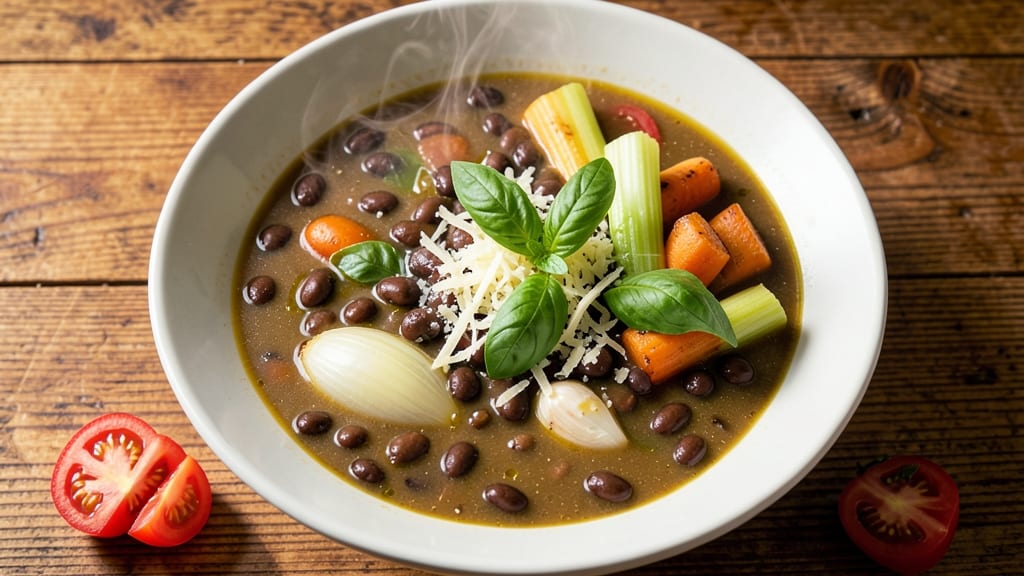
This black bean minestrone soup recipe brings Italian comfort to your table with a hearty blend of beans, vegetables, and aromatic herbs—packed with plant-based protein and satisfying texture. The secret lies in layering flavors through slow simmering, where roasted vegetables deepen their natural sweetness while the broth absorbs the essence of garlic, tomatoes, and fresh basil. I developed this version after years of perfecting the balance between rustic tradition and modern convenience, ensuring every spoonful delivers both nostalgia and nutrition.
The beauty of this soup is its flexibility—use canned beans for speed or dried for deeper flavor, swap seasonal vegetables without sacrificing balance, and adjust the spice level to suit your taste.
The key technique is building the broth in stages: first caramelizing onions and garlic, then adding tomatoes and herbs to create a rich foundation before introducing the beans and pasta. This method ensures each ingredient shines while coming together as a cohesive, comforting meal.
By the time you serve this soup, you'll have a steaming bowl of restaurant-quality minestrone that's hearty enough to stand alone or pair with crusty bread. The black beans add satisfying protein and earthy depth, while the medley of vegetables provides crunch and freshness.
The aroma alone will have everyone gathered around the table, and the first bite delivers on that promise of warmth and home-cooked goodness.
Perfect for weeknight dinners, meal prep, or potlucks, this recipe scales effortlessly and tastes even better the next day. The leftovers keep their texture and flavor, making it an ideal make-ahead dish for busy schedules.
Whether you're serving family or guests, this minestrone soup delivers the kind of satisfaction that turns an ordinary meal into a memorable experience.
Ingredients for black bean minestrone soup
Pantry staples meet fresh produce for a bowl of restaurant-quality black bean minestrone.
| Ingredient | Amount | Notes |
|---|---|---|
| Black Beans 🌱 | 1 ½ cups | Canned, drained and rinsed |
| Yellow Onions 🧅 | 1 whole | Diced, medium size |
| Garlic Cloves 🧄 | 4 cloves | Minced, fresh preferred |
| Carrots 🥕 | 2 medium | OR 1 cup diced |
| Celery Stalks 🧅 | 3 medium | Diced, about 1 cup |
| Diced Tomatoes 🍅 | 2 cans | (14.5 oz each), fire-roasted preferred |
| Vegetable Broth 💧 | 4 cups | Low-sodium preferred |
| Zucchini 🥒 | 1 medium | Diced, about 1 cup |
| Fresh Basil Leaves 🌿 | ¼ cup | Chopped, stems removed |
| Kidney Beans 🌱 | 1 cup | Canned, drained and rinsed |
| Ditalini Pasta 🍝 | 1 cup | Uncooked, small shells |
| Extra-Virgin Olive Oil 🫒 | ¼ cup | For sautéing |
| Tomato Paste 🍅 | 2 tbsp | For depth of flavor |
| Dried Oregano 🌿 | 1 tsp | Mexican preferred |
| Red Pepper Flakes 🌶️ | ½ tsp | Adjust to taste |
| Sea Salt 🧂 | 1 ½ tsp | To taste |
| Fresh Parsley 🌿 | 0.1 cup | Chopped, for garnish |
The black beans and kidney beans are the heart of this soup—Trader Joe's or Whole Foods carry the best canned varieties with no added salt. For deeper flavor, swap canned for dried beans (soaked overnight), but the convenience of canned is hard to beat for weeknight cooking. The fire-roasted diced tomatoes add a smoky depth that takes this soup from good to exceptional—Muir Glen is my go-to brand. Fresh basil and parsley should be bright green and fragrant; if they smell musty, skip them. The ditalini pasta adds a satisfying bite, but any small pasta shape works.
No fire-roasted tomatoes? Regular diced tomatoes with a pinch of smoked paprika gets you close. Short on kidney beans? Substitute more black beans or white beans—the texture stays similar. The zucchini and carrots can be swapped for seasonal veggies like bell peppers or green beans, but keep the total volume around 3 cups for balance. The tomato paste is non-negotiable for that rich, umami base—Rao's is a solid budget option. For extra smokiness, add 1 tsp liquid smoke to the broth. The vegetable broth matters here; Imagine or Pacific Foods brands are low-sodium and flavorful.
This soup tastes even better the next day as flavors meld. Store in an airtight container in the fridge for up to 5 days, or freeze portions for 3 months. I always make a double batch—one for dinner, one for lunches. The pasta holds up well when reheated, but if it feels dry, splash in a little extra broth. Garnish with fresh herbs and a drizzle of extra-virgin olive oil before serving to elevate the dish. Leftovers reheat beautifully; just stir in a splash of water or broth if it thickens too much.
Why You'll Love This Recipe
- I’ll be real: this recipe is my budget-friendly secret weapon. Black beans, carrots, and celery are cheap, and they stretch into a meal that feeds four for under $10. No fancy ingredients, no last-minute grocery runs—just whatever’s already in your cupboard. And if you’re feeding a crowd? Double the recipe. It’s that unfussy.
- One-Pot Magic: I swear by this recipe because it’s the kind of meal that turns a busy weeknight into a stress-free victory. Just toss chopped onions, garlic, carrots, and celery into a pot with the beans, broth, and spices—no separate pans, no extra bowls. The beans soften while the veggies caramelize, and suddenly, dinner’s ready while you’re still scrolling through your phone.
- Umami Bomb: Between us, that combo of black beans, sautéed onions, and garlic? It’s a flavor explosion in the best way. The beans add richness, the onions deepen into sweetness as they cook, and the garlic—oh, the garlic—just levels everything. Add a splash of vinegar or a sprinkle of smoked paprika at the end, and it’s like a hug in a bowl.
- Meal Prep MVP: This soup tastes just as good the next day—honestly, it’s my go-to for lunch prep. I make a big batch on Sundays, and by Wednesday, I’m still reaching for it. The flavors actually improve as the veggies meld together, and it reheats like a dream. Plus, it’s the kind of dish that makes you look like a hero when you bring it to a potluck (no one will guess how easy it was).
Step-by-step instructions for black bean minestrone soup
Here's how to create a rich, flavorful minestrone that balances hearty beans, tender vegetables, and al dente pasta.
Sauté the Aromatic Vegetable Base
Heat the 0.25 cup extra-virgin olive oil in a large Dutch oven over medium heat. Add the 1 whole diced yellow onion, 2 medium diced carrots, and 3 medium diced celery stalks. Cook for 6-8 minutes until the vegetables begin to soften and the onion becomes translucent.
This foundational step develops deep flavor through caramelization. Stir occasionally to prevent browning. I like to add the 4 minced garlic cloves and 2 tbsp tomato paste at this stage, cooking for another 1 minute until fragrant. The tomato paste will deepen the soup's richness as it cooks.
Build the Flavor Foundation
Pour in the 2 cans diced tomatoes (with juices) and stir to combine with the sautéed vegetables. Add the 4 cups vegetable broth, 1.5 tsp sea salt, 1 tsp dried oregano, and 0.5 tsp red pepper flakes. Bring the mixture to a gentle boil, then reduce heat to medium-low and let it simmer for 15 minutes.
This simmering time allows the flavors to meld together. You'll notice the soup developing a rich, slightly tangy aroma from the tomatoes and oregano. Here's where it gets important: skim off any foam that rises to the surface during the first 5 minutes of simmering. This ensures a cleaner, smoother soup texture.
Add the Beans and Vegetables
Stir in the 1.5 cups drained black beans and 1 cup drained kidney beans. Add the 1 medium diced zucchini and cook for another 10 minutes until the zucchini is tender but still holds its shape. The beans should be heated through but not mushy.
I find this is the perfect time to taste and adjust seasoning. If the soup needs more salt, add it now. For extra depth, you could also add a pinch of smoked paprika. The beans should be fully integrated into the soup, adding their signature earthy flavor and hearty texture that makes minestrone so satisfying.
Cook the Pasta to Al Dente Perfection
Add the 1 cup uncooked ditalini pasta to the soup and cook for 8-10 minutes, stirring occasionally, until the pasta is al dente. The pasta should have a slight bite to it—this is crucial for the perfect texture. You'll know it's ready when it floats to the surface and still has a bit of resistance when bitten.
During the final 5 minutes of cooking, stir in the 0.25 cup chopped fresh basil leaves. This adds a bright, herbal note that cuts through the richness of the soup. The basil will wilt slightly but still maintain its vibrant flavor. Don't skip this step—it's what elevates this from a basic bean soup to a restaurant-quality minestrone.
Finish and Serve Warm
Remove the soup from heat and let it rest for 5 minutes. This resting period allows all the flavors to settle and the pasta to finish absorbing any remaining liquid. Ladle the soup into bowls and garnish each serving with 1 tablespoon chopped fresh parsley.
Serve immediately while warm, with crusty bread on the side. The soup should be rich with vegetable flavors, tender beans, and al dente pasta, all balanced by the bright herbs. Each spoonful delivers a perfect harmony of textures and tastes that makes this minestrone a comforting, satisfying meal.
Pro Tips For Making Black Bean Minestrone Soup
- SOAK BEANS OVERNIGHT: I learned this the hard way—rushing the soak leaves your black beans tough and mealy. Toss them in cold water (4 cups per cup of beans) with a pinch of baking soda (yes, really) and let them sit 12+ hours. The texture becomes buttery-smooth, and you’ll taste the difference when they break down in your soup.
- SWEEP THE POT: After simmering your onions, garlic, carrots, and celery for 10 minutes, scrape up those browned bits stuck to the bottom with a wooden spoon. Those caramelized bits pack more flavor than you’d think—don’t let them go to waste. (Your future self will notice the richer base.)
- SKIP THE CROWDED POT: I used to dump everything in at once, and the soup would turn muddy instead of vibrant. Sauté onions, garlic, and celery until soft, then add carrots separately—cook them 3–4 minutes before adding beans and broth. This keeps colors bright and prevents a gloopy mess.
- USE STALE BREAD: Sounds weird, but it works: Tear 2–3 slices of day-old bread into the soup during the last 10 minutes of simmering. It thickens the broth naturally (no cornstarch needed) and adds a subtle toasty depth. Toss out the soggy pieces before serving—no one will know your shortcut.
Essential equipment for this dish
Dutch Oven Essentials
A large Dutch oven is the workhorse of this recipe—its heavy base distributes heat evenly, preventing hot spots that can burn your vegetables. I recommend a 5-6 quart enameled cast iron Dutch oven like the Lodge 5.5-Quart or Le Creuset Stoneware.
The enameled coating prevents rust and makes cleanup easier, while the cast iron retains heat beautifully for even cooking. 🔥
If you don’t own a Dutch oven, a heavy-bottomed stainless steel pot (like All-Clad) works too, though it may require slightly more attention to prevent scorching. Avoid thin, lightweight pots—they can’t maintain consistent heat, leading to unevenly cooked beans or pasta.
Pro tip: Preheat your Dutch oven for 5 minutes before adding oil to ensure even cooking from the start.
Knife and Cutting Tools
Sharp knives are non-negotiable for minestrone—dull blades crush vegetables instead of cleanly dicing them, which releases bitter juices and ruins texture. A 8-inch chef’s knife (like Mercer Culinary Genesis) is perfect for chopping onions, carrots, and celery into even ¼-inch dice.
For garlic, a garlic press saves time and ensures consistent mincing.
Invest in a cutting board with a juice groove (like John Boos Maple) to catch excess liquid and keep your workspace clean. I also keep a small offset spatula nearby to help scrape up any stuck-on bits when sautéing.
A microplane comes in handy for zesting lemon (if you add it) or finely grating garlic for extra flavor depth.
Measuring and Mixing
Precision matters when balancing flavors, so a stainless steel measuring cup set (like OXO Good Grips) ensures accurate measurements for broth, beans, and pasta. For spices, I use a small spice scoop (like Spicewalla’s) to measure dried oregano and red pepper flakes without spilling.
A wooden spoon (like Ozeri Wooden Spoons) is ideal for stirring—it won’t scratch your Dutch oven’s surface.
For the tomato paste, a small silicone spatula helps scrape every last bit from the tube, maximizing flavor. If you’re adding fresh herbs, a pair of kitchen shears makes quick work of chopping basil and parsley.
A ladle with a strainer (like OXO Good Grips) is perfect for serving while keeping the broth smooth.
Optional Upgrades
For next-level flavor, a mortar and pestle lets you crush dried oregano or red pepper flakes into a fine powder for deeper integration. A vegetable peeler helps create thin carrot ribbons for garnish, adding visual appeal.
If you love smoky depth, a small cast-iron skillet lets you torch garlic cloves for a charred aroma before adding them to the soup.
For meal prep, a large airtight container (like Rubbermaid Brilliance) keeps leftovers fresh for 5 days in the fridge. If you’re freezing portions, quart-sized freezer bags save space and prevent freezer burn. A fine-mesh strainer helps drain beans efficiently if you’re using dried varieties.
Nutrition facts
Frequently asked questions
Can I make this black bean minestrone soup without tomatoes?
The tomatoes provide essential acidity and depth, but you can substitute 1 cup tomato paste plus 1 cup extra vegetable broth for a similar umami base. For a completely tomato-free version, use mushrooms (8 oz chopped) and 1 tsp soy sauce to add savory richness. The soup will still be flavorful but will have a different profile.
How do I adjust the soup for a thicker or thinner consistency?
For a thicker soup, simmer uncovered for 10-15 extra minutes to reduce the liquid, or stir in 1-2 tbsp cornstarch mixed with water. For a thinner consistency, add ½-1 cup more vegetable broth while reheating. The ideal texture should coat the back of a spoon but still be easy to ladle.
What's the best way to reheat leftovers without making the pasta mushy?
Reheat gently on the stove over low heat with an extra ¼ cup vegetable broth to prevent drying. Never microwave directly—transfer to a microwave-safe bowl first, cover loosely, and heat in 30-second intervals, stirring between each. The broth helps maintain moisture while keeping the pasta al dente.
Can I substitute other types of beans for the black and kidney beans?
Try white beans, chickpeas, or lentils for a different texture. For a Southwestern twist, use pinto beans with cumin and chili powder. Just ensure the total bean volume remains 2.5 cups to maintain the soup's heartiness. Drain and rinse all canned beans thoroughly to avoid excess sodium.
Why did my minestrone turn out too salty?
Most canned beans contain added salt, so always rinse them well before adding. If your soup is too salty, try balancing it with 1 cup unsalted tomato sauce or ½ cup coconut milk to dilute the saltiness. For future batches, use low-sodium vegetable broth and reduce added salt by half until you taste the beans first.