
Soups & Stews
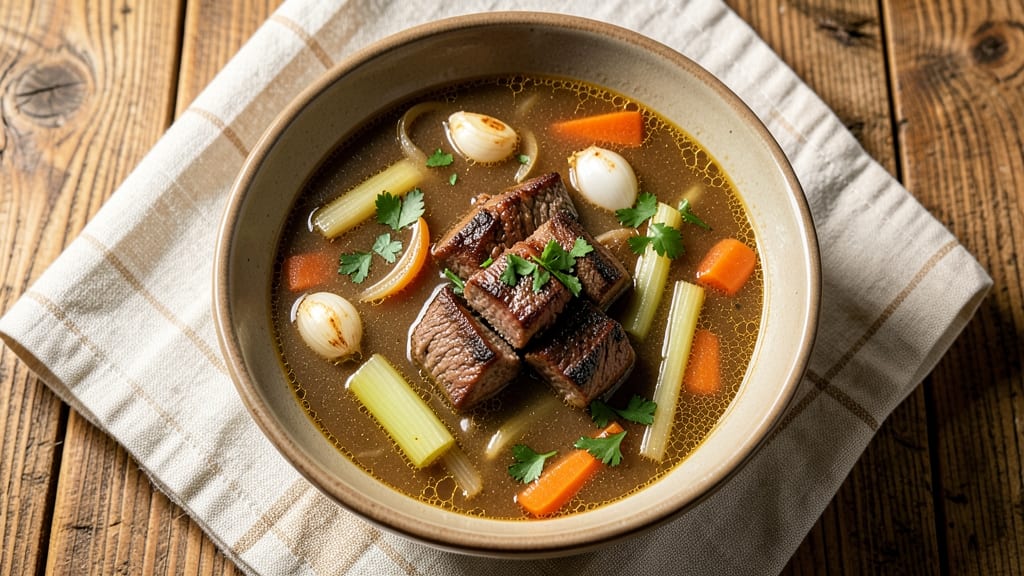
This Black Angus beef soup transforms tough cuts into melt-in-your-mouth perfection through slow simmering and rich umami-building techniques. The secret lies in searing the beef first—this creates a deep, caramelized crust that infuses the broth with layers of flavor as it braises for hours.
What starts as a simple pot of ingredients becomes a velvety, hearty soup where every spoonful delivers tender beef, aromatic vegetables, and a broth so rich it coats your spoon.
The process begins with a deep, flavorful base: onions, carrots, and celery sweated in butter until soft, then beef seared to a golden crust before being removed. The bones and meat return to the pot with herbs, garlic, and tomatoes, where they simmer until the beef falls apart effortlessly.
This method ensures no waste—every piece of beef contributes to a broth so concentrated it tastes like it’s been simmering for days, even if it’s only been a few hours. What makes this soup truly special is its balance of textures and flavors.
The beef remains tender yet substantial, while the vegetables stay crisp-tender, and the broth achieves that perfect consistency—neither too thin nor too thick.
Garnish with fresh parsley and a drizzle of cream for added richness, and you’ve got a soup that’s hearty enough for a cold evening but elegant enough for company. The result is a dish that feels like a restaurant-quality meal, made entirely at home.
This recipe delivers restaurant-worthy depth without requiring advanced skills—just patience and attention to detail. The slow cooking process transforms simple ingredients into something extraordinary, proving that the best soups are worth the time. Ready to create a bowl that warms both body and soul? Let’s get started.
Ingredients for black angus beef soup
Sixteen ingredients transform into restaurant-quality Black Angus beef soup through slow simmering and umami-building techniques.
| Ingredient | Amount | Notes |
|---|---|---|
| Black Angus Beef Chuck Roast 🥩 | 3 lb | Cut into 1-inch chunks, bones included |
| Yellow Onions 🧅 | 2 whole | Large, peeled and chopped |
| Carrots 🥕 | 4 whole | Medium, peeled and chopped |
| Celery Stalks 🌿 | 4 whole | Stringed and chopped |
| Unsalted Butter 🧈 | ½ cup | Cold, cut into pieces |
| Garlic Cloves 🧄 | 6 cloves | Peeled and smashed |
| Canned San Marzano Tomatoes 🍅 | 1 can | 28 oz, crushed by hand |
| Fresh Thyme 🌿 | ¼ cup | Leaves only, stems removed |
| Fresh Parsley 🌿 | ¼ cup | Chopped, for garnish |
| Heavy Cream 🥛 | ½ cup | Full-fat for richness |
| Beef Broth 💧 | 4 cups | Homemade or high-quality store-bought |
| Kosher Salt 🧂 | 1 ½ tsp | Diamond Crystal preferred |
| Ground Black Pepper 🌶️ | ½ tsp | Freshly ground |
| Bay Leaves 🍃 | 2 whole | Dried, for depth of flavor |
The Black Angus beef chuck roast is non-negotiable for texture and flavor. Look for cuts with good marbling at Costco or your local butcher—they'll often have it pre-cut into chunks, saving you time. If buying whole, ask for a 3-pound roast and cut it yourself. The San Marzano tomatoes are worth seeking out; their sweetness balances the rich beef. For the herbs, fresh thyme and parsley make all the difference—dried works in a pinch, but fresh delivers that restaurant-quality aroma. The beef broth should be homemade if possible, but Swanson or Pacific Foods brands are solid store-bought options.
No heavy cream? Full-fat coconut milk works surprisingly well, though the texture will be slightly different. Short on thyme? Dried thyme at one-third the amount gets you close, but fresh is ideal. The butter must be cold for proper searing—take it out of the fridge right before you need it. If you're using pre-cut beef, check for any small bones; they add incredible depth to the broth. The bay leaves are easy to overlook, but they're essential for that classic soup flavor. Don't skip them.
This soup tastes even better the next day as flavors meld. Store in an airtight container in the fridge for up to 5 days or freeze for 3 months. For serving, I like to portion it into bowls with a dollop of cream on top and a sprinkle of fresh parsley. The broth reduces slightly when reheated, so add a splash of water or beef broth if it gets too thick. Leftovers reheat beautifully—just warm on the stove over medium-low heat, stirring occasionally.
Why You'll Love This Recipe
- One-Pot Magic: I swear by this recipe when I’m too tired to wash pots—just dump everything in, simmer, and walk away. The chuck roast practically melts into tender perfection while the onions and carrots soften into that sweet, caramelized base without any extra work.
- Rich, Deep Flavor: That Black Angus chuck? It’s not just beef—it’s flavor bombs in a bowl. The slow-cooked richness pairs with the natural sweetness of the onions and carrots, and a pat of butter at the end? Pure, savory happiness.
- Leftovers That Don’t Suck: Between us, most soups turn into sad, watery meals the next day. Not this one. The beef stays juicy, the veggies hold their shape, and honestly? I make it on Sundays just to reheat for lunch all week.
- Budget-Friendly Luxury: You’re getting restaurant-quality beef for a fraction of the price, and the veggies stretch it into actual meals. I’ll be real: this is my go-to when I want to feel fancy without breaking the bank—or standing at the stove for hours.
Step-by-step instructions for Black Angus beef soup
This method extracts maximum flavor from the beef while building layers of umami through slow cooking.
🔥 Step 1: Sear the Beef for Deep Flavor
Heat a large Dutch oven over medium-high heat until hot. Add the 0.5 cup unsalted butter and let it melt completely, swirling to coat the bottom. Working in batches, add the 3 lb Black Angus Beef Chuck Roast cut into 1-inch chunks (including bones) and sear for 3-4 minutes per side until deeply browned. The meat should release easily from the pan—this indicates proper browning.
As each batch browns, transfer the beef to a plate. Don't crowd the pan or the temperature will drop, preventing proper searing. The rich, caramelized crust on the beef will form the foundation of your soup's depth of flavor. Once all beef is browned, return it to the Dutch oven.
🍳 Step 2: Sauté Vegetables and Build the Base
Add the 2 whole yellow onions, 4 whole carrots, and 4 whole celery stalks (all chopped) to the Dutch oven. Cook for 5-6 minutes, stirring occasionally, until the vegetables soften and begin to caramelize. This process develops their natural sweetness and forms the aromatic base of your soup.
Push the vegetables to the sides of the pot and add the 6 cloves garlic cloves (smashed) and the 0.25 cup fresh thyme leaves to the center. Cook for 30 seconds until fragrant—you should smell the garlic releasing its pungent aroma. Stir to combine with the vegetables, then pour in the 4 cups beef broth and scrape up all the browned bits from the bottom of the pot.
🥘 Step 3: Simmer the Soup Until Tender
Add the 1 can San Marzano tomatoes (crushed by hand), 1.5 tsp kosher salt, 0.5 tsp ground black pepper, and 2 whole bay leaves to the Dutch oven. Bring to a boil, then reduce heat to low and cover partially. Let the soup simmer gently for 2-2.5 hours until the beef is fork-tender and falling off the bone.
Here's the thing—patience is key. The beef should be so tender it practically disintegrates when pierced with a fork. If the liquid reduces too much before the beef is tender, add ½ cup hot water at a time to maintain the proper consistency. The soup will continue to thicken as it cools, so aim for a slightly thinner consistency at this stage.
🍳 Step 4: Finish with Cream and Fresh Herbs
Once the beef is tender, use tongs to remove it from the soup and transfer to a plate. Strain the soup through a fine-mesh sieve into a clean pot, pressing on the solids to extract maximum flavor. Discard the solids or save them for another use. Return the strained soup to the Dutch oven and stir in the 0.5 cup heavy cream.
Shred the beef using two forks, removing any large bones. Return the shredded beef to the soup and simmer for 5-7 minutes until heated through. Stir in the 0.25 cup chopped fresh parsley just before serving. The parsley adds a bright, fresh contrast to the rich, umami-packed soup. Taste and adjust seasoning if needed—the soup should be well-seasoned but not salty.
⏰ Step 5: Rest and Serve for Maximum Flavor
Let the soup rest for 10-15 minutes before serving. This allows the flavors to meld and the soup to thicken slightly as it cools. Ladle the soup into bowls, garnishing each serving with a sprinkle of fresh parsley. The soup should be rich, velvety, and packed with tender beef and vegetables.
Serve immediately with crusty bread to soak up every last drop of that flavorful broth. The combination of slow-cooked beef, aromatic vegetables, and creamy finish makes this soup a hearty, comforting dish perfect for any occasion. The umami depth from the Black Angus beef and San Marzano tomatoes ensures each bite is deeply satisfying.
Pro Tips For Making Black Angus Beef Soup
- Brown the Chuck Properly: That beef chuck won’t develop deep flavor if you simmer it right into the pot. Sear it in batches over high heat with a splash of water—yes, even if it sputters like crazy—until you’ve got a dark crust. I used to skip this, and the soup always tasted like it needed more salt.
- Cut Onions and Celery Evenly: Big chunks of onion and celery turn to mush; tiny dice disappear. Aim for ½-inch pieces—big enough to hold shape but small enough to cook through. My grandmother swore by this, and she was right: uniform size means even cooking and no weird textures.
- Don’t Rush the Low Simmer: Three hours isn’t a suggestion—it’s the minimum. The chuck needs time to fall apart, and rushing it turns the meat tough. Keep the heat low enough that you barely see bubbles, or you’ll end up with a watery mess. (I know, I know, but trust the process.)
- Save the Butter for the End: Adding butter to the pot early turns it into grease. Instead, stir in a pat at the very end—just before serving—to coat the veggies and beef. It makes a real difference in richness without breaking the soup. (Your future self will thank you.)
Make-ahead tips for this recipe
Prep Ahead
Start your prep the night before by chopping all vegetables and measuring spices. Store them in airtight containers in the fridge—this saves 30 minutes of prep time the next day.
I like to use quart-sized glass containers for easy stacking. The beef can be seared and refrigerated overnight too, just cover it tightly with plastic wrap. 💡
Slow Cooker Adaptation
For hands-off cooking, sear the beef as directed, then transfer everything (including browned bits) to a 6-quart slow cooker. Add all remaining ingredients and cook on low for 8-10 hours or high for 5-6 hours.
The slow cooker maintains consistent heat, making it perfect for busy days. Just stir in the cream and parsley at the end.
Freezer-Friendly Base
Make a double batch and freeze half for later! After the initial simmer but before adding cream, let the soup cool completely, then portion into ziplock freezer bags (remove as much air as possible).
Label with the date—this soup keeps for 3 months. When ready to eat, thaw overnight in the fridge, then reheat on the stove with a splash of broth or water. 🍲
Make-Ahead Garnishes
Pre-chop your garnishes the day before and store them separately. Keep the 0.25 cup fresh parsley in a small container with a damp paper towel to maintain freshness.
The heavy cream can be refrigerated in its original container until ready to use—just give it a quick stir before adding to the soup.
Reheating Like a Pro
Never microwave this soup—it ruins the texture. Instead, transfer portions to a pot and warm over medium-low heat for 10-15 minutes, stirring occasionally. If it thickens too much, add 2-3 tablespoons of beef broth at a time.
The gentle heat ensures the beef stays tender and the broth remains velvety. 🔥
Batch Prep for Meal Prep
Divide the finished soup into 6-8 meal prep containers (about 1.5 cups each) and store in the fridge for up to 5 days. To reheat individual portions, microwave for 1-2 minutes (covered) or warm on the stove.
The beef stays juicy and flavorful—perfect for quick lunches or dinner leftovers.
Nutrition facts
Frequently asked questions about Black Angus beef soup
Why does this recipe use chuck roast instead of tenderloin?
The chuck roast is ideal because it's well-marbled and full of connective tissue that breaks down beautifully during slow cooking. Unlike tenderloin—which stays tender but lacks flavor depth—the chuck delivers that rich, beefy taste that makes this soup so satisfying. Plus, the bones add incredible umami to the broth.
Can I substitute regular beef broth for homemade?
Store-bought beef broth works fine, but opt for high-quality brands like Swanson or Pacific Foods. For best results, use a low-sodium version and add extra salt later. The difference is noticeable—homemade broth has deeper flavor, but good-quality store-bought gets you 90% there with less effort.
How do I know when the beef is fully tender?
The beef should be fork-tender, meaning it should fall apart easily when pierced with a fork. Test a piece—if it shreds with gentle pressure, it's ready. If not, simmer for another 30 minutes. Pro tip: The broth will look slightly reduced, but that's normal and actually enhances the flavor.
Is it okay to skip the searing step?
Searing is crucial for developing deep, caramelized flavors that form the soup's foundation. Without it, your soup will taste more like stewed beef than rich, umami-packed soup. If you must skip it, add an extra teaspoon of Worcestershire sauce to compensate for the lost depth.
What if my soup is too thick after simmering?
Add ½ cup hot water or beef broth at a time while simmering, stirring until smooth. The soup will naturally thicken as it cools, so aim for a slightly thinner consistency when hot. If it's still too thick after resting, thin it with a splash of broth before serving.