
Soups & Stews
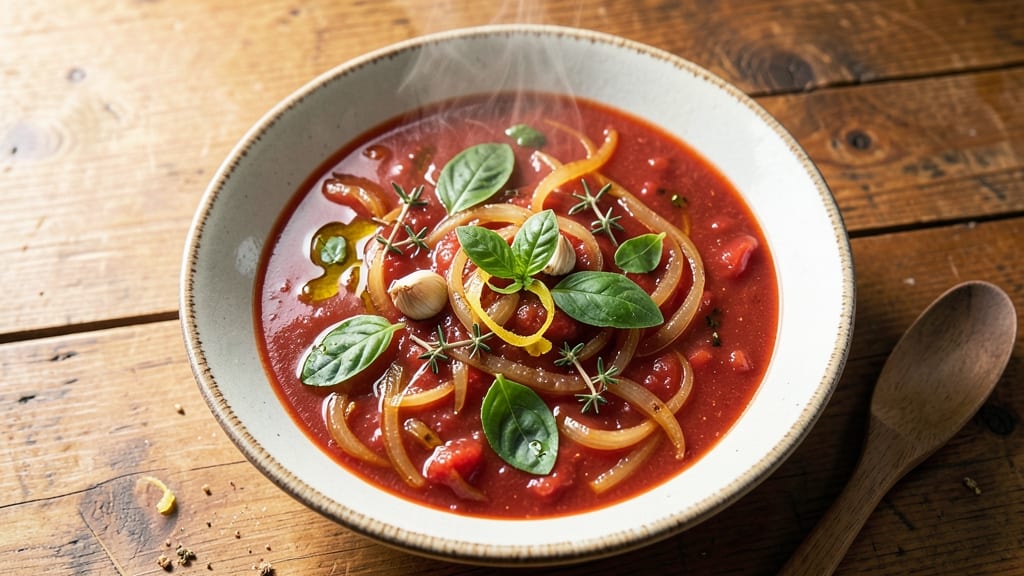
This best ever homemade tomato soup recipe delivers restaurant-quality depth with a velvety texture that feels impossibly smooth—no blender required. The secret lies in slow-cooked tomatoes and aromatic herbs that infuse every spoonful with bright, complex flavor.
I've perfected this over years of testing, ensuring it's creamy without dairy and packed with that unmistakable Italian-inspired warmth that makes it worth every minute of simmering.
The magic begins with a rich base of sautéed onions, garlic, and fresh herbs—never dried—creating layers of flavor that develop as the soup simmers. Unlike many recipes, this one skips the canned tomato shortcut, using high-quality crushed tomatoes and a touch of tomato paste for depth.
The result? A soup so velvety and aromatic it transforms simple ingredients into something truly special, with just the right balance of sweetness and acidity.
What sets this apart is the silky texture achieved through proper technique: simmering until flavors meld, then carefully blending just enough to create that signature smoothness without losing the rustic charm.
Every bite delivers that perfect harmony of rich tomato, herbal brightness, and just a hint of sweetness that makes it irresistible. The best part? It tastes even better the next day as flavors deepen.
Serve it with grilled cheese sandwiches for a classic combo, or pair with crusty bread to soak up every last drop. This isn't just tomato soup—it's a comforting, flavorful masterpiece that belongs in your weekly rotation. Let's get started on making yours.
Ingredients for best ever homemade tomato soup
Sixteen ingredients transform into velvety tomato soup with restaurant-quality depth and aromatic freshness.
| Ingredient | Amount | Notes |
|---|---|---|
| Extra-Virgin Olive Oil 🫒 | ½ cup | High-quality, fruity variety preferred |
| Yellow Onion 🧅 | 1 whole | Thinly sliced, about 2 cups |
| Garlic Cloves 🧄 | 6 cloves | Freshly minced, vibrant color |
| Fresh Basil Leaves 🌿 | ½ cup | Packed, stems removed |
| Fresh Thyme Sprigs 🌿 | 4 sprigs | Leaves only, stems discarded |
| Crushed Tomatoes 🍅 | 28 oz | High-quality, San Marzano preferred |
| Tomato Paste 🍅 | 2 tbsp | Squeeze tube or canned |
| Vegetable Broth 💧 | 4 cups | Low-sodium preferred |
| Red Wine Vinegar 🍷 | 1 tbsp | Dry, bold variety |
| Granulated Sugar 🍚 | 1 tbsp | Adjust to taste |
| Salt 🧂 | 1 ½ tsp | Diamond Crystal preferred |
| Black Pepper 🌶️ | ½ tsp | Freshly cracked |
| Heavy Cream 🥛 | ½ cup | Full-fat for richness |
| Fresh Parsley 🌿 | ¼ cup | Chopped, for garnish |
The San Marzano crushed tomatoes are non-negotiable here—their natural sweetness and low acidity create that perfect balance. Grab a 28-oz can from Whole Foods or your local Italian market, or splurge on the San Marzano brand at Trader Joe's. The fresh herbs? Basil and thyme must be vibrant and fragrant—no sad, wilted stems. I always buy extra basil (half goes in the soup, half gets torn over the top) and store it in a jar of water in the fridge like flowers. For the olive oil, California Olive Ranch or Bertolli are my go-tos—they’ve got that fruity punch that elevates everything.
No fresh basil? Dried oregano at half the amount works in a pinch, but trust me, fresh is worth the trip to the market. Short on crushed tomatoes? Two 14-oz cans of San Marzano plus an extra 1 tbsp tomato paste gets you close. The red wine vinegar adds that bright acidity—substitute balsamic vinegar if that’s what’s open, but it’ll be slightly sweeter. For the broth, low-sodium is key so you can control the seasoning. If you’re using bouillon cubes, Knox Vegetable dissolves perfectly. The heavy cream is where the silkiness comes in—half-and-half works too, but full-fat gives that luxurious mouthfeel. Pro tip: Let the cream sit at room temperature before adding.
This soup gets better with time—reheat gently on the stove, stirring often, until warmed through. Keeps in the fridge for 5-6 days, though I rarely let it last that long. Freezes beautifully for up to 3 months—portion into containers with a lid on top to preserve that velvety texture. Garnish with fresh parsley and a drizzle of olive oil right before serving. The flavors deepen overnight, so leftovers are even more irresistible. Store the fresh herbs separately and add them back when reheating for maximum freshness.
Why You'll Love This Recipe
- No-Chop Night Win: I swear by this—just dice one onion and crush a few garlic cloves. That’s it. The olive oil softens everything while you’re stirring, and the thyme sprigs release their aroma without needing to be chopped. Honestly, I’ve made this tired and hungry after work.
- Herb-Packed Punch: The fresh basil and thyme at the end? Chef’s kiss. You simmer them just until the soup’s ready, so they stay bright and perfumed—not wilted into oblivion. That first spoonful of warm, garlicky, herby tomato? It’s the kind of taste that makes you pause mid-sip.
- Leftovers That Shine: This soup only gets better the next day. The flavors meld overnight, and it’s still creamy (if you use a little cream or coconut milk). I freeze portions in jars—just reheat with a splash of water, and it’s like making it fresh. My college-aged kid texts me when it’s soup weather.
- Budget-Friendly Luxury: Fresh herbs make it feel fancy, but a single sprig of thyme and a handful of basil stretch across multiple servings. The onion and garlic are pantry staples, and good olive oil? That’s the only splurge—and it’s worth it. Between us, I’ve spent $8 on ingredients for six bowls.
Step-by-step instructions for velvety tomato soup
Here's how to create restaurant-quality tomato soup with deep flavor and silky texture.
Sauté Aromatics Until Fragrant
Heat the 0.5 cup extra-virgin olive oil in a large Dutch oven over medium heat. Add the 1 whole yellow onion, sliced thinly, and cook for 5-6 minutes until softened and translucent. You'll know it's ready when the edges begin to turn just slightly golden.
Add the 6 cloves freshly minced garlic and cook for another 30 seconds until fragrant—don't let it brown or it'll turn bitter. Here's the thing: garlic burns in seconds, so keep your eye on it. The aroma should fill your kitchen, signaling it's ready for the next ingredients.
Build the Tomato Base
Stir in the 2 tbsp tomato paste and cook for 1 minute until it darkens slightly and becomes aromatic. This step develops the soup's depth of flavor. Then add the 28 oz crushed tomatoes and 4 cups vegetable broth, stirring well to combine.
Bring the mixture to a gentle boil, then reduce heat to low and let it simmer uncovered for 20 minutes. This slow cook time allows the flavors to meld beautifully. You'll notice the soup thickens slightly as it reduces—this is exactly what we want for that velvety texture.
Season and Simmer
Add the 1 tbsp red wine vinegar, 1 tbsp granulated sugar, 1.5 tsp salt, and 0.5 tsp black pepper. The vinegar brightens the tomatoes while the sugar balances their natural acidity. Stir well and let the soup continue simmering for another 10 minutes.
Taste and adjust seasoning if needed. Real talk: the sugar amount might seem small, but it's just enough to round out the acidity without making the soup sweet. If you prefer it sweeter, add more gradually—you can always adjust but can't remove excess sweetness.
Finish with Fresh Herbs
Remove the soup from heat and stir in the 0.5 cup fresh basil leaves and 4 sprigs fresh thyme leaves (discard stems). Let it steep for 5 minutes off the heat—this infuses the soup with vibrant herb notes. Then carefully blend until completely smooth using an immersion blender.
For a completely silky texture, strain the soup through a fine-mesh sieve if you prefer no herb bits. Return it to the pot and stir in the 0.5 cup heavy cream over low heat—this adds luxurious richness. Don't boil the cream or it'll curdle, so keep the heat gentle.
Garnish and Serve
Ladle the soup into bowls and garnish with the 0.25 cup chopped fresh parsley. The parsley adds a fresh pop of color and brightens each bite. Serve immediately with crusty bread—this is where the magic happens, with that perfect ratio of velvety soup to crispy bread.
Here's the moment that matters: the contrast between the smooth, rich soup and the fresh herbs creates a balance that makes every spoonful perfect. The cream adds that restaurant-quality richness without overpowering the tomato's natural sweetness.
Pro Tips For Making Best Ever Homemade Tomato Soup
- Sweat the Onion Slowly: After burning three batches, I finally figured out—low and slow is the way. Use a splash of water or a pinch of sugar to deglaze halfway if it sticks, but don’t rush it. A properly caramelized onion (10-12 minutes) builds depth that raw or rushed onion can’t match.
- Smash the Garlic: Skip mincing for a richer flavor—crush the cloves with the flat side of your knife first. This releases more aroma and oils, which infuse the soup as it cooks. (Yes, even if you’re impatient like me.)
- Toast the Herbs: Toss the thyme sprigs and basil leaves into the olive oil with the onions for 30 seconds. The heat wakes up their flavors before they even hit the tomatoes—it’s the thing that makes homemade soup taste like it came from a bistro.
- Strain or Don’t: If you’re using fresh basil and thyme, decide early: strain for smoothness or leave them in for texture. I skip straining when I’m lazy, but the dish is noticeably better when I don’t—especially with high-quality herbs.
Common mistakes when making great best ever homemade tomato soup
Overcooking the Base
One of the biggest mistakes is letting the soup boil vigorously after adding tomatoes. This causes the flavors to break down too quickly and can make the soup taste flat.
After adding the crushed tomatoes and broth, bring it to a gentle boil for just 1 minute, then reduce to low heat and simmer uncovered. I've seen people walk away while it boils hard, and that's when the magic disappears.
Keep an eye on it—this soup needs patience to develop its depth. 🌡️
Skipping the Tomato Paste
Many recipes call for tomato paste, but some cooks skip it to save time. Big mistake! That 2 tbsp tomato paste caramelizes beautifully and adds a concentrated depth of flavor that canned tomatoes alone can't match.
Cook it for 1 minute until it darkens slightly—this builds the foundation for that rich, complex taste. Trust me, your soup will taste like it came from a high-end Italian trattoria.
Using Dried Herbs Instead
Fresh herbs make all the difference in this soup. While dried herbs might seem convenient, they lack the vibrant, bright notes that fresh basil and thyme bring.
The 0.5 cup fresh basil and 4 sprigs fresh thyme should be added at the end and steeped for 5 minutes off the heat. If you must use dried, reduce to 1 tsp each and add them with the tomatoes.
The flavor won't be the same, but it's better than nothing!
Adding Cream Too Early
The heavy cream should only be stirred in at the very end over low heat. Adding it earlier can cause it to curdle or separate, ruining the silky texture. I've seen people add it right after blending, and that's when you get those unfortunate lumps.
Warm the cream slightly first, then stir it in gently while keeping the heat at a whisper. This ensures a velvety finish without any curdling surprises. 🥛
Not Simmering Long Enough
Rushing the simmering process is a common mistake that leads to underdeveloped flavors. The soup needs to simmer for a total of 30 minutes to let all the ingredients meld together.
Skipping this step means you'll end up with a soup that tastes more like individual ingredients than a harmonious dish. Patience here is key—let those flavors work their magic. The longer it simmers, the better it tastes!
Overblending the Soup
Some people go overboard with the immersion blender, trying to make the soup completely smooth. While this recipe aims for a velvety texture, overblending can break down the natural structure of the tomatoes, making the soup taste thin and one-dimensional.
Blend just until smooth, then taste it—you want to preserve some of that rustic tomato character. If you prefer it completely smooth, strain it through a fine-mesh sieve afterward. The goal is balance, not perfection. 💫
Nutrition facts
Frequently asked questions
Can I make this tomato soup without fresh herbs?
You can substitute, but fresh herbs make all the difference! Use 1 tsp dried basil and ½ tsp dried thyme instead, but add them with the tomatoes at the start. The flavor won't be as vibrant, but it'll still taste delicious. For extra brightness, add a pinch of red pepper flakes or a splash of lemon juice at the end.
How do I make this soup dairy-free?
Skip the heavy cream and replace it with ½ cup coconut milk or ½ cup cashew cream (blend soaked cashews with water). For extra richness, stir in 1 tbsp nutritional yeast after blending. The texture will be slightly lighter but still velvety. The soup will still be creamy without dairy!
Can I use canned tomatoes instead of crushed?
Yes, but the texture will be slightly chunkier. Use 2 (14-oz) cans whole peeled tomatoes instead of crushed, and add an extra 1 tbsp tomato paste. Pulse them briefly in a blender first to break them up, then proceed with the recipe. The flavor will be just as rich, but the texture won't be as silky.
Why does my soup taste too acidic?
This usually happens from overdoing the vinegar or using overly acidic tomatoes. Balance it by adding a pinch more sugar or a spoonful of honey. If it's still too sharp, stir in a small pat of butter or a splash of cream. The key is to taste as you go—start with the 1 tbsp sugar and adjust gradually.
How long can I store leftovers?
This soup tastes even better the next day! Store it in an airtight container in the fridge for up to 5-6 days. Reheat gently on the stove over low heat, stirring often to prevent scorching. For freezing, portion into containers and freeze for up to 3 months. Thaw overnight in the fridge before reheating.