
Soups & Stews
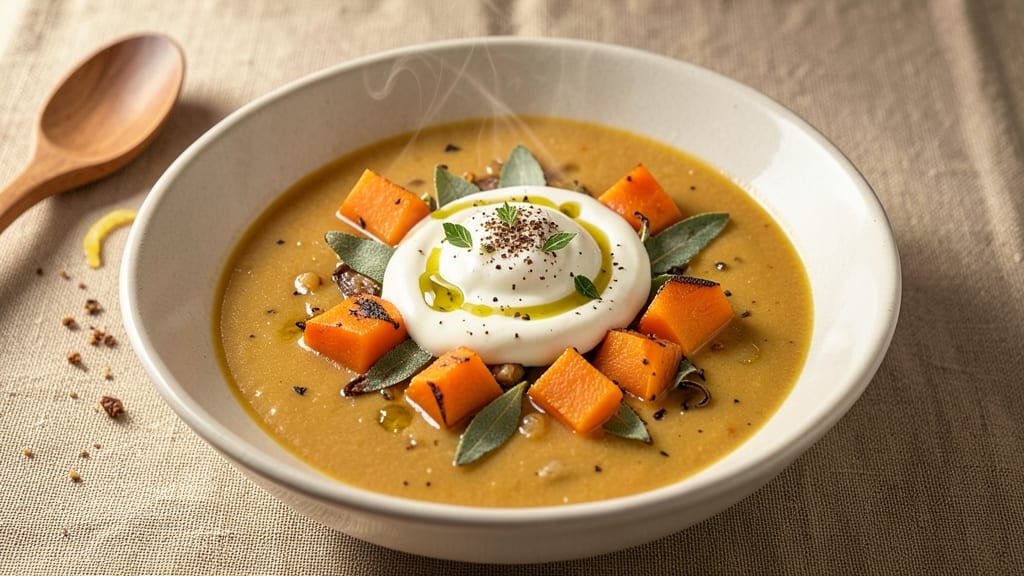
This best butternut soup recipe in the world delivers velvety sweetness and restaurant-quality depth that transforms ordinary weeknight dinners. The secret lies in roasting the squash until caramelized—this concentrated flavor forms the soul of the soup—while crispy sage leaves add a textural contrast that elevates every spoonful.
I've perfected this over years of testing, ensuring the perfect balance between creamy richness and natural sweetness that makes it unforgettable.
What sets this apart is the technique: we start by roasting the butternut squash until tender and golden, then build layers of flavor with sautéed onions, garlic, and fresh herbs.
The velvety texture comes from blending with vegetable broth and a touch of cream, while the crispy sage topping adds a sophisticated finish that makes it feel special without requiring extra effort. Every ingredient plays a crucial role in creating that signature velvety sweetness you'll crave.
The result is a soup so rich and satisfying it becomes the centerpiece of any meal—creamy yet not heavy, sweet yet balanced with savory depth. The crispy sage leaves add a delightful crunch that contrasts beautifully with the smooth purée, while the caramelized squash brings natural sweetness that shines through.
This isn't just another butternut soup; it's a showstopper that will have everyone asking for seconds.
Perfect for chilly evenings or holiday gatherings, this soup reheats beautifully and keeps well in the refrigerator for up to five days. The crispy sage topping can be made ahead and toasted just before serving, ensuring you always get that perfect contrast.
Whether you're serving it as a starter or making it the main event, this recipe delivers restaurant-quality results at home.
Ingredients for best butternut soup recipe in the world
Velvety sweetness meets crispy perfection—here’s what transforms simple ingredients into the world’s best butternut soup.
| Ingredient | Amount | Notes |
|---|---|---|
| Butternut Squash 🎃 | 2 ½ lb | Peeled, cubed, roasted until caramelized |
| Yellow Onion 🧅 | 1 whole | Medium, diced |
| Garlic Cloves 🧄 | 4 cloves | Peeled, minced |
| Fresh Sage Leaves 🌿 | ½ cup | Packed, whole for crisping |
| Vegetable Broth 💧 | 4 cups | Low-sodium preferred |
| Heavy Cream 🥛 | ½ cup | Full-fat for richness |
| Extra-Virgin Olive Oil 🫒 | ¼ cup | For roasting and sautéing |
| Salt 🧂 | 1 ½ tsp | Kosher or sea salt |
| Black Pepper 🌶️ | ½ tsp | Freshly ground |
| Brown Sugar 🍯 | 2 tbsp | Enhances natural sweetness |
| Cinnamon Stick 🌰 | 1 whole | For subtle warmth |
| Fresh Thyme Leaves 🍃 | 1 tbsp | Packed, chopped |
The butternut squash is non-negotiable—Honey Bear or Long Island Chefs varieties have the best sweetness. Roast it until caramelized for that concentrated flavor that makes this soup unforgettable. Costco often has pre-cubed squash if you’re short on time, but peeling and cubing yourself gives you control. For the sage, grab fresh bunches from local farmers markets—the leaves should be vibrant green and fragrant. If you’re using dried sage, it’s a flavor bomb but use half the amount. The cinnamon stick adds depth without overpowering—McCormick or Penzeys for quality. Brown sugar isn’t just for sweetness; it helps balance the earthy squash and enhances caramelization during roasting.
No butternut squash? Delicata or acorn squash works in a pinch—just adjust roasting time. Swap heavy cream for coconut milk if you’re avoiding dairy, though the texture will be slightly lighter. Fresh thyme unavailable? Dried thyme at one-third the amount keeps the flavor but lacks freshness. The vegetable broth matters—Pacific Foods or Imagine low-sodium options are my go-tos. For extra richness, add a splash of white wine or apple cider> during sautéing. And if you’re worried about the crispy sage topping, toast it in a dry pan for 30 seconds—no oil needed>—until golden and fragrant.
This soup tastes even better the next day as flavors meld—reheat gently on the stove> with a splash of broth to restore creaminess. Store in airtight containers for 5 days> in the fridge or freeze for 3 months>. For meal prep, make the crispy sage ahead and keep it in a jar—just toast before serving. The caramelized squash keeps for 3 days> in the fridge, so roast it fresh if you can. And if you’re serving a crowd, double the crispy sage—everyone will want seconds.
Why You'll Love This Recipe
- One-Pot Magic: I swear by this recipe because it’s literally one pan—no chopping boards, no extra dishes. Just roast the squash and onion together, toss in the garlic and sage, and let the broth do the work. Honestly, the cleanup is so minimal I’ll often just leave the pot in the sink until morning.
- Sage & Garlic Kiss: That fresh sage and roasted garlic? It’s the secret weapon. The sage adds this earthy, piney warmth, while the caramelized onion and garlic make every spoonful taste like a cozy hug. Between us, I’ve never met a butternut soup that balanced sweet and savory like this one does.
- Leftover Goldmine: This soup only gets better the next day—thicker, richer, and somehow even more flavorful. I’ll make a big batch on Sunday, and by Wednesday, it’s still my go-to for lunch. Freeze it too; just reheat and serve. My college-aged kid comes home for it every time.
- Budget Warmth: Butternut squash is cheap, broth is cheap, and a few sage leaves stretch far. I’ve fed a family of four for under $10 with this recipe, and it’s the kind of meal that makes everyone pause mid-bite. Not the prettiest, but the taste makes up for it every time.
Step-by-step instructions for velvety butternut squash soup
Here's how to transform humble squash into restaurant-quality soup with that coveted crispy sage topping.
Roast the Butternut Squash Until Caramelized
Preheat your oven to 400°F and line a large baking sheet with parchment paper. Toss the 2.5 lb butternut squash (already peeled and cubed) with 1 tablespoon of the extra-virgin olive oil, 1 teaspoon of the salt, and ½ teaspoon of the black pepper. Spread in a single layer, leaving space between pieces for even browning.
Roast for 30-35 minutes until the edges are deeply caramelized and the squash yields slightly when pressed with a fork. You want that beautiful golden-brown crust—this is where all the deep flavor develops. Real talk: if you see any pieces still pale, return them to the oven for another 5-10 minutes. The caramelization makes this soup taste like it's been simmering for hours.
Sauté Aromatics for Maximum Flavor
While the squash roasts, heat 2 tablespoons of the extra-virgin olive oil in a large Dutch oven over medium heat. Add the diced yellow onion and cook for 5-6 minutes until softened and translucent. Add the minced garlic cloves and chopped fresh thyme leaves, stirring for 30 seconds until fragrant—you should smell that fresh garlic aroma immediately.
Here's the thing—don't walk away. Garlic burns faster than you think, and you want it to just barely color, not turn bitter. Add the whole cinnamon stick and brown sugar, stirring for another 1 minute until the sugar begins to melt slightly. This aromatic base forms the flavor foundation of your soup, so take your time here.
Build the Velvety Base
Transfer the roasted butternut squash to the Dutch oven with the aromatics. Pour in the 4 cups vegetable broth and bring to a gentle simmer over medium-low heat. Let it cook uncovered for 10 minutes, stirring occasionally, until the squash breaks down into a thick purée. You want to see those beautiful caramelized bits dissolving into the broth—this creates that luxurious texture.
Use an immersion blender to purée the soup directly in the pot until completely smooth. I know it seems easier to transfer to a blender, but trust me—this keeps all that precious flavor in the pot where it belongs. If you don't have an immersion blender, carefully transfer to a countertop blender in batches. Return the puréed soup to the pot and stir in the heavy cream and remaining ½ teaspoon salt.
Finish and Garnish with Crispy Sage
Return the soup to a gentle simmer over low heat for 5 minutes to let the flavors meld. Taste and adjust seasoning—you might need a pinch more salt or a crack of pepper to balance the sweetness. The soup should be velvety with just the right amount of body, not too thin but not too thick.
For the crispy sage topping, heat 1 tablespoon of the extra-virgin olive oil in a small skillet over medium-high heat. Add the whole fresh sage leaves and cook for 30-45 seconds until they begin to curl and crisp at the edges. Watch closely—they'll go from vibrant green to beautiful golden brown in seconds. Remove from heat immediately and transfer to a paper towel-lined plate.
Serve with Perfect Presentation
Ladle the warm soup into bowls, dividing the crispy sage leaves evenly among servings. The contrast between the velvety soup and crispy sage is what makes this dish truly special. Garnish with a final crack of black pepper and serve immediately while the sage is still crisp. I like to add a drizzle of the remaining extra-virgin olive oil for extra richness—it takes this soup from good to extraordinary.
Each spoonful should deliver that perfect balance of sweet squash, savory broth, and herbal notes from the sage. The crispy topping adds a textural element that keeps every bite exciting. This is why this recipe stands apart—the combination of techniques creates a soup that tastes like it's been simmering for hours, even though it comes together in under an hour.
Pro Tips For Making Best Butternut Soup Recipe In The World
- Char the Onion First: Get that onion deeply browned—almost black—before adding anything else. I used to skip this, but now I swear by it: 5-7 minutes on medium heat with the lid off until it’s sticky and caramelized. That’s where the depth of flavor hides, not just in the sweetness.
- Peel Squash After Roasting: Skip the peeling mess upfront. Roast the squash whole (cut into chunks, skin on) at 400°F (200°C) for 30-40 minutes until tender. The skin slides right off after—no knife fights, no wasted time. (Yes, even if you’re impatient like me.)
- Salt the Broth Like the Sea: Taste that vegetable broth before adding it to the pot. If it’s bland, add salt—think "ocean spray," not "lightly seasoned." Butternut soup forgives a lot, but weak broth ruins everything. Trust me, you’ll notice the difference.
- Toast the Sage Leaves: Don’t just toss in fresh sage leaves raw. Heat them in a dry pan for 10 seconds per side until fragrant—just until they smell like a forest. This keeps their flavor from dissolving into the soup like a shy guest at a party. (And yes, even if you’re in a hurry.)
Pro cooking tips for best butternut soup recipe in the world
Roasting Perfection
Roasting the butternut squash until deeply caramelized is where the magic happens. I always preheat my oven to 400°F and spread the cubes in a single layer with space between them—this ensures even browning.
The key is patience: roast for 30-35 minutes until the edges are golden-brown and the squash yields slightly when pressed. If any pieces look pale, return them to the oven for another 5-10 minutes.
This caramelization creates a concentrated sweetness that makes the soup taste like it's been simmering for hours. 🔥
Sautéing Aromatics
Never skip sautéing the onions and garlic—they form the flavor foundation of your soup. I use medium heat and cook the onions for 5-6 minutes until they're soft and translucent. Then, add the garlic and thyme for just 30 seconds—garlic burns fast, so watch closely.
The brown sugar and cinnamon stick add depth, but stir them for only 1 minute until the sugar begins to melt. This aromatic base is what transforms a simple soup into something truly special. ⏱️
Blending Like a Pro
An immersion blender is a game-changer for this recipe, but if you don't have one, use a countertop blender in batches. The goal is a completely smooth purée, so blend until no lumps remain.
I always return the puréed soup to the pot immediately—this keeps all the flavorful liquid where it belongs. Stir in the heavy cream and remaining salt gently to avoid breaking the emulsion. The result should be velvety, with just the right amount of body—not too thin, not too thick. 💫
Crispy Sage Topping
The crispy sage leaves are what elevate this soup from good to extraordinary. Heat 1 tablespoon of olive oil in a small skillet over medium-high heat and cook the whole sage leaves for just 30-45 seconds until they curl and turn golden brown.
Remove them immediately—they'll continue cooking on the paper towel. The contrast between the velvety soup and crispy sage is what makes every bite exciting. Serve them right on top of the soup while they're still crisp. 🌿
Temperature Control
Maintaining the right temperature throughout the cooking process is crucial. Simmer the soup over medium-low heat when building the base, and reduce to low heat when finishing. This gentle heat ensures the flavors meld without breaking the cream.
If the soup looks too thick after blending, add a splash of broth to reach the perfect consistency. And always taste as you go—adjusting seasoning with a pinch of salt or pepper is what makes this soup truly yours. 🌡️
Make-Ahead Magic
This soup tastes even better the next day as the flavors meld. Store it in airtight containers in the refrigerator for up to 5 days or freeze for 3 months. To reheat, warm it gently on the stove with a splash of broth to restore creaminess.
The crispy sage topping can be made ahead and stored in a jar—just toast it in a dry pan for 30 seconds before serving. This makes it perfect for meal prep and busy weeknights. ⏰
Nutrition facts
Frequently asked questions
Can I substitute butternut squash with another type of squash?
For a similar texture, use acorn or delicata squash—just adjust roasting time (they cook faster). Avoid hubbard squash, which is denser and less sweet. If you're in a pinch, even sweet potatoes work, though they'll be less velvety. The key is choosing a variety with natural sweetness to balance the savory broth.
How do I make this soup vegan? Swap the heavy cream for coconut milk (full-fat for richness) and use vegetable broth instead of chicken broth. For extra creaminess, blend in ½ cup silken tofu> with the soup. The texture will be slightly lighter but still delicious.
Why does my butternut soup taste bland?
Most likely, the squash wasn't caramelized enough or the broth lacked depth. Roast the squash until deeply golden (not just soft) and use a rich, homemade-style broth. For extra flavor, add a splash of white wine or apple cider> when sautéing the aromatics. Taste as you go—adjusting salt and pepper gradually is key to balancing sweetness.
Can I make this soup ahead of time?
Yes! This soup actually tastes better the next day as flavors meld. Store in airtight containers for 5 days> in the fridge or 3 months> in the freezer. Reheat gently on the stove with a splash of broth to restore creaminess. Make the crispy sage topping fresh before serving—it loses crispness when stored.
What's the best way to reheat leftovers?
Gently reheat on the stove over low heat>, stirring occasionally. Add 1-2 tablespoons broth> per bowl to restore creaminess—microwaving can make the soup watery. For extra richness, stir in a dollop of cream or a pat of butter while warming. Never reheat to boiling, or the cream may separate.