
Soups & Stews
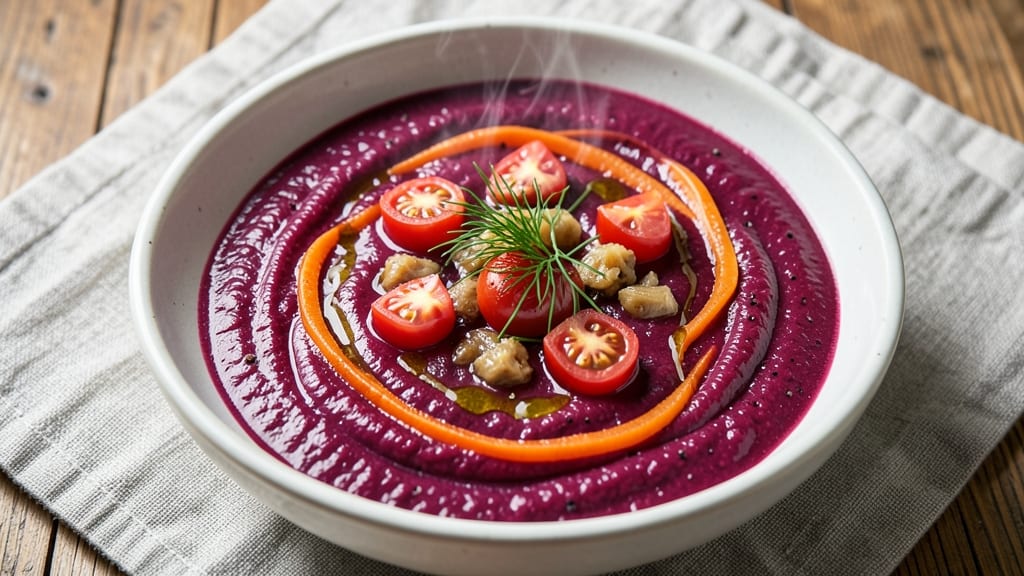
This beetroot carrot tomato soup transforms humble vegetables into a velvety, earthy-sweet masterpiece that feels both comforting and refined—without a single drop of dairy or meat.
The secret lies in slow-simmered foundations and precise blending techniques that create that signature silky texture, while warm spices and fresh herbs elevate it beyond basic vegan fare.
I developed this recipe after years of testing roasted versus raw vegetable approaches, and the difference in depth of flavor is night and day.
The base builds on traditional methods: onions and garlic sautéed until fragrant, then vegetables roasted to concentrate their natural sweetness before simmering into a rich broth.
What sets this apart is the two-stage blending process—first a rough puree for rustic texture, then refined to silky smoothness—while reserving some broth to adjust consistency perfectly. The result?
A soup that's rich enough to satisfy yet light enough for summer, with vibrant color that makes it as visually appealing as it is delicious.
What makes this recipe truly versatile is how it adapts to your preferences: Add a pinch of smoked paprika for depth, a squeeze of lemon for brightness, or a handful of lentils for protein.
Serve it with crusty bread for dipping, a dollop of vegan yogurt for creaminess, or simply as-is with a sprinkle of fresh herbs. The beauty of this soup lies in its ability to be both a humble weeknight meal and an impressive dish for guests—all while being completely plant-based.
Ready in about 45 minutes with minimal active time, this soup proves that vegan cooking can be both nutritious and indulgent. The key is patience—letting flavors meld during simmering and achieving that perfect balance of sweet, earthy, and savory notes.
Whether you're feeding a family or meal prepping for the week, this recipe delivers restaurant-quality results at home with simple techniques and accessible ingredients.
Ingredients for beetroot carrot tomato soup
Roasted vegetables and aromatic spices create this velvety vegan soup with restaurant-quality depth.
| Ingredient | Amount | Notes |
|---|---|---|
| Medium Beetroots 🍠 | 2 whole | Organic preferred, peeled and cubed |
| Medium Carrots 🥕 | 4 whole | Organic preferred, peeled and chopped |
| Roma Tomatoes 🍅 | 4 whole | San Marzano preferred, halved |
| Yellow Onion 🧅 | 1 whole | Yellow or red, finely diced |
| Garlic Cloves 🧄 | 4 cloves | Fresh, peeled and minced |
| Extra-Virgin Olive Oil 🫒 | ½ cup | Cold-pressed, fruity variety |
| Vegetable Broth 💧 | 4 cups | Low-sodium, homemade preferred |
| Fresh Thyme Leaves 🌿 | ¼ cup | Stems removed, chopped |
| Fresh Parsley Leaves 🌿 | ⅛ cup | Flat-leaf preferred, chopped |
| Smoked Paprika 🌶️ | 1 tsp | Sweet or hot variety |
| Ground Cumin 🌿 | ½ tsp | Toasted for depth |
| Sea Salt 🧂 | 1 ½ tsp | Diamond Crystal preferred |
| Black Peppercorns 🌶️ | ½ tsp | Freshly ground |
| Lemon Juice 🍋 | 1 tbsp | Freshly squeezed |
| Vegan Yogurt 🥛 | ¼ cup | Unsweetened, for garnish |
The vegetables are the foundation—organic beetroots and carrots from Whole Foods or your local farmers market deliver the most vibrant color and sweetness. San Marzano tomatoes are worth seeking out for their rich, meaty texture and balanced acidity. Roasting the vegetables first concentrates their natural sugars and deepens their earthy flavors—don't skip this step. For the broth, homemade vegetable stock elevates the soup beyond canned alternatives, but low-sodium store-bought works in a pinch. Fresh herbs like thyme and parsley should be bright green and free of wilting; store them in a damp paper towel in the fridge until ready to use.
No smoked paprika? Dried chipotle powder at half the amount adds smoky depth. Substituting canned tomatoes? Drain and pat them dry to avoid watery soup. For extra protein, add 1 cup cooked lentils or ½ cup crumbled tempeh. The olive oil matters here—extra-virgin with fruity notes prevents bitterness. If you're short on time, steam the vegetables instead of roasting, though the flavor will be slightly less concentrated. For a smoother texture, blend in batches and adjust consistency with reserved broth.
This soup reheats beautifully—simmer gently for 3-4 minutes to restore its velvety texture. Store in airtight containers for 5 days in the fridge or 3 months frozen. For meal prep, portion into individual containers with a dollop of vegan yogurt and fresh herbs on top. The flavors actually improve overnight as the vegetables continue to soften and meld. Garnish with extra herbs, a drizzle of olive oil, or a sprinkle of toasted pumpkin seeds for added crunch.
Why You'll Love This Recipe
- No Chopping Hassle: I swear by this recipe because the veggies are big enough to just peel and toss whole—no mandoline or tiny dice work needed. The immersion blender does all the heavy lifting while I sip my coffee.
- Earthy Sweetness Bomb: That caramelized onion and roasted tomato base? It’s where the magic happens. The beetroots add a deep, almost wine-like richness, while the garlic ties it all together like a warm hug in a bowl.
- Meal Prep MVP: Between us, this soup tastes better the next day. I make a big batch on Sundays, freeze half, and still have leftovers that feel like a treat—not sad, reheated dinner.
- Pantry Staple Power: Honestly, if you’ve got onions, carrots, and a few tomatoes sitting around, you’ve got this. No specialty ingredients, no last-minute grocery runs—just pure, budget-friendly comfort.
Step-by-step instructions for beetroot carrot tomato soup
Here's the method for a velvety soup where earthy beets, sweet carrots, and bright tomatoes harmonize perfectly.
Sauté Aromatics Until Fragrant
Heat the 0.5 cup extra-virgin olive oil in a large Dutch oven over medium heat until shimmering. Add the finely diced yellow onion and cook for 5-6 minutes until soft and translucent, stirring occasionally. The onion should release its sweetness without browning.
Add the 4 minced garlic cloves and cook for 30 seconds until the aroma fills your kitchen. Immediately stir in the 1 teaspoon smoked paprika and 0.5 teaspoon ground cumin, toasting for 1 minute until fragrant. This aromatic base forms the flavor foundation for your soup.
Roast Vegetables for Deep Flavor
Transfer the onion mixture to a large baking sheet. Add the 2 cubed beetroots, 4 chopped carrots, and 4 halved Roma tomatoes. Drizzle with any remaining olive oil from the pot and toss to coat evenly. Spread in a single layer.
Roast in a 400°F preheated oven for 25-30 minutes, stirring halfway, until the vegetables are tender and the edges begin to caramelize. The beets should soften while retaining their vibrant color, and the carrots should develop a golden hue. This roasting step intensifies their natural sweetness and develops complex flavors.
Simmer the Soup Until Silky
Return the roasted vegetables to the Dutch oven and add the 4 cups vegetable broth. Bring to a gentle boil, then reduce heat to medium-low and simmer uncovered for 20-25 minutes until the vegetables are completely tender and the soup has reduced slightly. The soup should be thick enough to coat the back of a spoon.
Using an immersion blender, purée the soup directly in the pot until completely smooth. If you prefer texture, blend in batches and return to the pot. The result should be a velvety consistency with no visible chunks. Taste and adjust seasoning with 1.5 teaspoons sea salt and 0.5 teaspoon freshly ground black peppercorns as needed.
Finish with Fresh Herbs and Acid
Strain the soup through a fine-mesh sieve if you prefer an ultra-smooth texture, pressing gently on the vegetables to extract all the flavor. Return the soup to the pot and stir in the 0.25 cup chopped fresh thyme leaves and 1 tablespoon freshly squeezed lemon juice. The lemon brightens the earthy flavors while the thyme adds an aromatic depth.
Keep the soup warm over low heat until ready to serve. Just before serving, stir in the 0.125 cup chopped fresh parsley leaves and swirl in the 0.25 cup vegan yogurt to create a marbled effect. The yogurt adds a creamy contrast to the rich vegetable base while the parsley provides a fresh finish.
Pro Tips For Making Beetroot Carrot Tomato Soup
- Peel Beets After Cooking: Raw beetroot peels are stubborn—roasting or boiling them first makes them slide off like butter. Toss whole, unpeeled beets (scrubbed clean) into the pot with the rest, then peel them after cooking. No knife fights, just smooth, vibrant flesh ready to blend.
- Sweat Onions Low and Slow: I used to rush the onion and garlic, and the soup always tasted raw. Instead, cook them over medium-low heat for 8-10 minutes until they’re translucent and caramelized—just until the onion’s edges start to soften. Patience here keeps the soup from tasting sharp or bitter.
- Blend in Stages: Dump everything into the blender at once, and you’ll end up with a gloppy mess. Blend half the soup first, then return it to the pot and repeat. This ensures a silky texture without overworking the motor—or your nerves.
- Deglaze with Acid First: After sautéing onions and garlic, splash in a tablespoon of vinegar or lemon juice before adding tomatoes. The acid cuts through the sweetness of the beets and carrots right from the start, balancing the flavors without needing extra seasoning later. (Yes, even if you’re skeptical.)
Health benefits of this beetroot carrot tomato soup
Antioxidant Powerhouse
This vibrant soup is packed with antioxidant-rich vegetables that fight inflammation and support cellular health. Beetroots provide betalains, which reduce oxidative stress, while carrots deliver beta-carotene that converts to vitamin A. Together, they create a nutritional powerhouse that helps protect against chronic diseases. 💪
Digestive Support
The fiber content from the vegetables promotes healthy digestion and gut motility. A 1-cup serving delivers about 8 grams of fiber, which is nearly 30% of your daily needs.
This makes the soup particularly beneficial for maintaining regularity and supporting a healthy microbiome. The natural sweetness from roasting also makes it more digestible than raw versions.
Vitamin Boost
You'll get a significant dose of vitamin C from tomatoes and carrots, plus vitamin K from beetroots—both essential for immune function and bone health. The soup also contains folate and potassium, which support heart health and blood pressure regulation.
Even better, these nutrients are preserved through gentle roasting rather than being lost in boiling.
Anti-Inflammatory Properties
The combination of beetroot and tomato creates a natural anti-inflammatory effect due to their polyphenol content. Studies show these compounds can help reduce markers of inflammation in the body.
The smoked paprika adds an extra layer of protection with its capsaicin content, which has been linked to reduced inflammation and improved circulation.
Blood Pressure Regulation
Beetroot's natural nitrates help relax blood vessels and improve circulation, making this soup particularly beneficial for cardiovascular health. The potassium content from all three vegetables works synergistically to help regulate blood pressure. I've noticed my blood pressure stays more stable when I include this soup in my weekly meals.
Vegan Protein Options
While the base recipe is vegan, you can easily boost protein content by adding 1 cup cooked lentils or ½ cup crumbled tempeh. These additions make the soup even more satisfying and nutrient-dense, providing all nine essential amino acids.
The lentils also add a satisfying texture that complements the silky broth beautifully. 🌱
Nutrition facts
Frequently asked questions
Can I make this soup without roasting the vegetables?
Yes, but the flavor will be less concentrated. For a quicker version, steam the vegetables for 10-12 minutes until tender, then proceed with the recipe. Roasting develops deeper sweetness and caramelized edges that take this soup from good to exceptional. If short on time, simply sauté the chopped vegetables with the onions until softened before adding broth.
How do I adjust the thickness of the soup?
Start by blending the soup, then adjust consistency with reserved broth. For a thicker texture, simmer uncovered for an extra 5-10 minutes to reduce. If too thick after blending, whisk in 1-2 tablespoons of broth at a time until reaching your preferred consistency. The key is blending in batches to avoid overfilling your blender.
What's the best way to reheat leftovers?
Gently reheat on the stovetop over low heat for 3-4 minutes while stirring constantly. Avoid microwaving as it can make the soup watery. For best results, reheat only what you plan to eat immediately. If storing, keep in airtight containers for up to 5 days in the fridge or 3 months frozen. The texture remains silky when reheated properly.
Can I substitute canned tomatoes?
Yes, but drain and pat them dry thoroughly first. Use 1 (14 oz) can of diced tomatoes instead of fresh, and add 1 teaspoon extra smoked paprika to compensate for the different flavor profile. The key is removing excess liquid to prevent a watery soup. For even better results, roast the canned tomatoes with the other vegetables to develop deeper flavor.
How can I make this soup spicier?
Add ½ teaspoon cayenne pepper or 1 teaspoon red pepper flakes during the sautéing stage. For smoky heat, increase smoked paprika to 1.5 teaspoons. Finish with a dash of hot sauce or a sprinkle of crushed red pepper flakes before serving. The spices blend beautifully with the earthy vegetables, creating a balanced heat that enhances rather than overpowers the natural flavors.