
Soups & Stews
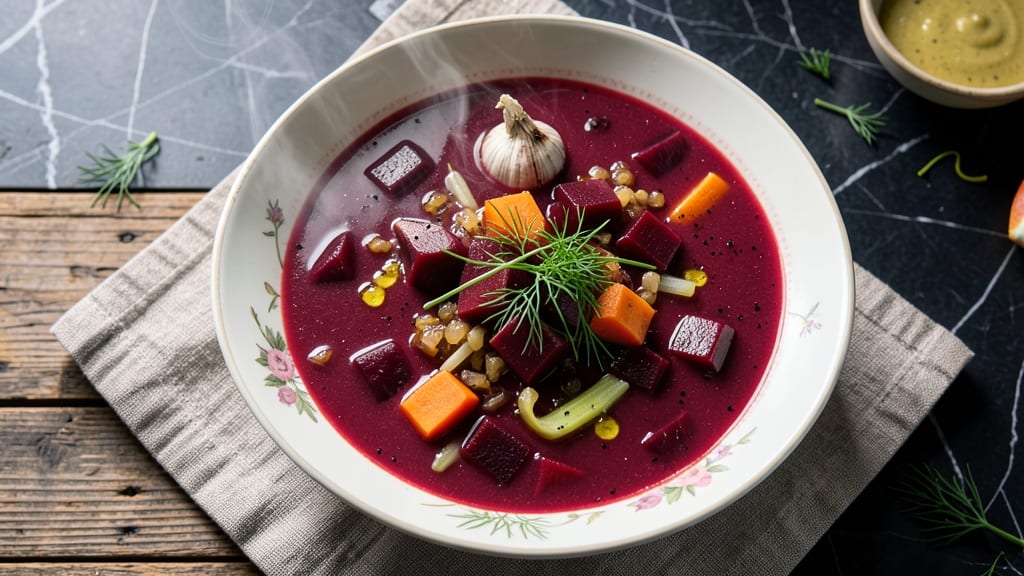
This beet vegetable soup recipe transforms earthy beets into a velvety, creamy masterpiece that balances sweetness and savory depth. 💛 The secret lies in roasting the beets first—caramelizing their natural sugars before blending them into a rich, velvety base.
What starts as a simple vegetable broth evolves into a hearty soup packed with seasonal vegetables and a swirl of herbed cream that ties everything together.
What sets this recipe apart is the two-stage cooking process: roasting intensifies the beets' flavor while preserving their vibrant color, and simmering the broth with aromatic vegetables builds layers of complexity.
The result is a soup that's both comforting and visually striking—deep ruby hues from the beets contrast beautifully with fresh herbs and optional garnishes like toasted nuts or a drizzle of olive oil.
The creamy texture comes from blending a portion of the soup with coconut yogurt or cashew cream, ensuring richness without dairy. Each spoonful delivers a harmonious blend of sweet, earthy, and herby notes, making it a standout dish for chilly evenings or cozy gatherings.
The recipe scales effortlessly, whether you're serving a family or meal prepping for the week.
Perfect for those who appreciate vegan comfort food, this soup proves hearty meals don't require meat or heavy cream. The step-by-step method ensures foolproof results, from roasting to blending to garnishing. Let's dive into the details to bring this vibrant, flavorful soup to your table.
Ingredients for beet vegetable soup
Roasted beets, aromatic vegetables, and creamy plant-based richness transform into this velvety soup masterpiece.
| Ingredient | Amount | Notes |
|---|---|---|
| Medium Beets 🍠 | 2 whole | Roasted with skins on |
| Yellow Onion 🧅 | 1 whole | Diced, medium size |
| Carrots 🥕 | 3 medium | Peeled, chopped into chunks |
| Celery Stalks 🌿 | 3 whole | Diced, including leaves |
| Garlic Cloves 🧄 | 4 cloves | Minced, fresh preferred |
| Vegetable Broth 💧 | 6 cups | Low-sodium preferred |
| Coconut Yogurt 🥛 | ½ cup | Unsweetened, full-fat |
| Fresh Thyme Leaves 🌿 | ¼ cup | Chopped, stems removed |
| Fresh Dill 🌿 | 0.15 cup | Chopped, leaves only |
| Extra-Virgin Olive Oil 🫒 | ½ cup | For roasting and finishing |
| Apple Cider Vinegar 🍎 | 1 tbsp | Balances sweetness |
| Salt 🧂 | 1 ½ tsp | Diamond Crystal preferred |
| Black Peppercorns 🌶️ | ½ tsp | Freshly cracked |
| Cashew Cream 🥜 | ½ cup | For extra creaminess |
| Toasted Walnuts 🌰 | ¼ cup | Optional garnish |
The beets are the heart of this recipe, and roasting them whole unlocks their natural sweetness. Look for medium-sized beets with smooth skins—no need to peel until after roasting. Whole Foods or local farmers markets often carry the most vibrant beets, but the regular grocery store variety works fine. For even roasting, trim the stems and leave the skins on. The carrots and celery should be organic if possible—Trader Joe's bulk section has great prices for these. Fresh thyme and dill are non-negotiable for that bright herbal finish, though dried will work in a pinch at one-third the amount. The vegetable broth should be low-sodium to control seasoning—Pacific Foods or Imagine brands are reliable vegan options.
No coconut yogurt? Cashew cream or silken tofu blended with lemon juice delivers similar creaminess. Substituting walnuts for garnish? Toasted pecans or almonds work equally well. The apple cider vinegar might seem unusual, but it's essential for cutting through the beets' natural sweetness—Bragg brand is my go-to. For the olive oil, California avocado oil has a higher smoke point if you're searing anything. The cashew cream can be made ahead by soaking raw cashews overnight, though store-bought versions like So Delicious save time. If you're using pre-minced garlic, fresh is always better—it makes a noticeable difference in flavor depth.
Roasted beets keep in the fridge for 5 days if stored properly, though they're best used within 2 days for peak flavor. The finished soup reheats beautifully—simmer gently to avoid breaking the emulsion. For meal prep, store the soup without the garnishes and add them fresh before serving. The cashew cream and coconut yogurt can be stored separately for up to 1 week in sealed containers. Freeze portions of the soup without the garnishes for 3 months—thaw overnight in the fridge before reheating. The toasted nuts should be stored in an airtight container at room temperature for up to 2 weeks to maintain their crunch.
Why You'll Love This Recipe
- No Peel Required: I swear by roasting the beets whole—just scrub, poke holes, wrap in foil, and toss in the oven. No knife skills needed, and the sweetness? Chef’s kiss. The caramelized edges melt into the soup like they’re supposed to.
- Earthy Umami Magic: That combo of roasted beets, sautéed onions, and garlic? It’s like a hug for your taste buds. The carrots and celery add just enough crunch to balance the creamy broth—honestly, it’s the kind of flavor that makes you pause mid-sip.
- Lunchbox Hero: Between us, this soup reheats like a dream and keeps for days. Pack it in a thermos for work or school—no soggy bread here. My kids actually ask for it, and I’ll take that win any day.
- Pantry Staple Power: Onions, carrots, celery—those are the holy trinity of cheap veggies. Add a few beets (they’re often on sale), and you’ve got a meal that costs less than takeout but feels like a restaurant dish. Budget-friendly? Yes. Delicious? Absolutely.
Step-by-step instructions for sweet-roasted beet vegetable soup
Transform humble vegetables into a velvety, herb-infused soup with deep caramelized flavors.
🔥 Step 1: Roast Vegetables for Concentrated Sweetness
Preheat oven to 400°F and line a baking sheet with parchment paper. Toss the 2 whole medium beets (skins on), 1 whole yellow onion (cut into wedges), 3 medium carrots (chopped into 1-inch pieces), and 3 whole celery stalks (cut into 1-inch chunks) with 2 tablespoons of the extra-virgin olive oil. Spread in a single layer and roast for 30 minutes, stirring halfway through.
You'll know they're ready when edges are deep golden brown and the beets smell intensely sweet. This roasting step develops complex caramelized flavors that infuse the broth. Remove from oven and let cool slightly before transferring to a blender—this prevents steam explosions when blending.
🍳 Step 2: Build the Herb-Infused Broth Base
In a large pot, combine the roasted vegetables with the 4 minced garlic cloves, 6 cups vegetable broth, 1 tablespoon apple cider vinegar, 1.5 teaspoons salt, and 0.5 teaspoon freshly cracked black peppercorns. Bring to a gentle boil, then reduce heat to medium-low and simmer uncovered for 20 minutes to meld flavors.
Here's the thing—this simmering time allows the vegetables to break down slightly, releasing their sweetness into the broth. Skim off any foam that rises to the surface to keep the broth clear. The vinegar brightens the natural sweetness of the roasted vegetables, creating that perfect balance of flavors.
🥘 Step 3: Blend to Silky Perfection
Transfer half of the vegetable mixture to a high-powered blender, leaving the remaining half in the pot. Blend until completely smooth, scraping down the sides as needed. Return the blended portion to the pot and stir well. Repeat with the remaining half, creating a velvety texture that coats the back of a spoon.
For extra creaminess, stir in the 0.5 cup cashew cream and 0.5 cup coconut yogurt now. This creates that luxurious mouthfeel promised in the title. If the soup is too thick, thin with hot vegetable broth until you reach your desired consistency—about 10 seconds of stirring should leave a visible trail.
👨🍳 Step 4: Finish with Fresh Herbs and Balance
Return the soup to medium heat and stir in the 0.25 cup chopped fresh thyme leaves and 0.15 cup chopped fresh dill. Simmer gently for 3 minutes to infuse the flavors without cooking the herbs to oblivion. Taste and adjust seasoning—you may need a pinch more salt to balance the sweetness.
The herbs should brighten the soup's flavor profile with their fresh, slightly peppery notes. Don't skip this step—it's what transforms good soup into exceptional soup. The thyme adds earthiness while the dill provides a bright, citrusy contrast that cuts through the richness of the cashew cream.
🍽️ Step 5: Serve with Garnishes for Texture
Ladle the soup into bowls and top each serving with 1 tablespoon toasted walnuts and an additional drizzle of extra-virgin olive oil—about 1 teaspoon per bowl. The walnuts add crunch while the olive oil enhances the natural flavors. Serve immediately while the soup is hot and the herbs are fragrant.
Each spoonful should deliver that perfect balance of sweet roasted vegetables, creamy texture, and bright herbal notes. The walnuts provide a satisfying contrast to the smooth soup, making every bite more interesting. For extra depth, offer a side of crusty bread to soak up those rich, flavorful juices.
Pro Tips For Making Beet Vegetable Soup
- Roast the Beets First: If you boil them, they’ll turn mushy and lose that deep, caramelized sweetness. Toss peeled beets in olive oil, salt, and roast at 400°F (200°C) for 45-50 minutes—until they’re fork-tender and naturally tenderized. (Yes, it’s extra work upfront, but the flavor pays off.)
- Cut Celery Small: I used to leave celery stalks whole, thinking it would hold shape, but they just turn to mush. Dice them into ¼-inch pieces—they’ll soften perfectly and blend into the soup’s texture without clumping. (Trust me, your spoon will thank you.)
- Sweat the Aromatics Low: Don’t rush the onion, carrot, and celery—cook them on medium-low heat for 10 minutes until the onion is translucent and the carrots release their natural sugars. This builds flavor without burning, so the garlic (which you’ll add at the end) doesn’t taste like ash. (Your nose will know if you skip this.)
- Simmer, Don’t Boil: After adding broth and beets, keep the heat at a gentle simmer, not a rolling boil. High heat makes the soup cloudy and dulls the beets’ color. A steady simmer for 20-25 minutes lets the flavors meld without breaking down the vegetables into mush. (Patience here makes all the difference.)
Flavor customization for beet vegetable soup
Sweet-Tangy Twist
Add 1 teaspoon of orange zest or 2 tablespoons of orange juice to the broth during simmering for a bright citrus note that cuts through the beets' earthiness. I find Navel or Valencia oranges work best—their sweetness complements the roasted vegetables beautifully.
For extra depth, add ½ teaspoon of ground ginger along with the orange zest. 🍊
Spicy Kick
For heat lovers, stir in ½ teaspoon of smoked paprika with the roasted vegetables before blending, then add 1-2 dashes of hot sauce (like Cholula or Tabasco) to each bowl before serving.
If you prefer fresh heat, top with chopped jalapeños or serranos and a sprinkle of fresh cilantro. The smokiness pairs wonderfully with the roasted beets.
Umami Boost
Deep umami flavors transform this soup into something restaurant-quality. Add 1 tablespoon of miso paste (white or red) to the simmering broth, or stir in 1 teaspoon of soy sauce or tamari after blending.
For extra richness, sauté 2 tablespoons of finely chopped mushrooms (like shiitake) with the garlic before adding to the pot. The umami enhances the natural sweetness of the beets. 🍄
Herb Variations
Swap out thyme and dill for other fresh herbs based on what you have: chopped parsley and basil for a Mediterranean vibe, or fresh tarragon and chives for an anise-like depth.
I love adding a few sprigs of fresh rosemary during simmering—remove before blending for a subtle piney aroma. The herbs should complement, not overpower, the beets' natural flavor.
Creamy Alternatives
If you don't have cashew cream, blend ½ cup silken tofu with 2 tablespoons of lemon juice and 1 tablespoon of olive oil for a lighter creaminess. For a tangier option, substitute with ½ cup vegan sour cream or ½ cup blended cooked white beans.
Each alternative adds a different texture—silken tofu is silky, sour cream adds tang, and beans provide heartiness. 🥛
Seasonal Additions
Spring brings fresh flavors—add ½ cup of chopped asparagus or peas to the simmering broth for 5 minutes before blending. In fall, swap in ½ cup of diced butternut squash and a pinch of cinnamon to complement the beets' natural sweetness.
Winter calls for heartier additions like ½ cup of chopped kale or Swiss chard—simmer them for 10 minutes before blending to soften. Each seasonal variation keeps the soup exciting year-round. 🌱
Nutrition facts
Frequently asked questions
Can I use canned beets instead of fresh?
Fresh roasted beets create the best flavor and texture, but you can use canned beets in a pinch. Drain and rinse them well, then roast at 375°F for 20 minutes to concentrate their sweetness. For extra depth, add 1 teaspoon of maple syrup to the broth to compensate for the milder flavor.
How do I make this soup extra creamy without dairy?
The recipe already includes cashew cream and coconut yogurt for richness, but you can boost creaminess further. Blend ½ cup cooked white beans into the soup for a heartier texture, or stir in 2 tablespoons of nutritional yeast for a cheesy, umami kick. Both options add body without dairy.
Why does my soup taste too sweet?
Roasted beets naturally concentrate sweetness, and the apple cider vinegar helps balance it. If your soup tastes too sweet, add ½ teaspoon of smoked paprika or 1 dash of hot sauce to introduce smoky or tangy notes. Simmer for 2 minutes to let flavors meld before serving.
Can I prep this soup ahead of time?
Store the finished soup (without garnishes) in an airtight container in the fridge for 4-5 days or freeze for 3 months. Reheat gently on the stove, stirring occasionally. For the best texture, add fresh herbs and garnishes right before serving.
What if I don't have a high-powered blender?
No problem! Use an immersion blender directly in the pot for a smoother texture, or blend in batches with a regular blender. For a rustic look, leave some chunks—simmer the soup longer (10 extra minutes) to soften the vegetables further. The flavor will still be delicious!