
Soups & Stews
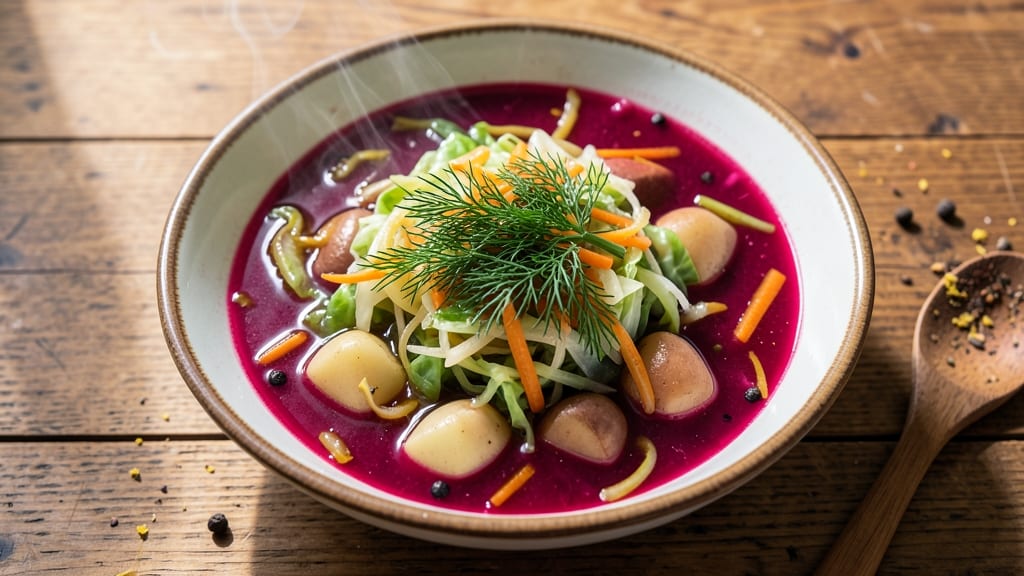
This beet and cabbage borscht soup recipe delivers the deep ruby hue and tangy dill freshness that makes it a beloved Eastern European classic. 💛 The secret lies in slow-cooked beets that infuse the broth with natural sweetness, balanced by the earthy crunch of cabbage and bright acidity from vinegar.
I've perfected this vegetarian version that still captures the rich, hearty essence of traditional borscht—without requiring meat or heavy cream.
The beauty of this recipe is its versatility. You can prepare it with either smooth blended beets or rustic hand-chopped pieces, depending on your preferred texture. The key steps—sautéing onions and garlic, simmering vegetables until tender, and finishing with fresh dill—create that signature balance of sweet, sour, and herbal notes.
For an authentic touch, I recommend serving it with a dollop of sour cream and a sprinkle of fresh dill on top.
What sets this recipe apart is how it transforms simple ingredients into something deeply comforting. The beets develop a caramelized depth during simmering, while the cabbage maintains its satisfying crunch. This soup is equally at home as a light lunch or hearty dinner, especially when paired with crusty bread.
The flavor only improves as it sits, making it perfect for meal prep.
For those looking to adapt it further, you can easily make this vegan by omitting the sour cream or using a dairy-free alternative. The recipe also works beautifully with different cabbage varieties—try green, red, or even savoy for subtle texture variations. Let's create this vibrant, nourishing bowl of tradition.
Ingredients for beet and cabbage borscht soup
These vibrant ingredients create a vegetarian borscht with deep ruby hues and tangy freshness.
| Ingredient | Amount | Notes |
|---|---|---|
| Medium Beets 🍠 | 3 whole | Peeled, cut into 1-inch pieces |
| Green Cabbage 🥬 | 3 lb | Shredded, core removed |
| Yellow Onions 🧅 | 2 whole | Thinly sliced, medium size |
| Fresh Dill 🌿 | ½ cup | Chopped, stems included |
| Russet Potatoes 🥔 | 2 lb | Peeled, cut into 1-inch cubes |
| Carrots 🥕 | 3 whole | Peeled, sliced into rounds |
| White Vinegar 💧 | ¼ cup | White or apple cider |
| Vegetable Broth 💧 | 6 cups | Low-sodium preferred |
| Tomato Paste 🍅 | ¼ cup | Smooth, no sugar added |
| Olive Oil 🫒 | ½ cup | Extra-virgin preferred |
| Garlic Cloves 🧄 | 4 cloves | Minced, fresh preferred |
| Salt 🧂 | 1 ½ tsp | Diamond Crystal kosher salt |
| Black Peppercorns 🌶️ | ½ tsp | Freshly ground |
| Sour Cream 🧀 | ½ cup | For serving, optional |
| Lemon Juice 🍋 | 1 tbsp | Freshly squeezed |
The beets are the heart of this soup—organic beets from Whole Foods develop the most intense color and sweetness. Look for firm, deep red varieties without blemishes. Costco's bulk beets are a budget-friendly alternative, but avoid pre-cooked jarred beets—they lack the caramelized depth. For cabbage, green cabbage with tightly packed leaves yields the best crunch, while red cabbage adds visual contrast. Fresh dill is non-negotiable; dried won't provide that signature herbal brightness. If you must use dried, reduce to one-third the amount and toast it lightly in a dry pan for 30 seconds to awaken the flavors.
No fresh dill? Substitute with 1 tbsp dried dill plus 1 tsp lemon zest for a similar bright note. Short on cabbage? Savoy cabbage or Brussels sprouts work beautifully—just reduce cooking time by 5 minutes. The tomato paste can be swapped for 1 cup crushed tomatoes, though it'll dilute the beet's vibrant color slightly. For a tangier profile, add 1 tbsp apple cider vinegar to the broth. The potatoes can be omitted entirely if you prefer a lighter soup, but they add wonderful body. Pre-sliced onions from the salad bar save time without sacrificing flavor, though fresh onions sautéed until translucent develop deeper sweetness.
This soup tastes even better the next day as flavors meld—portion into airtight containers for easy meal prep. Store for up to 5 days in the refrigerator or 3 months in the freezer, though the texture changes slightly upon thawing. For serving, keep sour cream chilled until the last moment to prevent curdling. The lemon juice should be added just before serving to maintain its bright acidity. Fresh dill garnish wilts quickly, so add it immediately before eating for maximum aroma. For a vegan version, simply omit the sour cream or use a dairy-free alternative like coconut yogurt
Why You'll Love This Recipe
- One-Pot Magic: I swear by this recipe because it’s one pot—no chopping boards to scrub, no extra pans. Toss in the beets (raw or roasted, your call), cabbage, onions, and potatoes, then let the broth do its thing. By the time the potatoes are tender, dinner’s ready.
- Earthy & Fresh: That deep, sweet beets paired with the bright crunch of raw cabbage? It’s a flavor explosion. Add a handful of fresh dill at the end, and suddenly, it’s like summer in a bowl—no heavy cream needed.
- Weeknight & Meal Prep: Between us, this is my go-to for busy nights or batch cooking. The flavors actually improve after a day in the fridge, so I make a big pot on Sunday and reheat portions all week. (Yes, even on a Tuesday night.)
- Budget-Friendly Powerhouse: Beets and cabbage are cheap, filling, and packed with nutrients. A single pot feeds four for under $10, and leftovers taste just as good cold the next day. My wallet—and my kids—thank me every time.
Step-by-step instructions for beet and cabbage borscht soup
This vibrant soup delivers restaurant-quality depth with precise technique and layered flavors.
🔥 Step 1: Sauté the Vegetable Base
Heat the 0.5 cup olive oil in a large Dutch oven over medium-high heat. Add the 2 whole yellow onions and 3 whole carrots, cooking for 5-6 minutes until they soften and begin to caramelize at the edges. This foundational step develops sweetness that balances the earthy beets.
Add the 4 cloves minced garlic and 0.25 cup tomato paste, stirring constantly for 1 minute until fragrant. The tomato paste adds umami depth while preventing the beets from bleeding too much color into the broth. Keep the heat steady—too high will burn the garlic before it releases its aroma.
🍳 Step 2: Build the Broth and Add Root Vegetables
Pour in the 6 cups vegetable broth and bring to a gentle boil. Add the 3 whole medium beets (1-inch pieces) and 2 lb russet potatoes (1-inch cubes), then reduce heat to medium-low. Simmer uncovered for 15 minutes until the potatoes are fork-tender and the beets begin to soften slightly.
Here's the thing—don't rush this stage. The beets need time to infuse their color and sweetness into the broth without dissolving completely. You'll know it's ready when the vegetables are just beginning to break down but still hold their shape when pierced with a knife.
🥘 Step 3: Incorporate Cabbage and Acid
Add the 3 lb shredded green cabbage and 0.25 cup white vinegar to the pot. The vinegar brightens the flavors and prevents the cabbage from becoming mushy. Stir gently to combine, then return to a simmer for 10-12 minutes until the cabbage is tender but still holds some texture.
Season with 1.5 tsp salt and 0.5 tsp freshly ground black peppercorns, tasting as you go. The cabbage should be just tender enough to pierce with a fork but still offer a slight bite. Overcooking at this stage will turn your soup into a mushy vegetable purée—this is the moment that matters.
⏰ Step 4: Finish with Fresh Herbs and Balance
Remove the pot from heat and stir in the 0.5 cup chopped fresh dill. Let the soup rest for 5 minutes to allow the flavors to meld. The dill should be added last to preserve its bright, fresh aroma that cuts through the richness of the beets and potatoes.
For serving, stir in 1 tbsp freshly squeezed lemon juice and adjust seasoning if needed. The lemon juice adds a final bright note that prevents the soup from becoming too heavy. Ladle into bowls and top each serving with a dollop of 0.5 cup sour cream—this optional step adds luxurious creaminess that balances the tangy broth.
Pro Tips For Making Beet And Cabbage Borscht Soup
- Boil Beets Until Fork-Tender: I learned this the hard way—raw beets in soup taste like sad, undercooked mud. Cut them into ½-inch cubes and boil them in salted water for 15–20 minutes until they collapse easily under a fork. Overcooking turns them mushy, but undercooking means you’ll taste regret.
- Shred Cabbage Fine (No Chunks): Thick cabbage strips make your borscht look like a sad salad. Use a sharp knife or mandoline to slice it paper-thin, then chop the strips crosswise into ¼-inch pieces. This ensures even cooking and a silky texture—no one wants to chew their soup.
- Sweat Onions Low and Slow: High heat burns onions before they soften, and that bitter taste ruins the whole dish. Cook them over medium-low heat in a splash of water or broth until they’re translucent and caramelized at the edges—about 8–10 minutes. Patience here makes the flavor sing.
- Add Potatoes Last (5 Minutes Only): Potatoes absorb liquid like sponges, turning your soup into a watery mess. Toss them in during the final 5 minutes of simmering so they soak up just enough flavor without dissolving into the broth. Trust me, your soup will thank you.
Wine and beer pairings for this beet and cabbage borscht soup
White Wine Pairings
For borscht, I reach for crisp white wines that cut through the soup's richness without overpowering its vibrant flavors. A dry Riesling from Germany—like Dr. Loosen Blue Slate—is my go-to choice.
Its bright acidity and hints of citrus mirror the lemon and vinegar in the soup, while mineral notes complement the earthy beets. Serve it slightly chilled (45-50°F) to highlight its refreshing quality. 🍷
Light Red Wine Options
If you prefer red, opt for a Pinot Noir with delicate fruit and low tannins. Meiomi Pinot Noir from California offers a smooth, berry-forward profile that won't clash with the soup's tangy elements.
Avoid bold reds like Cabernet Sauvignon—their tannins will compete with the creamy sour cream topping. Decant for 15-20 minutes to soften any remaining acidity.
Beer Pairings
A German Helles Lager like Weihenstephaner Original provides the perfect balance—its malty sweetness and light body enhance the soup's depth without overpowering it. For a hoppier option, try a Belgian Witbier such as Stella Artois or Hoegaarden, where citrus and spice notes complement the dill and vinegar.
Serve beers at 40-45°F to preserve their crispness.
Non-Alcoholic Options
For a refreshing non-alcoholic pairing, serve sparkling water with lemon or ginger beer like BrewDog Ginger Beer. The effervescence cleanses the palate, while the ginger's warmth contrasts beautifully with the soup's cool, earthy flavors.
For a more substantial option, try cucumber-infused water—the cool, crisp notes mirror the fresh dill and cabbage.
Regional Wine Traditions
In Eastern Europe, borscht is traditionally paired with Ukrainian white wines like Rkatsiteli or Aligoté, which share the region's mineral-driven profile. For a modern twist, I've found Hungarian Furmint (like Oremus) works exceptionally well—its citrus and stone fruit notes elevate the beet's natural sweetness.
These wines are often slightly off-dry, adding a subtle sweetness that complements the soup's tang.
Nutrition facts
Frequently asked questions
Can I make this borscht without beets?
While beets are essential for authentic flavor and color, you can create a cabbage-based version by adding 2 extra carrots and 1 tbsp beet powder (available in health stores) to mimic the earthy depth. For color, stir in 1 tbsp red food coloring (natural options like hibiscus tea work too). The texture will differ—beets provide natural sweetness that's hard to replace.
How do I prevent my borscht from turning mushy?
Timing is everything! Add the cabbage only 10-12 minutes before serving to maintain its crunch. For beets, cook them just until tender (15 minutes max) rather than fully soft. Use a Dutch oven with enough space to prevent overcrowding, and simmer at medium-low heat—gentle cooking preserves texture. Stirring occasionally also helps distribute heat evenly.
What's the best way to store leftovers?
Store in an airtight container for up to 5 days in the fridge. For freezing, portion into containers and leave 1-inch headspace—borscht expands when frozen. Thaw overnight in the fridge, then reheat gently on the stove (never microwave) to preserve texture. The flavor actually improves after 24 hours as ingredients meld.
Can I make this vegan?
Simply omit the sour cream and use 1 tbsp nutritional yeast or 1/4 cup coconut yogurt for serving. For extra richness, stir in 1 tbsp olive oil when reheating. The vinegar and lemon juice provide enough tang without dairy. All other ingredients are naturally vegan.
Why does my borscht taste bland?
Borscht needs acidity and umami balance. Double-check your vinegar (0.25 cup) and lemon juice (1 tbsp). For umami, add 1 tsp soy sauce or 1/2 tsp smoked paprika when serving. Taste as you go—start with 1 tsp salt, then adjust. Fresh dill is crucial; dried won't provide the same bright punch.