
Soups & Stews
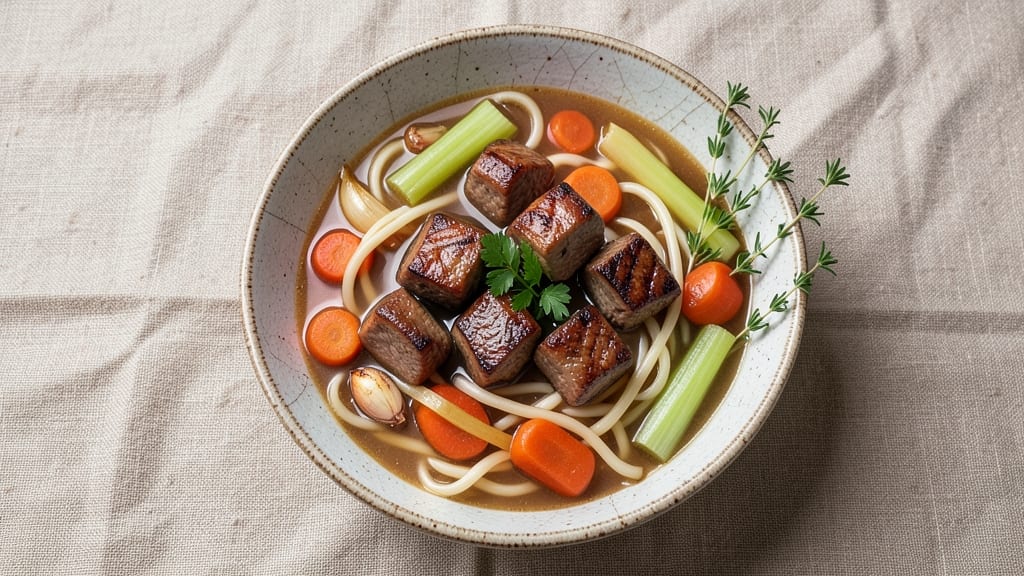
This beef stew noodle soup recipe delivers the kind of hearty, comforting meal that transforms tough cuts into melt-in-your-mouth tenderness. The secret lies in slow simmering—where tough beef transforms into fork-tender chunks while absorbing deep, savory flavors from garlic, herbs, and aromatic vegetables.
I developed this recipe during winter months when nothing beats a steaming bowl that warms both body and soul.
The magic happens in the broth, where beef bones and vegetables simmer for hours, creating a rich, flavorful base that coats every noodle and bite of meat. No shortcuts here—this is a recipe built on patience and layering flavors, but the result is worth every minute.
The noodles cook directly in the broth, absorbing its essence for that perfect slippery texture we all crave.
What you'll end up with is a bowl of soup where each component plays its part: tender beef, hearty noodles, and a broth so rich it practically sings.
The aroma alone will have everyone gathering around the table, and the first spoonful delivers on that promise of comfort food done right. This isn't just soup—it's a meal that feels like a hug in a bowl.
Perfect for chilly evenings or when you need to feed a crowd, this recipe scales beautifully while maintaining balance. The instructions guide you through each step—from searing the meat to simmering the broth—so you can achieve restaurant-quality results at home. Let's get started on creating this timeless classic.
Ingredients for beef stew noodle soup
Six hearty ingredients transform tough beef into melt-in-your-mouth perfection with slippery noodles.
| Ingredient | Amount | Notes |
|---|---|---|
| Beef Chuck Roast 🥩 | 2 lb | Cut into 1-inch cubes |
| Yellow Onion 🧅 | 2 whole | Chopped, medium size |
| Carrots 🥕 | 4 medium | Peeled, cut into chunks |
| Celery Stalks 🥬 | 4 whole | Chopped, including leaves |
| Garlic Cloves 🧄 | 6 cloves | Minced, not pre-minced |
| Fresh Thyme 🌿 | 2 tbsp | Leaves only, chopped |
| Fresh Bay Leaves 🍃 | 2 whole | Remove after cooking |
| Beef Bones 🦴 | 1 lb | For rich broth |
| Egg Noodles 🍜 | 1 lb | Medium width, uncooked |
| Tomato Paste 🍅 | 2 tbsp | Smooth, not chunky |
| Red Wine 🍷 | 1 cup | Dry, like Cabernet |
| Beef Broth 💧 | 4 cups | Low-sodium preferred |
| Olive Oil 🫒 | 2 tbsp | For searing |
| Salt 🧂 | 1 ½ tsp | Kosher or sea salt |
| Black Pepper 🌶️ | 1 tsp | Freshly ground |
The beef is non-negotiable here—chuck roast is your best bet for that fall-apart texture. Costco or local butchers usually have it pre-cut, but if you're buying a whole roast, cube it yourself for even cooking. Beef bones are the secret weapon for that deep, rich broth—ask your butcher for knuckle bones or marrow bones. Fresh thyme and bay leaves add layers of flavor, but dried will work in a pinch (use half the amount). For the carrots and celery, organic is ideal—no need to peel if they're clean, but chop them into even-sized pieces so they cook at the same rate.
No red wine? Substitute with beef broth plus a splash of balsamic vinegar—it mimics the depth. Running short on fresh thyme? Dried thyme at one-third the amount works, but fresh is worth the extra minute to chop. The tomato paste can be from a tube or a jar—Trader Joe's squeeze tubes are perfect for this since you only need a small amount. If you're making this ahead, cook the noodles separately and add them just before serving so they don't get mushy. The egg noodles should be medium-width—they hold up better in broth than thin ones.
This soup tastes even better the next day as flavors meld. Store in the fridge for up to 5 days, or freeze portions for 3 months. I always make extra—double the recipe if you're feeding a crowd. The broth freezes beautifully, so you can cook the meat and veggies ahead, then reheat with fresh noodles. For a quick fix, reheat on the stove over medium heat—stirring occasionally to prevent sticking. Garnish with fresh parsley if you've got it, but it's not required.
Why You'll Love This Recipe
- One-Pot Magic: I swear by this recipe—just toss the beef, onions, carrots, and celery into a pot, add water, and let it simmer. No fancy steps, no extra bowls to wash.
- Deep, Rich Flavor: That chuck roast turns insanely tender, and the garlic? Oh, it’s the secret weapon—layered with the natural sweetness of carrots and onions for a taste that sticks with you.
- Leftovers That Shine: Make a big batch on Sunday, and you’ve got lunch covered all week. The flavors actually get better the next day—trust me, I’ve tested this.
- Budget-Friendly Powerhouse: A whole roast for a few dollars? Yes, please. This soup stretches across meals without sacrificing taste, and the veggies keep it hearty and healthy.
Step-by-step instructions for beef stew noodle soup
Here's how to create a hearty, slow-cooked beef stew with perfectly tender meat and slippery noodles.
Sear the Beef and Build Rich Flavor
Heat the 2 tablespoons olive oil in a large Dutch oven over medium-high heat. Working in batches, add the 2 lb beef chuck roast cut into 1-inch cubes and sear until deeply browned on all sides—about 3-4 minutes per batch. This step is crucial for developing deep flavor through the Maillard reaction.
As you sear, remove the beef and set it aside. In the same pot, add the 2 whole yellow onion and 4 whole celery stalks (chopped with leaves) and cook for 5 minutes, stirring occasionally, until softened. Add the 4 medium carrots (peeled and chopped) and cook for another 3 minutes. You're building layers of flavor that will infuse the broth throughout the slow cook.
Develop the Aromatics and Deepen the Broth
Add the 6 cloves minced garlic, 2 tablespoons chopped fresh thyme, and 2 whole fresh bay leaves to the pot. Stir everything together and cook for 1 minute until fragrant. This is where the foundation of your soup's complex flavor begins to take shape.
Pour in the 1 cup red wine and scrape up any browned bits from the bottom of the pot with a wooden spoon. Let it simmer for 3-4 minutes until the wine reduces by half. Then add the 2 tablespoons tomato paste and stir well to create a rich, slightly sweet base for your broth. This step transforms simple ingredients into something truly special.
Simmer the Beef and Vegetables
Return the seared beef to the pot along with the 1 lb beef bones. Add 4 cups beef broth and bring everything to a boil. Once boiling, reduce heat to low and cover partially. Let it simmer gently for 2 hours, stirring occasionally. This slow cook transforms the tough beef into tender, fork-tender pieces while extracting maximum flavor from the bones and vegetables.
After 2 hours, check the beef for tenderness. It should be easily pierced with a fork. If not, continue simmering for another 30-60 minutes. The broth should now be rich, dark, and deeply flavorful. Remove and discard the fresh bay leaves—they've done their job.
Finish with Noodles and Seasoning
Add the 1 lb egg noodles to the pot and cook according to package instructions—usually 8-10 minutes—until al dente. The noodles should absorb the rich broth while maintaining a slight bite. Taste the broth and adjust seasoning with 1.5 teaspoons salt and 1 teaspoon black pepper as needed. The noodles will help distribute the seasoning evenly throughout the soup.
Real talk: Don't skip this tasting step. The broth should be deeply savory with just the right balance of saltiness and acidity from the wine. The noodles should be perfectly cooked but still hold their shape when drained. This is where all your hard work comes together into a comforting, satisfying bowl of soup.
Pro Tips For Making Beef Stew Noodle Soup
- Sear the Chuck Hard: I used to rush this step, but a deep, dark crust on the beef chuck is what carries the flavor through hours of simmering. Get your pan screaming hot—think smoke starting to curl—and let that meat sit undisturbed for 3-4 minutes per side. The edges should look like they’ve been kissed by a blowtorch. (Yes, even if you’re impatient like me.)
- Cut Celery in Big Chunks: Tiny celery dice disappear into oblivion while you’re waiting for the beef to tenderize. Leave those stalks ½-inch thick—no need to slice them like confetti. They’ll soften beautifully and still hold their shape, adding texture to every spoonful. (Your future self will notice the difference.)
- Don’t Rush the Braise: After browning, I’ve learned the hard way that dumping everything into boiling water and hoping for the best won’t cut it. Lower the heat to a bare simmer—just enough to keep tiny bubbles breaking the surface—and let the chuck cook for at least 2.5 hours. (No, 45 minutes won’t do it. Trust the process.)
- Save the Onion Water: After dicing your onions, don’t just toss the scraps—rinse them in cold water to remove dirt, then add them to the pot with the beef and broth. It won’t make a huge difference, but it’ll deepen the flavor without extra effort. (Sounds weird, but it works.)
Wine and beer pairings for this recipe
Red Wine Pairings
A bold Cabernet Sauvignon from Napa Valley or a Chianti Classico from Tuscany is my go-to choice—its tannins stand up to the rich beef while complementing the earthy notes from the thyme and bay leaves.
The acidity in these wines cuts through the soup's richness, leaving your palate refreshed between bites. 🍷
For something lighter but still robust, a Syrah from the Rhône Valley works beautifully. Its peppery notes mirror the caramelized onions and beef, while its fruitiness balances the savory broth. I always reach for a bottle aged 3-5 years—just enough to soften the tannins without losing complexity.
Beer Pairings
A dark lager like Samuel Adams Black Lager or Guinness adds a malty depth that enhances the caramelized flavors in the broth. The slight bitterness from the hops actually makes the beef taste even more tender. Serve it ice-cold to contrast the warm soup. 🍺
For a hoppier option, try a Belgian-style dubbel like Westmalle Dubbel. The caramel and spice notes in the beer echo the roasted beef and tomato paste, while the alcohol helps cleanse your palate between spoonfuls. This pairing feels especially cozy on chilly evenings.
Unexpected Pairings
If you're feeling adventurous, a Port wine (tawny or ruby) works surprisingly well with this hearty soup. The sweetness of the port balances the acidity in the broth, while its viscosity coats your tongue in a way that makes each bite even more satisfying. 🥂
For a non-alcoholic option, sparkling apple cider with a hint of cinnamon adds a refreshing contrast. The bubbles cut through the richness, and the apple's natural sweetness complements the caramelized onions and beef. It's a crowd-pleaser, especially with kids or designated drivers.
Pro Tips for Pairing
Always let your wine or beer breathe for 10-15 minutes before pouring—this releases aromas that will harmonize better with the soup's flavors. I also recommend serving drinks slightly cooler than room temperature (about 55-60°F) to enhance their balance with the warm broth. 🌡️
If you're serving this soup at a gathering, offer a wine and beer flight with 3-4 options. Include one red, one white (like a Viognier for contrast), one beer, and one non-alcoholic option. This way, everyone can find their perfect match without overpowering the dish.
Nutrition facts
Frequently asked questions
Can I use ground beef instead of chuck roast for this recipe?
Ground beef works in a pinch, but it won't give you the same tender, melt-in-your-mouth texture. For best results, stick with chuck roast cut into 1-inch cubes—it's designed to become fork-tender through slow cooking. If you must use ground beef, brown it well first and reduce the cooking time to 1 hour instead of simmering.
How do I make this recipe vegetarian?
Swap the beef for mushrooms (like cremini or portobello) and use vegetable broth instead of beef broth. Add 1 cup lentils or 1 block firm tofu (pressed and cubed) for protein. Keep the red wine and tomato paste for depth, but reduce the cooking time to 45 minutes to prevent the veggies from getting mushy.
Can I make this soup ahead of time?
This soup tastes even better the next day as flavors meld. Cook the beef and broth completely, then cool and refrigerate for up to 5 days. When ready to serve, reheat on the stove over medium-low heat and add the noodles just before serving. For freezing, store the broth and beef separately (without noodles) for up to 3 months—reheat and cook noodles fresh.
What if my beef isn't tender after 2 hours?
Don't worry—just give it more time! Cover the pot and simmer for another 30-60 minutes until the beef is fork-tender. If it's still tough, try adding 1/2 cup more beef broth and simmering uncovered for 10 minutes to reduce the liquid slightly. The longer you cook it, the more flavorful it becomes.
Can I use instant noodles instead of egg noodles?
Instant noodles will work, but they won't have the same rich texture. For a quick version, use ramen noodles (discard the seasoning packet) and cook them directly in the broth for 5 minutes. For better quality, try fresh egg noodles or udon noodles—they absorb the broth beautifully and hold up better during reheating.